Sovereign Enough to Steal From: How American Law Turns Conquest Into Governance

Ward Churchill’s Perversions of Justice exposes the legal machinery through which Indigenous sovereignty is recognized just enough to legitimize treaties, land cessions, resource extraction and colonial administration—then restricted whenever it threatens settler possession or state power. Following that contradiction from conquest and property into uranium mining, blood quantum, AIM repression and U.S. imperial expansion, this review tests both Churchill’s strongest insights and his strategic limits. His final wager—that the colonizer’s own law can be weaponized to fracture legitimacy and withdraw consent—remains powerful. But the deeper revolutionary question is what turns that rupture into organized material counter-power.

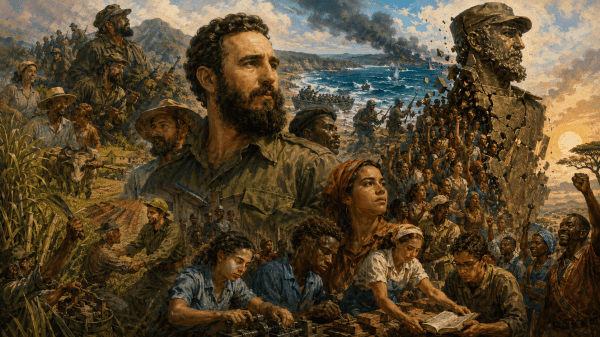
The Revolution Must Keep Making Revolutionaries: Fidel Castro and the Fight Against Becoming a Monument

On the centenary of Fidel Castro's birth, his autobiography, My Life, acts as a provocative lens into the complexities of revolution. It dismantles the myth of the born revolutionary, showcasing instead how context, struggle, and learning forge warriors for change. Despite Cuba's successes, deep-rooted issues like racism and inequality persist, with Fidel warning that Cuba's most significant threat may not come from external forces but from within—its own inability to correct mistakes. As the Revolution ages, the pressing query remains: can it continually foster revolutionary consciousness amidst evolving contradictions or will it succumb to the complacency that often follows victory?

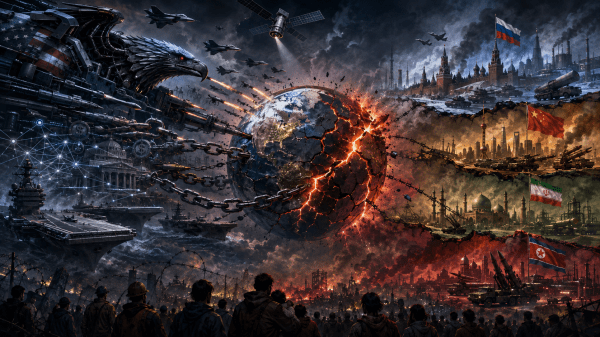
The Axis Washington Built: How the War Against Multipolarity Is Pushing the World Toward World War III

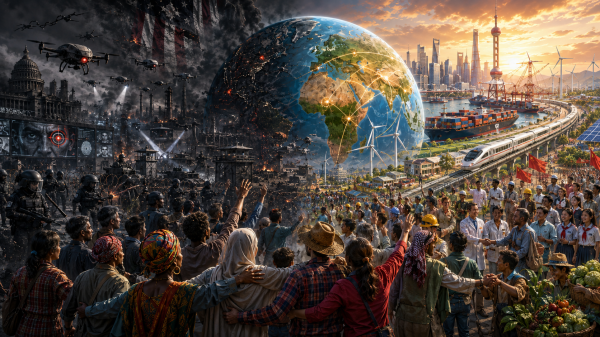
The rhetoric around a so-called "authoritarian axis" of Russia, China, Iran, and North Korea is dangerously misleading. This narrative stems from a long history of U.S. military expansion and interventionism that has fostered the very hostilities it claims to combat. Instead of viewing these nations as a monolithic threat, we must recognize that their alliances are responses to decades of American aggression and coercion. Bosco's portrayal of these entities as simple villains obscures the deeper dynamics at play, namely that U.S. actions have directly contributed to their convergence. To prevent a World War III scenario, we must dismantle the war machinery perpetuating this cycle of escalation and educate the public on these historical nuances.

Surrender as Relief: Rubio’s War on Cuba’s Means of Survival

Marco Rubio’s new sanctions do not merely target Cuban military procurement. They strike the institutions, banking channels, suppliers, repair systems, and foreign relationships through which Cuba survives a blockade designed to manufacture deprivation and political surrender. Washington restricts fuel, finance, technology, and trade, then presents the resulting hardship as proof of socialist failure. As Cuba turns toward China, Russia, and other partners to preserve its sovereignty, those lifelines are recast as threats. Behind the language of security lies the old imperial objective: isolate the island, weaken its defenses, deepen popular suffering, and force the Cuban Revolution to kneel.

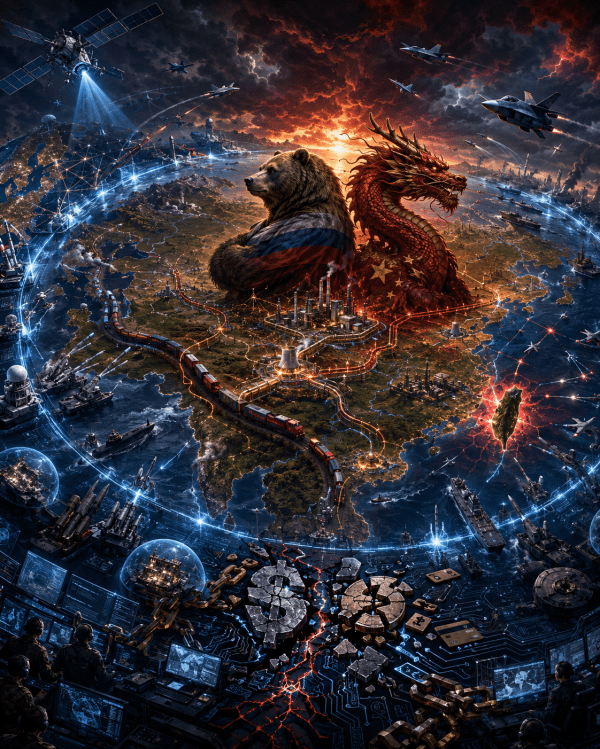
NATO’s Self-Fulfilling Prophecy; How Encirclement Forged the Russia–China Alliance

DER SPIEGEL's investigation into military cooperation between Russia and China is more than just a mere report; it's an embodiment of the West's narrative that casts these nations as the new "axis of evil." This framing is less about honesty and more about justifying aggressive military posturing and sanctions against perceived threats. The true danger lies not in an orientation towards war, but in an imperial system that, in its quest for domination, fuels the very alliances it fears. The article critiques this perspective, urging a grassroots movement to challenge militarism and push for a redirection of resources towards societal needs instead of war machinery.

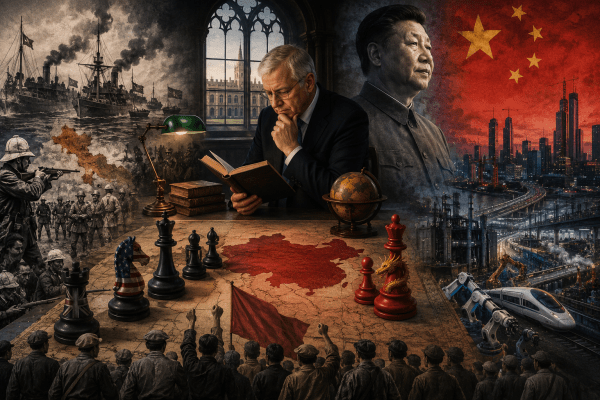
The New York Times’ China Guy: How Kevin Rudd Manufactures an Imperial Xi Jinping

The New York Times promises to explain what Xi Jinping wants, but its interview with former Australian Prime Minister Kevin Rudd performs a far more revealing task: it manufactures imperial expertise while burying the history that produced modern China. Through credential laundering, great-man theory, the caricature of Marxism, and the erasure of colonialism, China is reduced to the psychology of one leader instead of understood as the product of revolution, socialist construction and a century-long struggle against imperial domination. This Weaponized Propaganda Excavation dismantles the interview piece by piece, exposing how liberal media transforms ideology into common sense while presenting it as objective analysis.

When the Numbers Revolt: The World Stops Buying the American Empire

The world is turning its back on the American Empire as perceptions shift dramatically in favor of China, a shift underscored by a recent Pew survey revealing greater global trust in China over the U.S. The BBC attempts to downplay this trend, attributing it to America's chaotic leadership under Trump, but the truth lies in a stark reality: nations are weary of U.S. interference and long for a relationship defined by trade, not military might. This reversal signals not just a popularity contest but a fundamental reevaluation of power dynamics. The challenge now is to harness this anti-imperialist sentiment into a mass movement against war with China.

The Tollbooth at the Edge of Empire: Washington Sets Fire to Hormuz and Charges the World for Water

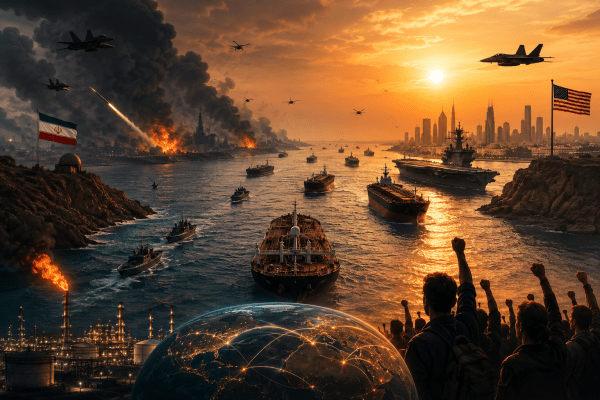
The Trump administration claims it is defending freedom of navigation in the Strait of Hormuz, yet its latest policy reveals something very different: a naval blockade of Iran, a bid to control one of the world's most strategic waterways and a proposed 20 percent charge on global commerce passing through it. Excavating the BBC's coverage, this essay reconstructs the chronology buried beneath the headlines, exposing how a war launched by the United States and Israel has been repackaged as a story of Iranian aggression. Behind the rhetoric of maritime security lies a deeper struggle over sovereignty, imperial power and who has the right to govern the world's vital arteries of trade.

Axis of Sovereignty: Why China, Russia, Iran, and the DPRK Terrify the Empire

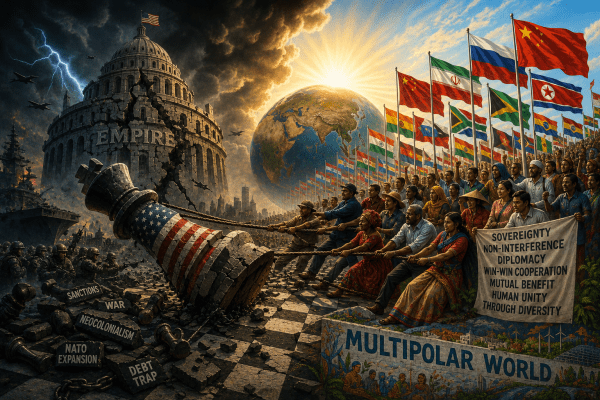
In a provocative shake-up, Foreign Affairs describes China, Russia, Iran, and DPRK as a nascent threat, labeling them "worse than an axis." This insinuation reveals a deep-seated imperial anxiety rather than a justified concern over a military conspiracy. These nations are forging multipolar alliances that challenge Western hegemony—an act of sovereign defiance unsettling the imperial status quo. The article underscores an inherent fear of an empowered Global South, no longer obedient to the West’s dictate. It’s not about a looming conquest but about nations rising to reclaim their sovereignty, thus threatening the very structure that sustains Western dominance. Forget the “axis” narrative; recognize the emerging world order as a potential liberation movement for the oppressed.

The Development Racket: How the World Bank Repackages Empire in Burkina Faso

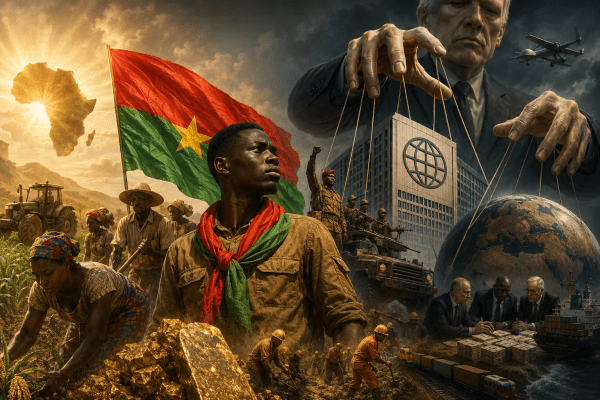
The World Bank's report on Burkina Faso masquerades as a beacon of growth while burying the sinister realities of imperialism and neoliberal domination. Beneath the polished metrics of economic success lies a nation striving for food and resource sovereignty, grappling with the vestiges of colonial exploitation. This report, cloaked in the language of reform, manipulates narratives to maintain control, ignoring the voices of those truly affected. Burkina Faso’s fight against the systems that dictate their development is not a mere economic story; it's a battleground for sovereignty, pitting genuine progress against imperial interests that aim to manage rather than liberate.

Website Powered by WordPress.com.

Up ↑