The Miracle Was Supposed to Take Orders: South Korea and the Contradiction of American Power

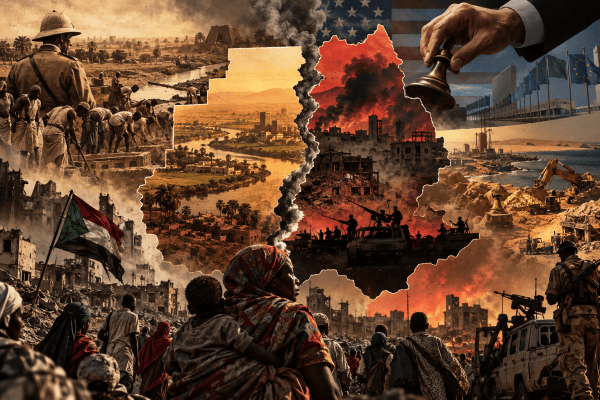
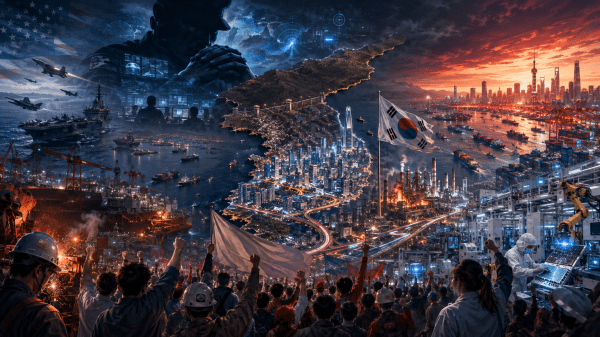
South Korea’s “miracle” didn’t fall from the fucking sky. It was built through war, U.S. occupation, anti-communist repression, Japanese capital, state-directed development, disciplined labor and a regional imperial order designed to make capitalism look victorious against socialism. But the contradiction is vicious: the same system built Korean industry strong enough to become indispensable, produced workers powerful enough to break dictatorship, and tied Korean accumulation into an Asian economy increasingly centered on China. Now Washington wants the miracle to keep taking orders—more weapons, more shipyards, more investment, more war preparation. The problem is South Korea ain’t the weak frontier state it used to be.

The Wall Produces the Ladder: How America’s China Scare Turns Exchange Into Evidence of Threat

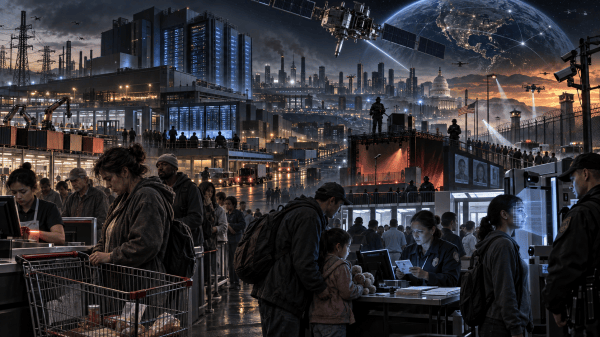
China’s Young Envoys program is openly political public diplomacy, but that is not the same thing as communist indoctrination, infiltration, or espionage. This essay excavates how KOMO and Defending Education turn educational exchange into a national-security threat by collapsing contact, influence, ideology, and subversion into one Red Scare narrative. Beneath the panic lies a deeper contradiction: U.S. efforts to isolate China generate the very Chinese counter-communication then cited as proof that greater isolation is necessary. The result is a narrow imperial provincialism that treats direct encounter with another civilization, its ideas, and its socialist project as something Americans must be protected from.

Sovereign Enough to Steal From: How American Law Turns Conquest Into Governance

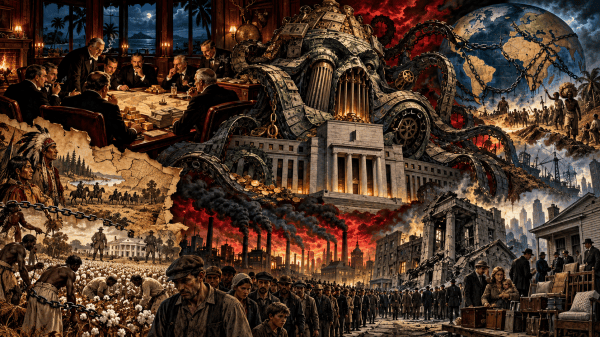
Ward Churchill’s Perversions of Justice exposes the legal machinery through which Indigenous sovereignty is recognized just enough to legitimize treaties, land cessions, resource extraction and colonial administration—then restricted whenever it threatens settler possession or state power. Following that contradiction from conquest and property into uranium mining, blood quantum, AIM repression and U.S. imperial expansion, this review tests both Churchill’s strongest insights and his strategic limits. His final wager—that the colonizer’s own law can be weaponized to fracture legitimacy and withdraw consent—remains powerful. But the deeper revolutionary question is what turns that rupture into organized material counter-power.

Democracy With a Gun to Your Head: George Jackson and the American Fascist Order

George Jackson wrote from inside the cage and exposed the system beyond it. In Blood in My Eye, prison, property, racial domination, monopoly capital, and imperial war appear not as separate problems but as parts of one American order. Jackson’s theory of secure fascism revealed how counterrevolution can rule through elections, reform, consumerism, surveillance, and controlled opposition as effectively as open terror. His strategic errors matter too: revolutionary potential is not consciousness, and militant initiative cannot substitute for organized mass power. This review recovers Jackson as a living weapon—one to be studied, sharpened, corrected, and returned to the struggle.

The New York Times’ China Guy: How Kevin Rudd Manufactures an Imperial Xi Jinping

The New York Times promises to explain what Xi Jinping wants, but its interview with former Australian Prime Minister Kevin Rudd performs a far more revealing task: it manufactures imperial expertise while burying the history that produced modern China. Through credential laundering, great-man theory, the caricature of Marxism, and the erasure of colonialism, China is reduced to the psychology of one leader instead of understood as the product of revolution, socialist construction and a century-long struggle against imperial domination. This Weaponized Propaganda Excavation dismantles the interview piece by piece, exposing how liberal media transforms ideology into common sense while presenting it as objective analysis.

The Empire Calls Resistance Subversion: Cuba and Washington’s War on Revolutionary Consciousness

The State Department's report conflates documented espionage with a sweeping indictment of social movements, branding students, revolutionaries, and dissenters as part of a conspiracy orchestrated from Cuba. This narrative denies local struggles against oppression, instead framing resistance as a foreign-directed plot, thus erasing historical context and the material origins of dissent. The document's loose connection between Cuba's influence and contemporary activism serves as a McCarthyite tool against American dissent. By equating genuine political engagement with espionage, it aims to squash revolutionary consciousness and reinforce the status quo, revealing the empire's fear that the oppressed might unite and resist independently.

Un-American by Choice: W.E.B. Du Bois and the Revolution Liberal Memory Could Not Bury

For generations, the American academy celebrated W.E.B. Du Bois while burying the revolutionary conclusions that defined the final decades of his life. In this Weaponized Intellects review of Bill V. Mullen's Un-American, we excavate the real Du Bois: communist, anti-imperialist, Pan-African internationalist and unapologetic ally of socialist revolution. Mullen powerfully restores Du Bois to the global struggle against capitalism and colonialism, yet retreats into familiar anti-Stalinist assumptions when revolution becomes embodied in the Soviet Union and the People's Republic of China. The result is both an indispensable recovery and a revealing ideological battleground over the meaning of socialism, state power and the unfinished project of world revolution.

The Rose That Grew From Concrete: Tupac Shakur, Revolutionary Memory, and the Industry That Sold It Back

Dean Van Nguyen's "Words for My Comrades" passionately reclaims Tupac Shakur as a pivotal voice in the Black revolutionary movement, tracing his roots back to the powerful yet fragmented legacy left by the Panthers. While capitalism commodifies Tupac's image, the essence of his revolutionary spirit remains alive, urging listeners to confront issues of systemic oppression and identity. Van Nguyen illuminates the contradictions in Tupac's life, linking them to a larger inheritance shaped by state repression and cultural rebellion. Ultimately, Tupac's significance lies not in providing a finished political framework but in sparking inquiry into collective struggle and revolutionary continuity, creating pathways toward genuine transformation.

The Guardrails Are a Cage: AI, Surplus Humanity, and the Technofascist State

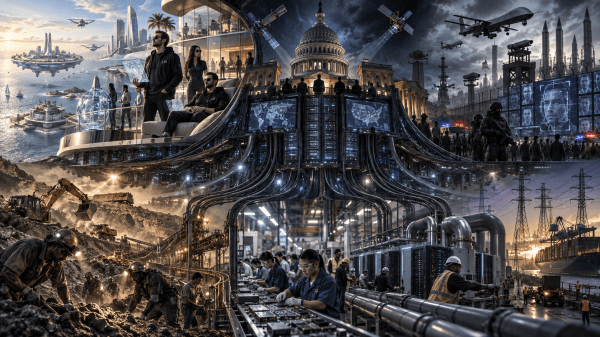
Hundreds of economists warn that artificial intelligence could displace millions of workers, but their petition mistakes a ruling-class offensive for a technical oversight. AI is already being used to reduce workforces, intensify surveillance, automate discipline, exclude applicants, restrict public benefits, and strengthen military and counterinsurgency systems. The real danger is not that machines may escape human control, but that monopoly capital is using them to reduce its dependence on labor while expanding the apparatus needed to manage those it renders surplus. Against this technofascist future, workers are organizing to seize control over deployment, data, productivity, and power.

The Palestine Exception: Why Washington Is Trying to Break the ICC

The Guardian's coverage of Marco Rubio's claim that the International Criminal Court (ICC) threatens U.S. sovereignty highlights the deeper issue of imperial exemption rather than genuine sovereignty. The U.S. has long opposed ICC jurisdiction that could implicate American or allied personnel, reacting strongly against Palestinian efforts to document crimes under occupation. The article critiques the liberal institutionalism of the response, noting a lack of representation for affected parties. It underscores that U.S. sanctions targeting Palestinian organizations and ICC officials are a means to maintain impunity. Oppressed nations seek accountability, using available legal systems to challenge the dominance of imperial powers and protect their sovereignty against external coercion.

Website Powered by WordPress.com.

Up ↑