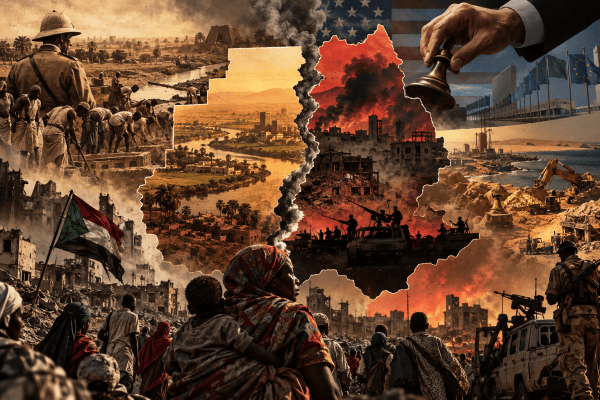
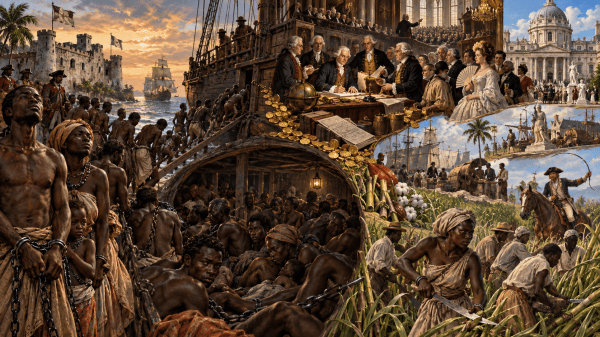
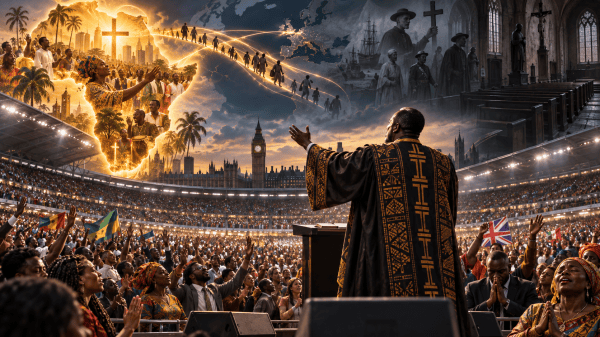
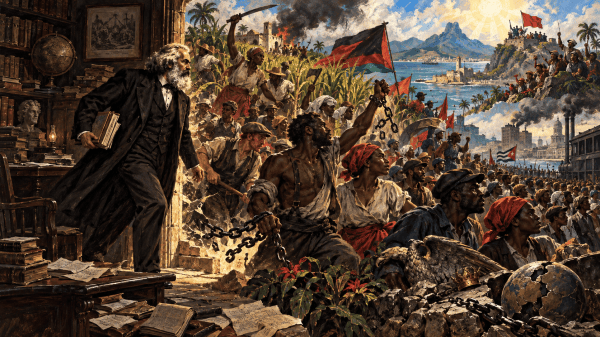
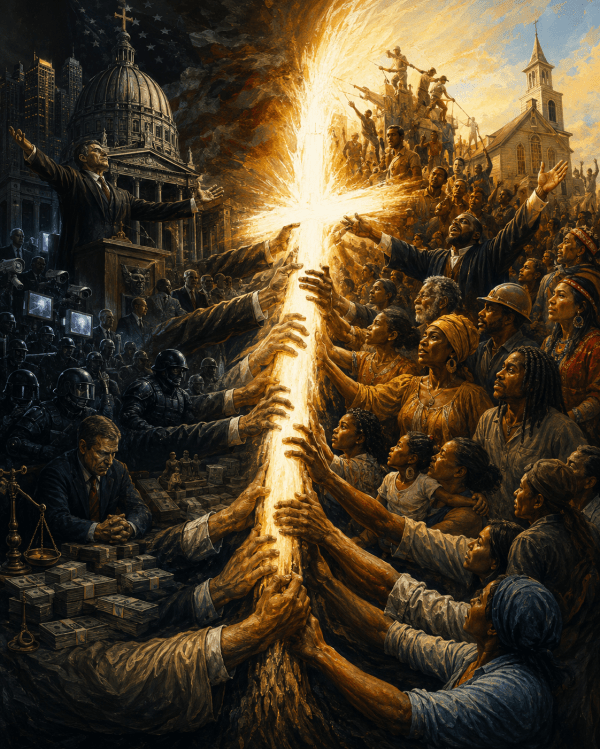
The profound legacy of American Christianity reveals a striking dichotomy: a faith that has historically upheld domination and one that fervently resists it. From the hidden church of the enslaved to Black abolitionism and Indigenous Christian defiance, oppressed communities have seized the Gospel to construct their liberation narrative. As institutional power consolidated in the hands of reactionary forces, an urgent call emerged for believers to reclaim their spiritual heritage and resist Christian nationalism. The challenge lies in forging an organized Christian movement capable of translating faith into collective action that confronts exploitation and promotes social justice, reinvigorating the powerful tradition of liberation Christianity.
Sovereign Enough to Steal From: How American Law Turns Conquest Into Governance
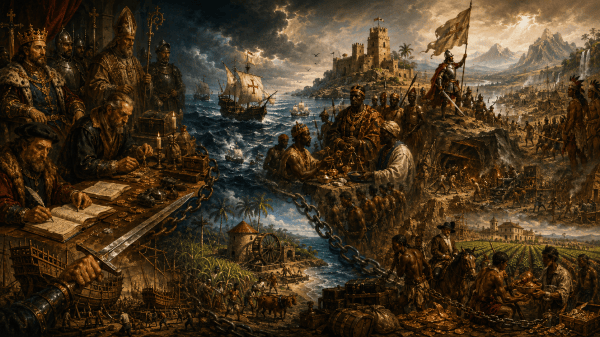
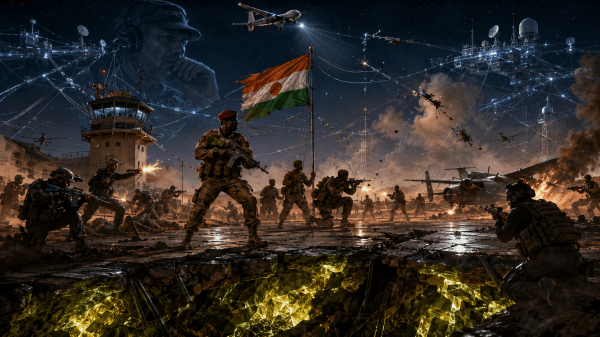
Ward Churchill’s Perversions of Justice exposes the legal machinery through which Indigenous sovereignty is recognized just enough to legitimize treaties, land cessions, resource extraction and colonial administration—then restricted whenever it threatens settler possession or state power. Following that contradiction from conquest and property into uranium mining, blood quantum, AIM repression and U.S. imperial expansion, this review tests both Churchill’s strongest insights and his strategic limits. His final wager—that the colonizer’s own law can be weaponized to fracture legitimacy and withdraw consent—remains powerful. But the deeper revolutionary question is what turns that rupture into organized material counter-power.
The Revolution Must Keep Making Revolutionaries: Fidel Castro and the Fight Against Becoming a Monument
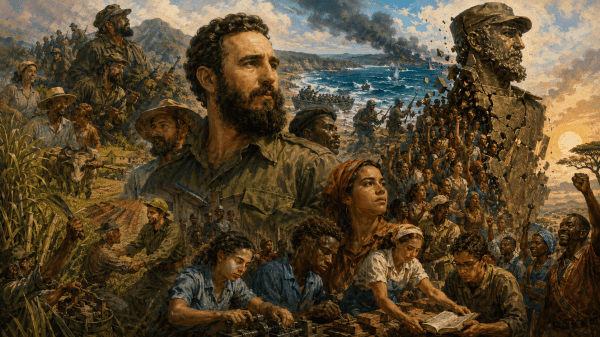
On the centenary of Fidel Castro's birth, his autobiography, My Life, acts as a provocative lens into the complexities of revolution. It dismantles the myth of the born revolutionary, showcasing instead how context, struggle, and learning forge warriors for change. Despite Cuba's successes, deep-rooted issues like racism and inequality persist, with Fidel warning that Cuba's most significant threat may not come from external forces but from within—its own inability to correct mistakes. As the Revolution ages, the pressing query remains: can it continually foster revolutionary consciousness amidst evolving contradictions or will it succumb to the complacency that often follows victory?
The Gate Opens, the Ground Hardens: Proportional Representation and the Fight Over Political Power
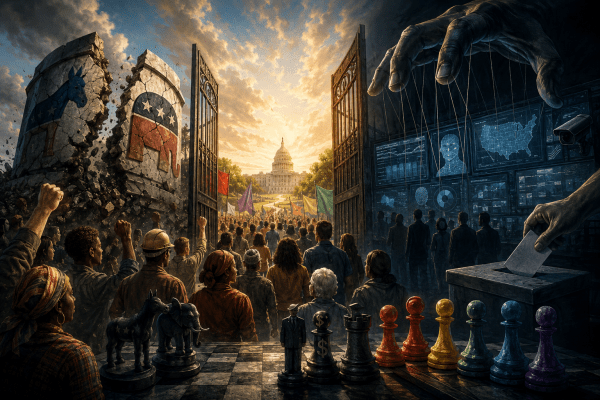
Americans are losing faith in the two-party cage faster than the political system can manufacture consent for it, yet NPR narrows that crisis of legitimacy into a problem of electoral design. Proportional representation could genuinely break part of the machinery that converts millions of politically dissatisfied people into wasted votes, but the racial history of... Continue Reading →
The Dividend Is Human: Africa’s Population Boom and the Battle Over Production
The Financial Times provocatively flips the Malthusian narrative on its head, arguing Africa's plight stems from a historical lack of population rather than excess. This revisionist tale criticizes the colonial legacy that stripped Africa of its labor and infrastructure, while the current swell of population, cities, and markets struggles against debt and underdevelopment. The real challenge isn't merely a growing populace; it's whether Africans can seize control of factories, technology, and continental markets. As density increases, the push for organized labor and investment in industrial capacity becomes crucial—otherwise, Africa risks becoming a mere market for foreign goods, trapped in a cycle of dependency despite its demographic potential.
The Divided Empire: Prashad, Buze and the Contradiction Between Hyper-Imperial Unity and Capitalist Rivalry
In a time when U.S.-led imperialism tightens its grip, nuanced debates emerge about the new American Pole—a daunting fusion of military, financial, and technological power that suppresses dissent while promising security. Vijay Prashad argues for a hyper-imperialism consolidating state control and aggressiveness against external defiance, while Özcan Buze highlights lingering national rivalries within the empire’s core. As cities devolve into ghost towns stripped of industry and sovereignty is commodified, the left is urged to unite struggles for worker power, national liberation, and social ownership. The empire’s contradictions must fuel a revolutionary response—a call to dismantle the machinery that perpetuates exploitation, rather than aspiring for a mere return to past privileges.
The Revolution Will Not Be Managed: Glen Ford, the Black Agenda, and the Missing Vehicle
Glen Ford's incisive critique shatters the myth of American progress, revealing how conquest and exploitation are cloaked as success. He dissects the deceptive practices of the Black misleadership class and the Democratic Party, showing how they perpetuate capitalist interests while masquerading as champions of Black liberation. Ford demands a radical rethinking of power and accountability, advocating for community control and reparations, emphasizing that true self-determination lies in empowering marginalized voices. Amidst the pandemic and civil unrest, Ford’s legacy calls for a revolutionary movement capable of dismantling systemic oppression rather than settling for token representation. The fight is not just for visibility; it’s for genuine power.
Democracy With a Gun to Your Head: George Jackson and the American Fascist Order
George Jackson wrote from inside the cage and exposed the system beyond it. In Blood in My Eye, prison, property, racial domination, monopoly capital, and imperial war appear not as separate problems but as parts of one American order. Jackson’s theory of secure fascism revealed how counterrevolution can rule through elections, reform, consumerism, surveillance, and controlled opposition as effectively as open terror. His strategic errors matter too: revolutionary potential is not consciousness, and militant initiative cannot substitute for organized mass power. This review recovers Jackson as a living weapon—one to be studied, sharpened, corrected, and returned to the struggle.
Wrong Map, Right Empire: Washington’s Blueprint for African Dependency
A State Department map mislabeled every country in Africa during a presentation on new U.S. health agreements. The blunder went viral as a joke about AI incompetence, but the deeper scandal was buried beneath the laughter. Washington may not know where African nations are on a map, yet it knows exactly how to reach their clinics, databases, laboratories, mineral corridors and security systems. Behind the humanitarian language lies a harder imperial architecture built on shrinking aid, conditional funding, data access, military cooperation and investment pressure. The map was wrong. The hierarchy was not.
Not Every Worker Is Proletarian: J. Sakai, White Labor, and the Settler Bargain
J. Sakai's Settlers shatters the sanctified image of the white proletariat by exposing them as products of a colonial system built on genocide, conquest, and exploitation. He argues that white labor, while subjected to capitalist oppression, has historically defended the very empire benefiting from their privilege. The text dismantles the myth that suffering automatically leads to class solidarity or consciousness, instead positing that loyalty to the colonial project is rooted in material circumstances. Sakai's revisionist approach insists that genuine liberation cannot emerge from complicity in settler structures, challenging the Euro-American left's complacency and demanding a conscious, organized revolutionary defection from oppressive systems.