Lenin’s Imperialism: The World Is Socialized, the Loot Stays Private

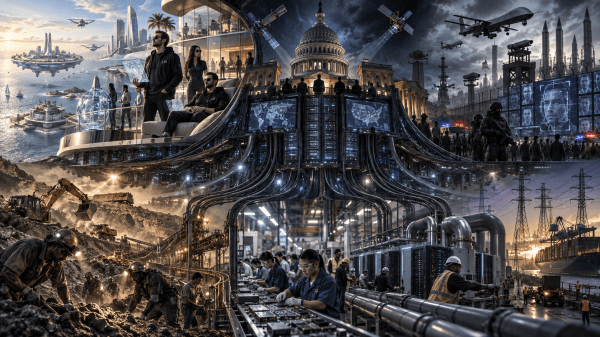
Lenin's "Imperialism, the Highest Stage of Capitalism" exposes the dark underbelly of capitalism, where economic forces and political power dance in a shadowy masquerade. He reveals how imperialism is not a mere side-effect of states' ambitions but a complex product of capital's relentless quest for profit, driving nations to export capital rather than just goods. The document reflects the sinister dynamics that create monopolies, establish financial oligarchies, and differentiate classes within the proletariat, suggesting that even workers can become complicit in their subjugation. This analysis remains crucial today, as it compels us to question ownership and control within our increasingly interconnected world.

Whose Gospel Is It?: Empire, the Oppressed, and the Battle for Christianity

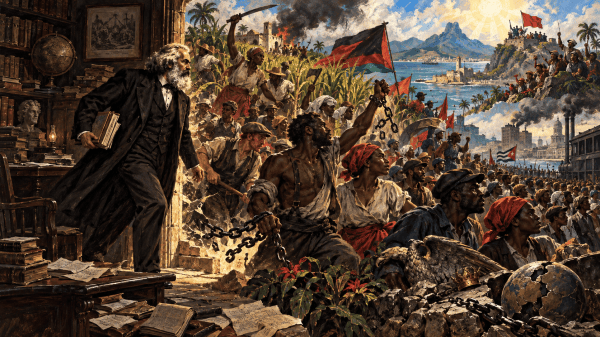
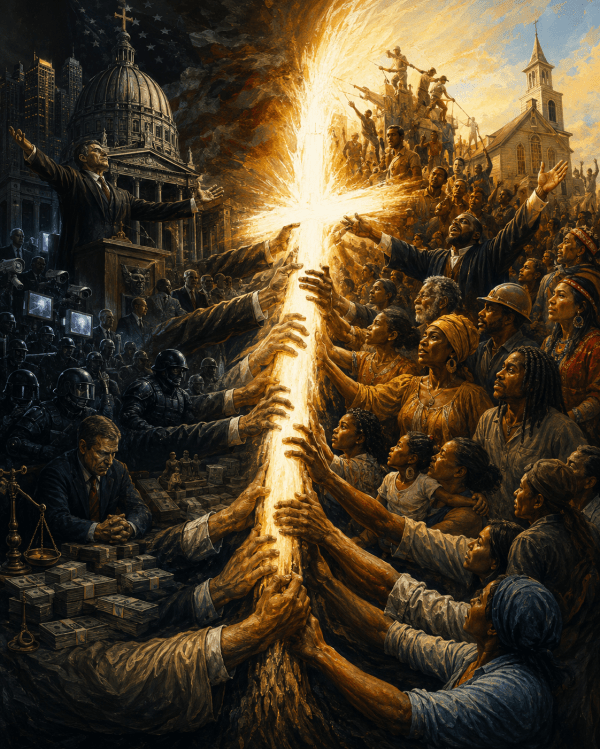
The profound legacy of American Christianity reveals a striking dichotomy: a faith that has historically upheld domination and one that fervently resists it. From the hidden church of the enslaved to Black abolitionism and Indigenous Christian defiance, oppressed communities have seized the Gospel to construct their liberation narrative. As institutional power consolidated in the hands of reactionary forces, an urgent call emerged for believers to reclaim their spiritual heritage and resist Christian nationalism. The challenge lies in forging an organized Christian movement capable of translating faith into collective action that confronts exploitation and promotes social justice, reinvigorating the powerful tradition of liberation Christianity.

Sovereign Enough to Steal From: How American Law Turns Conquest Into Governance

Ward Churchill’s Perversions of Justice exposes the legal machinery through which Indigenous sovereignty is recognized just enough to legitimize treaties, land cessions, resource extraction and colonial administration—then restricted whenever it threatens settler possession or state power. Following that contradiction from conquest and property into uranium mining, blood quantum, AIM repression and U.S. imperial expansion, this review tests both Churchill’s strongest insights and his strategic limits. His final wager—that the colonizer’s own law can be weaponized to fracture legitimacy and withdraw consent—remains powerful. But the deeper revolutionary question is what turns that rupture into organized material counter-power.

The Gate Opens, the Ground Hardens: Proportional Representation and the Fight Over Political Power

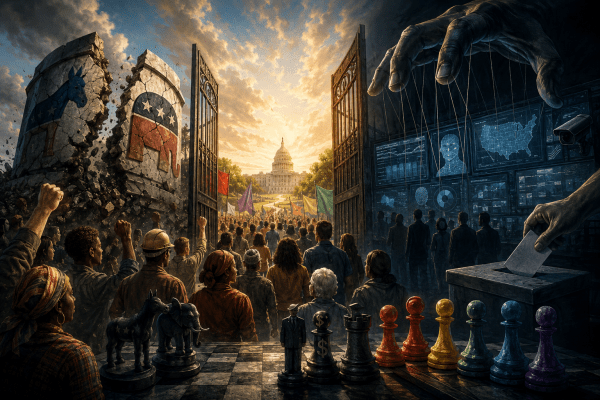
Americans are losing faith in the two-party cage faster than the political system can manufacture consent for it, yet NPR narrows that crisis of legitimacy into a problem of electoral design. Proportional representation could genuinely break part of the machinery that converts millions of politically dissatisfied people into wasted votes, but the racial history of... Continue Reading →

The Billionaire Is a Receipt: America’s Stolen Ledger of Wealth

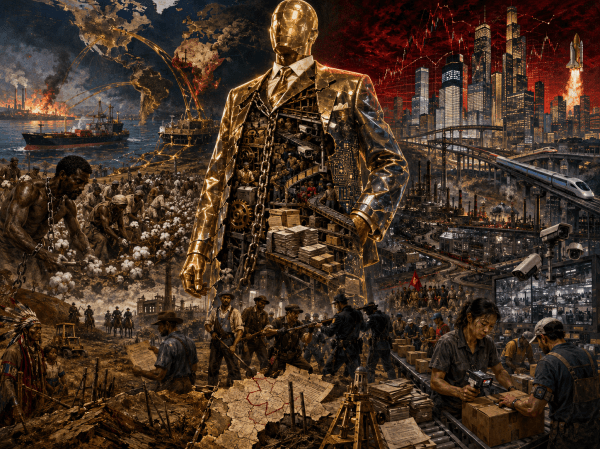
The Wall Street Journal tells a fairy tale in which billionaires create wealth while workers, enslaved people, Indigenous nations, Black farmers, public institutions, and the Global South disappear from the ledger. This excavation restores the buried history beneath American fortunes: conquest, slavery, land theft, union-breaking, financial extraction, digital surveillance, and unequal exchange. The real divide is not between innovators and envious socialists, but between the masses who collectively produce social wealth and the minority whose property claims grant them command over it. The answer is organization—from the shop floor to the wider struggle for collective control over humanity’s abundance.

The Divided Empire: Prashad, Buze and the Contradiction Between Hyper-Imperial Unity and Capitalist Rivalry

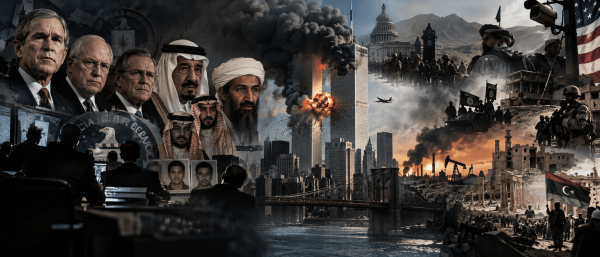
In a time when U.S.-led imperialism tightens its grip, nuanced debates emerge about the new American Pole—a daunting fusion of military, financial, and technological power that suppresses dissent while promising security. Vijay Prashad argues for a hyper-imperialism consolidating state control and aggressiveness against external defiance, while Özcan Buze highlights lingering national rivalries within the empire’s core. As cities devolve into ghost towns stripped of industry and sovereignty is commodified, the left is urged to unite struggles for worker power, national liberation, and social ownership. The empire’s contradictions must fuel a revolutionary response—a call to dismantle the machinery that perpetuates exploitation, rather than aspiring for a mere return to past privileges.

The Revolution Will Not Be Managed: Glen Ford, the Black Agenda, and the Missing Vehicle

Glen Ford's incisive critique shatters the myth of American progress, revealing how conquest and exploitation are cloaked as success. He dissects the deceptive practices of the Black misleadership class and the Democratic Party, showing how they perpetuate capitalist interests while masquerading as champions of Black liberation. Ford demands a radical rethinking of power and accountability, advocating for community control and reparations, emphasizing that true self-determination lies in empowering marginalized voices. Amidst the pandemic and civil unrest, Ford’s legacy calls for a revolutionary movement capable of dismantling systemic oppression rather than settling for token representation. The fight is not just for visibility; it’s for genuine power.

Democracy With a Gun to Your Head: George Jackson and the American Fascist Order

George Jackson wrote from inside the cage and exposed the system beyond it. In Blood in My Eye, prison, property, racial domination, monopoly capital, and imperial war appear not as separate problems but as parts of one American order. Jackson’s theory of secure fascism revealed how counterrevolution can rule through elections, reform, consumerism, surveillance, and controlled opposition as effectively as open terror. His strategic errors matter too: revolutionary potential is not consciousness, and militant initiative cannot substitute for organized mass power. This review recovers Jackson as a living weapon—one to be studied, sharpened, corrected, and returned to the struggle.

Not Every Worker Is Proletarian: J. Sakai, White Labor, and the Settler Bargain

J. Sakai's Settlers shatters the sanctified image of the white proletariat by exposing them as products of a colonial system built on genocide, conquest, and exploitation. He argues that white labor, while subjected to capitalist oppression, has historically defended the very empire benefiting from their privilege. The text dismantles the myth that suffering automatically leads to class solidarity or consciousness, instead positing that loyalty to the colonial project is rooted in material circumstances. Sakai's revisionist approach insists that genuine liberation cannot emerge from complicity in settler structures, challenging the Euro-American left's complacency and demanding a conscious, organized revolutionary defection from oppressive systems.

The Market Was Born with a Gun: Colonial Plunder, Neoliberal Rule, and the Worker-Peasant Road Beyond Capital

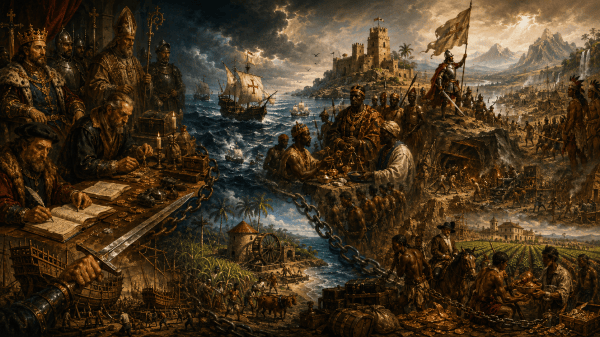
Utsa and Prabhat Patnaik’s groundbreaking analysis dismantles the myth that capitalism flourished independently within Europe, revealing a system intricately linked to colonial exploitation. They illustrate how colonialism not only financed European industrial growth but also perpetuated poverty and dependency in colonized nations. The authors articulate that capitalism's survival hinged on subjugating external economies. With the unraveling of colonial structures leading to depression and famine, they propose a radical rethinking of revolutionary potential through a worker-peasant alliance, emphasizing organized power as essential to dismantling capital's dominance. Ultimately, their work challenges the notion of capitalism's self-sufficiency, exposing its reliance on imperial mechanisms for survival.

Website Powered by WordPress.com.

Up ↑