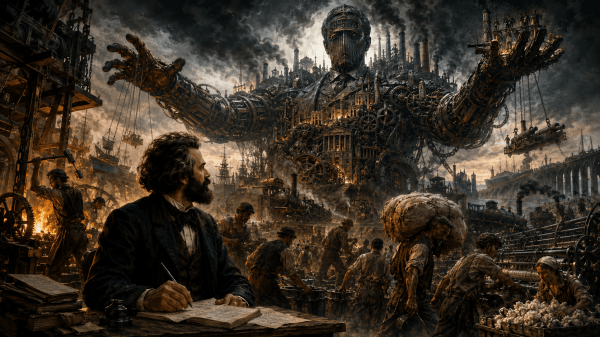
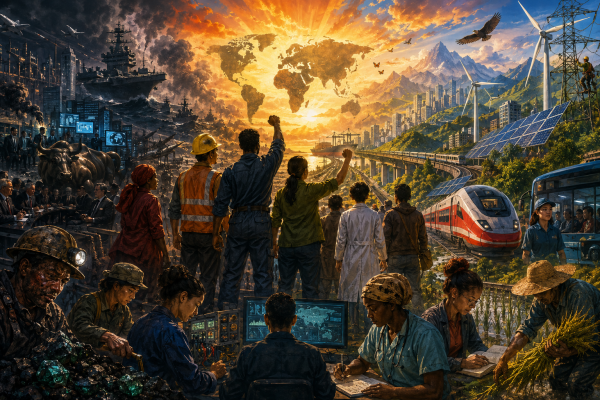
In the Economic and Philosophic Manuscripts of 1844, Marx discovers a contradiction that will haunt the whole development of his critique of capitalism: workers build an expanding world of wealth, machinery, knowledge and social power that returns to rule them as capital. This review follows that insight from wages and estranged labour through private property, colonial history, slavery, money, communism, Hegel and revolutionary humanism. It argues that the manuscripts are neither immature philosophy nor finished Marxism, but a breakthrough under pressure—one already forcing “Man” into history and asking the question that still matters: who controls humanity’s accumulated powers?
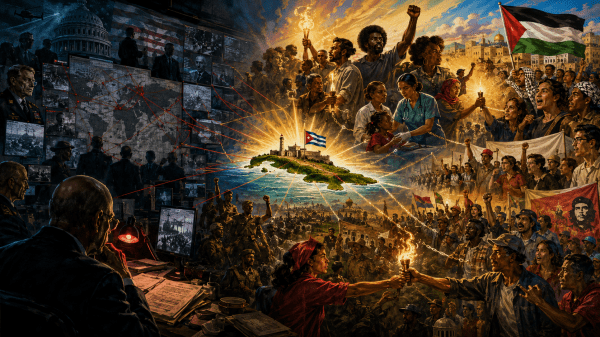
The Empire Calls Resistance Subversion: Cuba and Washington’s War on Revolutionary Consciousness
The State Department's report conflates documented espionage with a sweeping indictment of social movements, branding students, revolutionaries, and dissenters as part of a conspiracy orchestrated from Cuba. This narrative denies local struggles against oppression, instead framing resistance as a foreign-directed plot, thus erasing historical context and the material origins of dissent. The document's loose connection between Cuba's influence and contemporary activism serves as a McCarthyite tool against American dissent. By equating genuine political engagement with espionage, it aims to squash revolutionary consciousness and reinforce the status quo, revealing the empire's fear that the oppressed might unite and resist independently.
Socialism Without Revolution: Jacobin’s Market Fantasy Against the Socialist World
Bhaskar Sunkara’s market socialism is a bold yet flawed vision that naively overlooks the burdens of imperialism. He critiques past socialist models while proposing that worker-run firms can flourish within a system still embedded in capitalist exploitation. However, the reality is that these worker enterprises would still rely on the global hierarchy that upholds imperial advantages. A true socialist awakening must reject these inherited structures and demands an anti-imperialist framework instead. Without confronting the realities of colonial legacies and ensuring reparative relations, Sunkara’s proposal risks socializing the benefits of imperialism while maintaining its oppressive mechanisms intact.
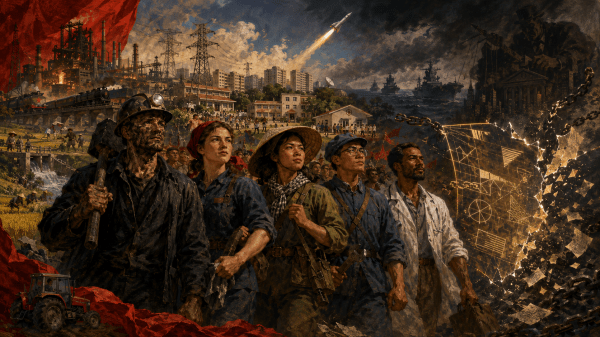
From Yan’an to Shenzhen: How China Forged Socialism Through Concrete Contradiction
China’s revolutionary saga obliterates the Cold War illusion of socialist states as mere Soviet puppets. Through peasant uprisings and intricate political maneuvers, China redefined socialism amidst imperial oppression, transforming from a colonial victim to a technological titan without abandoning Communist rule. The narrative that constraints socialism to a Soviet mold collapses under China’s rich history of adaptation to its unique tumultuous reality. China’s evolution showcases socialism as a living pursuit aimed at sovereignty and rejuvenation, not dogmatic adherence. The experiences of struggle, experimentation, and resilience reflect a deep understanding: socialism thrives on continuous reimagining, not imitation.
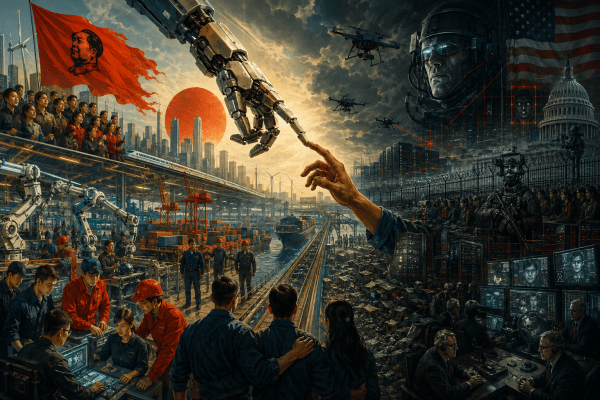
RED MACHINES, BLACK MIRRORS: AI, EMPIRE, AND THE NEW LONG MARCH AGAINST CAPITALISM
China's transformation from a mere assembly line to a powerhouse of intelligent manufacturing signals a seismic shift that threatens to dismantle the Atlantic monopoly on industrial command. As the U.S. responds with sanctions and technological blockades, the real battle unfolds over who controls the future of AI and automation. This is not merely an economic transition; it's a clash of ideologies. The West fears a new geopolitical order where technological sovereignty empowers the Global South, undermining imperial hierarchy. While intelligent manufacturing holds the potential for collective liberation, unchallenged monopoly control risks deepening exploitation. The future demands that humanity wrests command from corporate hands, reshaping technology for collective progress.
Workers of the New World: BRICS+, Platform Capital, and the Class Struggle Inside Multipolarity
The Atlantic neoliberal order is disintegrating, revealing the ravages inflicted on workers and the environment by a relentless pursuit of profit. As BRICS+ nations seek to reclaim industrial sovereignty and labor rights, they face a chaotic multipolar reality where exploitation continues under different guises. Amid profound instability, the laboring class must transition from mere instruments of production to conscious political actors capable of reshaping development. This moment offers a critical opportunity: to reclaim the narrative and construct a world centered on human dignity and ecological balance. The question now is whether history will be rewritten by workers or remain dominated by elites.
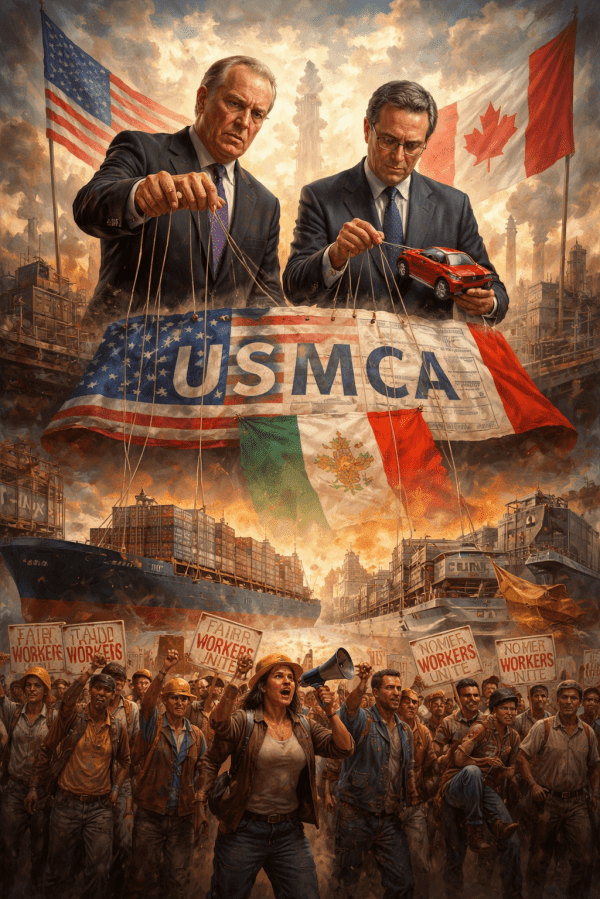
Lutnick, Carney, and the Politics of Permission: How USMCA Discipline Turns Trade Into Obedience
A U.S. trade official scolds Canada for stepping outside its assigned lane, revealing how power speaks through “commentary.” The facts show a bounded policy shift unfolding inside an unstable trade and industrial landscape the story refuses to name. Placed in historical and imperial context, the outrage reads less as economics than as enforcement of hierarchy... Continue Reading →
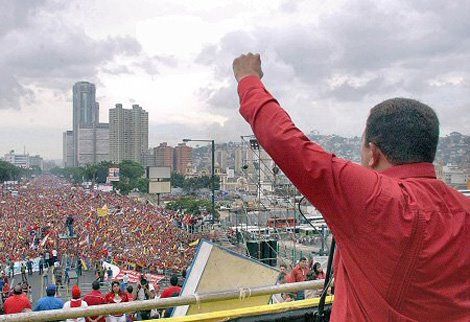
Understanding the Venezuelan Revolution: Power, Rupture, and the Discipline of Governing Under Siege
A Weaponized Intellects excavation of Understanding the Venezuelan Revolution: Hugo Chávez Talks to Marta Harnecker, tracing how popular rupture collides with institutions, empire, class power, and the unfinished task of building a revolution that can survive its own victories By Prince Kapone | Weaponized Information | January 18, 2026 A Revolution That Refuses the Script... Continue Reading →
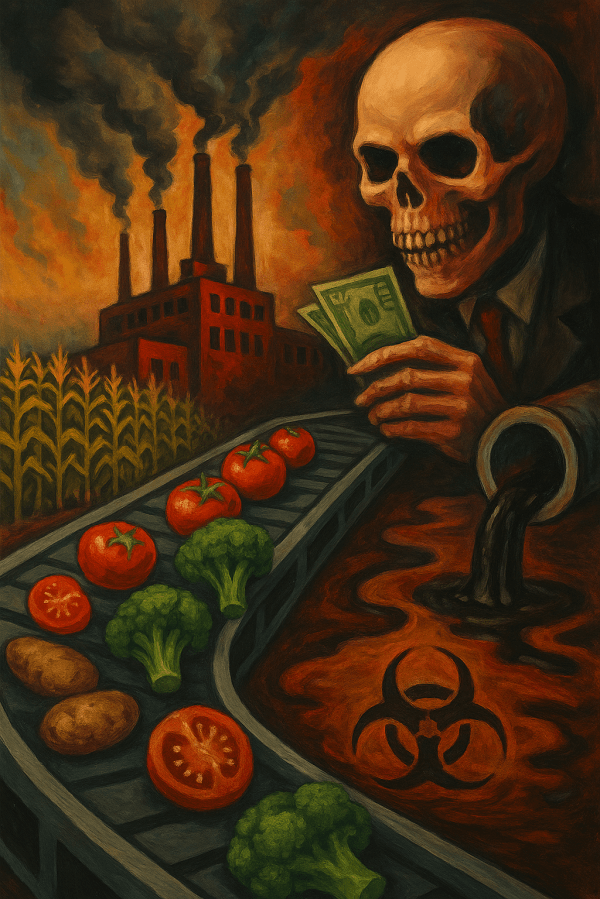
Poisoned at the Root: How Empire Turned the Global Food System Into a Chemical Battlefield
A Guardian report highlights the increasing toxins in food but fails to identify the underlying systems and corporations responsible for this crisis. The analysis reveals how synthetic chemicals result from a political and economic framework that prioritizes profit over health, affecting vulnerable populations globally. It calls for grassroots resistance and food sovereignty movements to confront these issues.
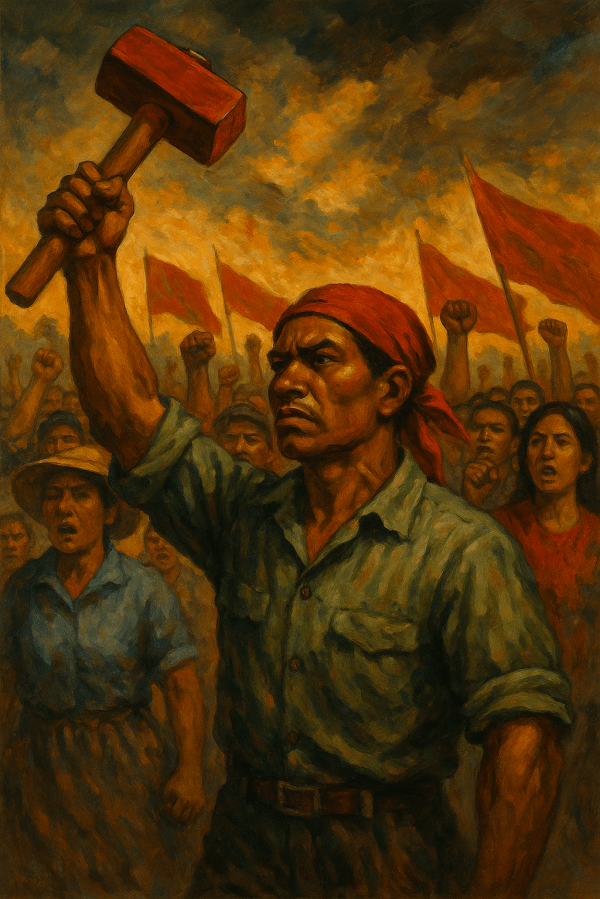
The Hands That Hold the Hammer: Sandinismo, Class Dictatorship, and the Siege of a Revolution
When the workers, peasants, and poor take state power and refuse to give it back, the oligarchy calls it tyranny and the empire calls it a crisis. We call it democracy from below.By Prince Kapone | Weaponized Information | October 2025The State Is a Hammer, Not a HaloThe liberals and their academic chaperones treat the... Continue Reading →