Grand Theft América: Cartels, Capital, and the CIA’s Hemispheric War

CNN's report on secret CIA operations in Mexico reveals a troubling narrative that frames U.S. intervention as a necessary counter-terror effort against cartels, while obscuring deeper issues of imperial influence. The article reflects how imperial media sanitizes violent operations, portraying them as essential for security. These actions are linked to a broader strategy of militarization and economic dependency, threatening Mexican sovereignty and democracy. The framing of cartels as terrorist organizations facilitates increased U.S. oversight and intervention. The need for organized anti-imperialist resistance is urgent, as declining U.S. hegemony conditions responses to crises under the guise of safety and necessity.

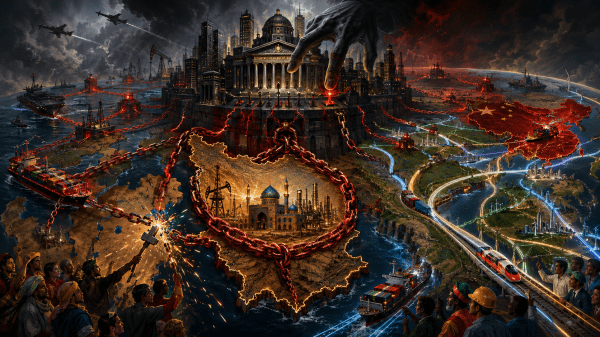
Great Satan at the Strait: Iran, International Law, and the Collapse of the “Rules-Based Order”

In a tale of diplomacy that sounds more like a sitcom plot, the Associated Press managed to frame U.S.-Israeli power plays as polite conversation while depicting Iran’s resistance as a chaotic tantrum. Imagine a landlord demanding rent while simultaneously hammering a "peace" sign into the wall—classic! The article promotes a narrative where blocking a nation is just “maritime security,” leaving readers to wonder if the actual level of aggression got lost in translation. Amid drones and oil price panic, the main issue lurking around like an unwelcome relative is whether nations can truly be sovereign or if they must politely obey the empire’s whims. It's a comedy of imperial contradictions, where legality bends more than a yoga instructor under pressure!

Failure According to Whom?: Rewriting the Metrics of Socialism

The pervasive claim that socialism has "failed" is an ideological construct rather than a factual statement. A closer analysis reveals that socialist systems, from the Soviet Union to China, achieved measurable gains in education, health, and economic development under dire conditions. This narrative of failure is not supported by historical evidence but rather is a product of a century-long ideological war against socialism. Capitalism, meanwhile, perpetuates crises, inequality, and social fragmentation, failing to meet human needs. The real question is not why socialism fails, but how it has transformed societies when confronted with immense challenges, challenging the ruling narrative that defines success so narrowly.

Fault Lines of Empire: U.S. Strategy, Pakistani Class Power, and the Crisis of Sovereignty

Asia Times frames Pakistan’s instability as a strategic obstacle, obscuring the material and political forces shaping the terrain. The crisis emerges from IMF austerity, elite domination, climate catastrophe, and a deepening political rupture following the coup against Imran Khan. Imperialist recalibration collides with multipolar transition, exposing the struggle between sovereignty and neocolonial extraction. Workers, peasants,... Continue Reading →

Reopening the Cage: Bretton Woods Returns to a Country That Refused to Kneel

The article presents IMF and World Bank re-engagement as routine normalization, masking a political event shaped by years of institutional blockade and external pressure. Beneath that surface lies a struggle over sovereignty, where constitutional legitimacy, sanctions, and anti-neoliberal memory redefine what “recognition” actually means. The return of global finance collides with a still-living project of... Continue Reading →

The Wound They Refuse to Heal: Taiwan, Empire, and the War Against Chinese Sovereignty

Reuters doesn’t just report events—it organizes reality through an imperial lens that disciplines how China is seen and understood. Beneath the surface, the Taiwan question reveals a dense structure of civil war legacy, U.S. militarization, legal contradictions, and economic interdependence. The truth is not “cross-strait tension,” but an unfinished revolutionary contradiction weaponized by empire to... Continue Reading →

From Imperial Plunder to Socialist Possibility: Capitalism, Dependency, and the Road to Sovereign Development

Development is not a neutral path but a historical process forged through conquest, extraction, and domination. Underdevelopment is not a failure to advance, but the condition produced by integration into a world system structured by imperial power. As the crisis of global capitalism deepens and the space for sovereign maneuver widens yet destabilizes, nations are... Continue Reading →

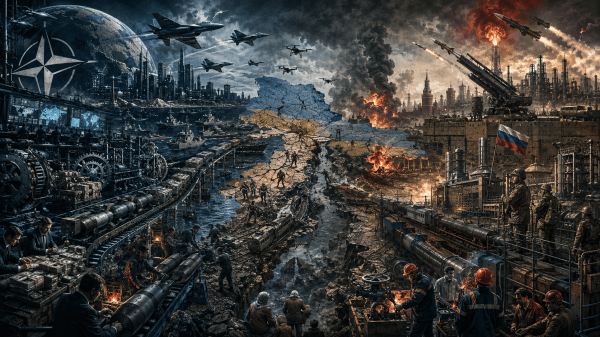
Carney, NATO, and the War Contractors: How Canada’s “Sovereignty” Pivot Deepens the Military Bloc

The New York Times sells a procurement shift as national independence. The numbers reveal a structural escalation anchored in NATO and continental integration. The pivot redistributes contracts while entrenching a war-oriented political economy. Workers and movements face a choice: defend the arms budget or reorganize production itself.By Prince Kapone | Weaponized Information | February 16,... Continue Reading →

“We Don’t Please East or West”: African Sovereignty Speaks While the Rules-Based Order Breaks

At a summit built to “shape future governments,” African heads of state confront old imperial binaries inside a new architecture of power. Tucker Carlson presses the familiar frames—China versus the West, democracy as sermon, race as property—while sanctions, AI infrastructure, and development finance reveal the harder machinery beneath the talk. Zimbabwe’s discipline, Sierra Leone’s education... Continue Reading →

Tunis Campbell and the Black Republic That White Power Destroyed

Born free in a slave republic, Campbell became an architect of Black self-rule after emancipation. On Georgia’s Sea Islands, freedpeople built land-based democracy before federal power restored white property. Rising to state leadership, he was criminalized as Reconstruction turned into counterrevolution. His life reveals Reconstruction as an unfinished revolution over land, labor, and power. Prince... Continue Reading →

Website Powered by WordPress.com.

Up ↑