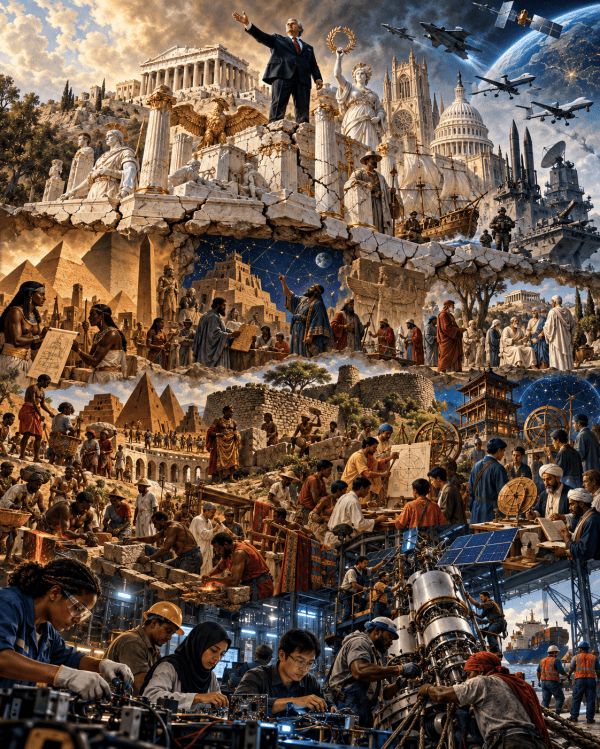
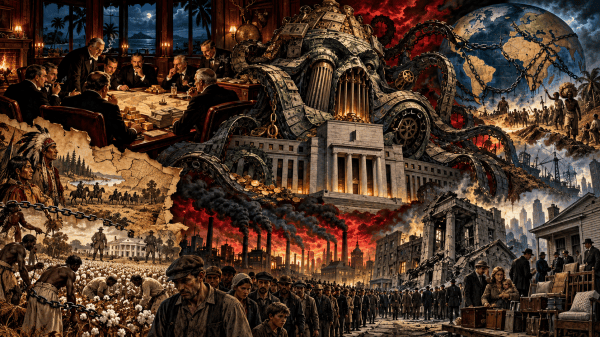
Marco Rubio's celebration of Western civilization conceals a history written through African and Asian scientific achievement, colonial conquest, capitalist exploitation, and revolutionary resistance. From ancient Greece to modern NATO, his manufactured civilizational inheritance transforms imperial domination into historical destiny while erasing the peoples whose labor built the world. Drawing on anti-colonial and Marxist scholarship, this investigation exposes how the political West was constructed through imperial rivalry, socialist revolutions, and struggles for national liberation. Beneath Rubio's mythology lies an American-led imperial bloc seeking renewed command over technology, finance, resources, and military power—and a continuing struggle to reclaim humanity's future.
Exporting War, Importing Insecurity: Saudi Capital Meets the Resistance It Can’t Crush
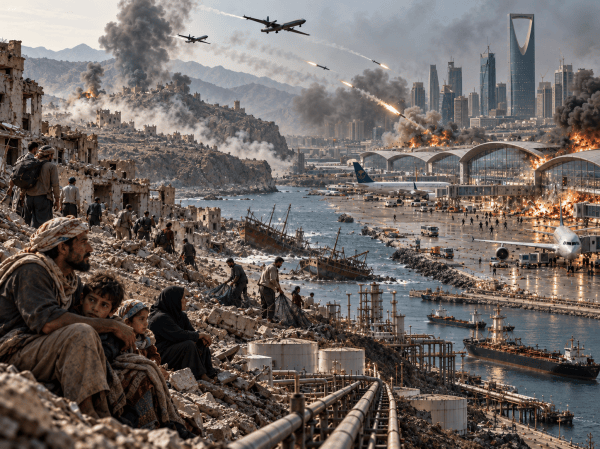
Saudi Arabia spent years bombing Yemen into ruin, only to confront a resistance capable of threatening the airports, trade routes, and investments sustaining its own economic ambitions. Behind the New York Times’ portrait of a vulnerable crown prince lies a century of struggles over Yemeni land, labor, sovereignty, and foreign domination. From grassroots development and migrant remittances to destroyed farms, contested oilfields, and imperial military assistance, this excavation exposes the material forces driving the conflict. The war Saudi Arabia tried to contain beyond its borders now threatens its capitalist transformation, while Yemen’s struggle for independence remains unfinished.
Big Brother, Meet the Working Class: Who Actually Rules Under Socialism?
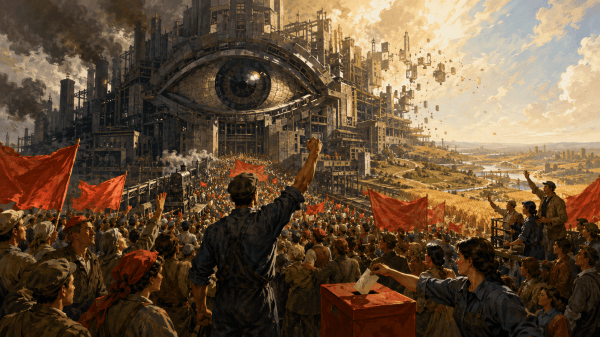
Capitalist democracy, while appearing politically equitable, safeguards bourgeois interests by leaving the means of production in elite hands. The proletarian revolution aims to dismantle this class dominance, yet it often gives rise to a new set of tensions within the ruling apparatus. Historical examples from Lenin's Soviet Union to Mao's China show that the transfer of power must be constantly defended against bureaucratic detachment. Yugoslavia's self-management experiment illustrates the struggle for genuine worker control, revealing that even radical reforms can’t bridge gaps between individual workplace democracy and broader economic coordination. Ultimately, socialism must evolve toward a society where its ruling structures diminish as proletarian power matures.
The Runway Is Lao: Washington Still Thinks It Owns the Sky
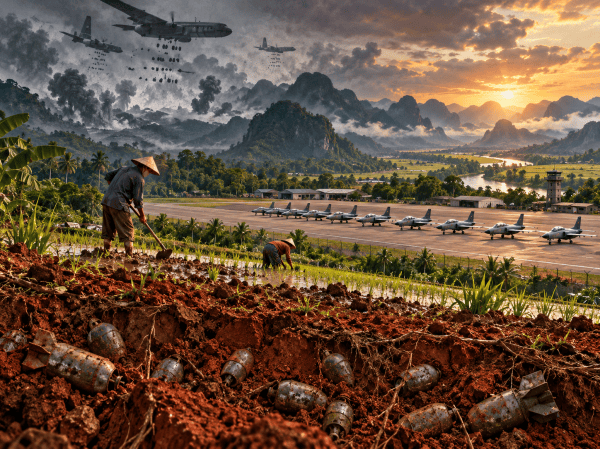
Eight small military jets at a joint Chinese-Lao training facility become a looming threat in The New York Times, while Laos’ sovereignty and revolutionary history disappear behind Washington’s geopolitical anxieties. Beneath the runway lies the legacy of American covert warfare, colonial devastation, and a socialist-rooted state struggling to build its productive and defensive capabilities. China’s cooperation offers genuine opportunities for national development while exposing contradictions involving debt, labor, land, and economic dependence. Weaponized Information excavates the imperial narrative to reveal the deeper struggle over material sovereignty, working-class interests, and the right of oppressed nations to determine their own future.
The Creature Was Capitalism: G. Edward Griffin, Jekyll Island, and the Federal Reserve
G. Edward Griffin's "The Creature from Jekyll Island" attempts to unmask a so-called conspiracy by banking elites undermining capitalism. Yet, beneath his theories lies an unsettling truth: Griffin exposes the inherent flaws of capitalism while futilely attempting to defend it. His narrative highlights systemic financial abuses and government collusion, ultimately diverting the anger away from the capitalist system itself and scapegoating collectivism instead. By romanticizing a nonexistent capitalist golden age, he veils the violent realities of dispossession and exploitation that built America. Instead of dismantling the oppressive structures underpinning capitalist domination, Griffin's solution ironically calls for a purer capitalism, perpetuating the very cycles of exploitation he critiques.
The Oil Is Venezuela’s: The Reconstruction May Not Be
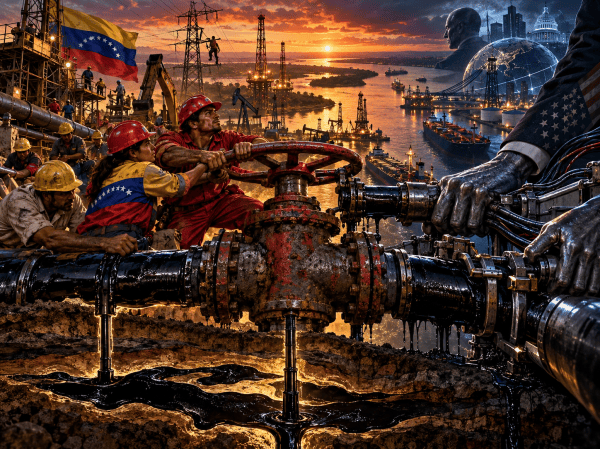
Venezuela's oil industry is a battleground for control, pitting national sovereignty against foreign interests. As international investors, backed by Washington, look to exploit Venezuela's vast oil wealth, a critical question emerges: who will truly benefit from the revival of this industry? The country desperately needs investment to recover from years of sanctions and mismanagement, yet this dependency raises alarms about fostering new forms of dominance. The struggle isn't just for ownership of resources but for command over the processes that translate crude oil into societal wealth. As the West's wager intensifies, the stakes rise for both Venezuela and its people.
Faster Than Judgment: NATO’s AI War Machine and the Nuclear Clock
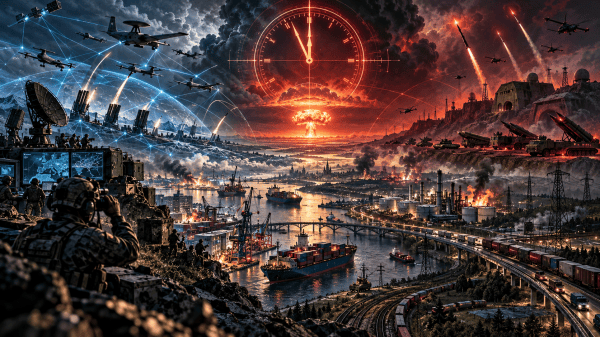
NATO's new "Theory of Victory" promises a tech-driven response to potential Russian aggression, yet it emerges from decades of military buildup and strategic EU burden-sharing. Integrating drones and AI threatens to shorten the gap between threat detection and lethal action, reshaping budgets and industry for constant readiness. This arms race with Russia underlines a historical imbalance without resolving underlying tensions, creating a perilous contradiction: as NATO pursues rapid strike capabilities, the risk of nuclear catastrophe escalates. The faster the machinery of war moves, the closer we edge toward a catastrophic misstep that could obliterate us all.
The Bunker Needs a State: End Times Fascism and the Class Machinery Behind the Gate
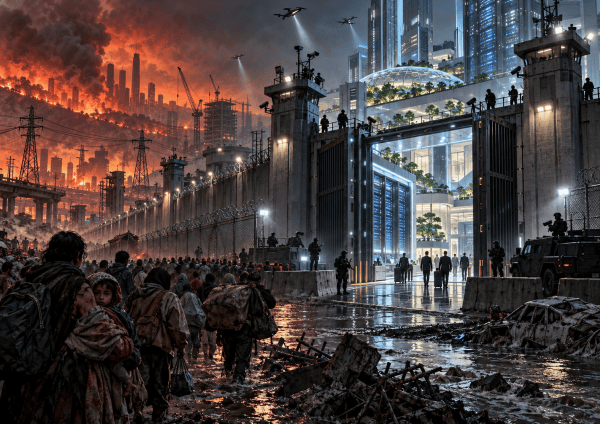
Naomi Klein and Astra Taylor's exploration reveals a chilling reality: a ruling class now reconciled with catastrophe, believing individual salvation lies in their wealth's capacity to buy security. Their book dissects the convergence of Big Tech, military might, and the capitalist state—a recipe for "technofascism" that shapes survival into a privilege reserved for the elite. As apocalyptic ideologies morph into a rationale for inequality, they argue against passive acceptance of a world where privilege fortifies walls while others suffocate outside. True resistance lies not in mere survival, but in collective power that demands ownership of the systems and resources shaping our future.
The War Built the Border: Sudan’s Partition Before the Ceasefire
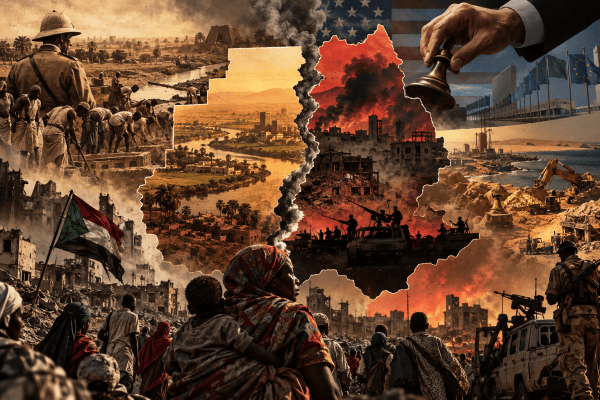
The War Built the Border: Sudan’s Partition Before the Ceasefire This essay argues that Sudan’s threatened partition didn’t begin with Washington’s latest ceasefire proposal. It traces the crisis through British colonial extraction, unequal development, Western creditor power, military accumulation, and the unfinished struggle opened by the December Revolution. As SAF and RSF turned on each other, war hardened front lines into rival economies, institutions, and systems of rule. The ceasefire therefore confronts a division already being built rather than creating it from nothing. Beneath the armies and foreign diplomacy, Sudanese civilian networks continue defending another basis for sovereignty rooted in the people who keep the country alive.
The Flag Is Sovereign, the Account Isn’t: UNGA 81 and the Power Beneath the Podium
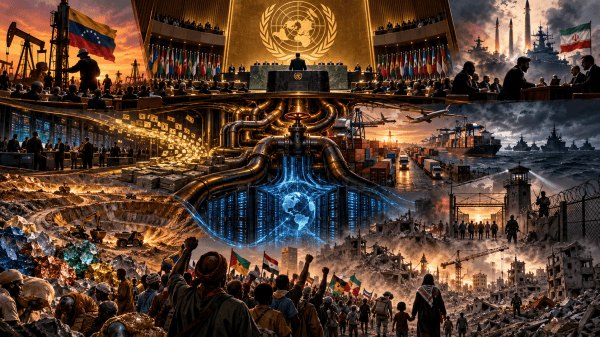
UNGA 81 looked like a week of separate crises: Palestine, Iran, Venezuela, artificial intelligence and China. Beneath the speeches, however, each exposed the same unfinished contradiction between formal sovereignty and the unequal material power needed to make sovereignty real. Gaza’s reconstruction, Venezuela’s oil revenues, Iran’s negotiations under coercion, and the Global South’s struggle for technological capacity all reveal how finance, property, military force and infrastructure shape what legal equality can actually deliver. The summit’s real story wasn’t only what leaders said from the podium, but who still controls the machinery that gives those words weight.