Socialism Without Revolution: Jacobin’s Market Fantasy Against the Socialist World

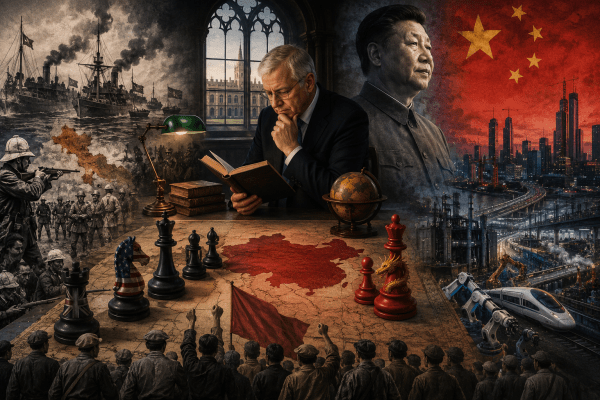
Bhaskar Sunkara’s market socialism is a bold yet flawed vision that naively overlooks the burdens of imperialism. He critiques past socialist models while proposing that worker-run firms can flourish within a system still embedded in capitalist exploitation. However, the reality is that these worker enterprises would still rely on the global hierarchy that upholds imperial advantages. A true socialist awakening must reject these inherited structures and demands an anti-imperialist framework instead. Without confronting the realities of colonial legacies and ensuring reparative relations, Sunkara’s proposal risks socializing the benefits of imperialism while maintaining its oppressive mechanisms intact.

From Yan’an to Shenzhen: How China Forged Socialism Through Concrete Contradiction

China’s revolutionary saga obliterates the Cold War illusion of socialist states as mere Soviet puppets. Through peasant uprisings and intricate political maneuvers, China redefined socialism amidst imperial oppression, transforming from a colonial victim to a technological titan without abandoning Communist rule. The narrative that constraints socialism to a Soviet mold collapses under China’s rich history of adaptation to its unique tumultuous reality. China’s evolution showcases socialism as a living pursuit aimed at sovereignty and rejuvenation, not dogmatic adherence. The experiences of struggle, experimentation, and resilience reflect a deep understanding: socialism thrives on continuous reimagining, not imitation.

The Blockade’s Market Miracle: How Washington Starves Cuba, Then Calls the Hunger Socialism

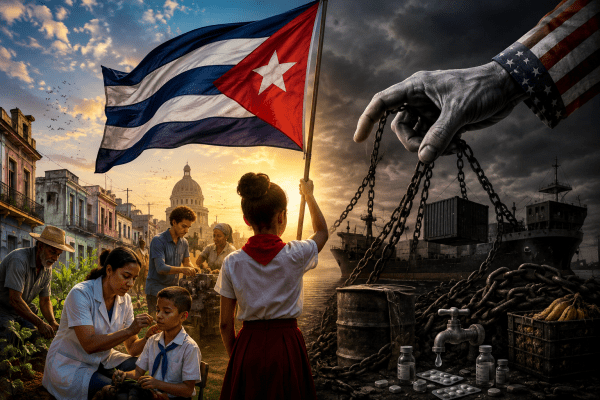
CBS/AFP’s portrayal of Cuba’s recent economic reforms is less about facts and more about constructing a narrative that favors imperialism. Framing these reforms as desperate "free-market" concessions, the article ignores the U.S. blockade's true role in choking Cuba's economy while painting socialism as a failed ideology. This reporting reduces complex realities into a morality tale that absolves the U.S. of accountability, instead distilling Cuba's struggles into proof of its socialist inadequacy. Ultimately, the real story is one of resilience: a nation striving for autonomy amid relentless imperial domination, desperately attempting to balance limited market adaptations without surrendering sovereignty.

China Locked the Vault: Wall Street Weeps for the Investor It Wanted to Recruit

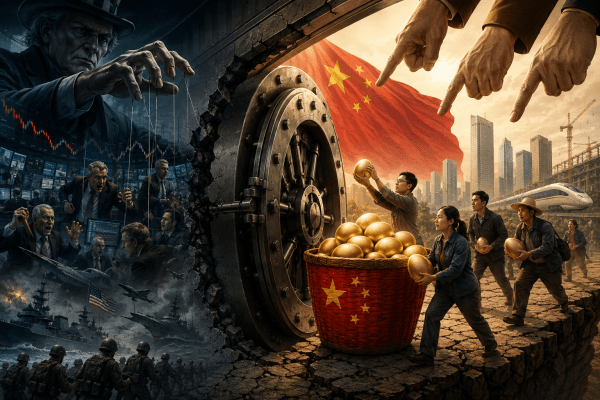
The New York Times portrays China's financial regulations as a morality tale of oppressed investors yearning for capital freedom, framing Beijing's restrictions on overseas investments as authoritarian repression. However, this narrative conveniently ignores China's struggle against capital flight amidst geopolitical tensions with the U.S. The real story is about defending national wealth from draining into imperial circuits while promoting domestic stability and development. This distortion of capital mobility as individual freedom obscures the broader implications of wealth dispersing into an adversarial financial system. The moral panic surrounding investor frustrations reveals a deeper conflict: the sovereignty of a nation versus the whims of financial capital.

Marx in the Witness Box: How Jacobin Turns a Chinese Worker’s Wounds Against the Revolution

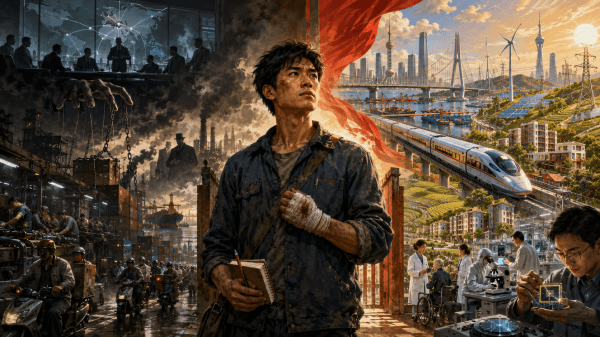
Jacobin's critique of Chinese worker Xiao Hai's memoir misrepresents the entire Chinese Revolution as a failed experiment based on exploitation. While Xiao Hai's story merits recognition, the narrative frames the factory's plight as representative of the whole nation, ignoring China's transformation from a colonial past into a sovereign socialist state. The real conflict lies not between the state and its workers, but rather over how the fruits of development serve the people's dignity versus capital's control. Exploitation exists, but it's the state that counters this with public power, proving not every wound validates Western perspectives of failure. Thus, the critique deflects from recognizing China's unique developmental trajectory amid global capitalism's inequities.

Keeping to the Socialist Path: Laos, China, and the Machinery of South-South Development

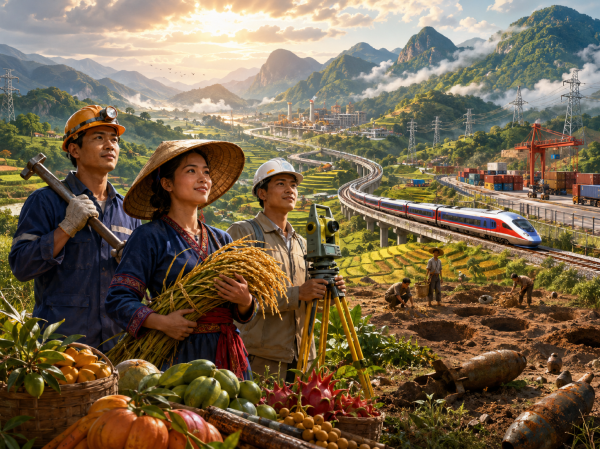
The June 2026 Laos-China state visit unfolded as a significant convergence between two socialist nations navigating their intertwined ambitions amid a capitalist-imperialist world. Rather than surrendering to the narrative of a “debt trap,” Laos and China embraced a collaboration marked by political intent, evidenced in thirty-two agreements across sectors like agriculture and technology. This partnership aims to transform Laos into a self-sufficient state, guided by its revolutionary history. The imperial media, however, conveniently ignored this cooperation, as it undermines their narrative of helpless nations. Laos, now reclaiming agency, is no longer portrayed as a mere victim but as a sovereign actor defining its path to development.

RED MACHINES, BLACK MIRRORS: AI, EMPIRE, AND THE NEW LONG MARCH AGAINST CAPITALISM

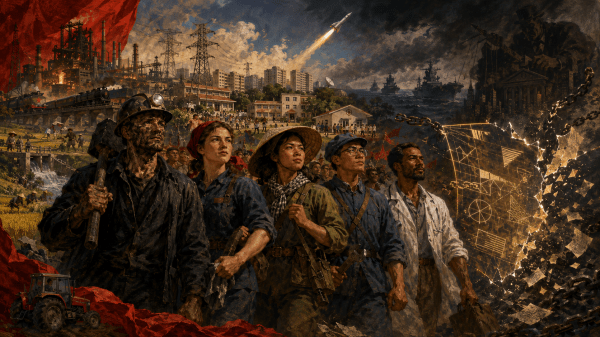
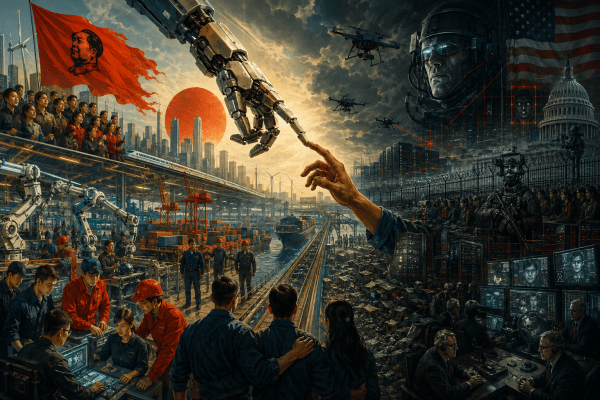
China's transformation from a mere assembly line to a powerhouse of intelligent manufacturing signals a seismic shift that threatens to dismantle the Atlantic monopoly on industrial command. As the U.S. responds with sanctions and technological blockades, the real battle unfolds over who controls the future of AI and automation. This is not merely an economic transition; it's a clash of ideologies. The West fears a new geopolitical order where technological sovereignty empowers the Global South, undermining imperial hierarchy. While intelligent manufacturing holds the potential for collective liberation, unchallenged monopoly control risks deepening exploitation. The future demands that humanity wrests command from corporate hands, reshaping technology for collective progress.

Failure According to Whom?: Rewriting the Metrics of Socialism

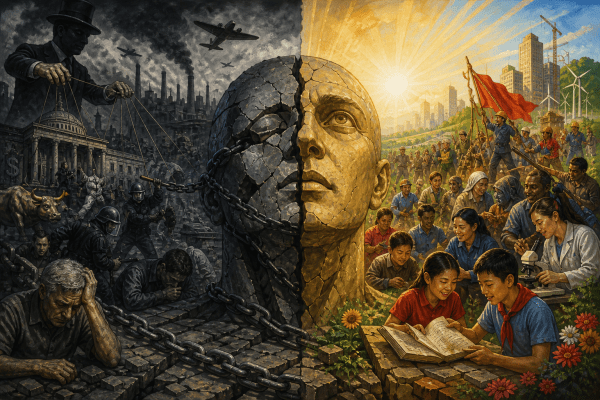
The pervasive claim that socialism has "failed" is an ideological construct rather than a factual statement. A closer analysis reveals that socialist systems, from the Soviet Union to China, achieved measurable gains in education, health, and economic development under dire conditions. This narrative of failure is not supported by historical evidence but rather is a product of a century-long ideological war against socialism. Capitalism, meanwhile, perpetuates crises, inequality, and social fragmentation, failing to meet human needs. The real question is not why socialism fails, but how it has transformed societies when confronted with immense challenges, challenging the ruling narrative that defines success so narrowly.

The Return of the State: How Industrial Policy Became a Weapon of Global Power

An emerging “consensus” around industrial policy masks a deeper ideological project disciplining development within the boundaries of global capital. The material reality reveals a world defined by subsidy wars, coercion, and uneven development, where state intervention is already reshaping the global economy. China stands at the center of this contradiction as a socialist-led state navigating... Continue Reading →

From Imperial Plunder to Socialist Possibility: Capitalism, Dependency, and the Road to Sovereign Development

Development is not a neutral path but a historical process forged through conquest, extraction, and domination. Underdevelopment is not a failure to advance, but the condition produced by integration into a world system structured by imperial power. As the crisis of global capitalism deepens and the space for sovereign maneuver widens yet destabilizes, nations are... Continue Reading →

Website Powered by WordPress.com.

Up ↑