The New York Times’ China Guy: How Kevin Rudd Manufactures an Imperial Xi Jinping
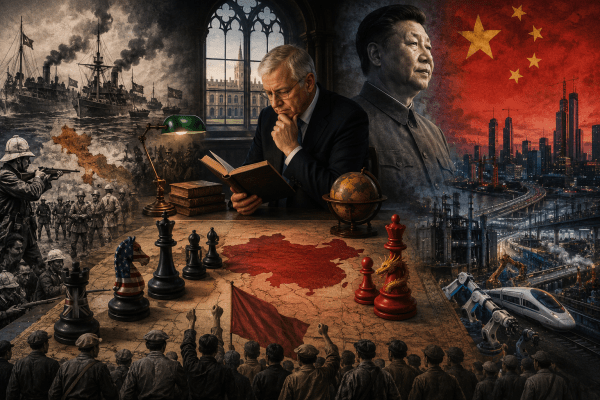
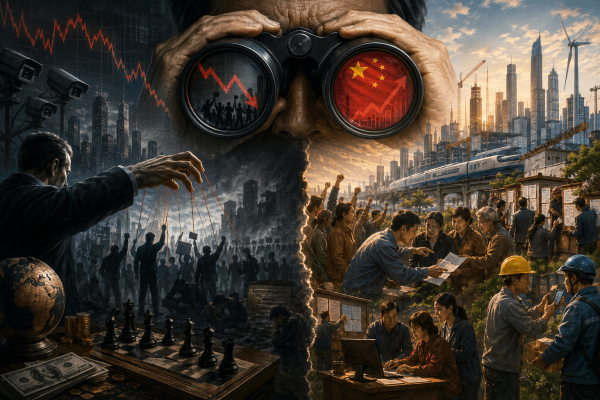
The New York Times promises to explain what Xi Jinping wants, but its interview with former Australian Prime Minister Kevin Rudd performs a far more revealing task: it manufactures imperial expertise while burying the history that produced modern China. Through credential laundering, great-man theory, the caricature of Marxism, and the erasure of colonialism, China is reduced to the psychology of one leader instead of understood as the product of revolution, socialist construction and a century-long struggle against imperial domination. This Weaponized Propaganda Excavation dismantles the interview piece by piece, exposing how liberal media transforms ideology into common sense while presenting it as objective analysis.

China’s Missing Protests: How Bloomberg Turns Workers’ Grievances into Investor Intelligence

Bloomberg turns a decline in documented protests into evidence of a hidden political crisis, relying on a US-backed monitoring project whose methods cannot support such sweeping conclusions. By collapsing wage disputes, housing conflicts, petitions, and local administrative complaints into the single category of “dissent,” the article strips Chinese grievances of their concrete class content. It also ignores the institutions through which millions of people pursue redress and reduces China’s political system to a Cold War caricature. The result is not a serious account of Chinese society, but investor intelligence: workers appear only as risks to accumulation, while the real struggle over socialism’s direction disappears.

The Guardrails Are a Cage: AI, Surplus Humanity, and the Technofascist State

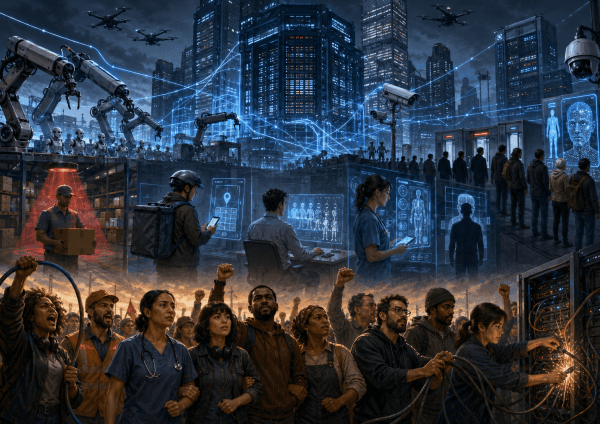
Hundreds of economists warn that artificial intelligence could displace millions of workers, but their petition mistakes a ruling-class offensive for a technical oversight. AI is already being used to reduce workforces, intensify surveillance, automate discipline, exclude applicants, restrict public benefits, and strengthen military and counterinsurgency systems. The real danger is not that machines may escape human control, but that monopoly capital is using them to reduce its dependence on labor while expanding the apparatus needed to manage those it renders surplus. Against this technofascist future, workers are organizing to seize control over deployment, data, productivity, and power.

The Lawyers of the Counterrevolution: How Nicaragua Is Dismantling the Infrastructure of Imperial Power

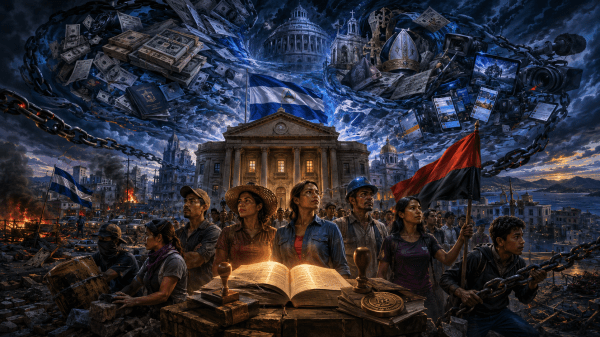
The Associated Press presents Nicaragua’s removal of lawyers from the professional registry as another unexplained authoritarian crackdown. This essay reconstructs the deeper reality: a post-2018 Sandinista counter-subversion campaign aimed at the foreign-funded NGO, media, ecclesiastical, expatriate, financial, and legal networks the government believes helped organize the attempted coup. Lawyers and notaries matter because they give those networks legal continuity through contracts, properties, associations, donations, and powers of attorney. Nicaragua has the right to dismantle imperial infrastructure, but revolutionary sovereignty must still distinguish proven subversion from ordinary legal practice through transparent evidence and popular accountability.

Communists and Patriots: The Flag, the Class, and the Lie of Imperial Nationalism

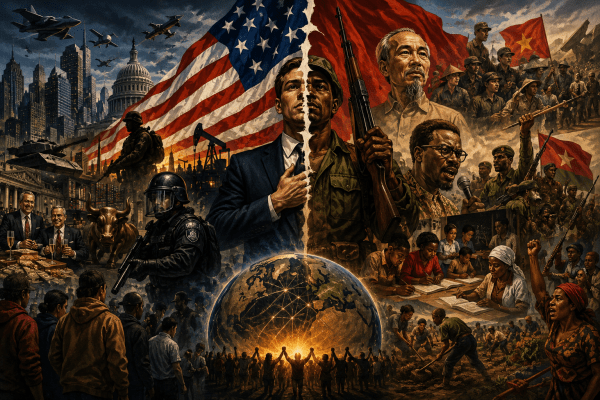
Trump says you can be a communist or a patriot—but not both. This essay exposes the historical fraud buried inside that slogan. By reconstructing the nation through historical materialism, it shows that nationalism has never possessed a fixed political content. In oppressed nations, communists repeatedly became the truest patriots because the struggle for national liberation demanded the overthrow of colonialism, imperialism, and comprador rule. In imperialist nations, however, nationalism serves the opposite function: binding workers to the ruling class and its global system of domination. The real contradiction is not between communism and patriotism, but between imperial patriotism and the liberation of the people.

The National Question Under Siege: How the New Cold War Weaponizes China’s Ethnic Contradictions

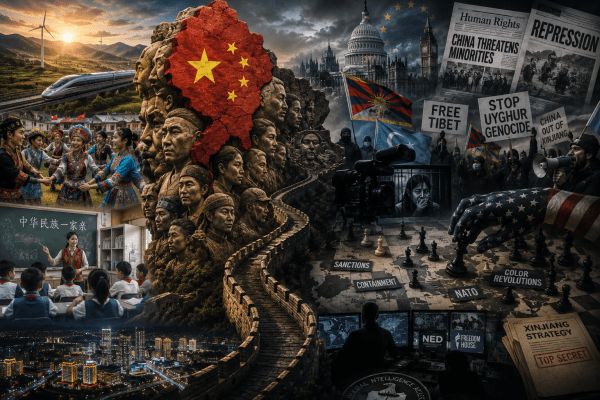
The New York Times frames China’s ethnic unity law as a blatant act of repression against minorities, echoing a Cold War moral narrative. Yet, this interpretation overlooks the historical and political complexities faced by a socialist state trying to maintain unity amidst the legacies of imperialism and foreign interference. The law seeks to counteract separatism and assert national sovereignty, but critics argue it risks bureaucratic assimilation of diverse ethnic identities. Ultimately, the struggle over the national question lies not in simplistic moral judgments, but in addressing imperialism's manipulative strategies while safeguarding genuine autonomy and cultural integrity within China's socialist framework.

Socialism Without Revolution: Jacobin’s Market Fantasy Against the Socialist World

Bhaskar Sunkara’s market socialism is a bold yet flawed vision that naively overlooks the burdens of imperialism. He critiques past socialist models while proposing that worker-run firms can flourish within a system still embedded in capitalist exploitation. However, the reality is that these worker enterprises would still rely on the global hierarchy that upholds imperial advantages. A true socialist awakening must reject these inherited structures and demands an anti-imperialist framework instead. Without confronting the realities of colonial legacies and ensuring reparative relations, Sunkara’s proposal risks socializing the benefits of imperialism while maintaining its oppressive mechanisms intact.

From Yan’an to Shenzhen: How China Forged Socialism Through Concrete Contradiction

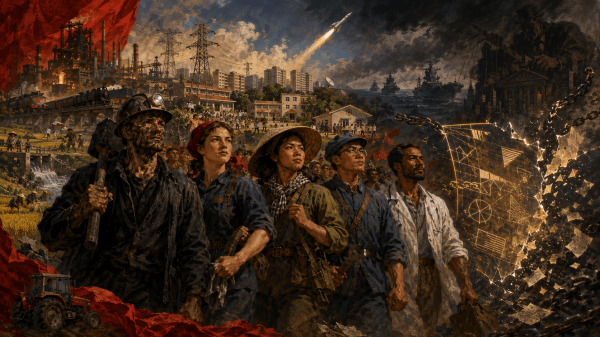
China’s revolutionary saga obliterates the Cold War illusion of socialist states as mere Soviet puppets. Through peasant uprisings and intricate political maneuvers, China redefined socialism amidst imperial oppression, transforming from a colonial victim to a technological titan without abandoning Communist rule. The narrative that constraints socialism to a Soviet mold collapses under China’s rich history of adaptation to its unique tumultuous reality. China’s evolution showcases socialism as a living pursuit aimed at sovereignty and rejuvenation, not dogmatic adherence. The experiences of struggle, experimentation, and resilience reflect a deep understanding: socialism thrives on continuous reimagining, not imitation.

The Hunger Chain: How Trump Feeds Capital and Disciplines the Hungry

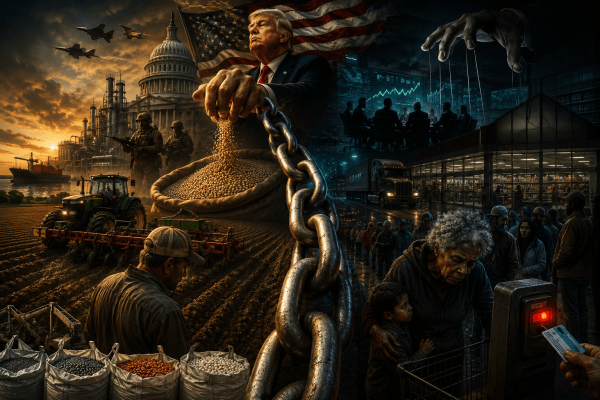
In a striking reveal, Fox celebrates Trump's fertilizer emergency as a boon for farmers, yet this facade obscures the underlying fragility of our food system reliant on state intervention. While fertilizer access gets prioritized, the true cost is hidden: a monopolized market where agribusiness thrives as workers face hunger, suspicion, and administrative punishment. Trump's regime twists food security into a mechanism for capital gain, revealing a stark disparity in state response; when profit is threatened, intervention is swift, but when workers struggle for sustenance, they face scrutiny. The urgent call is for food power—community sovereignty, mutual aid, and a radical rethinking of food as a right, not a commodity.

No Freedom Without Power: Machiavelli, Rome, and the Republic Built on Ruins

Machiavelli’s The Discourses is not a genteel treatise on republican ideals but a gritty how-to on wielding power from the depths of defeat. This work confronts the myth of liberal innocence, asserting that liberty arises not from consensus but through chaos, violence, and organized resistance against domination. Machiavelli's insights expose the harsh realities of historical conflict and the necessity of institutional discipline, emphasizing that true power is built on struggle, not sentiment. Yet, amidst its rich lessons, The Discourses reveals a troubling contradiction: the same republic that fosters internal liberty thrives through imperial conquest and exclusion. This duality beckons revolutionaries to seize its pragmatic lessons while rejecting its imperial legacy.

Website Powered by WordPress.com.

Up ↑