Cop City Is the Counterinsurgency Campus: How “Antifa” Became the New Name for the Old Domestic Enemy
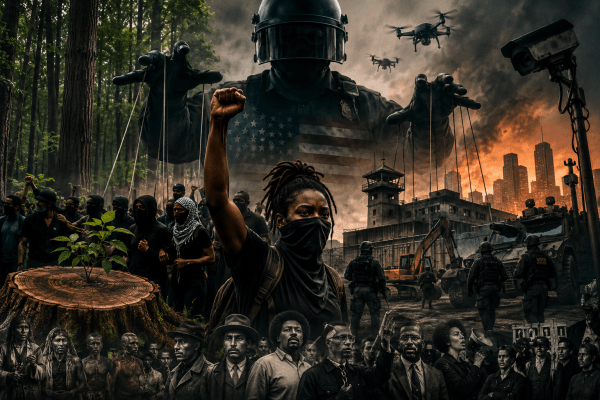
The Guardian's coverage of Trump's "antifa" prosecutions highlights a covert escalation of systemic repression rather than the emergence of a new threat. While it depicts the federal indictment against Cop City protesters as a shocking maneuver, this is merely the latest play in a long history of state-sponsored violence rooted in colonialism, slavery, and counterinsurgency tactics. The narrative frames Trump as the villain while obscuring the entrenched architecture of oppression that transcends his administration. The real battle lies in organizing effective resistance, connecting various social justice movements, and building robust defense mechanisms amidst a climate poised for increasing militarization and legislative warfare against dissent.

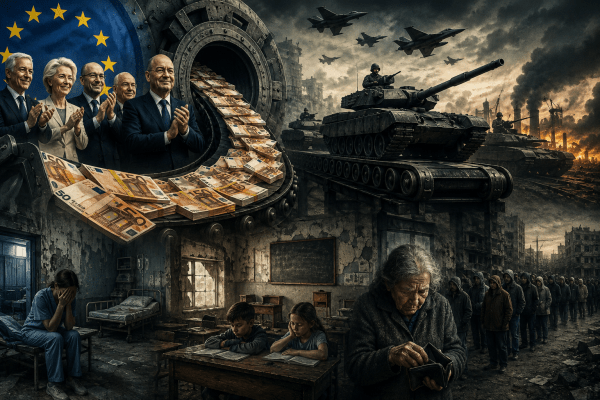
The Arsenal Is Late: Europe’s Ruling Class Discovers There Is Always Money for War

Deutsche Welle cleverly disguises Europe's urgent rearmament as a procurement issue, distracting from the stark reality of militarization overtaking public life. The article's real message isn't about the delays in weapon delivery, but rather the easing of governmental budgets for defense while essential services wither under austerity. It reveals an empire tightening its grip under NATO's command, where social welfare takes a back seat to military expenditure. This narrative won't invite questions about people's needs, but rather about how to improve efficiency in arms production. The specter looms: the increasing normalization of a military-first economy must be resisted, as it's not merely about security, but the reorganization of society around war.

The Empire’s Cheapest Deputies: How Liberal Media Turns White-Worker Disillusionment Into Political Defeat

The Guardian correctly rejects the liberal fantasy that MAGA is merely “economic anxiety,” but it turns a crack in the settler bargain into a locked door. Trump 2.0 is not the grassroots program of white workers but the ruling-class recalibration of labor discipline, border terror, tariff nationalism, and imperial decline. The racial wage remains real,... Continue Reading →

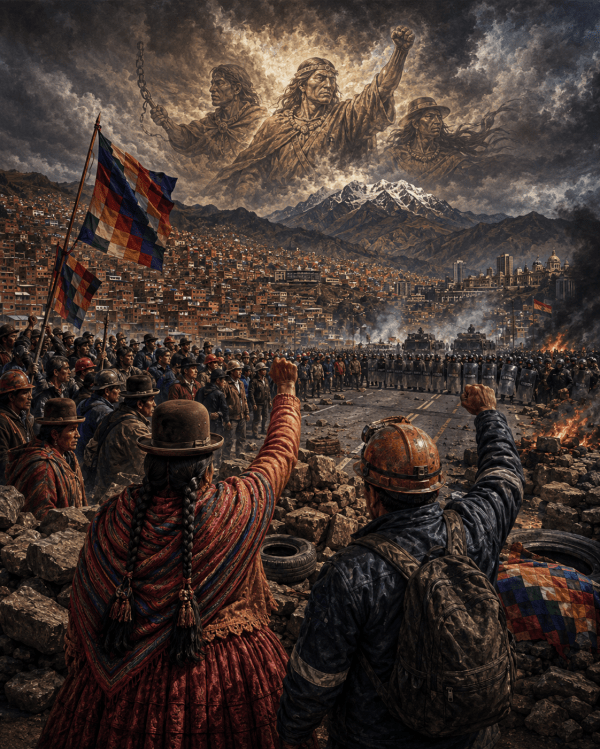
The Roads Remember Túpac Amaru: Jacobin Calls Popular Power a Vacuum

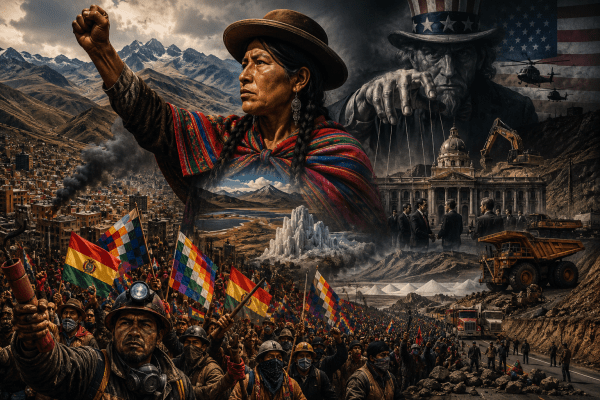
Bolivia is experiencing a seismic shift, as the indigenous and working-class masses rise against a government they see as complicit with imperial interests and corporate power. Jacobin's portrayal of this struggle as chaotic “political vacuum” fails to grasp the reality: the people are not absent from politics; they are reclaiming agency. While the ruling class laments blocked roads and instability, they ignore the genuine political force being forged by those occupying them—workers, campesinos, and indigenous communities asserting power where previously silenced. The barricades are not just obstacles; they symbolize resistance against commodification and repression, signaling a reawakening of history in the fight for sovereignty and justice.

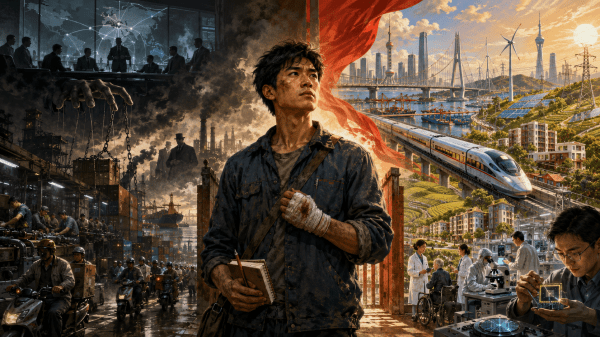
Marx in the Witness Box: How Jacobin Turns a Chinese Worker’s Wounds Against the Revolution

Jacobin's critique of Chinese worker Xiao Hai's memoir misrepresents the entire Chinese Revolution as a failed experiment based on exploitation. While Xiao Hai's story merits recognition, the narrative frames the factory's plight as representative of the whole nation, ignoring China's transformation from a colonial past into a sovereign socialist state. The real conflict lies not between the state and its workers, but rather over how the fruits of development serve the people's dignity versus capital's control. Exploitation exists, but it's the state that counters this with public power, proving not every wound validates Western perspectives of failure. Thus, the critique deflects from recognizing China's unique developmental trajectory amid global capitalism's inequities.

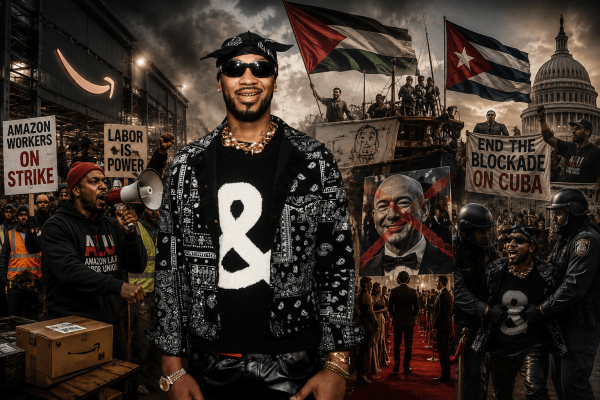
They Called It Ego: Jacobin, Chris Smalls, and the Policing of Black Anti-Imperialist Labor

Chris Smalls, once heralded as a labor hero, now finds himself a casualty of overblown ego in the eyes of Jacobin. Yet, this portrayal dangerously obscures a deeper truth: his evolution from solely confronting Amazon to advocating for Palestinian and Cuban solidarity reveals an unsettling fear among the respectable Left. They're comfortable with labor militancy as long as it remains contained and domesticated; once it branches into anti-imperialism, they recoil. Smalls symbolizes a challenge to the status quo, an unfiltered confrontation with empire that threatens to redefine labor politics as an international struggle. In essence, the fear of a Black worker embracing a global perspective exposes the fragile backbone of contemporary Leftist thought.

Bull Market, Broke People: The Stock Market’s Good News Is the Working Class’s Bad Joke

As markets soar, the majority of households are trapped in economic despair, cutting back on spending as essential prices rise and wages stagnate. The AP's analysis of "consumer confidence" reveals a grotesque class divide—where the wealthy thrive and the working class suffers under burdens of debt and inflation. This narrative cleverly masks the structural inequalities, framing economic distress as mere sentiment rather than a blatant symptom of a system rigged in favor of capital. The urgent call to action is clear: workers must unify and transform their economic plight into organized class power, recognizing that genuine change requires confrontational strategies, not empty optimism.

Cocaine Cowboys and Lithium Indians: Bolivia, the Monroe Doctrine, and the Return of the Colonial Republic

Bolivia is ablaze, but The New York Times misses the mark, framing protests as mere chaos ignited by a presidential betrayal. The truth is far more profound: a collision of historical projects poised for supremacy. Behind the unrest lies a struggle against neocolonial forces, with President Paz's agrarian reforms threatening Indigenous and campesino sovereignty. The culprits are not just disenfranchised voters but a systematic push toward resource extraction and imperialism. The uprising is a collective cry not just for policy change but for self-determination, land rights, and a unified front against re-colonization. The narrative must shift from superficial crisis to deep-rooted rebellion.

RED MACHINES, BLACK MIRRORS: AI, EMPIRE, AND THE NEW LONG MARCH AGAINST CAPITALISM

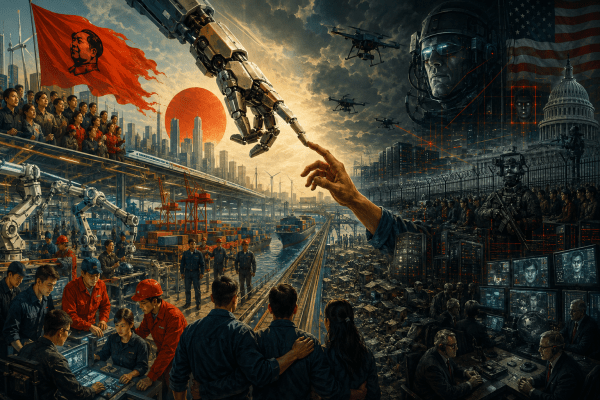
China's transformation from a mere assembly line to a powerhouse of intelligent manufacturing signals a seismic shift that threatens to dismantle the Atlantic monopoly on industrial command. As the U.S. responds with sanctions and technological blockades, the real battle unfolds over who controls the future of AI and automation. This is not merely an economic transition; it's a clash of ideologies. The West fears a new geopolitical order where technological sovereignty empowers the Global South, undermining imperial hierarchy. While intelligent manufacturing holds the potential for collective liberation, unchallenged monopoly control risks deepening exploitation. The future demands that humanity wrests command from corporate hands, reshaping technology for collective progress.

Stars, Stripes, and Holy Water: How a Dying Empire Learned to Pray Again

The Rededicate 250 rally manifests an America grappling with its imperial decline, revealing the ruling class’s desperation to fuse nationalism with spirituality. Beneath the spectacle of Christianity cloaked in patriotism lies a profound social crisis fueled by economic insecurity and political fragmentation. This event serves as a liturgy for a faltering empire, seeking to stabilize itself through divine deception, while conveniently ignoring the historical injustices it thrives upon. Critics alarmingly diminish the event's significance, merely framing it as religious overtone, while the deeper threat is a political theology exacerbating class power dynamics and moralizing imperial oppression. As the empire crumbles, the call for authentic solidarity becomes paramount.

Website Powered by WordPress.com.

Up ↑