The Miracle Was Supposed to Take Orders: South Korea and the Contradiction of American Power
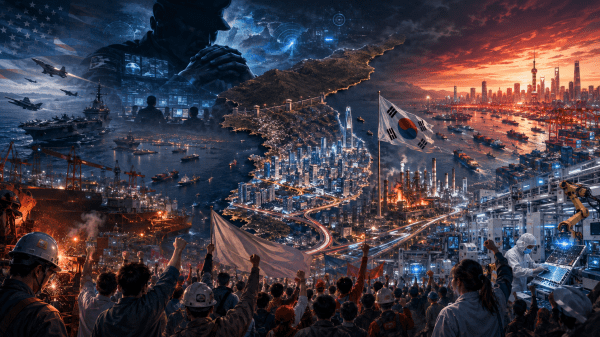
South Korea’s “miracle” didn’t fall from the fucking sky. It was built through war, U.S. occupation, anti-communist repression, Japanese capital, state-directed development, disciplined labor and a regional imperial order designed to make capitalism look victorious against socialism. But the contradiction is vicious: the same system built Korean industry strong enough to become indispensable, produced workers powerful enough to break dictatorship, and tied Korean accumulation into an Asian economy increasingly centered on China. Now Washington wants the miracle to keep taking orders—more weapons, more shipyards, more investment, more war preparation. The problem is South Korea ain’t the weak frontier state it used to be.

The Revolution Must Keep Making Revolutionaries: Fidel Castro and the Fight Against Becoming a Monument

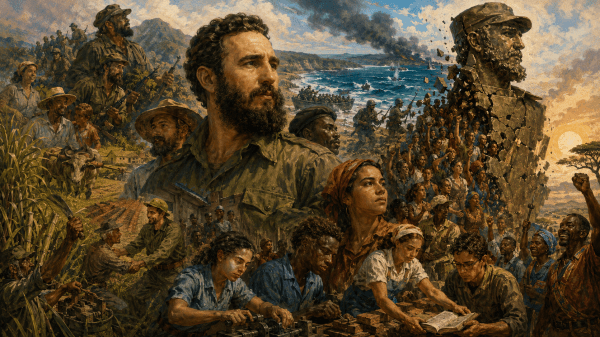
On the centenary of Fidel Castro's birth, his autobiography, My Life, acts as a provocative lens into the complexities of revolution. It dismantles the myth of the born revolutionary, showcasing instead how context, struggle, and learning forge warriors for change. Despite Cuba's successes, deep-rooted issues like racism and inequality persist, with Fidel warning that Cuba's most significant threat may not come from external forces but from within—its own inability to correct mistakes. As the Revolution ages, the pressing query remains: can it continually foster revolutionary consciousness amidst evolving contradictions or will it succumb to the complacency that often follows victory?

Tomorrow’s Russian Tank: How a Hypothetical War Rearms Europe Today

CNN warns that Russia could someday “test” NATO, but the military transformation supposedly justified by that future threat is already underway. Europe is being rearmed, civilian infrastructure reorganized for military mobility, and productive capacity redirected toward an expanding war economy as U.S. weapons stocks strain under commitments spanning Ukraine, Iran, Russia, and China. The deeper story is not a proven Russian timetable for invasion, but an American-centered imperial bloc confronting the rising cost of reproducing its military reach and hardening Europe as a Western Rear. What Russia could do tomorrow becomes the argument for what Europe must militarize today.

The Crime of Making Too Much: China and the Empire’s Monopoly on Abundance

The Economist's recent critique of China's industrial prowess reveals a deeper hypocrisy within Western narratives. While it acknowledges China's efficiency, it vilifies state-driven competition when it disrupts Western hegemony. The real issue is not overproduction but an imbalance of purchasing power, presenting an ugly tableau of warehouses filled with goods while people lack access. As China strives for self-reliance, the West's response is to impose tariffs and sanctions, prioritizing monopoly over equitable distribution. This conflict isn’t a mere economic dispute; it’s a struggle for who controls productive capacity. The question is whether to align production with human need or maintain the status quo of inequality.

The Divided Empire: Prashad, Buze and the Contradiction Between Hyper-Imperial Unity and Capitalist Rivalry

In a time when U.S.-led imperialism tightens its grip, nuanced debates emerge about the new American Pole—a daunting fusion of military, financial, and technological power that suppresses dissent while promising security. Vijay Prashad argues for a hyper-imperialism consolidating state control and aggressiveness against external defiance, while Özcan Buze highlights lingering national rivalries within the empire’s core. As cities devolve into ghost towns stripped of industry and sovereignty is commodified, the left is urged to unite struggles for worker power, national liberation, and social ownership. The empire’s contradictions must fuel a revolutionary response—a call to dismantle the machinery that perpetuates exploitation, rather than aspiring for a mere return to past privileges.

The Revolution Will Not Be Managed: Glen Ford, the Black Agenda, and the Missing Vehicle

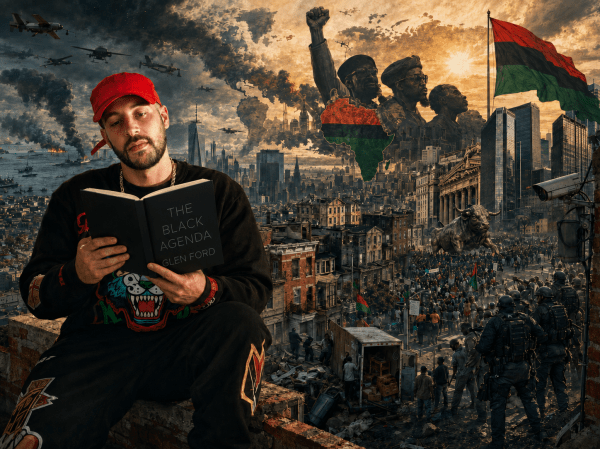
Glen Ford's incisive critique shatters the myth of American progress, revealing how conquest and exploitation are cloaked as success. He dissects the deceptive practices of the Black misleadership class and the Democratic Party, showing how they perpetuate capitalist interests while masquerading as champions of Black liberation. Ford demands a radical rethinking of power and accountability, advocating for community control and reparations, emphasizing that true self-determination lies in empowering marginalized voices. Amidst the pandemic and civil unrest, Ford’s legacy calls for a revolutionary movement capable of dismantling systemic oppression rather than settling for token representation. The fight is not just for visibility; it’s for genuine power.

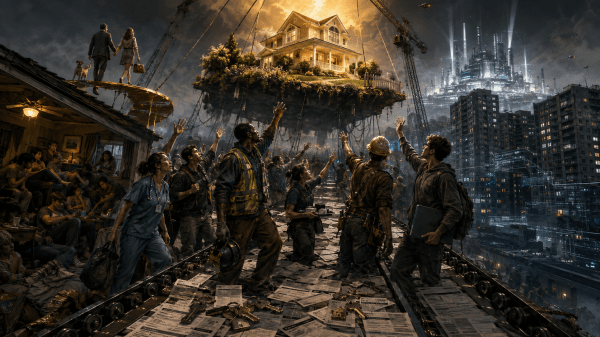
The Dream on Layaway: How Capital Repossessed American Adulthood

The "Great Postponement" isn't just about delayed dreams; it signals a devastating structural collapse for young adults trapped in a never-ending cycle of dependency and disempowerment. Despite holding jobs, many remain shackled to their parents' homes, unable to participate fully in adulthood due to spiraling rents and crippling inequality. The system deliberately obscures the true nature of this crisis, homogenizing individual struggles into mere statistics while upholding a status quo drenched in inherited privilege and racial disparity. The solution lies in organizing tenant unions and collective action—because waiting for change is no longer an option. The American Dream is not postponed; it's been stolen.

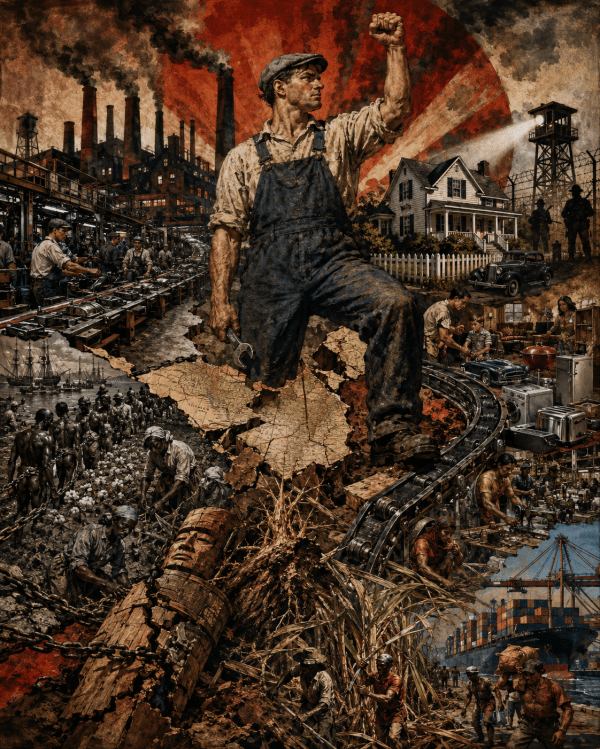
Not Every Worker Is Proletarian: J. Sakai, White Labor, and the Settler Bargain

J. Sakai's Settlers shatters the sanctified image of the white proletariat by exposing them as products of a colonial system built on genocide, conquest, and exploitation. He argues that white labor, while subjected to capitalist oppression, has historically defended the very empire benefiting from their privilege. The text dismantles the myth that suffering automatically leads to class solidarity or consciousness, instead positing that loyalty to the colonial project is rooted in material circumstances. Sakai's revisionist approach insists that genuine liberation cannot emerge from complicity in settler structures, challenging the Euro-American left's complacency and demanding a conscious, organized revolutionary defection from oppressive systems.

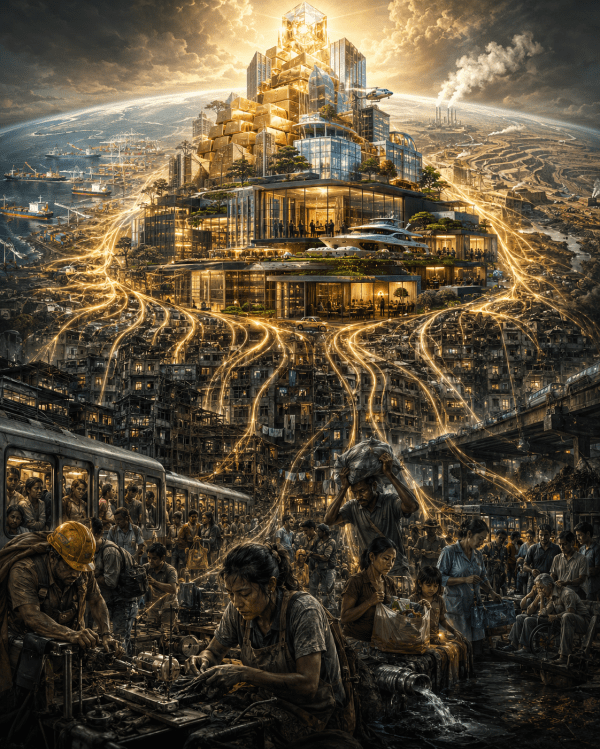
The World Got Richer, You Didn’t: Capitalism’s Quadrillion-Dollar Balance-Sheet Lie

Fortune says “global households” became $40 trillion richer in 2025. But when the richest 10 percent already own three-quarters of the world’s wealth, that headline is less a report than a magic trick. The new abundance came largely from rising equities, inflated asset values and expanding financial claims—not from productive investment or improved living standards. Behind the quadrillion-dollar balance sheet lies a system where private fortunes swell while public wealth stagnates, workers lose power, tenants lose security and the Global South services the debts of the imperial core. This is not shared prosperity. It is class power written in the language of accounting.

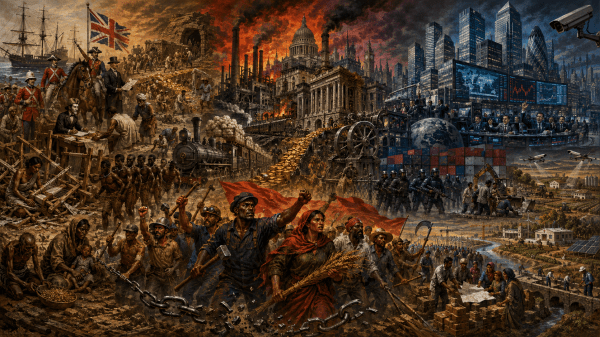
The Market Was Born with a Gun: Colonial Plunder, Neoliberal Rule, and the Worker-Peasant Road Beyond Capital

Utsa and Prabhat Patnaik’s groundbreaking analysis dismantles the myth that capitalism flourished independently within Europe, revealing a system intricately linked to colonial exploitation. They illustrate how colonialism not only financed European industrial growth but also perpetuated poverty and dependency in colonized nations. The authors articulate that capitalism's survival hinged on subjugating external economies. With the unraveling of colonial structures leading to depression and famine, they propose a radical rethinking of revolutionary potential through a worker-peasant alliance, emphasizing organized power as essential to dismantling capital's dominance. Ultimately, their work challenges the notion of capitalism's self-sufficiency, exposing its reliance on imperial mechanisms for survival.

Website Powered by WordPress.com.

Up ↑