Apples to Apples: Superexploitation from Orchards to iPhones
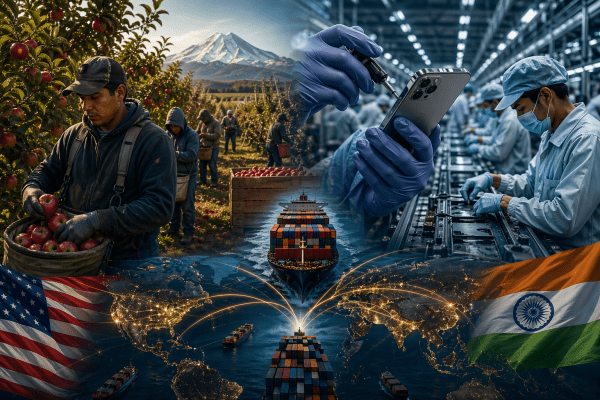
What appears to be a comparison between two unrelated commodities—apples picked in U.S. orchards and Apple devices assembled across the Global South—is in fact a comparison between two forms of the same capitalist-imperialist labor regime. In U.S. agriculture, superexploitation is organized through settler-colonial land relations, racialized migrant labor, H-2A dependency, deportability, and the broader coercive... Continue Reading →

Empire at the Doorstep: How the Narco War Becomes a License to Penetrate Sovereignty

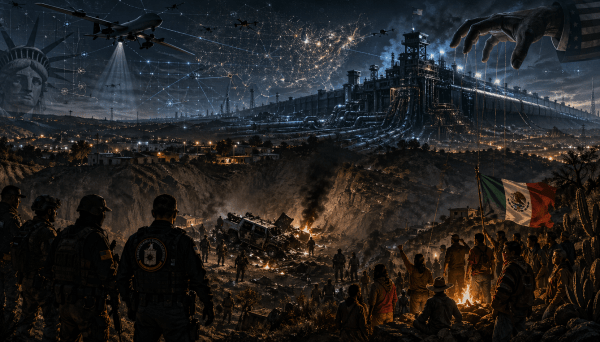
What appears as a tragic incident in Chihuahua is exposed as a carefully managed narrative that obscures the presence of foreign power operating inside Mexico. The factual record reveals a dense security architecture where intelligence, surveillance, and training pipelines blur the line between cooperation and control. Stripped of illusion, the episode reflects a deeper contradiction... Continue Reading →

Inside the House of Cards: How Empire Manages Crisis Through Memory, Civility, and Myth

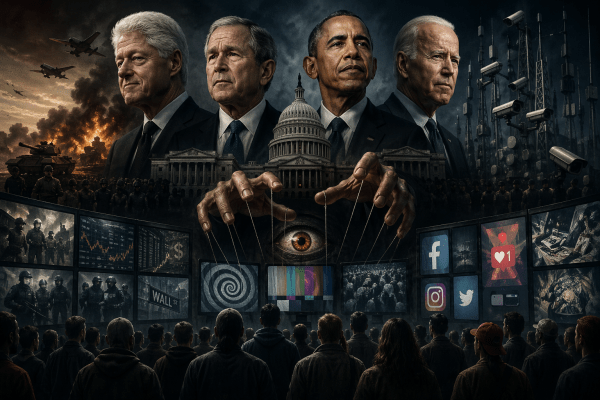
Four former presidents gather under corporate media lights to present democracy as a shared moral inheritance, grounded in unity, civility, and participation. Beneath that performance lies a material history of deregulation, war, surveillance, and repression that produced the very crisis now being discussed. The interview reveals not reflection, but a ruling-class effort to manage legitimacy... Continue Reading →

Concrete and Control: Imperial Media vs Sovereign Development in the China–Cambodia Energy Nexus

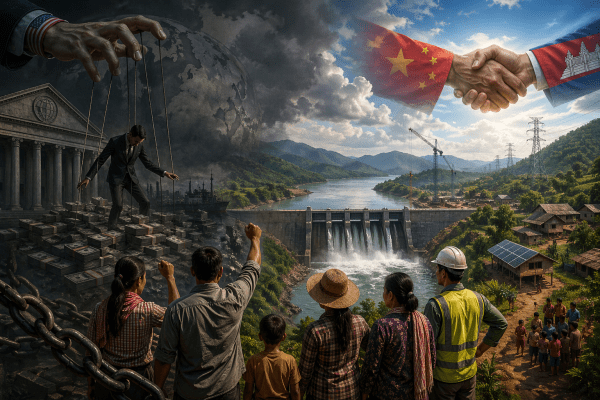
This essay excavates how Western energy media transforms a Cambodian hydropower project into a geopolitical morality play, recoding sovereign development as “Chinese influence.” It reconstructs the material reality beneath that narrative: fuel dependence, state planning, bilateral agreements, regional grid integration, and the political economy of infrastructure. It then reframes the project as a node in... Continue Reading →

The Return of the State: How Industrial Policy Became a Weapon of Global Power

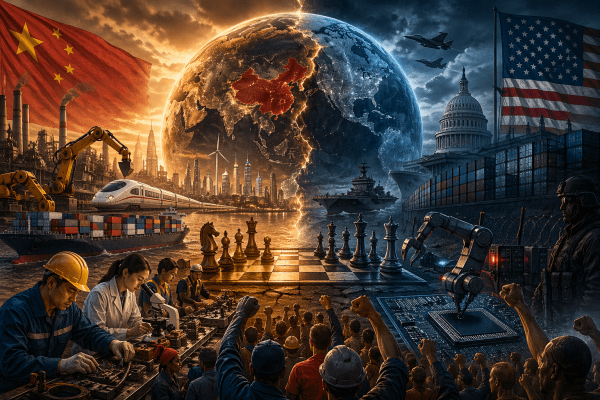
An emerging “consensus” around industrial policy masks a deeper ideological project disciplining development within the boundaries of global capital. The material reality reveals a world defined by subsidy wars, coercion, and uneven development, where state intervention is already reshaping the global economy. China stands at the center of this contradiction as a socialist-led state navigating... Continue Reading →

Leverage for Whom?: Bangladesh, Multipolarity, and the Managed Art of Dependence

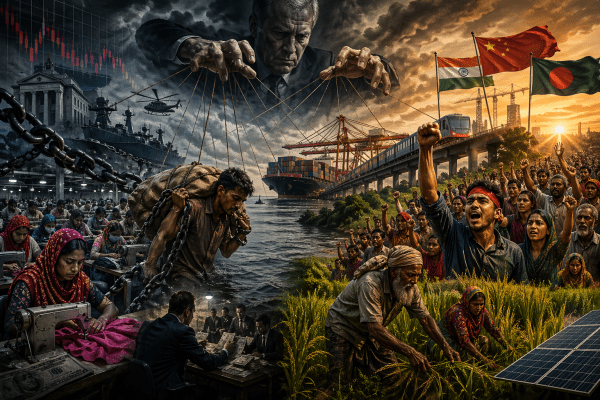
Asia Times doesn’t just argue for strategy—it reframes dependency as sophistication, urging Bangladesh to negotiate its place in a system it does not control. Beneath the language of leverage lies a material reality of export concentration, external inputs, financial discipline, and geopolitical pressure shaping every move. Multipolarity opens space—but only within limits, where new alignments... Continue Reading →

The World System Before European Hegemony: How the West Hijacked a System It Did Not Build

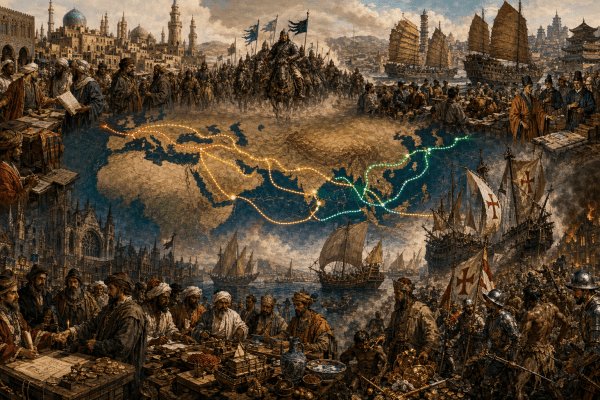
Janet Abu-Lughod's "Before European Hegemony" ruthlessly dismantles the myth that Europe rose to global prominence due to inherent superiority or brilliance. Instead, it reveals a pre-existing world economy crafted by diverse, thriving civilizations from which Europe, late to the game, benefited through exploitation and rupture. By tracing this narrative, Abu-Lughod forces us to confront uncomfortable truths: Europe did not create history; it emerged through the erosion of powerful systems created by others. History wasn’t predestined; it was violently reshaped.

Reopening the Cage: Bretton Woods Returns to a Country That Refused to Kneel

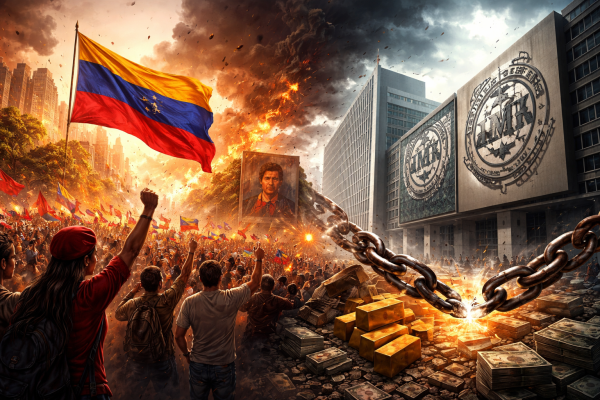
The article presents IMF and World Bank re-engagement as routine normalization, masking a political event shaped by years of institutional blockade and external pressure. Beneath that surface lies a struggle over sovereignty, where constitutional legitimacy, sanctions, and anti-neoliberal memory redefine what “recognition” actually means. The return of global finance collides with a still-living project of... Continue Reading →

Starve the Island, Blame the Victim: How Empire Turns Siege into “Defiance”

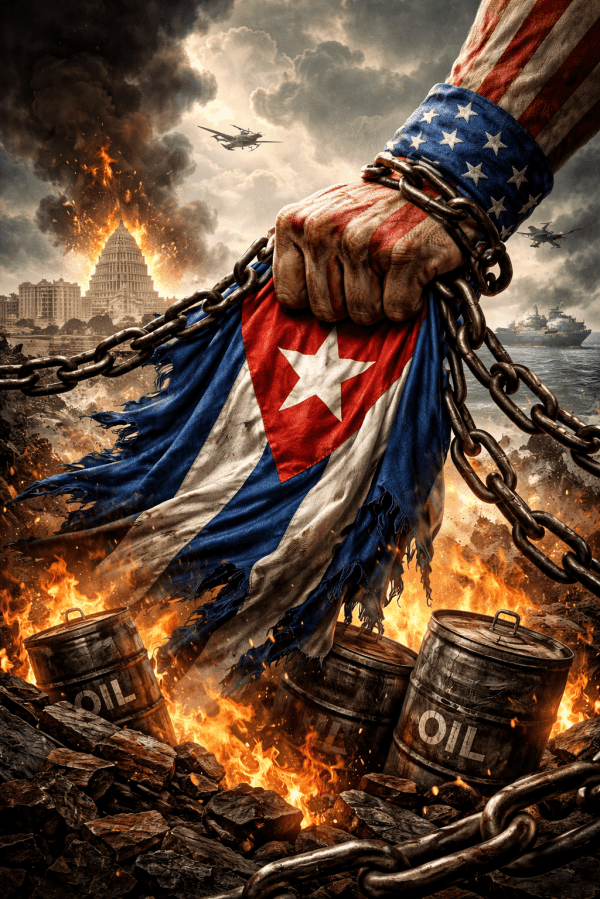
The New York Times repackages economic warfare as diplomatic tension, presenting Cuba’s resistance as irrational defiance rather than a response to material coercion. A reconstruction of the facts reveals a deliberate strategy of energy strangulation, financial restriction, and calibrated pressure designed to destabilize Cuban society from within. When these conditions are placed back at the... Continue Reading →

Website Powered by WordPress.com.

Up ↑