By Prince Kapone | Weaponized Information | June 27, 2025
I. Introduction: Zambia at the Faultline of Financial Imperialism
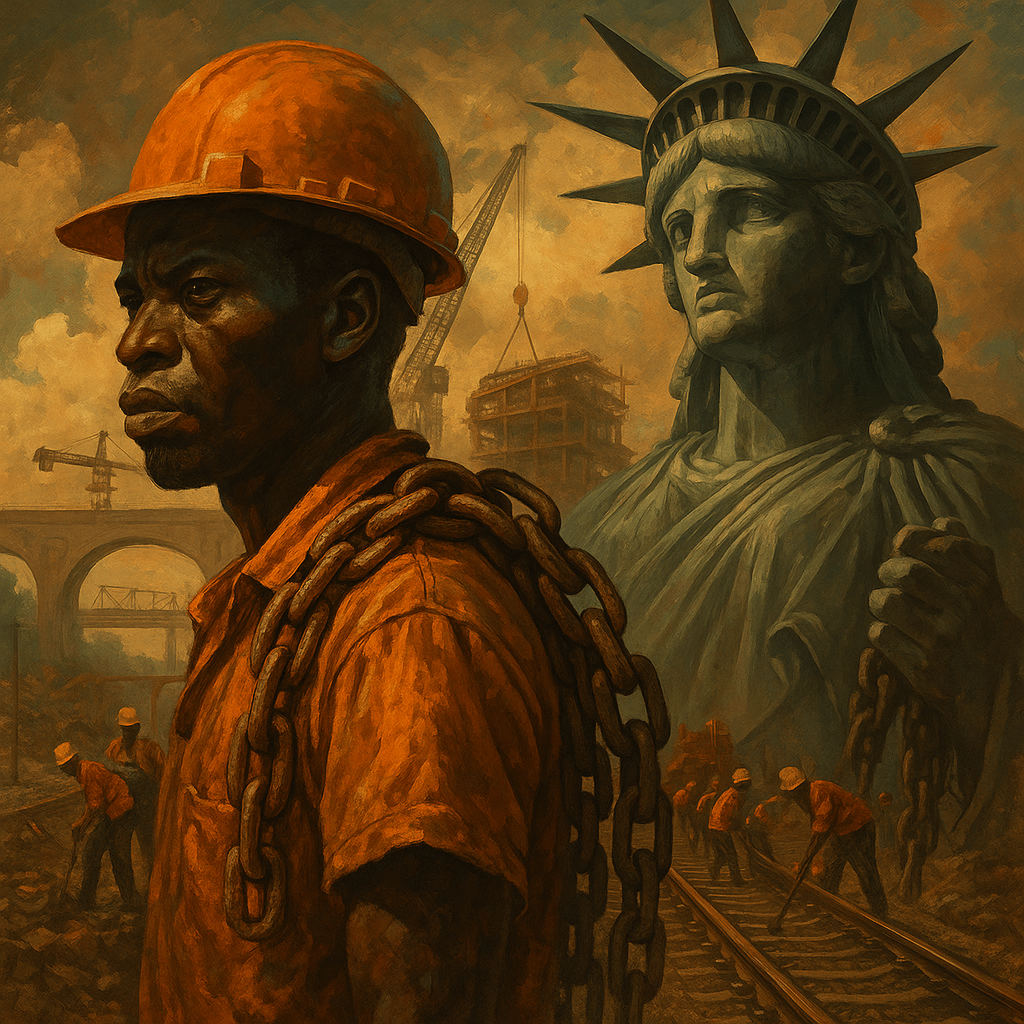
When Western officials talk about “Chinese debt traps,” it’s a bit like a thief yelling “stop, thief!” The real debt trap—the one that’s wrecked entire nations—was built in Washington, not Beijing. For over five decades, the IMF and World Bank have imposed austerity as policy: shutter your schools, starve your hospitals, and auction your forests to pay debts you’ll never finish repaying. Each bailout came with new chains. Each reform meant surrender.
But now, when China offers loans with longer terms, lower interest, and a focus on infrastructure—not budget bailouts—the empire shouts “trap.” Suddenly, building a bridge is suspicious. Financing a railway is “strategic encroachment.” And the people crying foul? They’re the same ones who made sure Africa stayed broke, dependent, and divided. Their fear isn’t about debt—it’s about losing control.
That’s what this essay is about. Not ideology. Not headlines. Just one country—Zambia—and one question: what’s the real difference between loans from the West and loans from China? In their terms. Their conditions. Their consequences. And their contradictions. Because for all the noise, it’s not hard to tell the difference between a loan that builds something—and one that builds nothing but debt.
Zambia, caught between creditors and crises, gives us a near-perfect case study. It defaulted. It negotiated with the IMF. It borrowed from Beijing. It tried to rebuild while trapped in the ruins of a system designed to keep it poor. And through that story, we see the wider pattern: China’s model—despite its limits—creates space. Washington’s model shuts it down.
This isn’t about trading one master for another. It’s about recognizing that the old master is still in the room—wearing a new suit, offering the same poisoned pen. And it’s about finding the exit, not just for Zambia, but for every nation still fighting to breathe through a noose made of numbers.
II. The Architecture of Debt: Terms, Conditionalities, and Enforcement
Debt is never neutral. It either builds or it breaks. And whether it builds roads or builds ruins depends on the fine print: the interest rate, the grace period, the repayment terms, the enforcement clauses. In Zambia’s case, the gap between Western and Chinese creditors isn’t about ideology—it’s about structure, law, and the mechanics of domination.
Chinese loans to Zambia have mostly followed a concessional model—with fixed interest rates between 2%–3%, repayment terms stretching 20 to 40 years, and grace periods as long as 7 years. These loans are tied to tangible projects: power plants, hospitals, roads, and railways. Funds are disbursed in phases, linked to construction milestones. Repayment is often drawn from the very infrastructure being built. In other words: money goes in, something material comes out.
Compare that to the West. Zambia’s Eurobonds—sold to private investors in London and New York—come with interest rates as high as 9.5% and no grace periods at all. They mature in just 10 to 15 years. They’re not for development—they’re for plugging budget holes and paying off older debt. Repayment is demanded in dollars, and if you default, you don’t get a meeting. You get a lawsuit. In London. In New York. Under their rules.
Then comes the IMF, the so-called good cop. Its interest rates may be lower, but the price is political obedience. In exchange for funds, Zambia has been told to devalue its currency, slash subsidies, freeze public-sector wages, and privatize public assets. These aren’t side notes—they’re the whole agenda. IMF programs in Zambia have mandated austerity through subsidy cuts, currency devaluation, and wage freezes. The loan itself is just the bait.
And what happens when the money runs out? Here the difference becomes even sharper. Chinese lenders have a track record of restructuring, extending, and renegotiating loans. No courts. No asset seizures. No gunboat clauses. But Western creditors? They call their lawyers. In Zambia’s case, bondholders refused to budge—demanding that China fall in line before the IMF would even release new funds.
So let’s be clear: Chinese debt is imperfect, but at least it builds something. Western debt builds nothing but dependence, litigation, and economic discipline. One lends with a blueprint. The other lends with a whip. And for Zambia, the stakes aren’t abstract—they’re poured in concrete or trapped in courtrooms.
III. What Gets Funded? Developmental Aims vs. Financial Speculation
Debt is a promise. But the question is—what gets built with that promise? In Zambia, the answer depends entirely on who’s holding the pen. Chinese loans put concrete on the ground. Western loans disappear into the spreadsheet ether. That’s not rhetoric—it’s material fact.
Over the last two decades, Chinese lending in Zambia has been overwhelmingly tied to specific, physical projects: roads, hospitals, power plants, bridges, rail lines. These aren’t vanity items—they’re the foundation of economic life. Roads get farmers to market. Hydropower gets factories online. Hospitals keep workers alive. In one standout example, the Tanzania-Zambia Railway (TAZARA)—originally built with Chinese support in the 1970s—received a RMB 45 million interest-free loan in 2004 to support maintenance. More recently, China committed $1 billion to rehabilitate the railway under a new 30‑year concession.
Meanwhile, Western financing arrives in a very different form: Eurobonds and IMF disbursements. These aren’t tied to any project. The funds are fungible—dumped into general budgets, where they cover deficits, imports, or past-due loans. Nothing gets built. No new factory, no clinic, no road. The money goes in, the interest comes out, and the country is left holding the bag.
Worse still, when a country does try to invest strategically, Western lenders often stand in the way. Under the banner of “efficiency,” IMF and World Bank programs prohibit public investment in critical sectors unless approved by technocrats in Washington. That means Zambia can borrow billions—and still be told it cannot build a refinery, expand housing, or subsidize fertilizer. The money is real. The leash is tighter.
Now, to be clear—Chinese lending isn’t immune to critique. Some projects prioritize visibility over long-term need. Concerns about local labor, environmental impact, and debt transparency are real. But these are questions of policy—of execution. They can be debated, adjusted, restructured. What can’t be reformed is a Western system that lends without building, profits without producing, and punishes any attempt to break the mold.
In Zambia, the contrast is concrete. Where Chinese credit lands, roads rise. Where Western money flows, austerity follows. That’s not just a difference in interest rates—it’s a difference in interest, full stop. One invests in the future. The other bets against it.
IV. Debt in Crisis: Defaults, Restructuring, and Creditor Behavior
A loan is easy to sign. The real test comes when repayment is no longer possible. Drought hits. Prices collapse. The currency implodes. And that’s when creditors show their true face. In 2020, Zambia became the first African country to default during the COVID-19 crisis. What followed wasn’t charity. It was a stress test—and the results were brutally revealing.
At the time of the default, Zambia’s total external debt stood near $23 billion. About $6.6 billion was owed to Chinese lenders like the Export-Import Bank and China Development Bank, while another $6.8 billion was owed to private bondholders headquartered in New York and London. The rest was divided among multilateral lenders like the IMF and World Bank.
And when the crisis struck, the difference in approach was stark. Chinese lenders stepped in to renegotiate—offering extended maturities, adjusted schedules, and participation in Zambia’s official creditor committee. There were no asset seizures. No lawsuits. No sabre-rattling. China even joined the G20’s Common Framework, despite its flaws, to try to make restructuring multilateral. Meanwhile, private bondholders stalled the April 2023 restructuring deal, insisting that China take equal losses before they’d move.
This is where the term “comparability of treatment” entered the fray—not as a principle of equity, but as a weapon of delay. In March–April 2023, private bondholders in London and New York refused to join Zambia’s debt restructuring until China offered equivalent concessions. What seems fair on paper became a cage in practice: “comparability” meant China must obey empire’s terms, or Zambia gets nothing.
The IMF didn’t mediate. It enforced. When China refused to play by Wall Street’s rules, the IMF withheld its $1.3 billion financing package. No restructure, no release. Only when creditors aligned under IMF terms was the funding approved. In parallel, Zambia’s $3 billion bond restructuring deal was tied directly to those same IMF conditions. This wasn’t negotiation. It was extortion in multilateral clothing.
This pattern extends far beyond Zambia. In Sri Lanka, when debt distress peaked in 2022, Western media blamed China for a so‑called “debt trap,” citing alleged asset seizures. But the reality tells another story. According to MR Online, over 81 % of Sri Lanka’s foreign debt in 2021 was owed to Western banks, Japan, India, and multilateral institutions—while China accounted for less than 10 %. The narrative didn’t match the numbers: the crisis was driven by imperial creditors, not Beijing.
U.S. and U.K. courts have been used to seize ships, freeze central bank reserves, and sue entire nations into paralysis. Hedge funds, the IMF, and the Paris Club coordinate like old colonial administrators—guaranteeing that no crisis ever becomes an opening for sovereignty. They don’t forgive—they foreclose.
In Zambia, the mask slipped. One group of creditors treated the default as a problem to be solved. The other saw it as a business opportunity. And for every nation staring down the barrel of default, that distinction is not academic—it’s existential.
V. The Battle for Narrative: Propaganda, Disinformation, and Consent
Empire doesn’t just rule with bombs and banks—it rules with stories. If you control the narrative, you don’t need to explain the theft. You just rename it “aid.” That’s why every Chinese-funded highway becomes a “trap,” every renegotiated loan a “scheme,” and every new rail line a “strategic threat.” It’s not about what’s happening on the ground. It’s about inoculating the imagination—so no one sees an alternative.
In the U.S., that narrative is stitched together by think tanks, media conglomerates, and Silicon Valley’s invisible algorithms. Institutions like the Heritage Foundation, Hudson Institute, and Center for Strategic and International Studies (CSIS) churn out claims that China is “weaponizing infrastructure”. These accusations get recycled across the New York Times, Washington Post, BBC, and Reuters, rarely challenged, never contextualized.
Then there are the foot soldiers of disinformation—people like Marco Rubio and Pete Hegseth—who cry “Chinese neocolonialism” while backing U.S.-sponsored strongmen and debt traps across the Global South. Hegseth went so far as to label Chinese-built railways “PLA frontlines,” calling them invasion routes in disguise. Even Chinese officials had to respond, denouncing his remarks as deliberate vilification. But by then, the damage was algorithmically done.
Social media platforms take it further. Anti-China narratives are shadow-promoted: they rise in search results, flood timelines, and appear in recommended feeds. Meanwhile, dissenting views are throttled, buried, or flagged as “misinformation.” Even TikTok—a Chinese-owned platform—mimics U.S. geopolitical framing, curating content to stay within empire’s acceptable bounds. This isn’t just bias. It’s a digital consensus, manufactured in Washington and exported as “world opinion.” Tech platforms and the IMF now work hand-in-hand to define—and suppress—the terms of debate.
The media’s hypocrisy is glaring. The same outlets that dedicate front-page coverage to imaginary Chinese asset seizures stay silent when Western banks seize oil tankers, freeze national reserves, or privatize water systems through conditionalities. A study by the Tricontinental Institute found that over 80% of Western media reports on Chinese loans used “debt trap” language, while fewer than 10% mentioned the role of the IMF or bondholders in obstructing sovereign development.
Propaganda isn’t decoration—it’s doctrine. It prepares the ideological ground for financial warfare. It convinces the world that looting is rescue, that austerity is discipline, and that imperialism is partnership. In places like Zambia, the real danger isn’t Chinese lending—it’s the imperial story that says there’s no alternative.
VI. Geopolitical Stakes: Why the Empire Fears Chinese Lending
The West’s panic over Chinese lending isn’t about financial risk—it’s about losing grip. Washington isn’t worried that Chinese railways will collapse. It’s worried they’ll work. If Global South countries can finance development without surrendering to austerity, the entire foundation of U.S. empire starts to shake. What’s at stake here is control—not credit.
Start with currency. Western loans—whether from the IMF or commercial bond markets—are denominated in U.S. dollars. That means repayment requires earning dollars: through exports, remittances, or new loans. It’s a rigged dependency that makes the Federal Reserve functionally the central bank of the Global South. But China is rewriting that playbook. With record yuan swap lines and rising trade in renminbi, Chinese financing is decoupling from the dollar system.
This isn’t just a technical tweak—it’s a structural rupture. China’s Cross-Border Interbank Payment System (CIPS) bypasses SWIFT, undermining U.S. sanctions enforcement and surveillance power. When BRICS countries trade in their own currencies, or when African states settle debts in yuan, they chip away at the scaffolding of dollar hegemony. The empire sees it—and trembles.
Infrastructure is the other battleground. Chinese loans aren’t just capital—they’re connective tissue. Railways, ports, energy grids, fiber cables. These are arteries of global life. And when they run outside Western control, they become corridors of autonomy. A port financed by China, linked to inland markets by Chinese-built rail, becomes a bypass around Western choke points. And that’s what really terrifies Washington—not the concrete, but the circuits of power it no longer controls.
That’s why infrastructure gets securitized. A bridge in Zambia is branded a potential PLA outpost. A railway in Kenya becomes a “sovereignty risk.” This isn’t about national defense—it’s about narrative defense. Because if nations can build without being disciplined, and borrow without being broken, the whole imperial order loses its leverage.
None of this means China is anti-imperialist. It is a rising power with its own global interests. But it does mean that China’s model—lending without demanding regime change, military basing rights, or neoliberal “reforms”—is objectively more compatible with sovereignty than anything the West offers. And that’s why it’s dangerous: not because it conquers, but because it gives others space to breathe.
The fear isn’t that China will become the new empire. The fear is that the old empire won’t be needed anymore.
VII. Revolutionary Horizons: Delinking from Debt and Building Sovereignty
The fight over debt is not just a financial argument—it’s a war over who gets to live with dignity and who stays in chains. For centuries, debt has been empire’s favorite tool: less visible than boots, more permanent than bombs. The Global South now holds nearly 30% of global debt, up from 16% in 2010. But that debt was never designed to be paid back. It was designed to discipline.
Chinese lending, for all its contradictions, creates a crack in that wall. It offers nations a chance to delink—not to retreat from the world, but to refuse imperial management of it. To stop privatizing water for bailout cash. To stop slashing healthcare just to earn an IMF review. To choose infrastructure over austerity. People over profit.
But delinking doesn’t happen on its own. It must be built—step by step, brick by brick. That means constructing sovereign alternatives to the imperial financial order: regional banks like the BRICS New Development Bank, public credit systems, and South-South cooperation. It means debt audits, like Ecuador’s 2008 audit, which exposed illegitimate obligations. It means outlawing vulture funds and rewriting international lending norms to serve people—not hedge funds.
More than anything, it means power must shift from boardrooms to barricades. The technocrats won’t save us. The comprador class won’t free us. Only organized movements—of workers, peasants, youth, and the dispossessed—can fight to nationalize key industries, democratize central banks, and reclaim the wealth of our labor. Delinking is not a spreadsheet adjustment. It is a political rupture.
And for those of us inside the empire, solidarity isn’t symbolic—it’s strategic. We must confront the banks and law firms that extract tribute from the Global South. We must expose the media that packages looting as “development.” We must demand the abolition—not reform—of the institutions that enforce planetary apartheid through finance.
The empire doesn’t fear collapse. It fears clarity. It fears that the debtors might organize, that sovereignty might be reclaimed, that refusal might become contagious. Zambia is not just another case study. It is a frontline. And what happens there is a signal to every nation deciding who to trust—and how to fight.
This is not a conclusion. It is a beginning. A call to study, to organize, and to rip the mask off debt—so we can build the world it was meant to prevent.
 Weaponized Information
Leave a comment