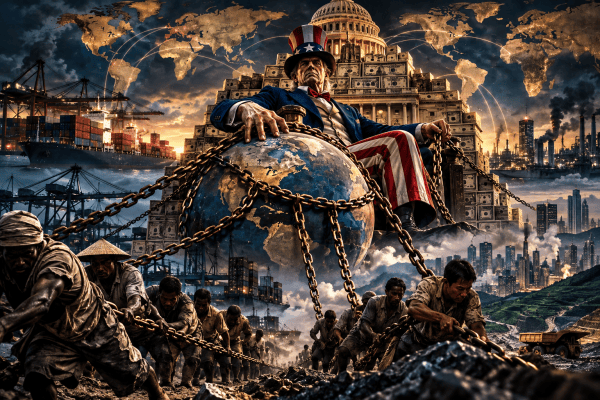
Michael Hudson's "Super Imperialism" reveals capitalism's peculiar twist: the U.S. transitioned from a great creditor to a dominant debtor, utilizing its debts as leverage in a world where power dynamics are shifting. Post-World War I, American financial institutions crafted a system that exploited other nations through debt, claiming to promote development while actually enforcing dependency. The contradiction lies in the U.S. controlling the world's currency even as its productive supremacy fades. As the global landscape evolves, the implications of dollar dominance become increasingly tenuous, demanding us to confront a crucial question—who ultimately commands the productive forces that money can influence but not generate?
The Collateral of Empire: Debt, Power, and the Future
America's staggering $81.9 trillion debt is more than just a number; it's a complex web of financial claims overshadowing the real economic landscape. The nation's ability to issue dollars grants it a unique power, allowing it to leverage future incomes to accommodate debt—while the average worker grapples with mortgages, credit cards, and student loans. This contradictory system—where public power fuels private finance—disguises the inequality at play. As lenders profit, households struggle, further entrenching societal divides. The U.S. isn’t just a massive debtor; it’s a realm where debt serves as both a lifeline and a constraint, revealing the capitalist dance between ownership and obligation.
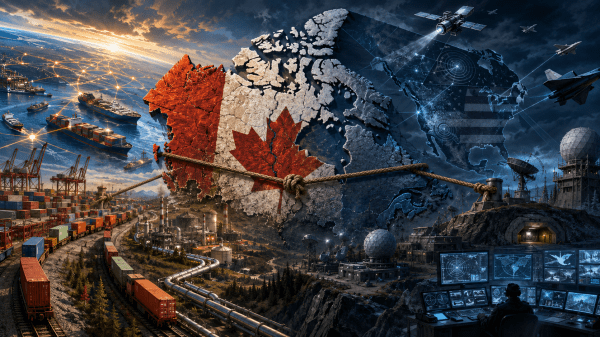
The Freight Is Moving, the Guns Aren’t: Canada Between Multipolar Markets and Atlantic Command
Canada’s century-old continental bargain with the United States built factories, pipelines, profits, and military integration into the same structure that Washington can now turn into leverage. Yet Canada was never merely an American dependency: its banks, mining firms, pension funds, and corporations grew into a secondary imperial power capable of exercising domination abroad even while... Continue Reading →
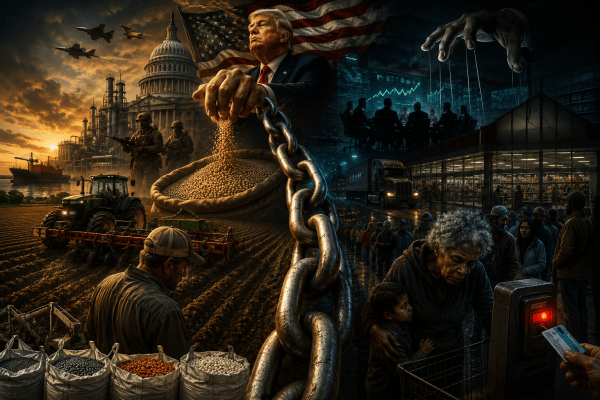
The Hunger Chain: How Trump Feeds Capital and Disciplines the Hungry
In a striking reveal, Fox celebrates Trump's fertilizer emergency as a boon for farmers, yet this facade obscures the underlying fragility of our food system reliant on state intervention. While fertilizer access gets prioritized, the true cost is hidden: a monopolized market where agribusiness thrives as workers face hunger, suspicion, and administrative punishment. Trump's regime twists food security into a mechanism for capital gain, revealing a stark disparity in state response; when profit is threatened, intervention is swift, but when workers struggle for sustenance, they face scrutiny. The urgent call is for food power—community sovereignty, mutual aid, and a radical rethinking of food as a right, not a commodity.
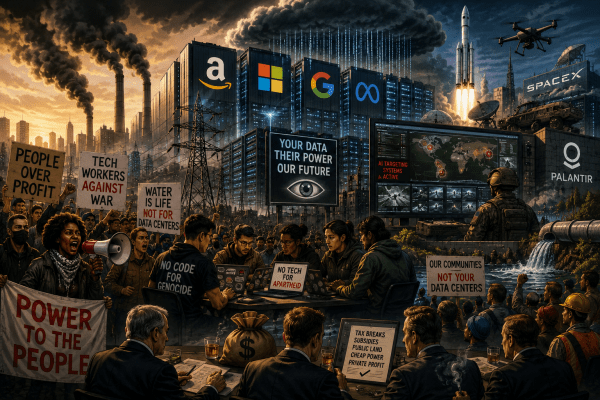
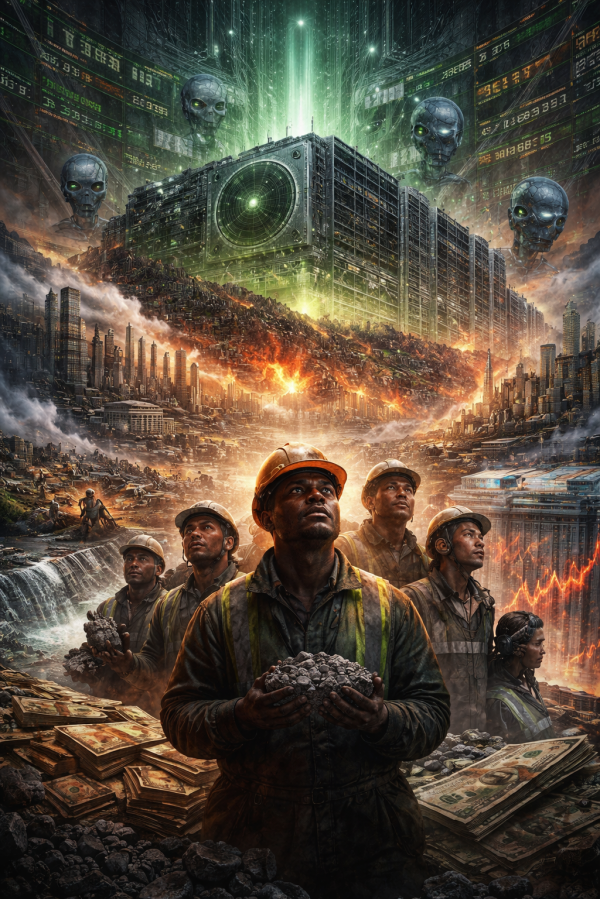
The Cloud Has Teeth: Big Tech, SpaceX, and the Casino of Technofascism
The Financial Times might report a stock market tremor as a mere sell-off, but beneath this facade lies a damning truth: Big Tech’s AI boom and SpaceX’s bubble float atop public resources, military contracts, and labor exploitation. This crisis isn't just an investor's blip; it reveals the rot of monopoly capitalism, where clouds obscure heavy debts to the state and imperialism. As SpaceX’s stocks drop, they signify a broader collapse of illusion, exposing the grim reality of military dependency and energy consumption. The future shouldn’t be left to financiers, but redirected to the people, demanding public ownership and accountability in the face of an engineered technological dystopia.
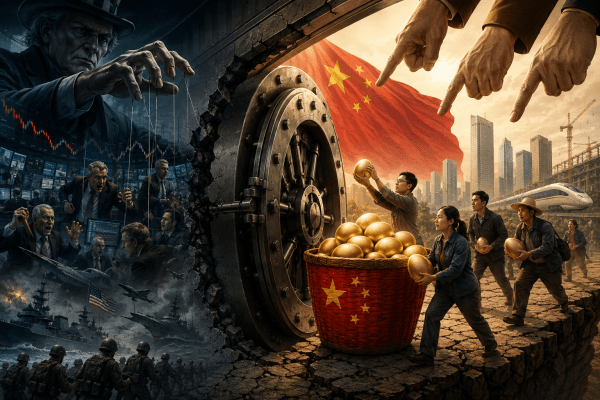
China Locked the Vault: Wall Street Weeps for the Investor It Wanted to Recruit
The New York Times portrays China's financial regulations as a morality tale of oppressed investors yearning for capital freedom, framing Beijing's restrictions on overseas investments as authoritarian repression. However, this narrative conveniently ignores China's struggle against capital flight amidst geopolitical tensions with the U.S. The real story is about defending national wealth from draining into imperial circuits while promoting domestic stability and development. This distortion of capital mobility as individual freedom obscures the broader implications of wealth dispersing into an adversarial financial system. The moral panic surrounding investor frustrations reveals a deeper conflict: the sovereignty of a nation versus the whims of financial capital.
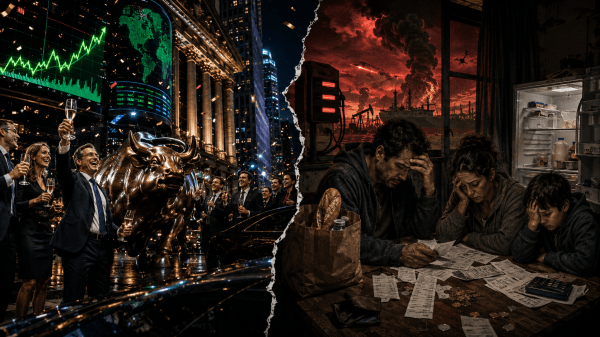
Bull Market, Broke People: The Stock Market’s Good News Is the Working Class’s Bad Joke
As markets soar, the majority of households are trapped in economic despair, cutting back on spending as essential prices rise and wages stagnate. The AP's analysis of "consumer confidence" reveals a grotesque class divide—where the wealthy thrive and the working class suffers under burdens of debt and inflation. This narrative cleverly masks the structural inequalities, framing economic distress as mere sentiment rather than a blatant symptom of a system rigged in favor of capital. The urgent call to action is clear: workers must unify and transform their economic plight into organized class power, recognizing that genuine change requires confrontational strategies, not empty optimism.
Axel Springer, the Africa Finance Corporation, and the Vault: Gold, Monetary Anxiety, and the Battle Over Who Controls the Chain
A trillion dollars in untapped gold is sold as opportunity in an age of financial instability. The numbers glitter, but the narrative abstracts extraction from labor, land, and history. Reserve accumulation rises alongside illicit outflows, smuggling networks, and toxic exposure. The real struggle is not over gold in the vault, but over who governs the... Continue Reading →
Nvidia’s Casino, the IMF’s Confession: How Wall Street Sells an “AI Economy” While Empire Runs on Debt, Extraction, and Discipline
TheStreet’s “IMF warning” is not neutral analysis but a piece of market propaganda that converts class power into spreadsheet logic and fear into investor common sense. Beneath the tech hype, the U.S. growth story is revealed as a fragile pyramid propped up by the Magnificent Seven, Nvidia’s monopoly rents, and a debt-financed AI buildout that... Continue Reading →
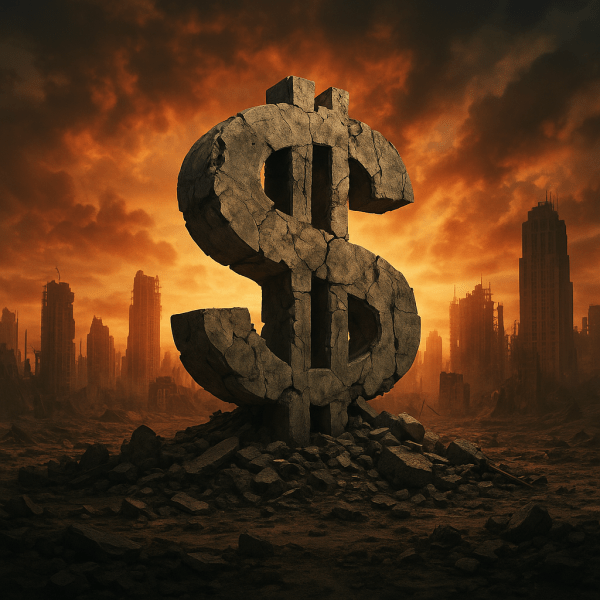
Debt, Dollar, and Decline: How the Crisis of Empire Opens the Road to Liberation
The end of dollar supremacy is not the end of the world—it’s the end of theirs. As the empire defaults on history, the Global South rises to claim what always belonged to it: sovereignty, production, and the right to breathe outside the shadow of Wall Street.By Prince Kapone | Weaponized Information | October 2025Inevitable by... Continue Reading →