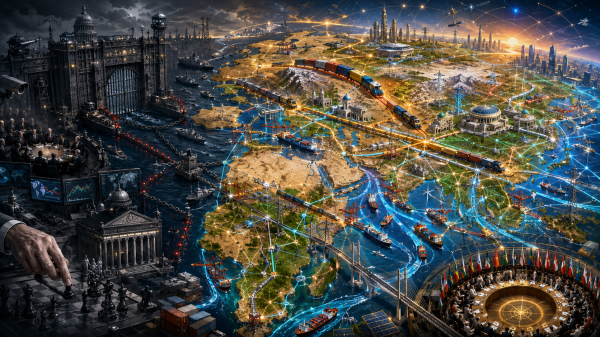
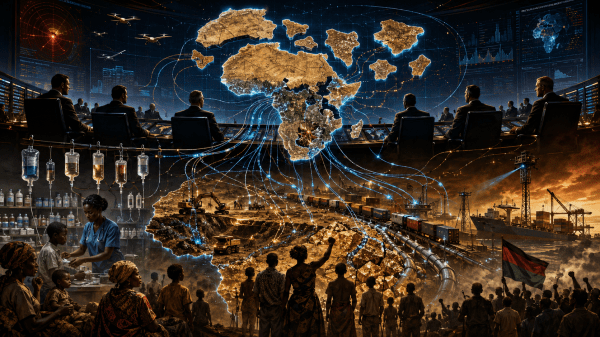
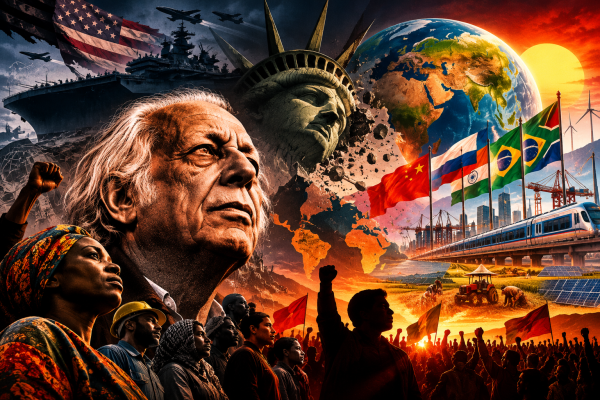
The recent oil agreements between Niger and Chinese firms aren't just another business deal; they expose a seismic shift in Africa's political landscape. As Western powers cling to outdated neocolonial frameworks, Niger is bargaining fiercely for sovereignty over its vast resources, rejecting mere extraction in favor of local control. This isn't a clean break; it’s messy and contradictory, revealing the power struggle over who governs the circulatory systems of wealth. The Sahel countries are navigating a new reality where they challenge traditional dependency and assert their agency. History is shifting beneath our feet—can Africa carve out a new path, or will old patterns reassert themselves?
Françafrique 2.0: Macron, Multipolarity, and the Quiet Reassembly of Empire
French President Emmanuel Macron's interruption at a Nairobi summit starkly reveals the hypocrisy behind France's so-called partnership with Africa. Masked in the rhetoric of mutual respect and development lies an insidious struggle for neocolonial influence amid a backdrop of declining French authority. As African nations increasingly assert sovereignty, aiming to break free from debt and military dependency, Macron's actions embody centuries of colonial entitlement. While Paris attempts to rebrand its influence through climate and technological initiatives, a new wave of Pan-African movements challenges these narratives, demanding genuine autonomy over the façade of partnership. The true legacy of imperialism endures, evolving but never vanishing.
Françafrique Forward: Macron, Ruto, and the Nairobi Trap of Imperial Recalibration
The Africa Forward Summit in Nairobi is nothing more than a polished façade for France's enduring imperial ambitions in Africa, cleverly cloaked in the language of innovation and partnership. While hailed as a diplomatic reset as it moves outside Francophone Africa for the first time, the summit simply signals France’s desperation to regain footholds after being ousted from the Sahel. As Kenya grapples with its own debt crisis, the summit reflects a deeper reality: a struggle for sovereignty masked by corporate rhetoric. Opposing forces are mobilizing against this repackaging of imperialism, unearthing the true narrative of resistance against old empires in new guises.
Gold, Lithium, and the Chains of Empire: Zimbabwe, China, and the Battle to Break the Colonial Economy
The imperial press calls Zimbabwe’s recovery “bizarre,” revealing more about empire’s ideology than Africa’s reality. Beneath the headlines lies a material transformation driven by gold, lithium, labor, and survival within a system built to constrain it. As Zimbabwe pushes toward beneficiation and partners with China, it enters a global struggle over who controls resources, industry,... Continue Reading →
Africa Against the World Market: Hosea Jaffe, Imperialism, and the Long Struggle for Liberation
A Weaponized Intellects review of A History of Africa that excavates Hosea Jaffe’s uncompromising analysis of colonialism, class formation, and imperial domination—situating his intervention within the liberation struggles of his time and assessing its enduring relevance for understanding Africa, the world system, and the unfinished project of revolutionary transformation today. By Prince Kapone | Weaponized... Continue Reading →
From Imperial Plunder to Socialist Possibility: Capitalism, Dependency, and the Road to Sovereign Development
Development is not a neutral path but a historical process forged through conquest, extraction, and domination. Underdevelopment is not a failure to advance, but the condition produced by integration into a world system structured by imperial power. As the crisis of global capitalism deepens and the space for sovereign maneuver widens yet destabilizes, nations are... Continue Reading →
They Killed the State, Then Sold Us “Democracy”: Burkina Faso and the Empire’s Favorite Lie
The BBC frames Burkina Faso as a story of a rogue soldier rejecting democracy, but its narrative quietly assumes the innocence of the very system now being challenged. Beneath the surface lies a region shaped by war, extraction, and foreign control, where democracy functioned less as popular rule than as managed dependency. What appears as... Continue Reading →
U.S. Empire, Somaliland, and the Sale of Sovereignty at the Red Sea Chokepoint
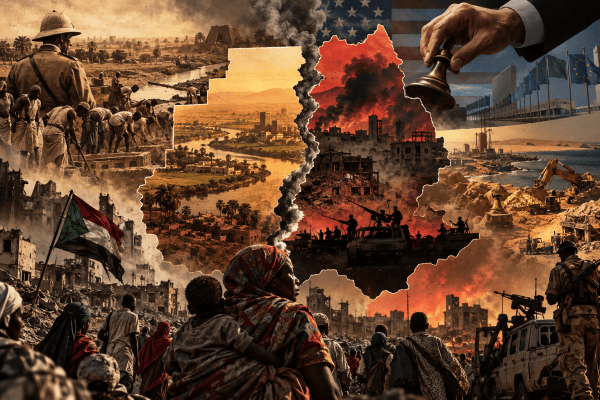
A Military.com analysis presents U.S. recognition of Somaliland as pragmatic strategy, disguising a deeper imperial project. The colonial fracture between British and Italian Somaliland, combined with postcolonial crisis, has been repurposed into an opening for external intervention. What appears as diplomacy is in fact the conversion of territory into infrastructure—Berbera as port, base, and extractive... Continue Reading →
Erase the Crime, Evade the Debt: Black History Under Siege as Reparations Rise
From Reuters’ managed neutrality to Washington’s cultural rollback and Ghana’s UN challenge, the struggle over memory reveals a deeper battle between imperial erasure and a growing global demand for reparatory justice. By Prince Kapone | Weaponized Information | March 27, 2026 The Cropped Memory of Empire “Ghana's president, in New York, says US is ‘normalizing’... Continue Reading →
After the Empire — Before the Collapse
When Emmanuel Todd wrote After the Empire, Washington still believed it ruled a permanent unipolar world. Todd saw something different: an empire sustained less by production than by financial tribute and military spectacle. Two decades later the contradictions he described—economic dependency, micromilitarism, and ideological decay—have matured into the turbulent transition now reshaping global power.By Prince... Continue Reading →