The Robber at the Gate: Venezuela, China, and the American Pole’s Oil Ledger

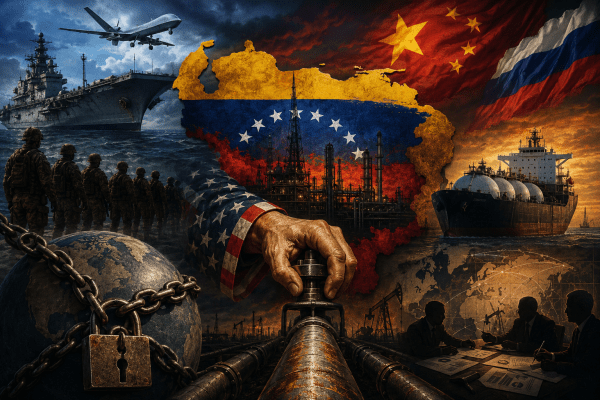
Washington masquerades as a “gatekeeper,” but it’s merely an imperial force exploiting Venezuela’s oil through a facade of debt management. The South China Morning Post article dismisses the severe issue of sovereignty, framing the US’s dominance as mere financial oversight. This is financial piracy, where the empire suffocates a nation but presents itself as a recovery manager. As China seeks to protect its investments in Venezuela, the true battle is not about debt but about reclaiming sovereignty from imperial grasp. The struggle is clear: Venezuela’s resources belong to its people, not to the US, which must be confronted directly to dismantle this neocolonial command.

No Pride in Empire: Seattle’s Rainbow Classroom and the World Cup War Machine

The Seattle Pride Match is not just a progressive celebration but a vehicle for imperial propaganda, co-opting the cultural struggles of predominantly Muslim nations like Iran and Egypt. This event frames the West as a moral authority while masking the brutal realities of sanctions, military finance, and surveillance that underpin these dynamics. The local organizers, corporate sponsors, and FIFA collaborate to transform a football match into a colonial lesson, undermining the very values they profess to uphold. The real challenge lies in recognizing this manipulation and reframing the narrative: embracing genuine solidarity and resistance against imperial structures, rather than succumbing to an illusion of moral superiority.

The Empire’s Cheapest Deputies: How Liberal Media Turns White-Worker Disillusionment Into Political Defeat

The Guardian correctly rejects the liberal fantasy that MAGA is merely “economic anxiety,” but it turns a crack in the settler bargain into a locked door. Trump 2.0 is not the grassroots program of white workers but the ruling-class recalibration of labor discipline, border terror, tariff nationalism, and imperial decline. The racial wage remains real,... Continue Reading →

China Locked the Vault: Wall Street Weeps for the Investor It Wanted to Recruit

The New York Times portrays China's financial regulations as a morality tale of oppressed investors yearning for capital freedom, framing Beijing's restrictions on overseas investments as authoritarian repression. However, this narrative conveniently ignores China's struggle against capital flight amidst geopolitical tensions with the U.S. The real story is about defending national wealth from draining into imperial circuits while promoting domestic stability and development. This distortion of capital mobility as individual freedom obscures the broader implications of wealth dispersing into an adversarial financial system. The moral panic surrounding investor frustrations reveals a deeper conflict: the sovereignty of a nation versus the whims of financial capital.

The Roads Remember Túpac Amaru: Jacobin Calls Popular Power a Vacuum

Bolivia is experiencing a seismic shift, as the indigenous and working-class masses rise against a government they see as complicit with imperial interests and corporate power. Jacobin's portrayal of this struggle as chaotic “political vacuum” fails to grasp the reality: the people are not absent from politics; they are reclaiming agency. While the ruling class laments blocked roads and instability, they ignore the genuine political force being forged by those occupying them—workers, campesinos, and indigenous communities asserting power where previously silenced. The barricades are not just obstacles; they symbolize resistance against commodification and repression, signaling a reawakening of history in the fight for sovereignty and justice.

Starve the Island, Blame the System: Cuba and the Logic of Imperial Warfare

The Associated Press's portrayal of Cuba's economic reforms as an admission of socialism's failure belies the truth: these changes emerge from a relentless siege engineered by U.S. imperialism. While Cuba navigates fuel shortages and food insecurity, it confronts an economic warfare strategy designed to instigate hunger and political capitulation. The AP article obscures the genuine reform efforts by presenting them as a retreat from ideology, framing Washington as a reasonable negotiator rather than an aggressive adversary. Cuba's struggle isn't merely to reform; it's a fierce fight for sovereignty against an oppressive narrative that seeks to suffocate its revolutionary spirit.

The Throne Was Always Cracked: Radhika Desai and the Myth of American Hegemony

Radhika Desai’s Geopolitical Economy obliterates the illusion of a stable, American-led world, revealing that capitalism thrives on conflict, not unity. The book exposes capitalism’s instability, punctuated by crises that merely reshift the burdens onto workers and debtor nations. Desai argues for a multipolar world not as a peaceful transition to a new hegemon, but as a rupture from monopolistic control, fostering opportunities for sovereign development and socialist planning. However, liberation demands that working people reclaim the means of production and governance. The narrative warns against complacency; the emerging multipolarity is ripe for struggle, shaping the future based on who wields power over resources and development.

Keeping to the Socialist Path: Laos, China, and the Machinery of South-South Development

The June 2026 Laos-China state visit unfolded as a significant convergence between two socialist nations navigating their intertwined ambitions amid a capitalist-imperialist world. Rather than surrendering to the narrative of a “debt trap,” Laos and China embraced a collaboration marked by political intent, evidenced in thirty-two agreements across sectors like agriculture and technology. This partnership aims to transform Laos into a self-sufficient state, guided by its revolutionary history. The imperial media, however, conveniently ignored this cooperation, as it undermines their narrative of helpless nations. Laos, now reclaiming agency, is no longer portrayed as a mere victim but as a sovereign actor defining its path to development.

Hands Off Tanzania: The West Discovers Democracy When Africa Stops Asking Permission

Tanzania's diplomatic dance with Russia unveils a stark reality: while Western media narrows the narrative to a disobedient state seeking validation from imperial powers, the true story is a nation striving for sovereignty and survival. President Hassan’s trip, framed as a scandal by Western outlets, masks the pressing needs of food security, trade, and military cooperation. The West frames Africa’s foreign policy through its lens, yet Tanzania’s pursuit of diverse partnerships challenges this monopoly. This isn’t merely about a president’s reputation; it’s about a country's right to self-determination. The true scandal? Tanzania’s defiance shakes colonial chains, invoking both anxiety and resentment from its former overseers.

The Witch Has a Booking Page: How Capital Sells Women Back the Commons It Destroyed

The Guardian romanticizes women's escape into witchcraft retreats, masking a harsher truth: capitalism has fragmented community, only to sell facsimiles of it back to the lonely. Beneath the rituals of sisterhood lies a commodified search for healing, where pain is packaged as a wellness experience for those who can afford it. This article stirs empathy but shies away from confronting the systemic forces that produced these wounds. Women are not merely seeking solace; they are expressing anger born from societal oppression. The challenge is to transition from commodified refuge to collective action, turning shared grief into political power.

Website Powered by WordPress.com.

Up ↑