Petrodollars and Missiles: U.S.–Israel War, Iran’s Retaliation, and the Gulf’s $6 Trillion Imperial Contradiction

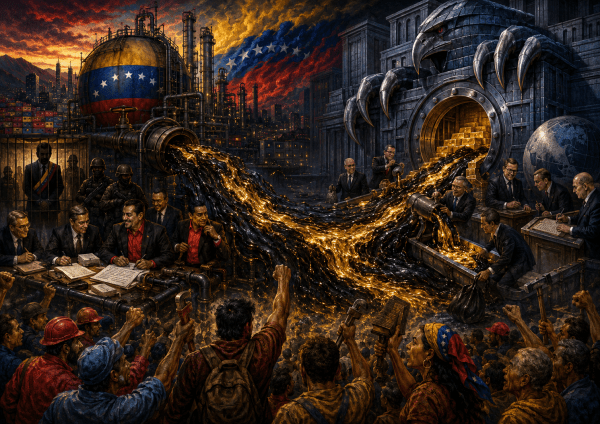
The Economist laments over the Gulf's $6 trillion sovereign wealth as war disrupts its financial stability, but this narrative is a smokescreen. The real story lies in the imperial dynamics that intertwine U.S.-Israeli aggression with Gulf fortunes. Rather than a neutral financial assessment, it presents war as a minor nuisance to elites banking on oil rents. The article flattens the human cost, sidelining migrant laborers and ignoring the root causes of conflict shaped by imperial agendas. Ultimately, this crisis reveals the Gulf's wealth is a tool of empire, not liberation—a stark reminder that war and capital are inexorably linked.

Fault Lines of Empire: U.S. Strategy, Pakistani Class Power, and the Crisis of Sovereignty

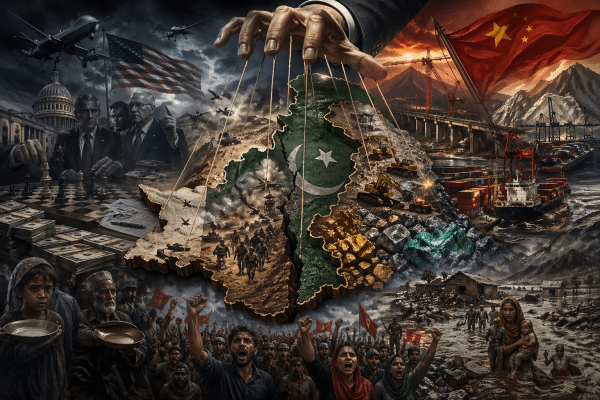
Asia Times frames Pakistan’s instability as a strategic obstacle, obscuring the material and political forces shaping the terrain. The crisis emerges from IMF austerity, elite domination, climate catastrophe, and a deepening political rupture following the coup against Imran Khan. Imperialist recalibration collides with multipolar transition, exposing the struggle between sovereignty and neocolonial extraction. Workers, peasants,... Continue Reading →

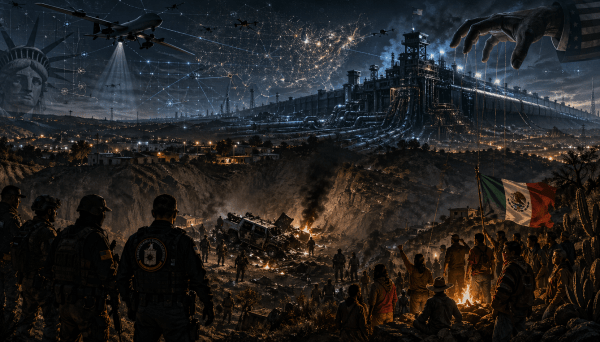
Empire at the Doorstep: How the Narco War Becomes a License to Penetrate Sovereignty

What appears as a tragic incident in Chihuahua is exposed as a carefully managed narrative that obscures the presence of foreign power operating inside Mexico. The factual record reveals a dense security architecture where intelligence, surveillance, and training pipelines blur the line between cooperation and control. Stripped of illusion, the episode reflects a deeper contradiction... Continue Reading →

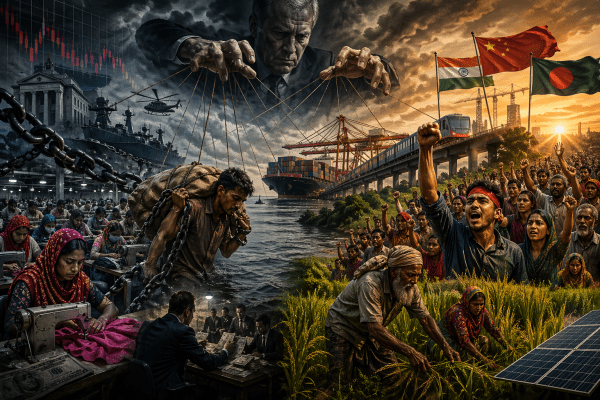
Leverage for Whom?: Bangladesh, Multipolarity, and the Managed Art of Dependence

Asia Times doesn’t just argue for strategy—it reframes dependency as sophistication, urging Bangladesh to negotiate its place in a system it does not control. Beneath the language of leverage lies a material reality of export concentration, external inputs, financial discipline, and geopolitical pressure shaping every move. Multipolarity opens space—but only within limits, where new alignments... Continue Reading →

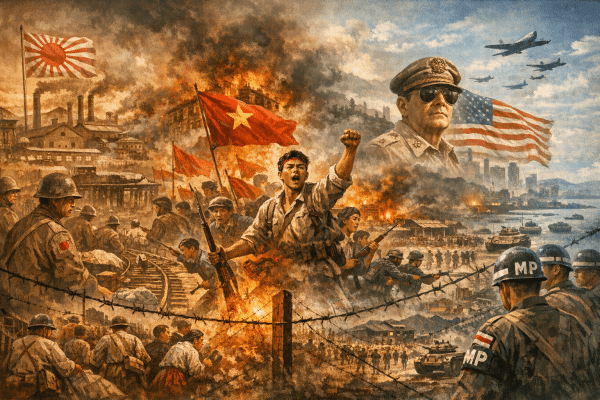
The Origins of the Korean War: From Colonial Rupture to Contained Revolution

This review reconstructs the Korean War not as a sudden conflict in 1950, but as the culmination of colonial transformation, revolutionary struggle, and imperial intervention between 1945 and 1947. Drawing on Bruce Cumings, it reveals how liberation opened a radical possibility that was contained, divided, and ultimately reshaped into two opposing systems—making war not accidental,... Continue Reading →

Borrowed Flags, Built-In Crisis: South Korea’s Anti-Communist State Cracks Under Its Own Weight

POLITICO turns a deep political rupture into spectacle, masking a crisis rooted in repression, dependency, and anti-communist rule. Beneath that spectacle lies a system shaped by coup attempts, militarized governance, U.S. command integration, and a society strained by inequality and dislocation. What appears as imported MAGA politics is in reality an old state logic speaking... Continue Reading →

Website Powered by WordPress.com.

Up ↑