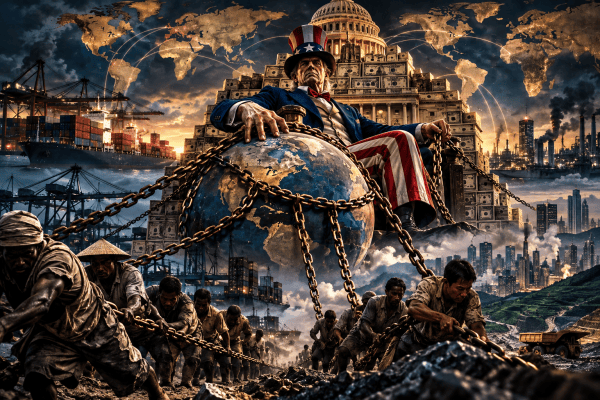
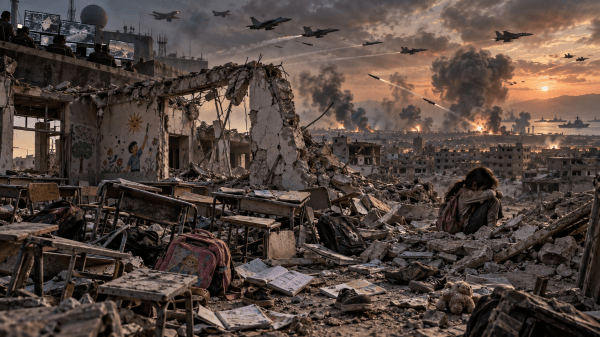
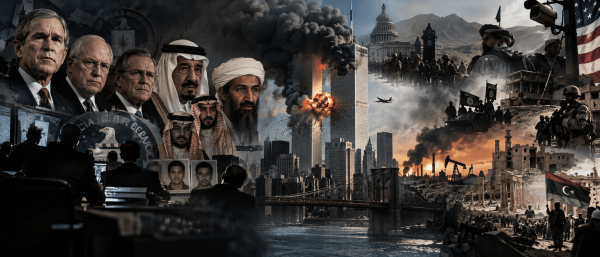
Trump’s threat to cut trade with Spain was not a diplomatic feud. It was imperial discipline. TIME reported the spectacle, but the real story sits beneath the headline: Spain refused to let Rota, Morón, and its airspace become automatic instruments of the U.S. war on Iran, while rejecting NATO’s demand to raise military spending to 5 percent of GDP. Washington’s response exposed the alliance for what it is: a command system that turns allied territory into launchpads, public budgets into war tribute, and dissent into a target for economic coercion.
Peace Board, Prison Yard: Gaza’s Handover Trap
The Guardian frames Hamas’s offer to hand over Gaza’s civil administration as a possible opening in a stalled peace process, but its article launders U.S.-backed governance as neutral transition. The buried facts show a Board of Peace built through U.S. command, Israeli security conditions, Gulf logistics capital, legal immunity, and reconstruction leverage. The real story... Continue Reading →
Communists and Patriots: The Flag, the Class, and the Lie of Imperial Nationalism
Trump says you can be a communist or a patriot—but not both. This essay exposes the historical fraud buried inside that slogan. By reconstructing the nation through historical materialism, it shows that nationalism has never possessed a fixed political content. In oppressed nations, communists repeatedly became the truest patriots because the struggle for national liberation demanded the overthrow of colonialism, imperialism, and comprador rule. In imperialist nations, however, nationalism serves the opposite function: binding workers to the ruling class and its global system of domination. The real contradiction is not between communism and patriotism, but between imperial patriotism and the liberation of the people.
Same Boss, New Contract: USMCA and the Empire’s Grip on Mexico and Canada
NBC's portrayal of Trump's refusal to renew the USMCA is more than a mere disruption in trade; it’s a calculated move to establish an iron grip over North America. The article frames this as instability, ignoring the deeper narrative of imperial ambition where trade agreements become tools for coercion. The U.S. isn't retreating; it's reconfiguring the continent, tightening control over Mexico and Canada while excluding China from the fold. Workers from all sides suffer under this new order while corporate interests thrive unchallenged. Ultimately, this is not a story of chaos but of empire reshaping subjugation—inviting you to witness the birth of Fortress America instead of its decay.
Socialism Without Revolution: Jacobin’s Market Fantasy Against the Socialist World
Bhaskar Sunkara’s market socialism is a bold yet flawed vision that naively overlooks the burdens of imperialism. He critiques past socialist models while proposing that worker-run firms can flourish within a system still embedded in capitalist exploitation. However, the reality is that these worker enterprises would still rely on the global hierarchy that upholds imperial advantages. A true socialist awakening must reject these inherited structures and demands an anti-imperialist framework instead. Without confronting the realities of colonial legacies and ensuring reparative relations, Sunkara’s proposal risks socializing the benefits of imperialism while maintaining its oppressive mechanisms intact.
The Robber at the Gate: Venezuela, China, and the American Pole’s Oil Ledger
Washington masquerades as a “gatekeeper,” but it’s merely an imperial force exploiting Venezuela’s oil through a facade of debt management. The South China Morning Post article dismisses the severe issue of sovereignty, framing the US’s dominance as mere financial oversight. This is financial piracy, where the empire suffocates a nation but presents itself as a recovery manager. As China seeks to protect its investments in Venezuela, the true battle is not about debt but about reclaiming sovereignty from imperial grasp. The struggle is clear: Venezuela’s resources belong to its people, not to the US, which must be confronted directly to dismantle this neocolonial command.
Immunity for the Occupiers: Gaza and the Peace Board of Empire
The Guardian's exposure of a leaked immunity draft serves as just the tip of a colossal iceberg: the Board of Peace governing Gaza masquerades as a humanitarian initiative but is an elaborate facade for hyper-imperialism. Rather than delivering justice or sovereignty to the Palestinian people, this foreign administration seeks legal immunity, converting public facilities into operational bases and redefining colonial rule as a technocratic management process. The real scandal lies not just in their legal shield but in the fact that Gaza is being stripped of autonomy and treated as a problem to be managed. Resistance isn’t merely an option; it’s a necessity against this colonial resurrection disguised as peace.
No Pride in Empire: Seattle’s Rainbow Classroom and the World Cup War Machine
The Seattle Pride Match is not just a progressive celebration but a vehicle for imperial propaganda, co-opting the cultural struggles of predominantly Muslim nations like Iran and Egypt. This event frames the West as a moral authority while masking the brutal realities of sanctions, military finance, and surveillance that underpin these dynamics. The local organizers, corporate sponsors, and FIFA collaborate to transform a football match into a colonial lesson, undermining the very values they profess to uphold. The real challenge lies in recognizing this manipulation and reframing the narrative: embracing genuine solidarity and resistance against imperial structures, rather than succumbing to an illusion of moral superiority.
The Sea Is Not Sam’s: How Empire Turns Asia’s Waters into a War Map
Deutsche Welle dresses militarization in the soft language of autonomy, access, and rules while burying the machinery of containment beneath diplomatic polish. The omitted facts reveal a region tied to China through trade, food security, diplomacy, and history even as U.S.-aligned military infrastructure tightens around it. The real story is not “middle power cooperation,” but... Continue Reading →
The Arsenal Is Late: Europe’s Ruling Class Discovers There Is Always Money for War
Deutsche Welle cleverly disguises Europe's urgent rearmament as a procurement issue, distracting from the stark reality of militarization overtaking public life. The article's real message isn't about the delays in weapon delivery, but rather the easing of governmental budgets for defense while essential services wither under austerity. It reveals an empire tightening its grip under NATO's command, where social welfare takes a back seat to military expenditure. This narrative won't invite questions about people's needs, but rather about how to improve efficiency in arms production. The specter looms: the increasing normalization of a military-first economy must be resisted, as it's not merely about security, but the reorganization of society around war.