The Divided Empire: Prashad, Buze and the Contradiction Between Hyper-Imperial Unity and Capitalist Rivalry
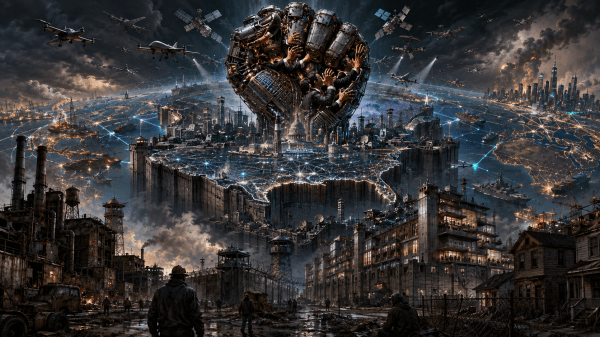
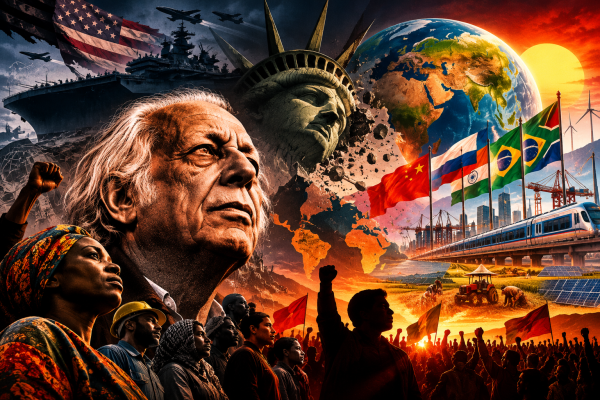
In a time when U.S.-led imperialism tightens its grip, nuanced debates emerge about the new American Pole—a daunting fusion of military, financial, and technological power that suppresses dissent while promising security. Vijay Prashad argues for a hyper-imperialism consolidating state control and aggressiveness against external defiance, while Özcan Buze highlights lingering national rivalries within the empire’s core. As cities devolve into ghost towns stripped of industry and sovereignty is commodified, the left is urged to unite struggles for worker power, national liberation, and social ownership. The empire’s contradictions must fuel a revolutionary response—a call to dismantle the machinery that perpetuates exploitation, rather than aspiring for a mere return to past privileges.

Beyond Hegemony, Beyond Illusion: Samir Amin, Multipolarity, and the Unfinished Road to Socialism

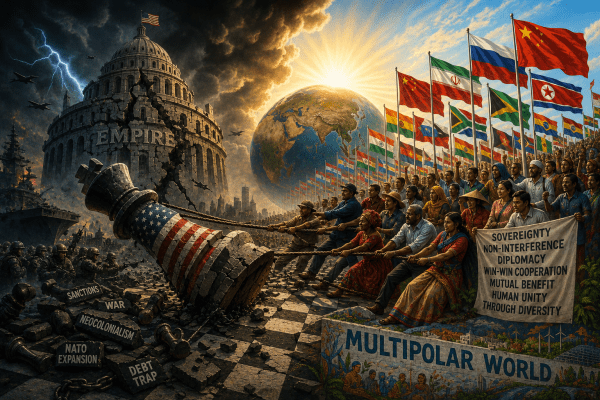
What happens when one of the twentieth century's greatest Marxist theorists is tested against the world that emerged after unipolarity began to fracture? This Weaponized Intellects review excavates Samir Amin's Beyond US Hegemony? as both a product of its historical moment and a living revolutionary framework, measuring its arguments against China's socialist transition, Russia's anti-hegemonic resurgence, the rise of BRICS, and Amin's own later theoretical development. The result is neither celebration nor dismissal, but a critical reconstruction that distinguishes multipolarity from socialism and argues that only organized popular power can transform the decline of empire into genuine human emancipation.

The Foreign Enemy Fraud: From Russiagate’s Thought Police to Chinagate’s Electoral Cage

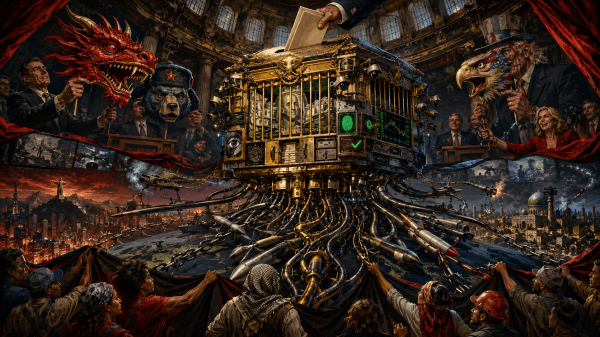
David Corn's resurrection of Russiagate in response to Trump's accusations of Chinagate exposes the absurdity of electoral politics in a billionaire-dominated America. By framing the discourse as a conflict between foreign adversaries—Russia or China—Corn obscures the true culprits: a corrupt ruling class manipulating the political system to protect its interests. Both narratives serve to distract the populace from the reality of a plutocracy masquerading as democracy. The ongoing chaos is but a struggle within the elite, each side reinforcing the structures of oppression while preventing real power from reaching the working class. True resistance demands unity against this imperial façade.

Axis of Sovereignty: Why China, Russia, Iran, and the DPRK Terrify the Empire

In a provocative shake-up, Foreign Affairs describes China, Russia, Iran, and DPRK as a nascent threat, labeling them "worse than an axis." This insinuation reveals a deep-seated imperial anxiety rather than a justified concern over a military conspiracy. These nations are forging multipolar alliances that challenge Western hegemony—an act of sovereign defiance unsettling the imperial status quo. The article underscores an inherent fear of an empowered Global South, no longer obedient to the West’s dictate. It’s not about a looming conquest but about nations rising to reclaim their sovereignty, thus threatening the very structure that sustains Western dominance. Forget the “axis” narrative; recognize the emerging world order as a potential liberation movement for the oppressed.

The Arsenal Is Late: Europe’s Ruling Class Discovers There Is Always Money for War

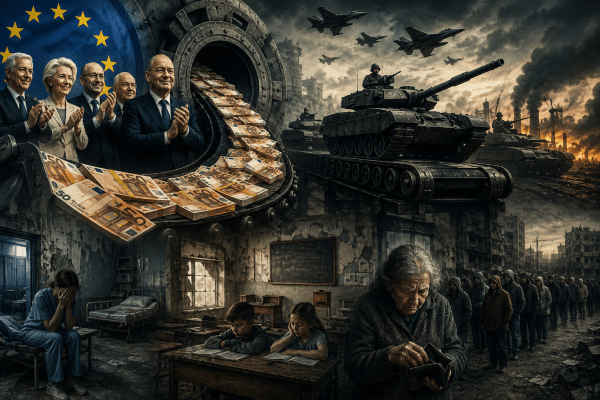
Deutsche Welle cleverly disguises Europe's urgent rearmament as a procurement issue, distracting from the stark reality of militarization overtaking public life. The article's real message isn't about the delays in weapon delivery, but rather the easing of governmental budgets for defense while essential services wither under austerity. It reveals an empire tightening its grip under NATO's command, where social welfare takes a back seat to military expenditure. This narrative won't invite questions about people's needs, but rather about how to improve efficiency in arms production. The specter looms: the increasing normalization of a military-first economy must be resisted, as it's not merely about security, but the reorganization of society around war.

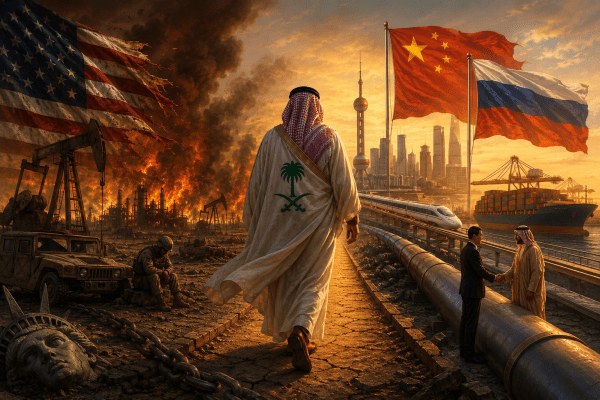
The Master Brings Fire: Why Saudi Arabia Is Looking East as the American Oil Order Burns

The narrative on Saudi Arabia's pivot to China disguises a deeper crisis in the U.S. imperial order. This is not a simple geopolitical romance; rather, it's a monarchy hedging its bets amid a shaky alliance once thought stable. With U.S. militarism fueling vulnerability in the Gulf, Riyadh seeks alternatives to the failing American security blanket, signaling an alarming shift. Yet, this recalibration is not liberation; it reveals the fragility of U.S. dominance as clients explore exits from a system that thrives on exploitation and chaos. As empires decay, the task is clear: galvanize working-class resistance against the war machinery that perpetuates this chaos.

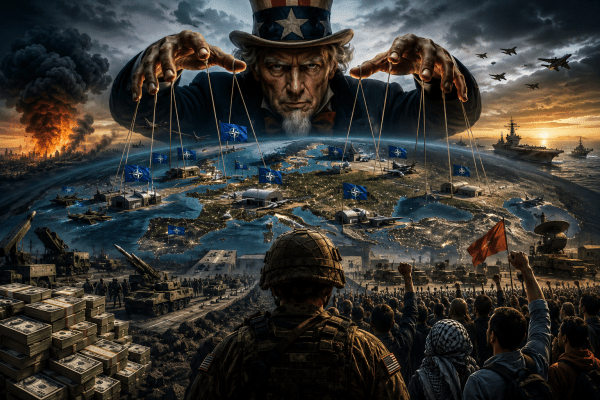
NATO 3.0: The Empire Rebrands Its Launchpads

NBC’s coverage of Pete Hegseth's outburst in Brussels starkly reveals a deeper imperial narrative: NATO is a glorified framework for U.S. militarism, demanding European complicity. Instead of a cooperative alliance, it illustrates a machinery of war where access to land and resources is treated as a given entitlement. The jargon of "burden-sharing" and "NATO 3.0" drapes the insistence on militarized obedience in a veneer of unity. The article neglects dissenting voices, such as the European populations and their rights, instead framing hesitation as irresponsibility. This is not a mere operational adjustment; it’s a clarion call to recognize and resist the underlying realities of imperialism masquerading as alliance-building.

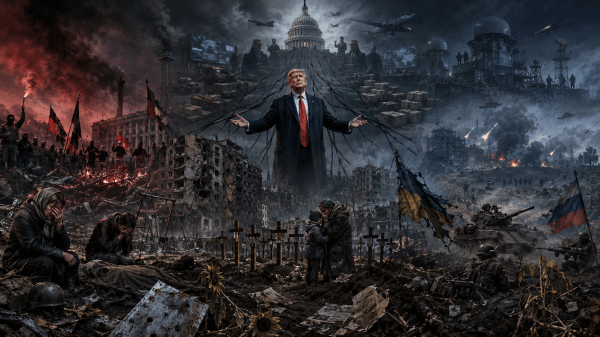
Washington’s War, Ukraine’s Graveyard: The Proxy Conflict Trump Now Pretends to Mediate

The Guardian’s narrative on the Ukraine war kicks off in February 2022, conveniently disregarding the chaotic political landscape, foreign meddling, and the violent rise of armed nationalists that preceded it. The buried history illustrates the overthrow of an elected government and NATO's strategic maneuvers pushing Ukraine to the frontline against Russia. The article reduces years of tragedy to a phone call between Trump, Putin, and Zelenskyy, framing diplomacy as mere spectacle. The real implications? The global working class must rise against this imperialist agenda, demanding peace and refusing to perpetuate a conflict that is less about nations and more about power plays and puppetry.

Hands Off Tanzania: The West Discovers Democracy When Africa Stops Asking Permission

Tanzania's diplomatic dance with Russia unveils a stark reality: while Western media narrows the narrative to a disobedient state seeking validation from imperial powers, the true story is a nation striving for sovereignty and survival. President Hassan’s trip, framed as a scandal by Western outlets, masks the pressing needs of food security, trade, and military cooperation. The West frames Africa’s foreign policy through its lens, yet Tanzania’s pursuit of diverse partnerships challenges this monopoly. This isn’t merely about a president’s reputation; it’s about a country's right to self-determination. The true scandal? Tanzania’s defiance shakes colonial chains, invoking both anxiety and resentment from its former overseers.

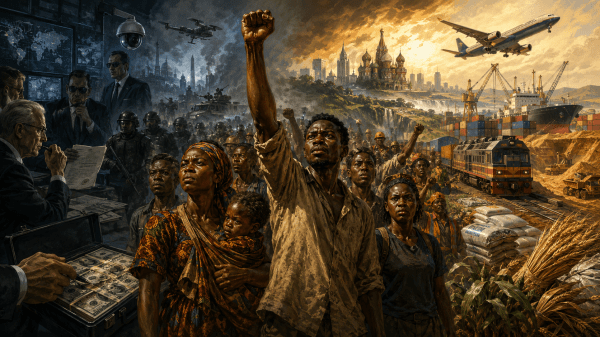
Black Gold, Broken Chains: The AES, China, and the Sahel’s Revolt Against Empire

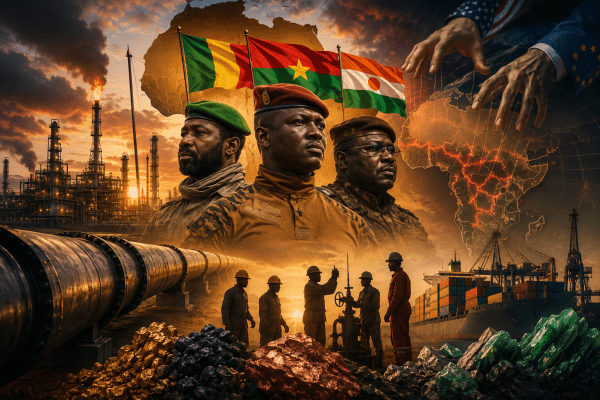
The recent oil agreements between Niger and Chinese firms aren't just another business deal; they expose a seismic shift in Africa's political landscape. As Western powers cling to outdated neocolonial frameworks, Niger is bargaining fiercely for sovereignty over its vast resources, rejecting mere extraction in favor of local control. This isn't a clean break; it’s messy and contradictory, revealing the power struggle over who governs the circulatory systems of wealth. The Sahel countries are navigating a new reality where they challenge traditional dependency and assert their agency. History is shifting beneath our feet—can Africa carve out a new path, or will old patterns reassert themselves?

Website Powered by WordPress.com.

Up ↑