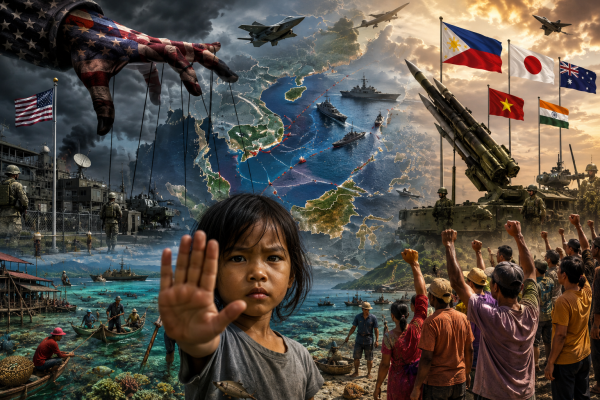
Deutsche Welle dresses militarization in the soft language of autonomy, access, and rules while burying the machinery of containment beneath diplomatic polish. The omitted facts reveal a region tied to China through trade, food security, diplomacy, and history even as U.S.-aligned military infrastructure tightens around it. The real story is not “middle power cooperation,” but... Continue Reading →
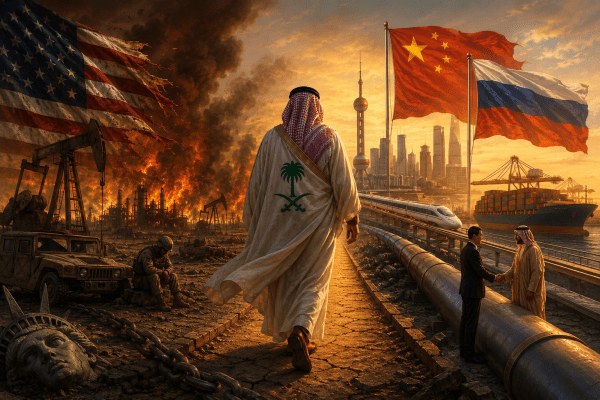
The Master Brings Fire: Why Saudi Arabia Is Looking East as the American Oil Order Burns
The narrative on Saudi Arabia's pivot to China disguises a deeper crisis in the U.S. imperial order. This is not a simple geopolitical romance; rather, it's a monarchy hedging its bets amid a shaky alliance once thought stable. With U.S. militarism fueling vulnerability in the Gulf, Riyadh seeks alternatives to the failing American security blanket, signaling an alarming shift. Yet, this recalibration is not liberation; it reveals the fragility of U.S. dominance as clients explore exits from a system that thrives on exploitation and chaos. As empires decay, the task is clear: galvanize working-class resistance against the war machinery that perpetuates this chaos.
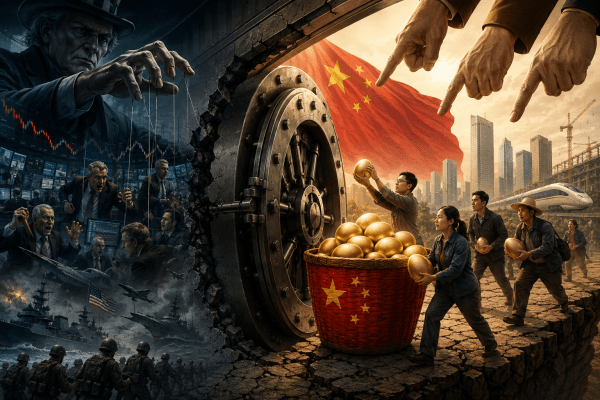
China Locked the Vault: Wall Street Weeps for the Investor It Wanted to Recruit
The New York Times portrays China's financial regulations as a morality tale of oppressed investors yearning for capital freedom, framing Beijing's restrictions on overseas investments as authoritarian repression. However, this narrative conveniently ignores China's struggle against capital flight amidst geopolitical tensions with the U.S. The real story is about defending national wealth from draining into imperial circuits while promoting domestic stability and development. This distortion of capital mobility as individual freedom obscures the broader implications of wealth dispersing into an adversarial financial system. The moral panic surrounding investor frustrations reveals a deeper conflict: the sovereignty of a nation versus the whims of financial capital.
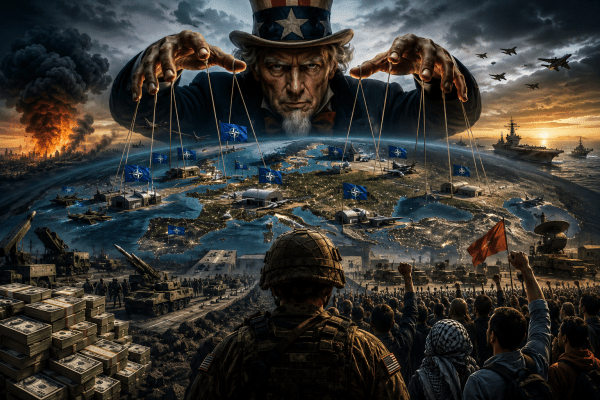
NATO 3.0: The Empire Rebrands Its Launchpads
NBC’s coverage of Pete Hegseth's outburst in Brussels starkly reveals a deeper imperial narrative: NATO is a glorified framework for U.S. militarism, demanding European complicity. Instead of a cooperative alliance, it illustrates a machinery of war where access to land and resources is treated as a given entitlement. The jargon of "burden-sharing" and "NATO 3.0" drapes the insistence on militarized obedience in a veneer of unity. The article neglects dissenting voices, such as the European populations and their rights, instead framing hesitation as irresponsibility. This is not a mere operational adjustment; it’s a clarion call to recognize and resist the underlying realities of imperialism masquerading as alliance-building.
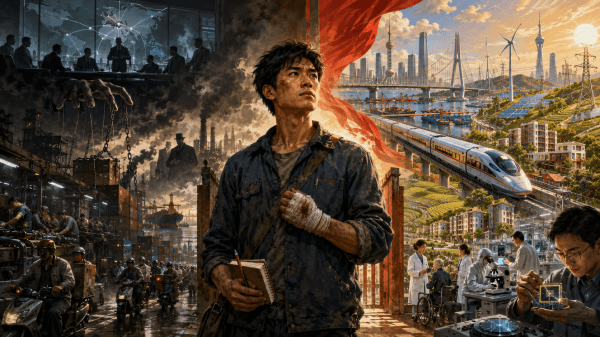
Marx in the Witness Box: How Jacobin Turns a Chinese Worker’s Wounds Against the Revolution
Jacobin's critique of Chinese worker Xiao Hai's memoir misrepresents the entire Chinese Revolution as a failed experiment based on exploitation. While Xiao Hai's story merits recognition, the narrative frames the factory's plight as representative of the whole nation, ignoring China's transformation from a colonial past into a sovereign socialist state. The real conflict lies not between the state and its workers, but rather over how the fruits of development serve the people's dignity versus capital's control. Exploitation exists, but it's the state that counters this with public power, proving not every wound validates Western perspectives of failure. Thus, the critique deflects from recognizing China's unique developmental trajectory amid global capitalism's inequities.
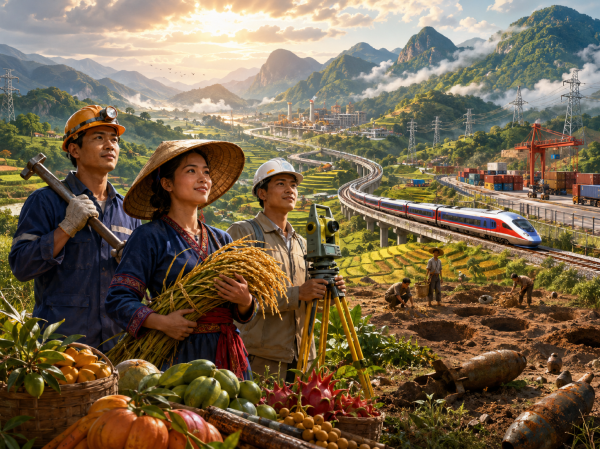
Keeping to the Socialist Path: Laos, China, and the Machinery of South-South Development
The June 2026 Laos-China state visit unfolded as a significant convergence between two socialist nations navigating their intertwined ambitions amid a capitalist-imperialist world. Rather than surrendering to the narrative of a “debt trap,” Laos and China embraced a collaboration marked by political intent, evidenced in thirty-two agreements across sectors like agriculture and technology. This partnership aims to transform Laos into a self-sufficient state, guided by its revolutionary history. The imperial media, however, conveniently ignored this cooperation, as it undermines their narrative of helpless nations. Laos, now reclaiming agency, is no longer portrayed as a mere victim but as a sovereign actor defining its path to development.
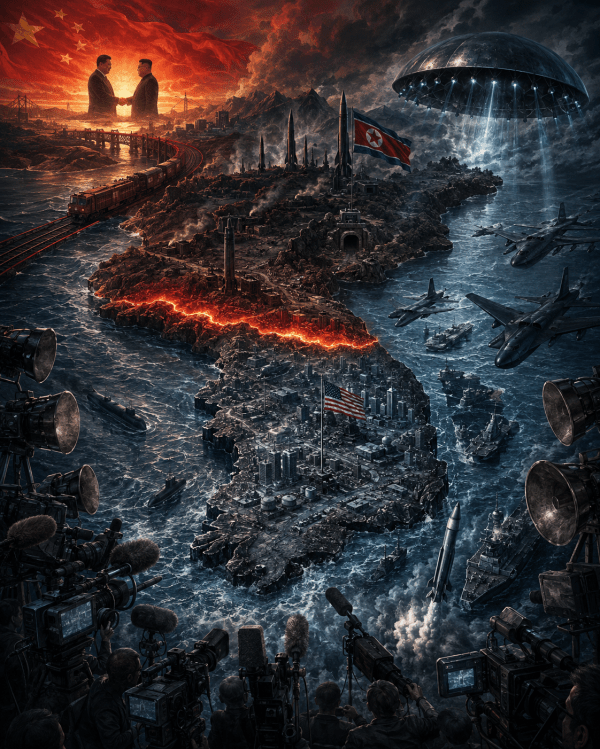
The Empire Calls Its Bombs Peace: Xi’s Silence, North Korea’s Deterrent, and the Unfinished War Washington Refuses to End
The Associated Press's portrayal of Xi Jinping's silence on North Korea's nuclear status obscures the underlying realities of imperial power dynamics. Instead of examining the broader context of the ongoing Korean War, the article sensationalizes rhetoric to favor U.S. perspectives, framing Xi as tacitly supporting Kim Jong Un. This selective narrative overlooks the long-standing military presence of the U.S., the unresolved conflict, and the historical injustices faced by North Korea. By fostering a culture of fear, the media perpetuates a skewed understanding of sovereignty and security, leaving out the pivotal truth: peace cannot stem from disarmament when historical grievances and military pressure remain intact.
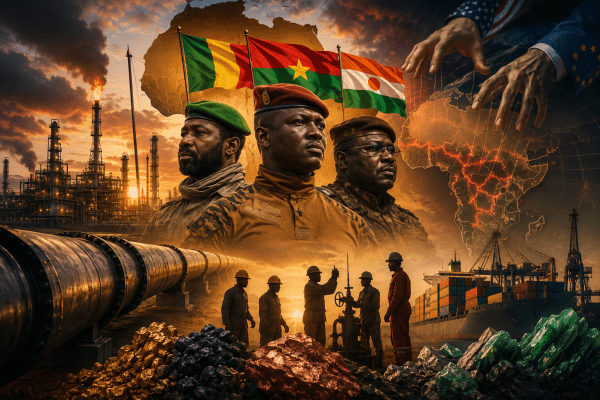
Black Gold, Broken Chains: The AES, China, and the Sahel’s Revolt Against Empire
The recent oil agreements between Niger and Chinese firms aren't just another business deal; they expose a seismic shift in Africa's political landscape. As Western powers cling to outdated neocolonial frameworks, Niger is bargaining fiercely for sovereignty over its vast resources, rejecting mere extraction in favor of local control. This isn't a clean break; it’s messy and contradictory, revealing the power struggle over who governs the circulatory systems of wealth. The Sahel countries are navigating a new reality where they challenge traditional dependency and assert their agency. History is shifting beneath our feet—can Africa carve out a new path, or will old patterns reassert themselves?
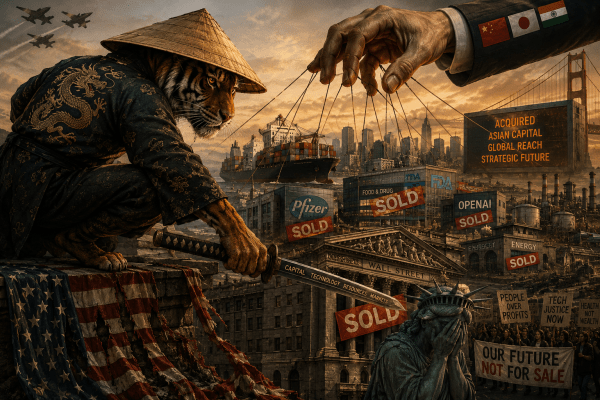
Crouching Tiger, Hidden Shareholder: The Empire Goes on the Auction Block
What if the façade of Asian firms acquiring American assets is merely a veneer masking a broader crisis of imperial power? The Asia Times' portrayal presents a triumphant narrative of capital flows, yet ignores the brutal realities behind ownership transitions. As firms like Sun Pharma and Mitsubishi grasp at American infrastructure, the underlying forces of deindustrialization, labor exploitation, and geopolitical tensions are left unexamined. This isn't progress—it's a manipulation of perception. The real question remains: who controls these vital resources? Without a radical reimagining of ownership, the future remains shackled to elite interests, while workers are forced to celebrate their own dispossession.
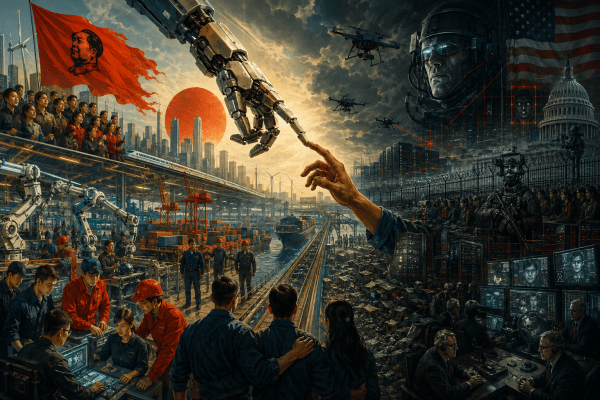
RED MACHINES, BLACK MIRRORS: AI, EMPIRE, AND THE NEW LONG MARCH AGAINST CAPITALISM
China's transformation from a mere assembly line to a powerhouse of intelligent manufacturing signals a seismic shift that threatens to dismantle the Atlantic monopoly on industrial command. As the U.S. responds with sanctions and technological blockades, the real battle unfolds over who controls the future of AI and automation. This is not merely an economic transition; it's a clash of ideologies. The West fears a new geopolitical order where technological sovereignty empowers the Global South, undermining imperial hierarchy. While intelligent manufacturing holds the potential for collective liberation, unchallenged monopoly control risks deepening exploitation. The future demands that humanity wrests command from corporate hands, reshaping technology for collective progress.