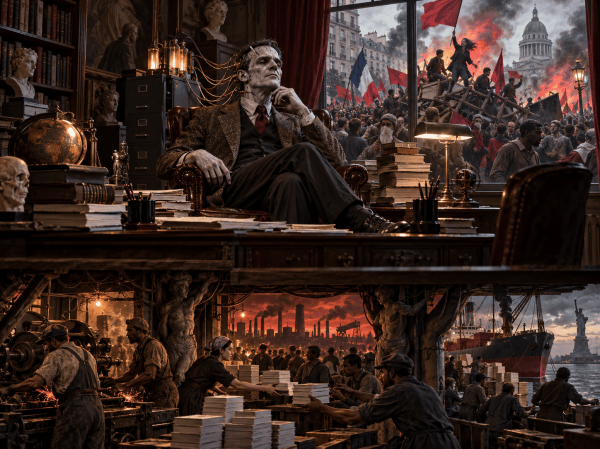
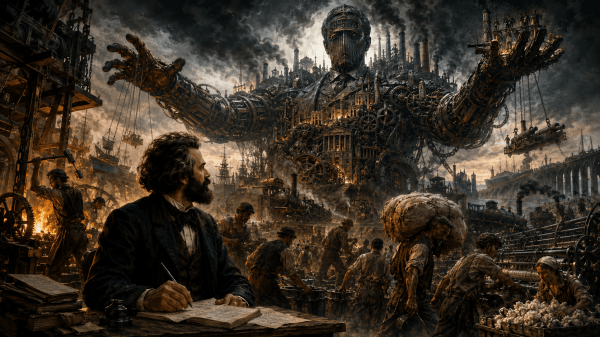
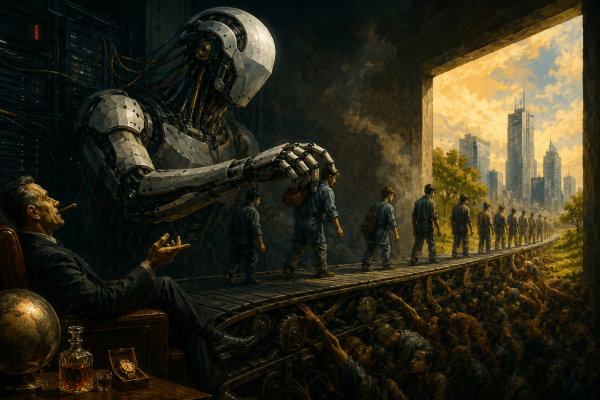
The pervasive claim that socialism has "failed" is an ideological construct rather than a factual statement. A closer analysis reveals that socialist systems, from the Soviet Union to China, achieved measurable gains in education, health, and economic development under dire conditions. This narrative of failure is not supported by historical evidence but rather is a product of a century-long ideological war against socialism. Capitalism, meanwhile, perpetuates crises, inequality, and social fragmentation, failing to meet human needs. The real question is not why socialism fails, but how it has transformed societies when confronted with immense challenges, challenging the ruling narrative that defines success so narrowly.
Palantir and the Digital Leviathan: Silicon Power, State Violence, and the Technofascist War on Humanity
Palantir's recent manifesto is more than corporate bravado; it reveals an unsettling convergence of warfare, surveillance, and governance. The media's alarmism obscures a deeper truth: Palantir stands as a linchpin in an expansive control apparatus, integrating deportation, military actions, and state surveillance into a seamless framework of power. Critics timidly label this brewing authoritarianism but fail to pinpoint the machinery at work. As anti-immigrant systems and military strategies fuse, resistance is evolving. It’s time to unite disparate struggles against this creeping technofascism, transforming scattered dissent into a powerful, coordinated force ready to dismantle the system that seeks to dominate us all.
Freedom Trucks and Forgotten Crimes: Trump, PragerU, and the Rolling War Over America’s Past
The Freedom Trucks, a mobile spectacle promoted by Trump’s campaign and supported by federal and corporate funding, embody a calculated effort to sanitize American history. Behind the facade of patriotic education lies a strategic apparatus that whitewashes the nation's origins: the triumph of freedom inescapably intertwined with slavery and genocide. As kids engage with AI-enhanced exhibits glorifying historical figures, the truth becomes obscured within a mythic narrative designed for obedience, not inquiry. In response, educators and activists are building a counter-history rooted in truth, pushing back against this historical manipulation. As the ruling class desperately rewrites the past, the need for authentic resistance grows ever urgent.
Missing Scientists or Manufactured Fog: Empire’s Security State, Media Spectacle, and the Weaponization of Uncertainty
The media's sensational framing of missing scientists morphs unrelated tragedies into a national mystery, leveraging public fear to create an illusion of coordinated malevolence. An investigation reveals these cases are disparate incidents, manipulated through narrative distortions, state secrecy, and congressional theatrics. The real enemy isn't a hidden conspiracy but a militarized system that prioritizes power over human lives. This complex interplay fuels confusion, enabling a dangerous fog where accountability and transparency are sacrificed for profit and control. Rather than succumb to fear, the public must demand clarity and challenge the oppressive structures that breed distrust and silence dissent.
Petrodollars and Missiles: U.S.–Israel War, Iran’s Retaliation, and the Gulf’s $6 Trillion Imperial Contradiction
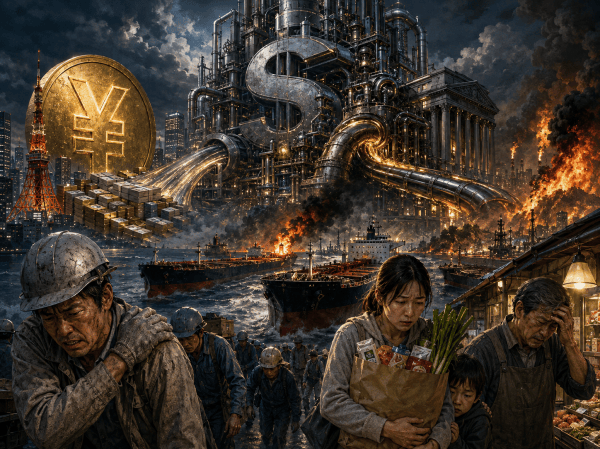
The Economist laments over the Gulf's $6 trillion sovereign wealth as war disrupts its financial stability, but this narrative is a smokescreen. The real story lies in the imperial dynamics that intertwine U.S.-Israeli aggression with Gulf fortunes. Rather than a neutral financial assessment, it presents war as a minor nuisance to elites banking on oil rents. The article flattens the human cost, sidelining migrant laborers and ignoring the root causes of conflict shaped by imperial agendas. Ultimately, this crisis reveals the Gulf's wealth is a tool of empire, not liberation—a stark reminder that war and capital are inexorably linked.
Gold, Lithium, and the Chains of Empire: Zimbabwe, China, and the Battle to Break the Colonial Economy
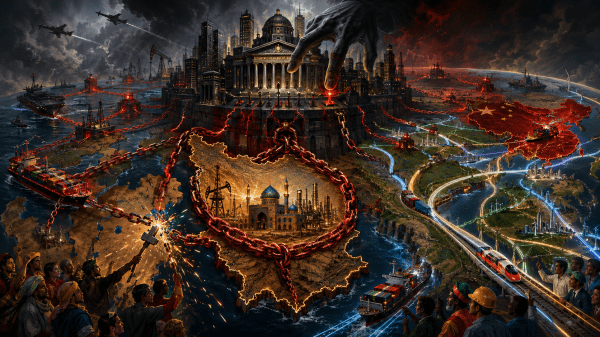
The imperial press calls Zimbabwe’s recovery “bizarre,” revealing more about empire’s ideology than Africa’s reality. Beneath the headlines lies a material transformation driven by gold, lithium, labor, and survival within a system built to constrain it. As Zimbabwe pushes toward beneficiation and partners with China, it enters a global struggle over who controls resources, industry,... Continue Reading →
Capital vs. the Commons: The War on Women, Land, and the World Proletariat
This Weaponized Intellects review of Caliban and the Witch by Silvia Federici excavates how capitalism emerged not as progress, but as a counter-revolution forged through land theft, colonial conquest, and the violent subjugation of women’s bodies. It traces the medieval struggles of peasants, workers, and heretics to show that another world was not only imagined—but... Continue Reading →
Settlers in the Wreckage: J. Sakai, Technofascism, and the War for the Future
J. Sakai’s interviews force the U.S. left to confront the settler-colonial foundations it has spent generations avoiding. His analysis exposes the myth of the revolutionary white proletariat, the collapse of liberal illusions, and the expansion of war into every domain of life. But Weaponized Information pushes further, grounding his insights in monopoly finance capital, technofascism,... Continue Reading →
Apples to Apples: Superexploitation from Orchards to iPhones
What appears to be a comparison between two unrelated commodities—apples picked in U.S. orchards and Apple devices assembled across the Global South—is in fact a comparison between two forms of the same capitalist-imperialist labor regime. In U.S. agriculture, superexploitation is organized through settler-colonial land relations, racialized migrant labor, H-2A dependency, deportability, and the broader coercive... Continue Reading →
Inside the House of Cards: How Empire Manages Crisis Through Memory, Civility, and Myth
Four former presidents gather under corporate media lights to present democracy as a shared moral inheritance, grounded in unity, civility, and participation. Beneath that performance lies a material history of deregulation, war, surveillance, and repression that produced the very crisis now being discussed. The interview reveals not reflection, but a ruling-class effort to manage legitimacy... Continue Reading →