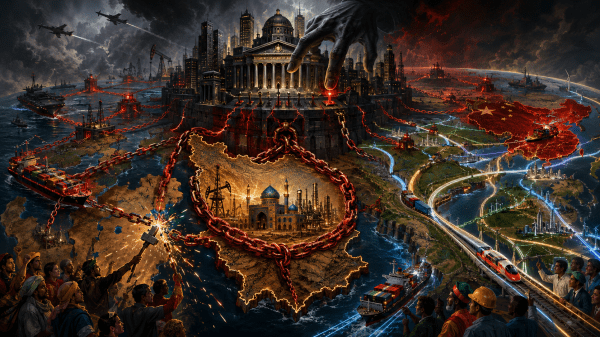
The Empire Still Holds the Gates: Multipolarity Builds Roads Around Them
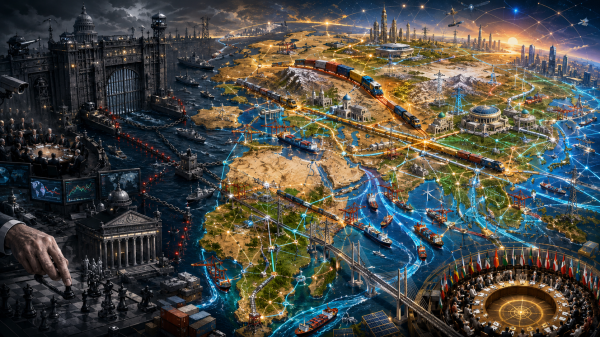
Multipolarity isn't a new empire but a complex web of power dynamics where countries strive for developmental autonomy without severing ties to imperial centers. Though emerging institutions like BRICS and SCO offer alternatives, they reveal a deeper truth: political independence doesn't guarantee economic sovereignty. The geopolitical landscape is increasingly messy; states are interconnected yet vulnerable. For every summits attended and partnerships forged, underlying dependencies remain unchallenged. The real question isn’t where countries sit on a world map; it’s who controls resources and technology within their borders. True liberation from exploitation lies not in diplomatic participation but in addressing internal inequalities and class power.

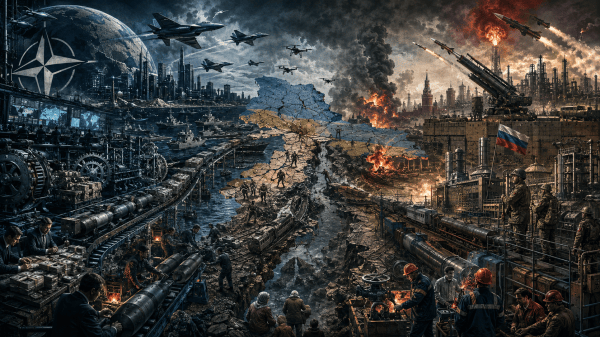
Primacy Produced the Resistance: How the Atlantic Order Turned Russian Sovereignty Into a Threat

The Economist’s recent piece on Putin frames him as a cornered gangster, obscuring the complex geopolitical history that shapes the current conflict in Ukraine. It reduces a crisis rooted in thirty-five years of U.S.-led strategy, NATO expansion, and Russia's own capitalist evolution to Putin’s psychological profile. This overlooks how pre-existing economic and military pressures prepared the battlefield for escalation. By ignoring this context, the narrative becomes dangerously simplistic, presenting Russia's actions as mere reactions to outside threats, not as part of a larger historical clash of powers. The truth? This war is as much about systemic tensions as individual leaders.

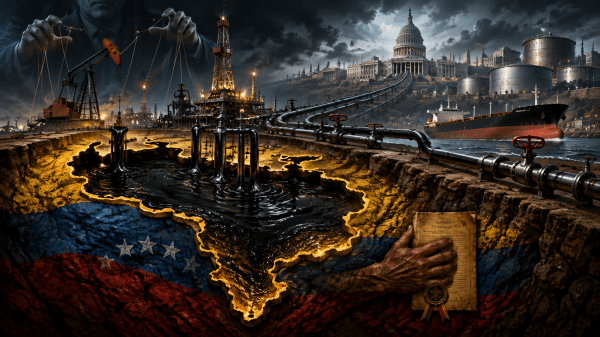
The Deed Stays in Caracas: How Washington Commands Oil It Doesn’t Own

Delcy Rodríguez's shocking pivot from anti-imperialist rhetoric to endorsing U.S. oil agreements is less a political betrayal and more an unveiling of Venezuela's fractured sovereignty. The narrative is explosive: as Washington tightens its grip, national ownership of oil assets becomes a hollow claim, with real power shifting to private capital and American influence. The illusion of control is shattered—Venezuelans are left to wrestle with a new reality where contracts dictate who profits from their resources. The stakes are high, as demands for transparency and public scrutiny grow louder; will the oil wealth truly benefit the people, or simply reinforce the power structures in play?

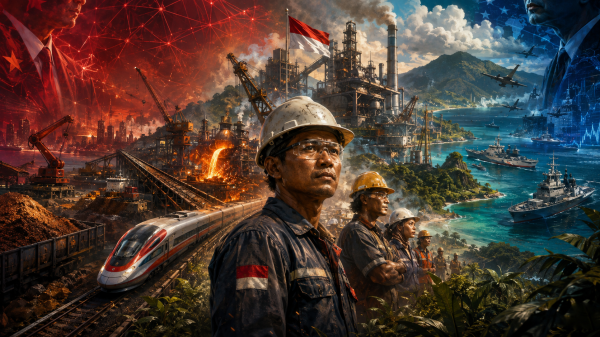
Sovereignty Built on Foreign Steel: Indonesia’s Industrial Rise and the Fight Over Who Commands It

Indonesia is ensnared in a web of foreign capital and corporate power, straddling the interests of Beijing and Washington while striving for autonomy. Its dependency on Chinese investment for industrial growth is creating complex struggles over resource control and worker rights. While the state seeks to regulate foreign involvement in its burgeoning industries, genuine sovereignty hinges on who truly reaps the benefits. Rhetoric about maintaining balance belies a troubling reality: as the nation builds industrial capacity, the power dynamics increasingly favor foreign interests, leaving local workers and communities grappling for their rightful share in this economic transformation.

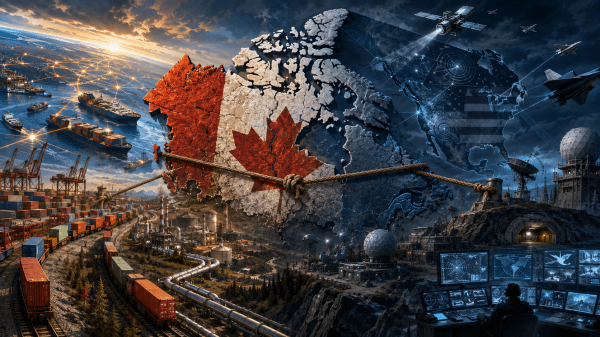
The Freight Is Moving, the Guns Aren’t: Canada Between Multipolar Markets and Atlantic Command

Canada’s century-old continental bargain with the United States built factories, pipelines, profits, and military integration into the same structure that Washington can now turn into leverage. Yet Canada was never merely an American dependency: its banks, mining firms, pension funds, and corporations grew into a secondary imperial power capable of exercising domination abroad even while... Continue Reading →

Bessent’s Dollar War: Iran, Imperial Recalibration, and the Rising Cost of American Command

Scott Bessent’s Operation Economic Outcast exposes the machinery beneath U.S. financial power. Washington is not merely sanctioning Iran; it is pressuring governments, banks, ports, airlines, and corporations across the world to enforce American policy or risk exclusion from the dollar system. The campaign reveals a deeper process of Imperialist Recalibration: as U.S. command becomes harder to reproduce, inherited financial and military advantages are wielded more openly and coercively. Yet every act of compulsion also strengthens the incentive for sovereign alternatives. The struggle is over who controls the infrastructure of global economic life—and who gets to say no.

Lenin’s Imperialism: The World Is Socialized, the Loot Stays Private

Lenin's "Imperialism, the Highest Stage of Capitalism" exposes the dark underbelly of capitalism, where economic forces and political power dance in a shadowy masquerade. He reveals how imperialism is not a mere side-effect of states' ambitions but a complex product of capital's relentless quest for profit, driving nations to export capital rather than just goods. The document reflects the sinister dynamics that create monopolies, establish financial oligarchies, and differentiate classes within the proletariat, suggesting that even workers can become complicit in their subjugation. This analysis remains crucial today, as it compels us to question ownership and control within our increasingly interconnected world.

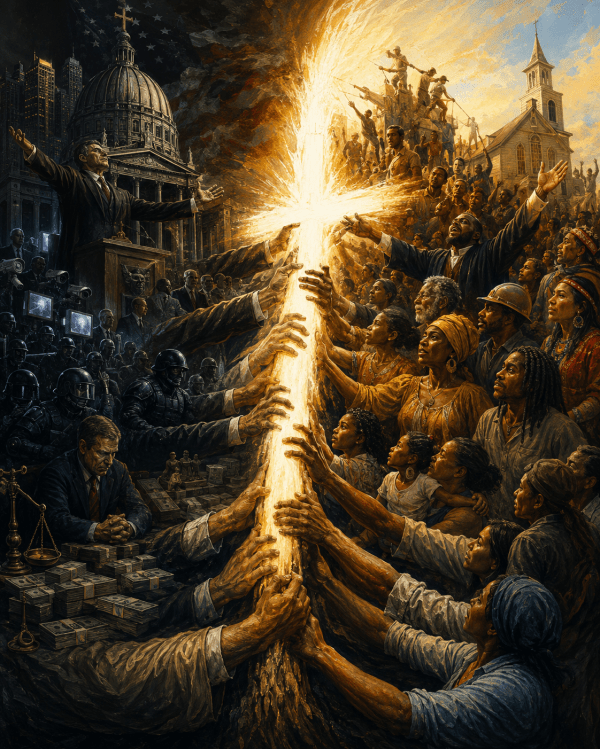
Whose Gospel Is It?: Empire, the Oppressed, and the Battle for Christianity

The profound legacy of American Christianity reveals a striking dichotomy: a faith that has historically upheld domination and one that fervently resists it. From the hidden church of the enslaved to Black abolitionism and Indigenous Christian defiance, oppressed communities have seized the Gospel to construct their liberation narrative. As institutional power consolidated in the hands of reactionary forces, an urgent call emerged for believers to reclaim their spiritual heritage and resist Christian nationalism. The challenge lies in forging an organized Christian movement capable of translating faith into collective action that confronts exploitation and promotes social justice, reinvigorating the powerful tradition of liberation Christianity.

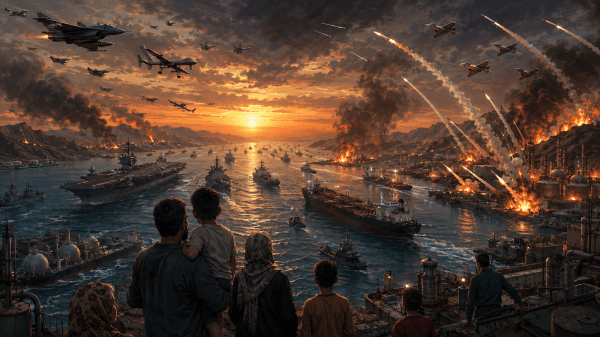
Bombing for Submission, Producing Deterrence: How the War on Iran Manufactures the Threat Washington Claims to Fear

CNN admits that Washington started the war, then quietly moves that fact into the scenery so Iran’s response can reappear as the new source of danger. The chronology tells another story: Iran’s offensive doctrine preceded the August reshuffle and was hardened through war, blockade, a failed reciprocal settlement, and renewed coercion around the Strait of... Continue Reading →

The Wall Produces the Ladder: How America’s China Scare Turns Exchange Into Evidence of Threat

China’s Young Envoys program is openly political public diplomacy, but that is not the same thing as communist indoctrination, infiltration, or espionage. This essay excavates how KOMO and Defending Education turn educational exchange into a national-security threat by collapsing contact, influence, ideology, and subversion into one Red Scare narrative. Beneath the panic lies a deeper contradiction: U.S. efforts to isolate China generate the very Chinese counter-communication then cited as proof that greater isolation is necessary. The result is a narrow imperial provincialism that treats direct encounter with another civilization, its ideas, and its socialist project as something Americans must be protected from.

Website Powered by WordPress.com.

Up ↑