Ward Churchill’s Perversions of Justice exposes the legal machinery through which Indigenous sovereignty is recognized just enough to legitimize treaties, land cessions, resource extraction and colonial administration—then restricted whenever it threatens settler possession or state power. Following that contradiction from conquest and property into uranium mining, blood quantum, AIM repression and U.S. imperial expansion, this review tests both Churchill’s strongest insights and his strategic limits. His final wager—that the colonizer’s own law can be weaponized to fracture legitimacy and withdraw consent—remains powerful. But the deeper revolutionary question is what turns that rupture into organized material counter-power.
The Revolution Must Keep Making Revolutionaries: Fidel Castro and the Fight Against Becoming a Monument
On the centenary of Fidel Castro's birth, his autobiography, My Life, acts as a provocative lens into the complexities of revolution. It dismantles the myth of the born revolutionary, showcasing instead how context, struggle, and learning forge warriors for change. Despite Cuba's successes, deep-rooted issues like racism and inequality persist, with Fidel warning that Cuba's most significant threat may not come from external forces but from within—its own inability to correct mistakes. As the Revolution ages, the pressing query remains: can it continually foster revolutionary consciousness amidst evolving contradictions or will it succumb to the complacency that often follows victory?
The Dividend Is Human: Africa’s Population Boom and the Battle Over Production
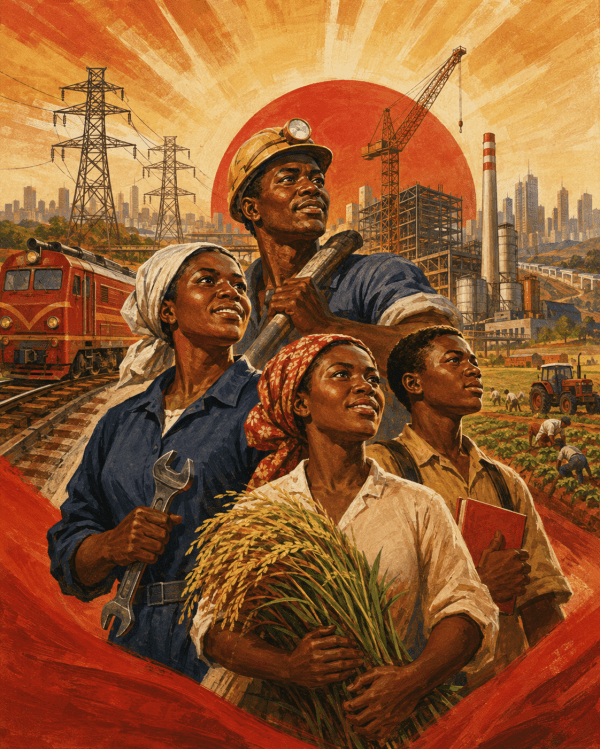
The Financial Times provocatively flips the Malthusian narrative on its head, arguing Africa's plight stems from a historical lack of population rather than excess. This revisionist tale criticizes the colonial legacy that stripped Africa of its labor and infrastructure, while the current swell of population, cities, and markets struggles against debt and underdevelopment. The real challenge isn't merely a growing populace; it's whether Africans can seize control of factories, technology, and continental markets. As density increases, the push for organized labor and investment in industrial capacity becomes crucial—otherwise, Africa risks becoming a mere market for foreign goods, trapped in a cycle of dependency despite its demographic potential.
The Status Quo Has to Be Manufactured: America’s Pacific Primacy and the Rising Cost of Keeping It Alive
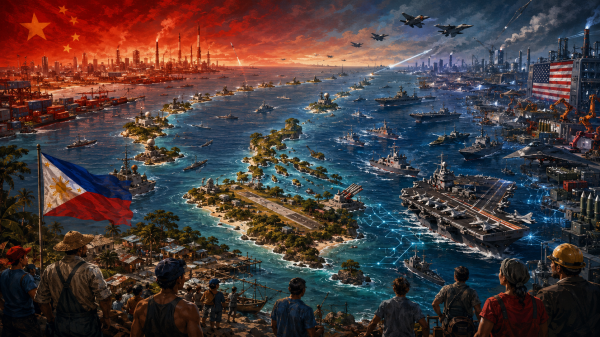
Elbridge Colby's assertion that America is the "apex predator" in military readiness disguises the troubling reality of dwindling U.S. military supremacy against a rising China. The narrative expertly choreographs U.S. responses to China's actions, framing Washington as a stabilizing force while ignoring the material consequences of its expansive military infrastructure and the burdens it places on allies like the Philippines. This contrived status quo sustains American dominance at an ever-increasing cost, presenting imperial ambitions as mere defense. The real struggle lies not in choosing a stronger predator, but in dismantling the systems that perpetuate this militarized hierarchy, exposing the true stakes of U.S. imperialism.
The Axis Washington Built: How the War Against Multipolarity Is Pushing the World Toward World War III
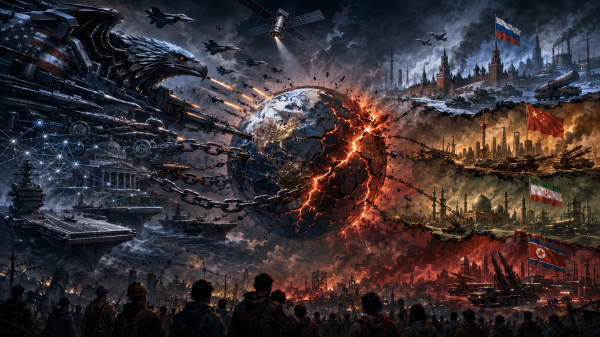
The rhetoric around a so-called "authoritarian axis" of Russia, China, Iran, and North Korea is dangerously misleading. This narrative stems from a long history of U.S. military expansion and interventionism that has fostered the very hostilities it claims to combat. Instead of viewing these nations as a monolithic threat, we must recognize that their alliances are responses to decades of American aggression and coercion. Bosco's portrayal of these entities as simple villains obscures the deeper dynamics at play, namely that U.S. actions have directly contributed to their convergence. To prevent a World War III scenario, we must dismantle the war machinery perpetuating this cycle of escalation and educate the public on these historical nuances.
When the Shield Became the Target: The Iran War and the Mecca Pact Beyond Washington
The Times of India packages Saudi money, Turkish military power and Pakistan’s nuclear arsenal into the spectacle of an emerging “Islamic NATO,” while burying the war and contradictions that made the agreement intelligible. Beneath the headline lies an older architecture of military cooperation, energy dependence and regional hedging accelerated by a U.S.-Israeli war that devastated... Continue Reading →
Tomorrow’s Russian Tank: How a Hypothetical War Rearms Europe Today
CNN warns that Russia could someday “test” NATO, but the military transformation supposedly justified by that future threat is already underway. Europe is being rearmed, civilian infrastructure reorganized for military mobility, and productive capacity redirected toward an expanding war economy as U.S. weapons stocks strain under commitments spanning Ukraine, Iran, Russia, and China. The deeper story is not a proven Russian timetable for invasion, but an American-centered imperial bloc confronting the rising cost of reproducing its military reach and hardening Europe as a Western Rear. What Russia could do tomorrow becomes the argument for what Europe must militarize today.
Surrender as Relief: Rubio’s War on Cuba’s Means of Survival
Marco Rubio’s new sanctions do not merely target Cuban military procurement. They strike the institutions, banking channels, suppliers, repair systems, and foreign relationships through which Cuba survives a blockade designed to manufacture deprivation and political surrender. Washington restricts fuel, finance, technology, and trade, then presents the resulting hardship as proof of socialist failure. As Cuba turns toward China, Russia, and other partners to preserve its sovereignty, those lifelines are recast as threats. Behind the language of security lies the old imperial objective: isolate the island, weaken its defenses, deepen popular suffering, and force the Cuban Revolution to kneel.
The Crime of Making Too Much: China and the Empire’s Monopoly on Abundance
The Economist's recent critique of China's industrial prowess reveals a deeper hypocrisy within Western narratives. While it acknowledges China's efficiency, it vilifies state-driven competition when it disrupts Western hegemony. The real issue is not overproduction but an imbalance of purchasing power, presenting an ugly tableau of warehouses filled with goods while people lack access. As China strives for self-reliance, the West's response is to impose tariffs and sanctions, prioritizing monopoly over equitable distribution. This conflict isn’t a mere economic dispute; it’s a struggle for who controls productive capacity. The question is whether to align production with human need or maintain the status quo of inequality.
When the Numbers Revolt: The World Stops Buying the American Empire
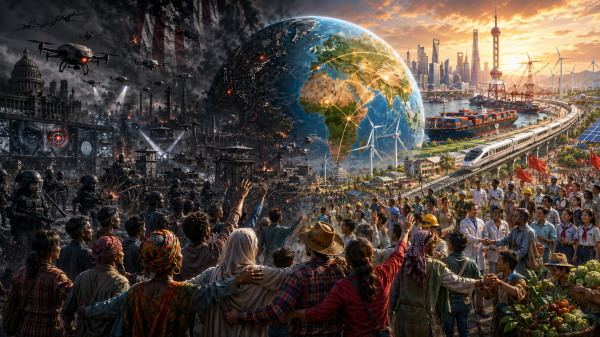
The world is turning its back on the American Empire as perceptions shift dramatically in favor of China, a shift underscored by a recent Pew survey revealing greater global trust in China over the U.S. The BBC attempts to downplay this trend, attributing it to America's chaotic leadership under Trump, but the truth lies in a stark reality: nations are weary of U.S. interference and long for a relationship defined by trade, not military might. This reversal signals not just a popularity contest but a fundamental reevaluation of power dynamics. The challenge now is to harness this anti-imperialist sentiment into a mass movement against war with China.