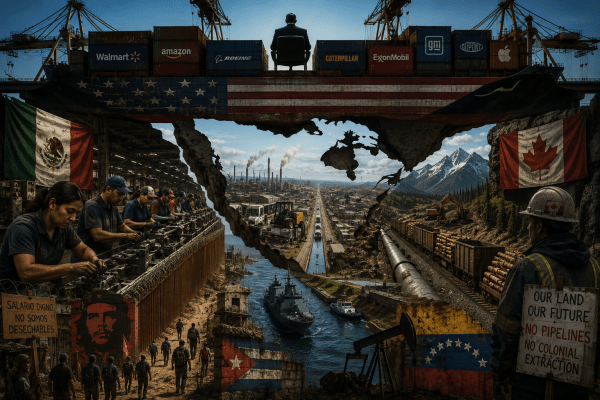
Same Boss, New Contract: USMCA and the Empire’s Grip on Mexico and Canada

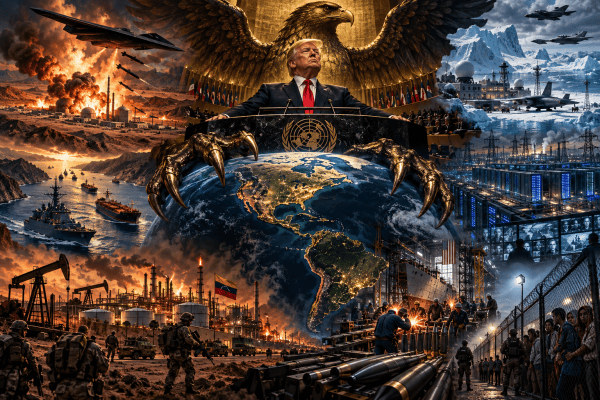
NBC's portrayal of Trump's refusal to renew the USMCA is more than a mere disruption in trade; it’s a calculated move to establish an iron grip over North America. The article frames this as instability, ignoring the deeper narrative of imperial ambition where trade agreements become tools for coercion. The U.S. isn't retreating; it's reconfiguring the continent, tightening control over Mexico and Canada while excluding China from the fold. Workers from all sides suffer under this new order while corporate interests thrive unchallenged. Ultimately, this is not a story of chaos but of empire reshaping subjugation—inviting you to witness the birth of Fortress America instead of its decay.

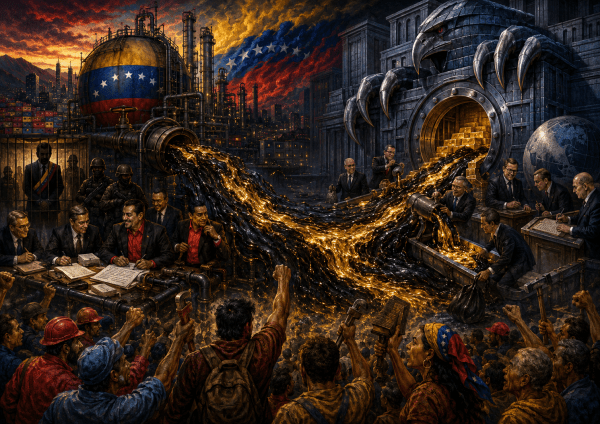
The Robber at the Gate: Venezuela, China, and the American Pole’s Oil Ledger

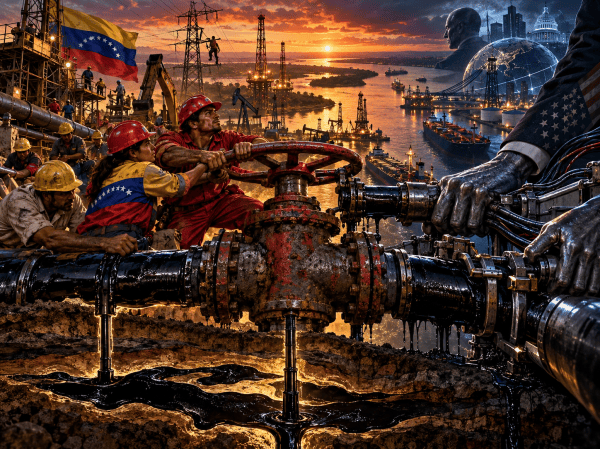
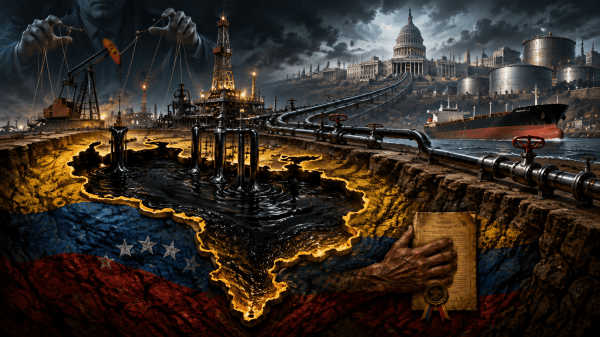
Washington masquerades as a “gatekeeper,” but it’s merely an imperial force exploiting Venezuela’s oil through a facade of debt management. The South China Morning Post article dismisses the severe issue of sovereignty, framing the US’s dominance as mere financial oversight. This is financial piracy, where the empire suffocates a nation but presents itself as a recovery manager. As China seeks to protect its investments in Venezuela, the true battle is not about debt but about reclaiming sovereignty from imperial grasp. The struggle is clear: Venezuela’s resources belong to its people, not to the US, which must be confronted directly to dismantle this neocolonial command.

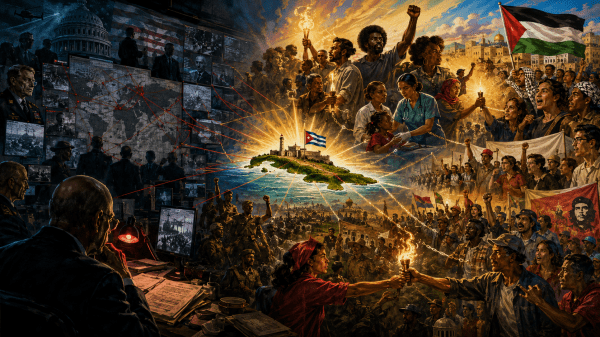
The Blockade’s Market Miracle: How Washington Starves Cuba, Then Calls the Hunger Socialism

CBS/AFP’s portrayal of Cuba’s recent economic reforms is less about facts and more about constructing a narrative that favors imperialism. Framing these reforms as desperate "free-market" concessions, the article ignores the U.S. blockade's true role in choking Cuba's economy while painting socialism as a failed ideology. This reporting reduces complex realities into a morality tale that absolves the U.S. of accountability, instead distilling Cuba's struggles into proof of its socialist inadequacy. Ultimately, the real story is one of resilience: a nation striving for autonomy amid relentless imperial domination, desperately attempting to balance limited market adaptations without surrendering sovereignty.

The Roads Remember Túpac Amaru: Jacobin Calls Popular Power a Vacuum

Bolivia is experiencing a seismic shift, as the indigenous and working-class masses rise against a government they see as complicit with imperial interests and corporate power. Jacobin's portrayal of this struggle as chaotic “political vacuum” fails to grasp the reality: the people are not absent from politics; they are reclaiming agency. While the ruling class laments blocked roads and instability, they ignore the genuine political force being forged by those occupying them—workers, campesinos, and indigenous communities asserting power where previously silenced. The barricades are not just obstacles; they symbolize resistance against commodification and repression, signaling a reawakening of history in the fight for sovereignty and justice.

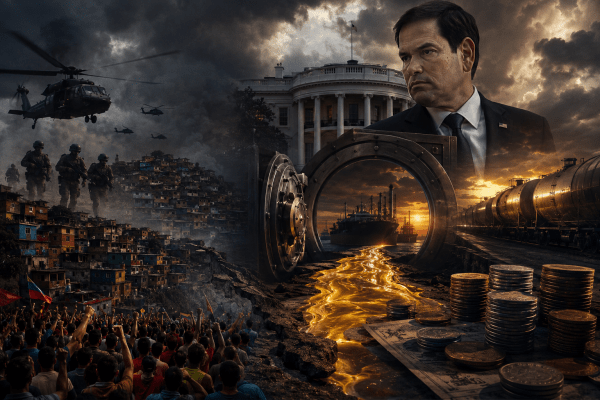
The Embassy Government: How AP Turns Venezuela’s Capture Into a Chavista Crack-Up

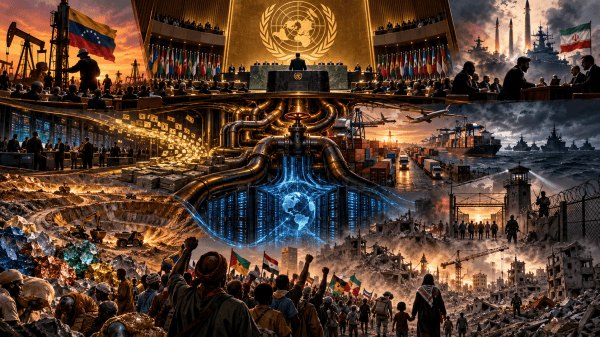
The Associated Press spins Venezuela’s crisis as a mere internal drama of political division, subtly masking the U.S. military’s pivotal role in toppling Maduro. Behind the façade of Chavismo's weakening loyalties lies imperial coercion—an acting government subservient to Washington. The narrative portrays disarray but downplays U.S. oversight of oil sales and military drills, normalizing foreign occupation while disguising it as internal strife. By framing this as a crisis of governance, the AP shifts attention from the imperial machinery at work, thereby sidestepping critical questions of sovereignty and resistance. The real story is not betrayal; it's exploitation under the guise of reform.

Empire at the Doorstep: How the Narco War Becomes a License to Penetrate Sovereignty

What appears as a tragic incident in Chihuahua is exposed as a carefully managed narrative that obscures the presence of foreign power operating inside Mexico. The factual record reveals a dense security architecture where intelligence, surveillance, and training pipelines blur the line between cooperation and control. Stripped of illusion, the episode reflects a deeper contradiction... Continue Reading →

Reopening the Cage: Bretton Woods Returns to a Country That Refused to Kneel

The article presents IMF and World Bank re-engagement as routine normalization, masking a political event shaped by years of institutional blockade and external pressure. Beneath that surface lies a struggle over sovereignty, where constitutional legitimacy, sanctions, and anti-neoliberal memory redefine what “recognition” actually means. The return of global finance collides with a still-living project of... Continue Reading →

Starve the Island, Blame the Victim: How Empire Turns Siege into “Defiance”

The New York Times repackages economic warfare as diplomatic tension, presenting Cuba’s resistance as irrational defiance rather than a response to material coercion. A reconstruction of the facts reveals a deliberate strategy of energy strangulation, financial restriction, and calibrated pressure designed to destabilize Cuban society from within. When these conditions are placed back at the... Continue Reading →

Venezuela in the Imperial Vise: The Intercept, Trump’s “Perfect Scenario,” and the Forced Reconstruction of the Bolivarian State

The Intercept’s account of Trump’s Venezuela “success” exposes colonial features of the new order, but still stops short of naming the imperial body on the table. Beneath the language of reform and normalization lies a forced recalibration: oil, minerals, law, diplomacy, and public finance are being reorganized under duress while the Bolivarian state struggles to... Continue Reading →

Cuba Will Not Kneel: Trump, The New York Times, and the Contradictions of the American Pole

The New York Times launders U.S. regime-change demands into the language of negotiation, masking domination as diplomacy. Beneath the narrative, a coordinated campaign of economic strangulation—especially through energy chokepoints—reveals deliberate coercion, not Cuban failure. This pressure is part of a broader imperial recalibration: the consolidation of Fortress America as a hemispheric bloc under U.S. control.... Continue Reading →

Website Powered by WordPress.com.

Up ↑