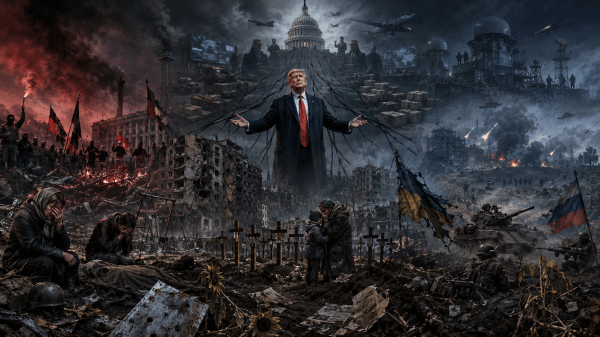
All Will Be Forgiven: Pakistan, Iran, and the Empire’s Crisis of Obedience

Pakistan’s emergence as a mediator in the U.S.-Iran war is a masquerade, showcasing a military regime, led by Prime Minister Shehbaz Sharif, seeking legitimacy through compliance with U.S. agendas. The facade of diplomacy hides a deeper reality: military-managed governance, manipulative partnerships, and economic subjugation sustained by Western powers. As global dynamics shift, Pakistan's balancing act among rival powers reveals an opportunistic survival strategy rather than genuine sovereignty. This troubling scenario underscores an essential truth: imperialism thrives not through outright violence but via coercive control, shaping a world where authentic peace remains a distant, arguably unattainable ideal.

Fault Lines of Empire: U.S. Strategy, Pakistani Class Power, and the Crisis of Sovereignty

Asia Times frames Pakistan’s instability as a strategic obstacle, obscuring the material and political forces shaping the terrain. The crisis emerges from IMF austerity, elite domination, climate catastrophe, and a deepening political rupture following the coup against Imran Khan. Imperialist recalibration collides with multipolar transition, exposing the struggle between sovereignty and neocolonial extraction. Workers, peasants,... Continue Reading →

Cuba Will Not Kneel: Trump, The New York Times, and the Contradictions of the American Pole

The New York Times launders U.S. regime-change demands into the language of negotiation, masking domination as diplomacy. Beneath the narrative, a coordinated campaign of economic strangulation—especially through energy chokepoints—reveals deliberate coercion, not Cuban failure. This pressure is part of a broader imperial recalibration: the consolidation of Fortress America as a hemispheric bloc under U.S. control.... Continue Reading →

NBC’s Cuba Narrative and the Siege It Refuses to See

NBC’s coverage frames Cuba’s economic adjustment as a dramatic crisis, but a close reading of the article reveals the narrative techniques and framing devices used to construct that impression. Beneath the headline lies a far denser economic terrain shaped by sanctions, energy shortages, inflation, and the long search for productive stability under siege. When these... Continue Reading →

How to Kill a Nation: Michael Parenti and the Imperial Instruction Manual — Humanitarian War, Economic Siege, and the Machinery of Regime Destruction

This review reads Michael Parenti’s To Kill a Nation as a field manual for modern empire, tracing how Yugoslavia was destroyed not by accident or ancient hatred but through a disciplined sequence of epistemological warfare, economic siege, political fragmentation, demonization, humanitarian pretext, and infrastructural annihilation, culminating in privatization, permanent dependency, and historical amnesia. By following... Continue Reading →

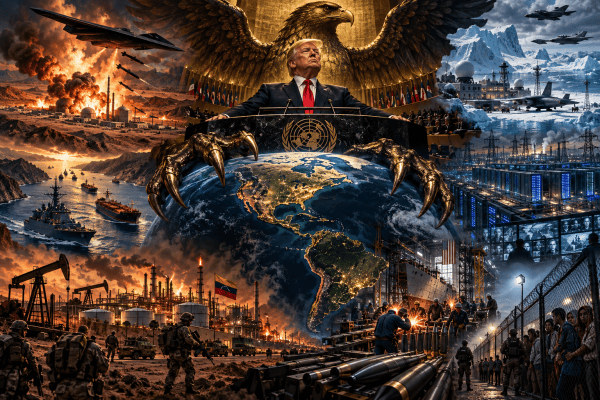
Fortress America and the Oil Ultimatum: Venezuela, Hyper-Imperialism, and the Open Consolidation of the American Pole

This essay argues that Trump 2.0 marks the open phase of U.S. hyper-imperialism, where coercion replaces consent and hemispheric dominance is enforced without disguise. Using Venezuela as the central case, it traces how leader abduction, naval encirclement, oil custodianship, and legal warfare form a consolidated strategy to subordinate sovereign states to the American Pole under... Continue Reading →

Who Owns Venezuela?

Trump’s claim that Venezuela “stole” U.S. oil is not a gaffe or exaggeration—it is an imperial verdict. This essay dismantles that claim by tracing the conflict over Venezuela’s resources through international law, the neoliberal wreckage of the pre-Chávez era, the Bolivarian rupture, Maduro’s Plan de la Patria, and María Corina Machado’s restoration blueprint. What emerges... Continue Reading →

Website Powered by WordPress.com.

Up ↑