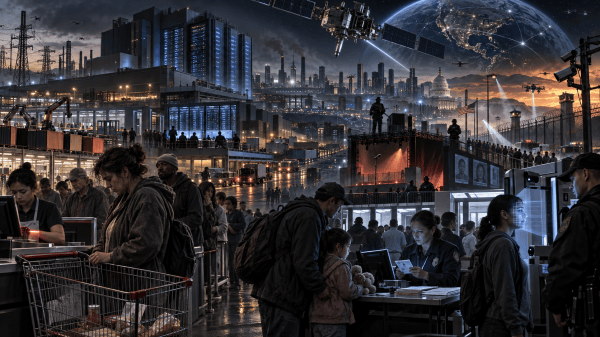
The U.S. state is vigorously fortifying its military and technological apparatus while systematically withdrawing social support through food assistance and healthcare, showcasing a disturbing trend of technofascist consolidation. As military might is acknowledged in orbit and social benefits dwindle, the ruling order exacerbates class divisions, demanding increased legitimacy from a population now subjected to strict classification and conditionality. Political expression faces barriers in increasingly privatized venues, reflecting a tactical alliance between state interests and tech monopolies. This ominous shift marks a historical reckoning: the state is reallocating its substantial resources toward military supremacy at the expense of everyday security, creating a precarious societal structure poised for conflict.
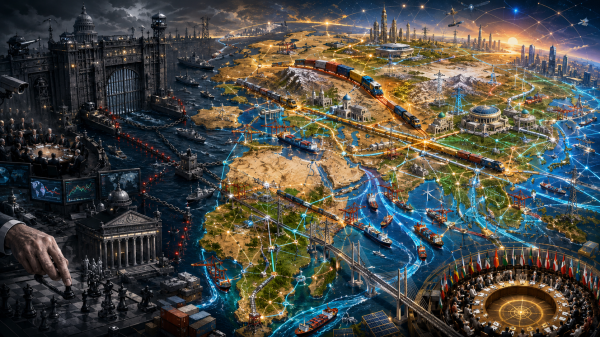
The Empire Still Holds the Gates: Multipolarity Builds Roads Around Them
Multipolarity isn't a new empire but a complex web of power dynamics where countries strive for developmental autonomy without severing ties to imperial centers. Though emerging institutions like BRICS and SCO offer alternatives, they reveal a deeper truth: political independence doesn't guarantee economic sovereignty. The geopolitical landscape is increasingly messy; states are interconnected yet vulnerable. For every summits attended and partnerships forged, underlying dependencies remain unchallenged. The real question isn’t where countries sit on a world map; it’s who controls resources and technology within their borders. True liberation from exploitation lies not in diplomatic participation but in addressing internal inequalities and class power.
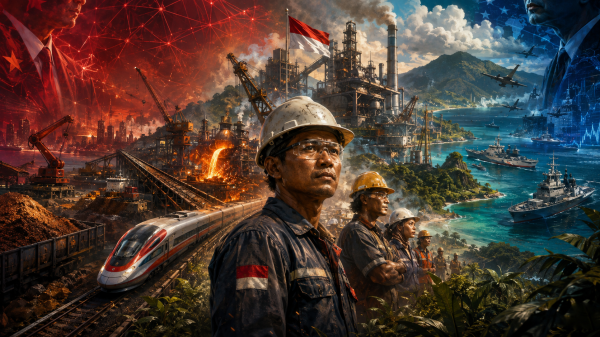
Sovereignty Built on Foreign Steel: Indonesia’s Industrial Rise and the Fight Over Who Commands It
Indonesia is ensnared in a web of foreign capital and corporate power, straddling the interests of Beijing and Washington while striving for autonomy. Its dependency on Chinese investment for industrial growth is creating complex struggles over resource control and worker rights. While the state seeks to regulate foreign involvement in its burgeoning industries, genuine sovereignty hinges on who truly reaps the benefits. Rhetoric about maintaining balance belies a troubling reality: as the nation builds industrial capacity, the power dynamics increasingly favor foreign interests, leaving local workers and communities grappling for their rightful share in this economic transformation.
Bombing for Submission, Producing Deterrence: How the War on Iran Manufactures the Threat Washington Claims to Fear
CNN admits that Washington started the war, then quietly moves that fact into the scenery so Iran’s response can reappear as the new source of danger. The chronology tells another story: Iran’s offensive doctrine preceded the August reshuffle and was hardened through war, blockade, a failed reciprocal settlement, and renewed coercion around the Strait of... Continue Reading →
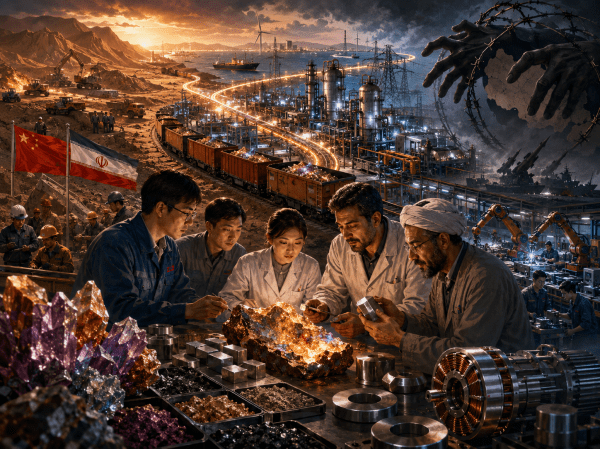
Containment Makes Its Own Escape Routes: China, Iran, and the Rare-Earth Contradiction
The narrative surrounding a modest scientific workshop between China and Iran is sensationalized into a geopolitical crisis, primarily through the lens of U.S. concerns. It's ironic: while Washington frantically condemns this cooperation, the real battle revolves around who controls the rare-earth supply chain. Both countries face sanctions that push them to create independent scientific and industrial pathways. The focus should pivot from mere diplomatic theatrics to whether this partnership enhances Iran's productive capacity or merely perpetuates dependency. Ultimately, this cooperative effort holds the potential to disrupt traditional power dynamics—unless it devolves into another avenue for exploitation under foreign dominance.
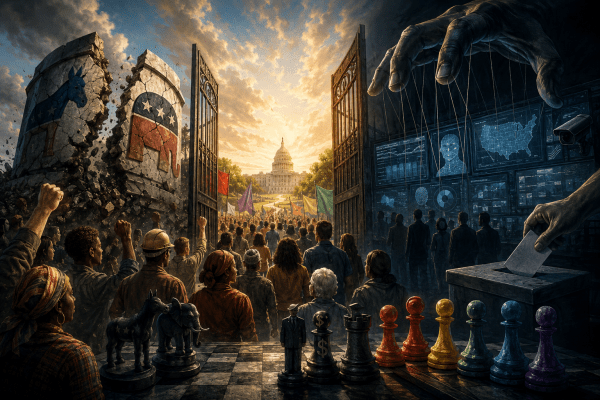
The Gate Opens, the Ground Hardens: Proportional Representation and the Fight Over Political Power
Americans are losing faith in the two-party cage faster than the political system can manufacture consent for it, yet NPR narrows that crisis of legitimacy into a problem of electoral design. Proportional representation could genuinely break part of the machinery that converts millions of politically dissatisfied people into wasted votes, but the racial history of... Continue Reading →
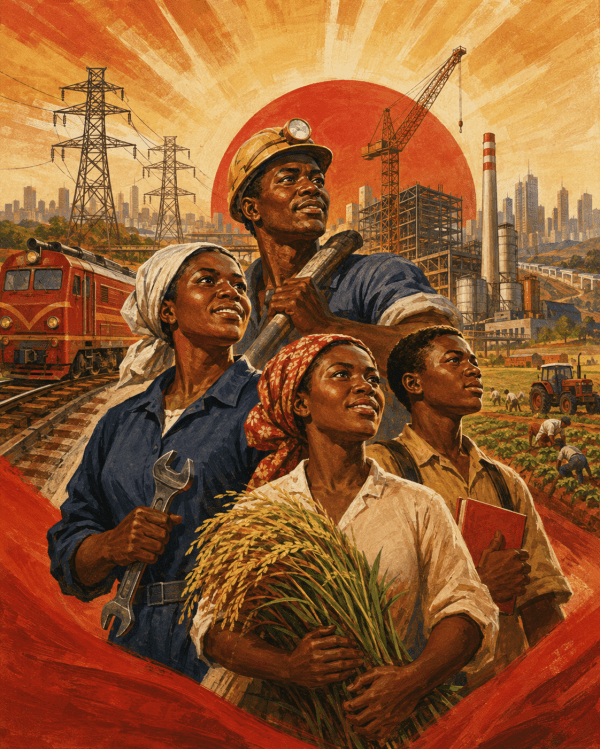
The Dividend Is Human: Africa’s Population Boom and the Battle Over Production
The Financial Times provocatively flips the Malthusian narrative on its head, arguing Africa's plight stems from a historical lack of population rather than excess. This revisionist tale criticizes the colonial legacy that stripped Africa of its labor and infrastructure, while the current swell of population, cities, and markets struggles against debt and underdevelopment. The real challenge isn't merely a growing populace; it's whether Africans can seize control of factories, technology, and continental markets. As density increases, the push for organized labor and investment in industrial capacity becomes crucial—otherwise, Africa risks becoming a mere market for foreign goods, trapped in a cycle of dependency despite its demographic potential.
The Dream on Layaway: How Capital Repossessed American Adulthood
The "Great Postponement" isn't just about delayed dreams; it signals a devastating structural collapse for young adults trapped in a never-ending cycle of dependency and disempowerment. Despite holding jobs, many remain shackled to their parents' homes, unable to participate fully in adulthood due to spiraling rents and crippling inequality. The system deliberately obscures the true nature of this crisis, homogenizing individual struggles into mere statistics while upholding a status quo drenched in inherited privilege and racial disparity. The solution lies in organizing tenant unions and collective action—because waiting for change is no longer an option. The American Dream is not postponed; it's been stolen.
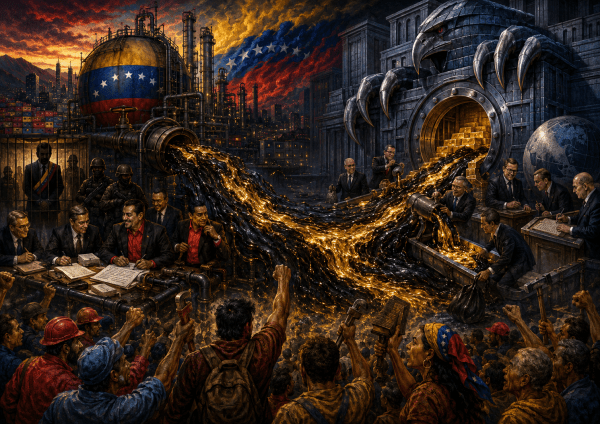
The Thieves Opened the Vault: From Comprador Corruption to Imperial Receivership in Venezuela
The betrayal of Pedro Binaggia, a Venezuelan informant for U.S. authorities, is just a microcosm of a much larger imperial drama. While Binaggia recorded evidence of a $1.2 billion oil fraud, he found the American government he served turned its back on him after extracting what it needed. This tale is framed as his personal tragedy but obscures the broader context of imperial overreach. The U.S. not only investigates and prosecutes alleged crimes but assumes control over Venezuela’s oil revenue, reducing a sovereign state to a pawn in a power game. The theft of national wealth is cleaned up by a facade of legality, while corrupted officials and foreign interests conspire in the shadows. It's a grim reminder: in this twisted narrative, the real crime lies in the extraction, not just the theft.
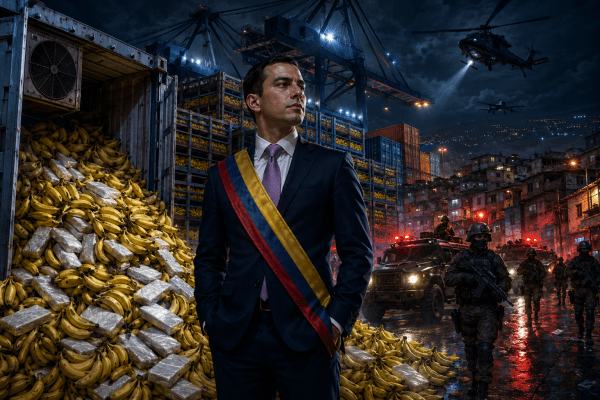
White Bricks, Yellow Gold: Noboa’s Banana Empire and the Drug War That Never Looks Up
Ecuador's banana industry is a tangled web of legal commerce and illicit narcotics, illustrated starkly by the recent discovery of nearly 770 kilograms of cocaine hidden in a banana shipment. The narrative spins a tale of heroic law enforcement battling malevolent traffickers, all while evading deeper scrutiny of who truly profits. President Daniel Noboa, emerging from a powerful banana-exporting family, faces criticism for militarizing the drug war without addressing the oligarchic structures underpinning the trade. This contradiction exposes a class-selective drug war where the state fights the visible enemy at the bottom while shielding corporate interests. The demand? Unmask the hidden players and dismantle the system that links both bananas and cocaine.