Un-American by Choice: W.E.B. Du Bois and the Revolution Liberal Memory Could Not Bury
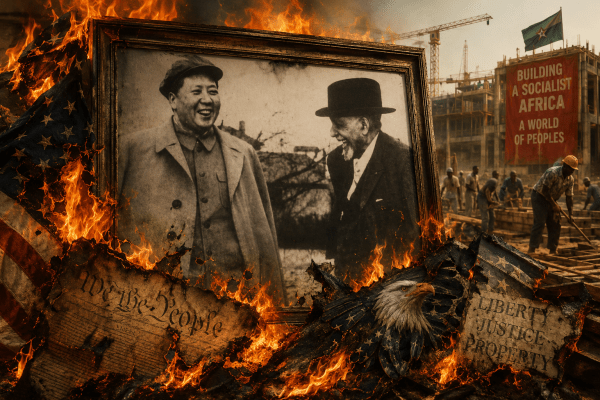
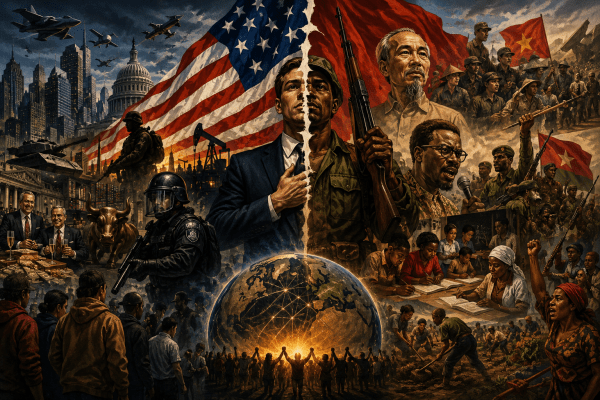
For generations, the American academy celebrated W.E.B. Du Bois while burying the revolutionary conclusions that defined the final decades of his life. In this Weaponized Intellects review of Bill V. Mullen's Un-American, we excavate the real Du Bois: communist, anti-imperialist, Pan-African internationalist and unapologetic ally of socialist revolution. Mullen powerfully restores Du Bois to the global struggle against capitalism and colonialism, yet retreats into familiar anti-Stalinist assumptions when revolution becomes embodied in the Soviet Union and the People's Republic of China. The result is both an indispensable recovery and a revealing ideological battleground over the meaning of socialism, state power and the unfinished project of world revolution.

The Market Came Armed: Sven Beckert and the World Capital Built by Conquest

Sven Beckert demolishes capitalism’s favorite myth: that it emerged from free markets, innovation, and peaceful exchange. His global history shows a system built through conquest, slavery, colonial dispossession, state power, coerced labor, and repeated counterrevolution. Yet Beckert repeatedly turns rebellions, socialist revolutions, and anticolonial victories into episodes in capitalism’s adaptation. This review seizes his historical arsenal while rejecting that retreat, arguing that a world made through organized class and colonial power can be remade only through the organized power of workers and oppressed peoples.

Communists and Patriots: The Flag, the Class, and the Lie of Imperial Nationalism

Trump says you can be a communist or a patriot—but not both. This essay exposes the historical fraud buried inside that slogan. By reconstructing the nation through historical materialism, it shows that nationalism has never possessed a fixed political content. In oppressed nations, communists repeatedly became the truest patriots because the struggle for national liberation demanded the overthrow of colonialism, imperialism, and comprador rule. In imperialist nations, however, nationalism serves the opposite function: binding workers to the ruling class and its global system of domination. The real contradiction is not between communism and patriotism, but between imperial patriotism and the liberation of the people.

The National Question Under Siege: How the New Cold War Weaponizes China’s Ethnic Contradictions

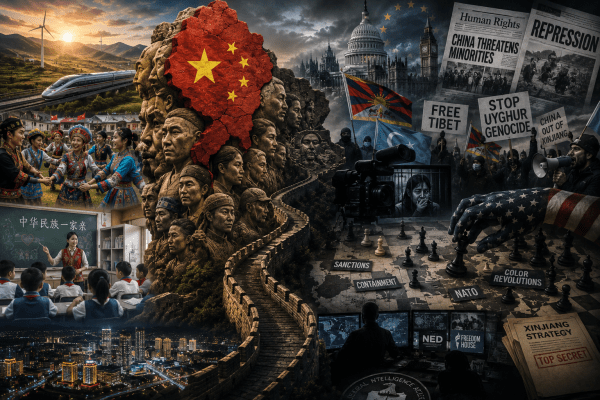
The New York Times frames China’s ethnic unity law as a blatant act of repression against minorities, echoing a Cold War moral narrative. Yet, this interpretation overlooks the historical and political complexities faced by a socialist state trying to maintain unity amidst the legacies of imperialism and foreign interference. The law seeks to counteract separatism and assert national sovereignty, but critics argue it risks bureaucratic assimilation of diverse ethnic identities. Ultimately, the struggle over the national question lies not in simplistic moral judgments, but in addressing imperialism's manipulative strategies while safeguarding genuine autonomy and cultural integrity within China's socialist framework.

Socialism Without Revolution: Jacobin’s Market Fantasy Against the Socialist World

Bhaskar Sunkara’s market socialism is a bold yet flawed vision that naively overlooks the burdens of imperialism. He critiques past socialist models while proposing that worker-run firms can flourish within a system still embedded in capitalist exploitation. However, the reality is that these worker enterprises would still rely on the global hierarchy that upholds imperial advantages. A true socialist awakening must reject these inherited structures and demands an anti-imperialist framework instead. Without confronting the realities of colonial legacies and ensuring reparative relations, Sunkara’s proposal risks socializing the benefits of imperialism while maintaining its oppressive mechanisms intact.

From Yan’an to Shenzhen: How China Forged Socialism Through Concrete Contradiction

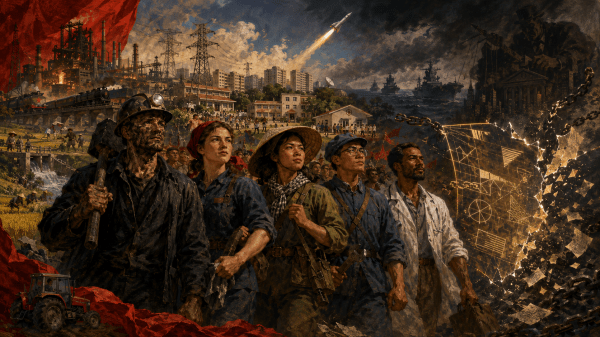
China’s revolutionary saga obliterates the Cold War illusion of socialist states as mere Soviet puppets. Through peasant uprisings and intricate political maneuvers, China redefined socialism amidst imperial oppression, transforming from a colonial victim to a technological titan without abandoning Communist rule. The narrative that constraints socialism to a Soviet mold collapses under China’s rich history of adaptation to its unique tumultuous reality. China’s evolution showcases socialism as a living pursuit aimed at sovereignty and rejuvenation, not dogmatic adherence. The experiences of struggle, experimentation, and resilience reflect a deep understanding: socialism thrives on continuous reimagining, not imitation.

Marx in the Witness Box: How Jacobin Turns a Chinese Worker’s Wounds Against the Revolution

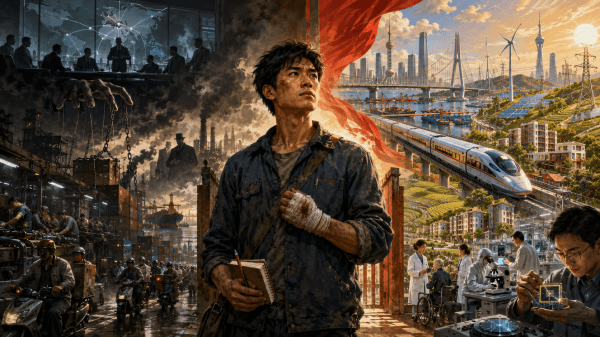
Jacobin's critique of Chinese worker Xiao Hai's memoir misrepresents the entire Chinese Revolution as a failed experiment based on exploitation. While Xiao Hai's story merits recognition, the narrative frames the factory's plight as representative of the whole nation, ignoring China's transformation from a colonial past into a sovereign socialist state. The real conflict lies not between the state and its workers, but rather over how the fruits of development serve the people's dignity versus capital's control. Exploitation exists, but it's the state that counters this with public power, proving not every wound validates Western perspectives of failure. Thus, the critique deflects from recognizing China's unique developmental trajectory amid global capitalism's inequities.

The Throne Was Always Cracked: Radhika Desai and the Myth of American Hegemony

Radhika Desai’s Geopolitical Economy obliterates the illusion of a stable, American-led world, revealing that capitalism thrives on conflict, not unity. The book exposes capitalism’s instability, punctuated by crises that merely reshift the burdens onto workers and debtor nations. Desai argues for a multipolar world not as a peaceful transition to a new hegemon, but as a rupture from monopolistic control, fostering opportunities for sovereign development and socialist planning. However, liberation demands that working people reclaim the means of production and governance. The narrative warns against complacency; the emerging multipolarity is ripe for struggle, shaping the future based on who wields power over resources and development.

They Called It Ego: Jacobin, Chris Smalls, and the Policing of Black Anti-Imperialist Labor

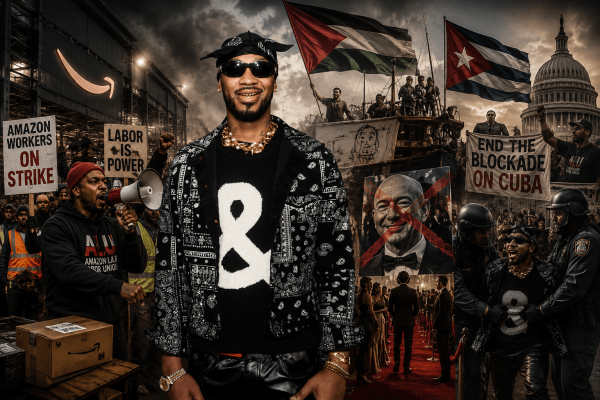
Chris Smalls, once heralded as a labor hero, now finds himself a casualty of overblown ego in the eyes of Jacobin. Yet, this portrayal dangerously obscures a deeper truth: his evolution from solely confronting Amazon to advocating for Palestinian and Cuban solidarity reveals an unsettling fear among the respectable Left. They're comfortable with labor militancy as long as it remains contained and domesticated; once it branches into anti-imperialism, they recoil. Smalls symbolizes a challenge to the status quo, an unfiltered confrontation with empire that threatens to redefine labor politics as an international struggle. In essence, the fear of a Black worker embracing a global perspective exposes the fragile backbone of contemporary Leftist thought.

Capitalism After the Robbery: Adam Smith, the Wealth of Nations, and the Clean Alibi of Bourgeois Political Economy

Adam Smith’s The Wealth of Nations is a twisted tale masquerading as a free-market manifesto, one that defies the naive faith bestowed upon it by neoliberals. It exposes capitalism's fundamental contradictions, revealing how labor produces wealth while class divides it unjustly. Smith acknowledges the state's crucial role in maintaining this order, contradicting the myth of an autonomous market. He scrutinizes colonialism and monopoly yet ultimately upholds capitalist structures. Historical materialism challenges his framework, demanding accountability from the beneficiaries of this exploitation. As we dissect Smith's insights, we unearth his omissions, seeking a world where labor governs—transforming capitalism's alibi into an indictment of its foundation.

Website Powered by WordPress.com.

Up ↑