The media's sensational framing of missing scientists morphs unrelated tragedies into a national mystery, leveraging public fear to create an illusion of coordinated malevolence. An investigation reveals these cases are disparate incidents, manipulated through narrative distortions, state secrecy, and congressional theatrics. The real enemy isn't a hidden conspiracy but a militarized system that prioritizes power over human lives. This complex interplay fuels confusion, enabling a dangerous fog where accountability and transparency are sacrificed for profit and control. Rather than succumb to fear, the public must demand clarity and challenge the oppressive structures that breed distrust and silence dissent.
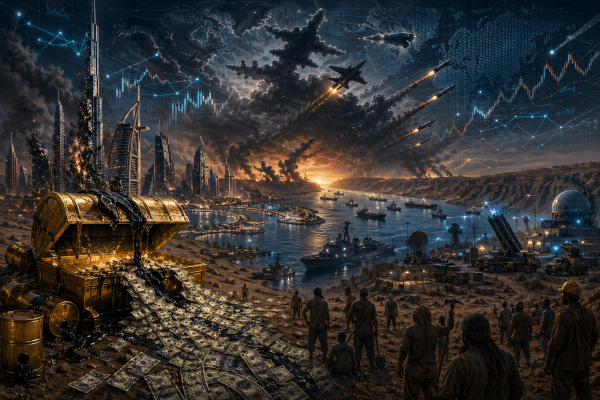
Petrodollars and Missiles: U.S.–Israel War, Iran’s Retaliation, and the Gulf’s $6 Trillion Imperial Contradiction
The Economist laments over the Gulf's $6 trillion sovereign wealth as war disrupts its financial stability, but this narrative is a smokescreen. The real story lies in the imperial dynamics that intertwine U.S.-Israeli aggression with Gulf fortunes. Rather than a neutral financial assessment, it presents war as a minor nuisance to elites banking on oil rents. The article flattens the human cost, sidelining migrant laborers and ignoring the root causes of conflict shaped by imperial agendas. Ultimately, this crisis reveals the Gulf's wealth is a tool of empire, not liberation—a stark reminder that war and capital are inexorably linked.
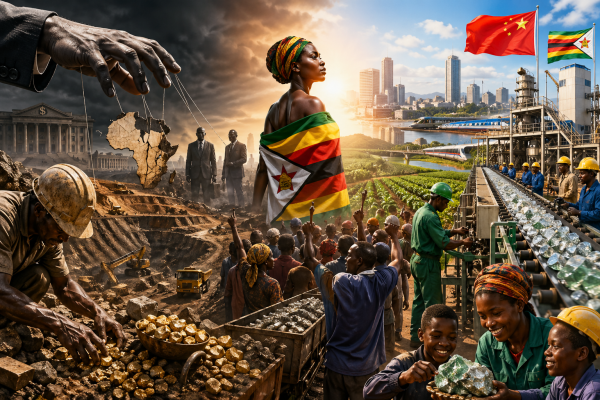
Gold, Lithium, and the Chains of Empire: Zimbabwe, China, and the Battle to Break the Colonial Economy
The imperial press calls Zimbabwe’s recovery “bizarre,” revealing more about empire’s ideology than Africa’s reality. Beneath the headlines lies a material transformation driven by gold, lithium, labor, and survival within a system built to constrain it. As Zimbabwe pushes toward beneficiation and partners with China, it enters a global struggle over who controls resources, industry,... Continue Reading →
Settlers in the Wreckage: J. Sakai, Technofascism, and the War for the Future
J. Sakai’s interviews force the U.S. left to confront the settler-colonial foundations it has spent generations avoiding. His analysis exposes the myth of the revolutionary white proletariat, the collapse of liberal illusions, and the expansion of war into every domain of life. But Weaponized Information pushes further, grounding his insights in monopoly finance capital, technofascism,... Continue Reading →
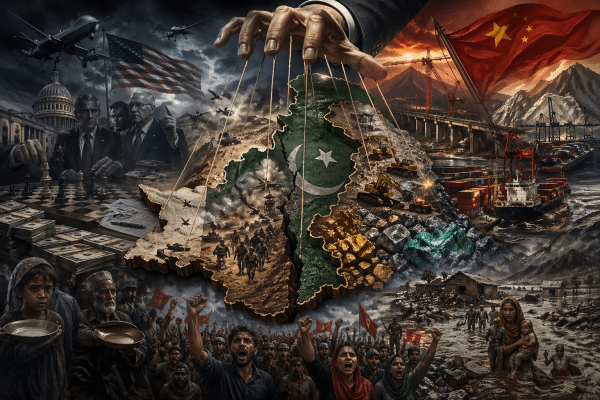
Fault Lines of Empire: U.S. Strategy, Pakistani Class Power, and the Crisis of Sovereignty
Asia Times frames Pakistan’s instability as a strategic obstacle, obscuring the material and political forces shaping the terrain. The crisis emerges from IMF austerity, elite domination, climate catastrophe, and a deepening political rupture following the coup against Imran Khan. Imperialist recalibration collides with multipolar transition, exposing the struggle between sovereignty and neocolonial extraction. Workers, peasants,... Continue Reading →
Apples to Apples: Superexploitation from Orchards to iPhones
What appears to be a comparison between two unrelated commodities—apples picked in U.S. orchards and Apple devices assembled across the Global South—is in fact a comparison between two forms of the same capitalist-imperialist labor regime. In U.S. agriculture, superexploitation is organized through settler-colonial land relations, racialized migrant labor, H-2A dependency, deportability, and the broader coercive... Continue Reading →
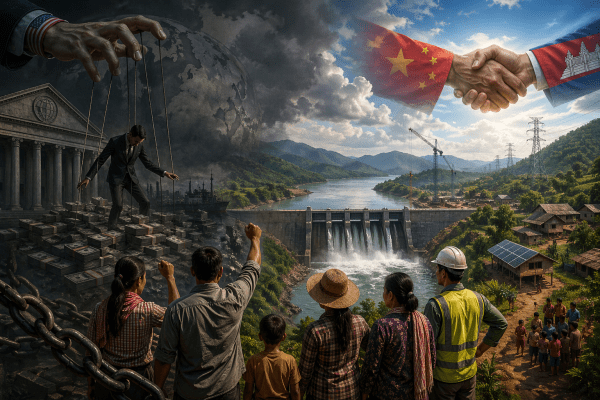
Concrete and Control: Imperial Media vs Sovereign Development in the China–Cambodia Energy Nexus
This essay excavates how Western energy media transforms a Cambodian hydropower project into a geopolitical morality play, recoding sovereign development as “Chinese influence.” It reconstructs the material reality beneath that narrative: fuel dependence, state planning, bilateral agreements, regional grid integration, and the political economy of infrastructure. It then reframes the project as a node in... Continue Reading →
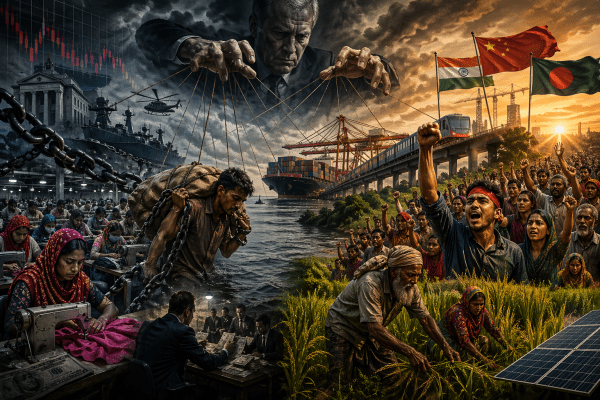
Leverage for Whom?: Bangladesh, Multipolarity, and the Managed Art of Dependence
Asia Times doesn’t just argue for strategy—it reframes dependency as sophistication, urging Bangladesh to negotiate its place in a system it does not control. Beneath the language of leverage lies a material reality of export concentration, external inputs, financial discipline, and geopolitical pressure shaping every move. Multipolarity opens space—but only within limits, where new alignments... Continue Reading →
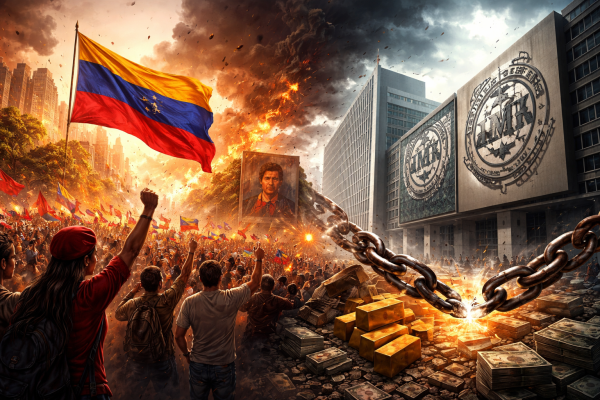
Reopening the Cage: Bretton Woods Returns to a Country That Refused to Kneel
The article presents IMF and World Bank re-engagement as routine normalization, masking a political event shaped by years of institutional blockade and external pressure. Beneath that surface lies a struggle over sovereignty, where constitutional legitimacy, sanctions, and anti-neoliberal memory redefine what “recognition” actually means. The return of global finance collides with a still-living project of... Continue Reading →
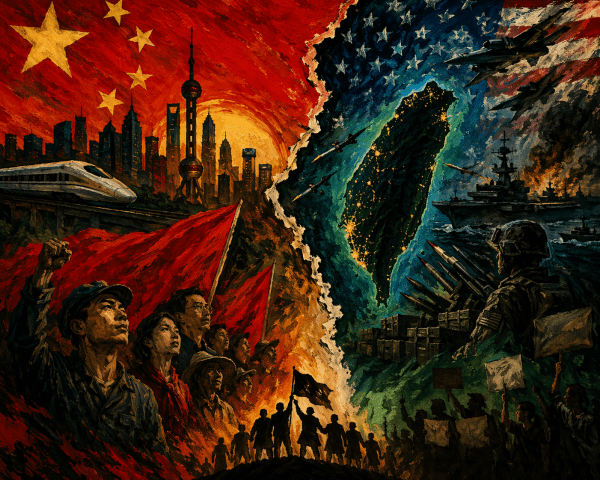
The Wound They Refuse to Heal: Taiwan, Empire, and the War Against Chinese Sovereignty
Reuters doesn’t just report events—it organizes reality through an imperial lens that disciplines how China is seen and understood. Beneath the surface, the Taiwan question reveals a dense structure of civil war legacy, U.S. militarization, legal contradictions, and economic interdependence. The truth is not “cross-strait tension,” but an unfinished revolutionary contradiction weaponized by empire to... Continue Reading →