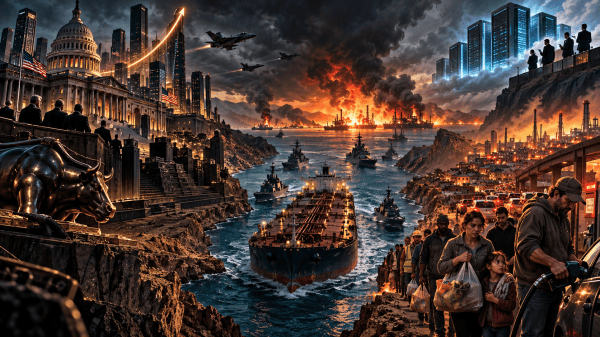
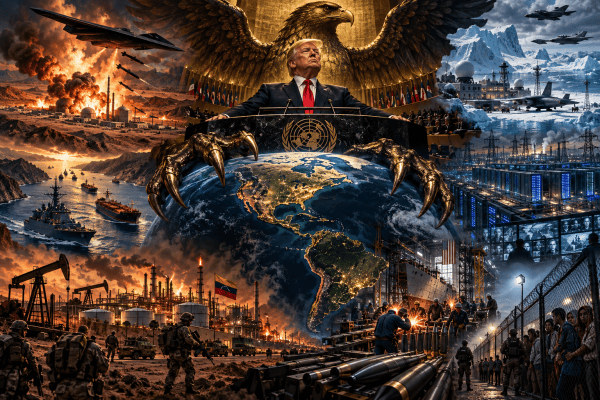
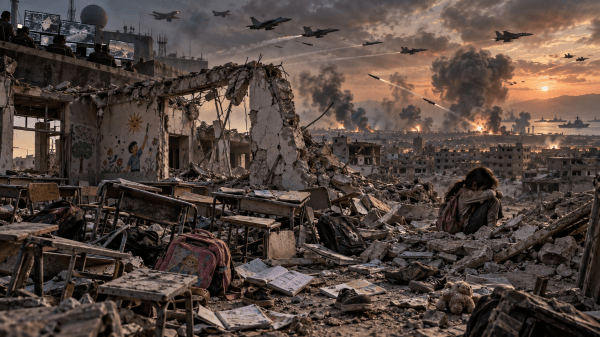
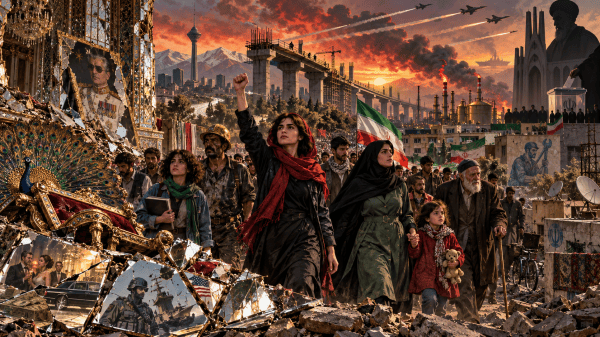
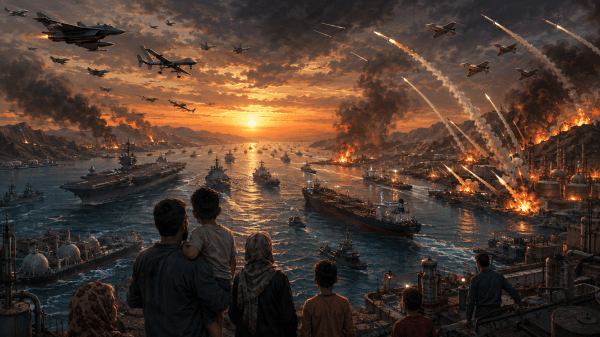
CNN admits that Washington started the war, then quietly moves that fact into the scenery so Iran’s response can reappear as the new source of danger. The chronology tells another story: Iran’s offensive doctrine preceded the August reshuffle and was hardened through war, blockade, a failed reciprocal settlement, and renewed coercion around the Strait of... Continue Reading →
Containment Makes Its Own Escape Routes: China, Iran, and the Rare-Earth Contradiction
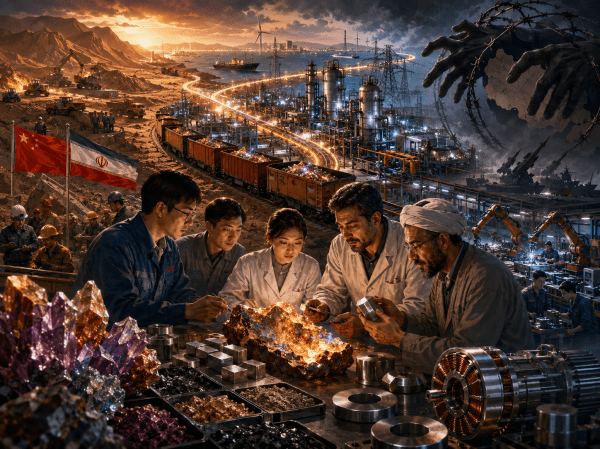
The narrative surrounding a modest scientific workshop between China and Iran is sensationalized into a geopolitical crisis, primarily through the lens of U.S. concerns. It's ironic: while Washington frantically condemns this cooperation, the real battle revolves around who controls the rare-earth supply chain. Both countries face sanctions that push them to create independent scientific and industrial pathways. The focus should pivot from mere diplomatic theatrics to whether this partnership enhances Iran's productive capacity or merely perpetuates dependency. Ultimately, this cooperative effort holds the potential to disrupt traditional power dynamics—unless it devolves into another avenue for exploitation under foreign dominance.
The Revolution Must Keep Making Revolutionaries: Fidel Castro and the Fight Against Becoming a Monument
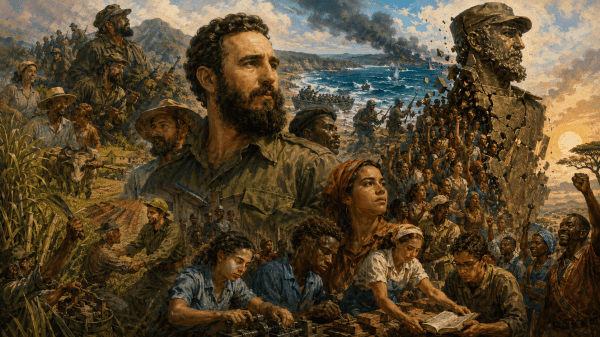
On the centenary of Fidel Castro's birth, his autobiography, My Life, acts as a provocative lens into the complexities of revolution. It dismantles the myth of the born revolutionary, showcasing instead how context, struggle, and learning forge warriors for change. Despite Cuba's successes, deep-rooted issues like racism and inequality persist, with Fidel warning that Cuba's most significant threat may not come from external forces but from within—its own inability to correct mistakes. As the Revolution ages, the pressing query remains: can it continually foster revolutionary consciousness amidst evolving contradictions or will it succumb to the complacency that often follows victory?
The Status Quo Has to Be Manufactured: America’s Pacific Primacy and the Rising Cost of Keeping It Alive
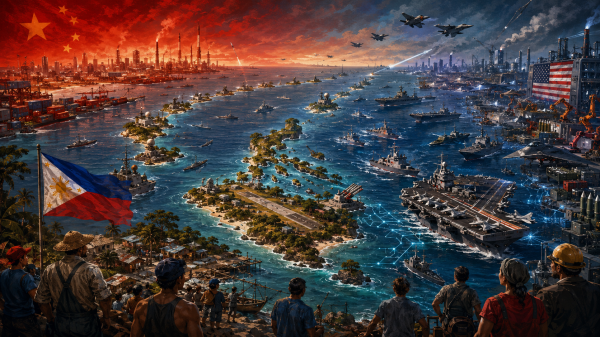
Elbridge Colby's assertion that America is the "apex predator" in military readiness disguises the troubling reality of dwindling U.S. military supremacy against a rising China. The narrative expertly choreographs U.S. responses to China's actions, framing Washington as a stabilizing force while ignoring the material consequences of its expansive military infrastructure and the burdens it places on allies like the Philippines. This contrived status quo sustains American dominance at an ever-increasing cost, presenting imperial ambitions as mere defense. The real struggle lies not in choosing a stronger predator, but in dismantling the systems that perpetuate this militarized hierarchy, exposing the true stakes of U.S. imperialism.
The Axis Washington Built: How the War Against Multipolarity Is Pushing the World Toward World War III
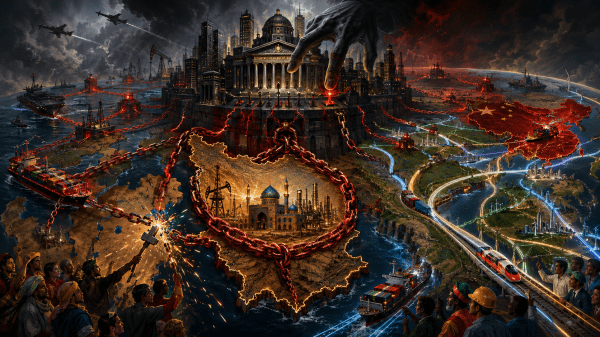
The rhetoric around a so-called "authoritarian axis" of Russia, China, Iran, and North Korea is dangerously misleading. This narrative stems from a long history of U.S. military expansion and interventionism that has fostered the very hostilities it claims to combat. Instead of viewing these nations as a monolithic threat, we must recognize that their alliances are responses to decades of American aggression and coercion. Bosco's portrayal of these entities as simple villains obscures the deeper dynamics at play, namely that U.S. actions have directly contributed to their convergence. To prevent a World War III scenario, we must dismantle the war machinery perpetuating this cycle of escalation and educate the public on these historical nuances.
Surrender as Relief: Rubio’s War on Cuba’s Means of Survival
Marco Rubio’s new sanctions do not merely target Cuban military procurement. They strike the institutions, banking channels, suppliers, repair systems, and foreign relationships through which Cuba survives a blockade designed to manufacture deprivation and political surrender. Washington restricts fuel, finance, technology, and trade, then presents the resulting hardship as proof of socialist failure. As Cuba turns toward China, Russia, and other partners to preserve its sovereignty, those lifelines are recast as threats. Behind the language of security lies the old imperial objective: isolate the island, weaken its defenses, deepen popular suffering, and force the Cuban Revolution to kneel.
The Crime of Making Too Much: China and the Empire’s Monopoly on Abundance
The Economist's recent critique of China's industrial prowess reveals a deeper hypocrisy within Western narratives. While it acknowledges China's efficiency, it vilifies state-driven competition when it disrupts Western hegemony. The real issue is not overproduction but an imbalance of purchasing power, presenting an ugly tableau of warehouses filled with goods while people lack access. As China strives for self-reliance, the West's response is to impose tariffs and sanctions, prioritizing monopoly over equitable distribution. This conflict isn’t a mere economic dispute; it’s a struggle for who controls productive capacity. The question is whether to align production with human need or maintain the status quo of inequality.
The Empire Calls Resistance Subversion: Cuba and Washington’s War on Revolutionary Consciousness
The State Department's report conflates documented espionage with a sweeping indictment of social movements, branding students, revolutionaries, and dissenters as part of a conspiracy orchestrated from Cuba. This narrative denies local struggles against oppression, instead framing resistance as a foreign-directed plot, thus erasing historical context and the material origins of dissent. The document's loose connection between Cuba's influence and contemporary activism serves as a McCarthyite tool against American dissent. By equating genuine political engagement with espionage, it aims to squash revolutionary consciousness and reinforce the status quo, revealing the empire's fear that the oppressed might unite and resist independently.
Same Boss, New Contract: USMCA and the Empire’s Grip on Mexico and Canada
NBC's portrayal of Trump's refusal to renew the USMCA is more than a mere disruption in trade; it’s a calculated move to establish an iron grip over North America. The article frames this as instability, ignoring the deeper narrative of imperial ambition where trade agreements become tools for coercion. The U.S. isn't retreating; it's reconfiguring the continent, tightening control over Mexico and Canada while excluding China from the fold. Workers from all sides suffer under this new order while corporate interests thrive unchallenged. Ultimately, this is not a story of chaos but of empire reshaping subjugation—inviting you to witness the birth of Fortress America instead of its decay.
The Embassy Government: How AP Turns Venezuela’s Capture Into a Chavista Crack-Up
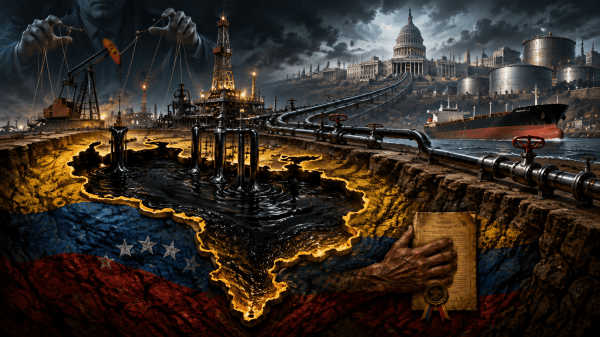
The Associated Press spins Venezuela’s crisis as a mere internal drama of political division, subtly masking the U.S. military’s pivotal role in toppling Maduro. Behind the façade of Chavismo's weakening loyalties lies imperial coercion—an acting government subservient to Washington. The narrative portrays disarray but downplays U.S. oversight of oil sales and military drills, normalizing foreign occupation while disguising it as internal strife. By framing this as a crisis of governance, the AP shifts attention from the imperial machinery at work, thereby sidestepping critical questions of sovereignty and resistance. The real story is not betrayal; it's exploitation under the guise of reform.