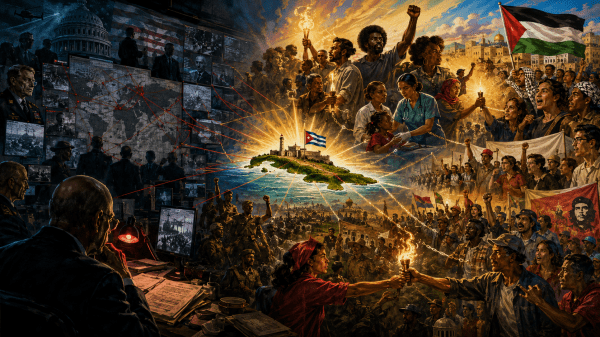
The essay provocatively dismantles the myth that the Cold War was merely a reaction to "Soviet aggression." Instead, it reveals it as America's calculated strategy to reinforce a capitalist world order post-World War II, driven by anxieties over rising leftist movements and anti-colonial uprisings. It highlights how the U.S. initiated a campaign of political warfare and economic reconstruction through the Marshall Plan, effectively shaping Europe and other regions under its imperial influence. To Washington, the real danger was not communism but the threat of genuine independence that challenged capitalist dominance. The Cold War was less about ideological battles and more about inter-imperialist struggles to determine global economic control.
Failure According to Whom?: Rewriting the Metrics of Socialism
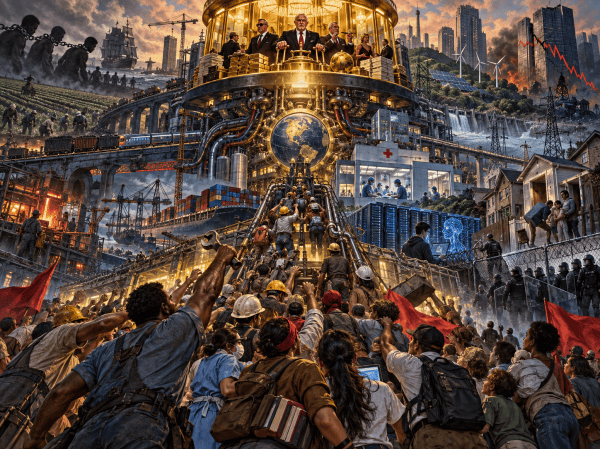
The pervasive claim that socialism has "failed" is an ideological construct rather than a factual statement. A closer analysis reveals that socialist systems, from the Soviet Union to China, achieved measurable gains in education, health, and economic development under dire conditions. This narrative of failure is not supported by historical evidence but rather is a product of a century-long ideological war against socialism. Capitalism, meanwhile, perpetuates crises, inequality, and social fragmentation, failing to meet human needs. The real question is not why socialism fails, but how it has transformed societies when confronted with immense challenges, challenging the ruling narrative that defines success so narrowly.
Starve the Island, Blame the Victim: How Empire Turns Siege into “Defiance”
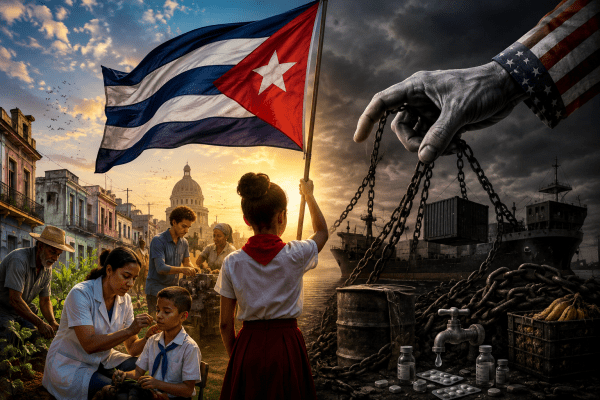
The New York Times repackages economic warfare as diplomatic tension, presenting Cuba’s resistance as irrational defiance rather than a response to material coercion. A reconstruction of the facts reveals a deliberate strategy of energy strangulation, financial restriction, and calibrated pressure designed to destabilize Cuban society from within. When these conditions are placed back at the... Continue Reading →
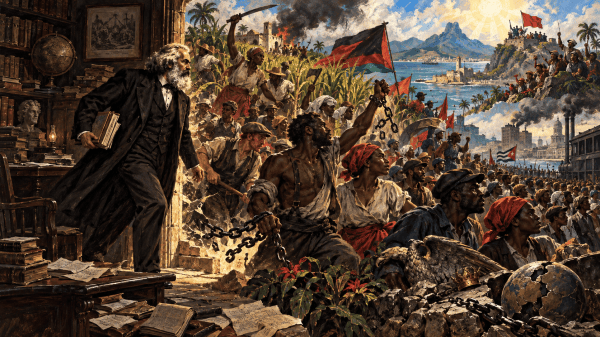
From Imperial Plunder to Socialist Possibility: Capitalism, Dependency, and the Road to Sovereign Development
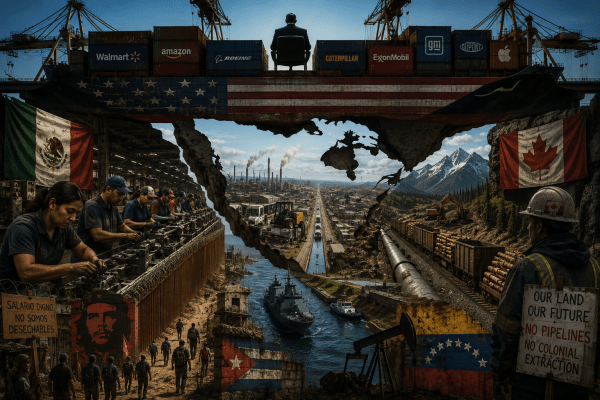
Development is not a neutral path but a historical process forged through conquest, extraction, and domination. Underdevelopment is not a failure to advance, but the condition produced by integration into a world system structured by imperial power. As the crisis of global capitalism deepens and the space for sovereign maneuver widens yet destabilizes, nations are... Continue Reading →
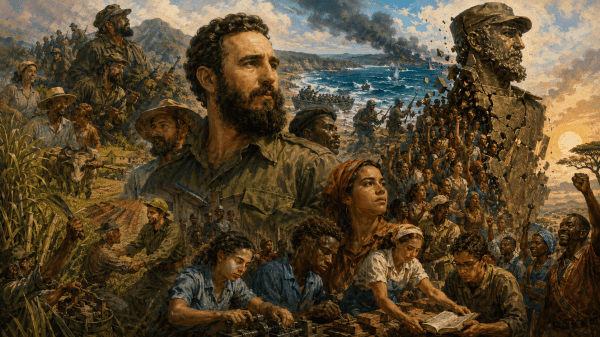
The Gazafication of Cuba: Economic War and the Genocidal Siege on Sovereignty
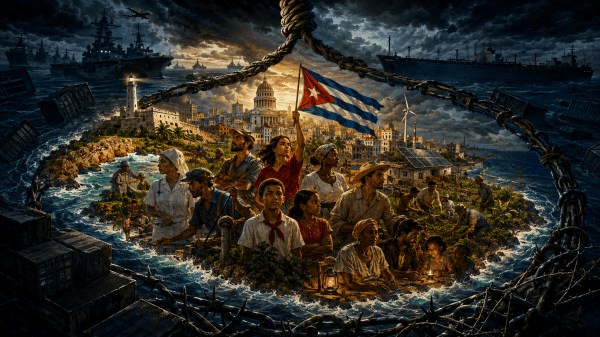
This review of The Economic War Against Cuba by Salim Lamrani excavates the historical architecture of the U.S. blockade and reinterprets it through the present conjuncture, revealing it not as a failed Cold War relic but as an evolving system of imperial economic warfare. Moving from trade embargo to extraterritorial coercion to full-spectrum energy siege,... Continue Reading →
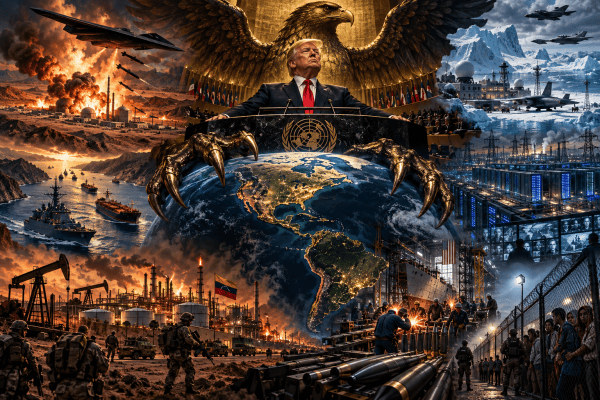
Cuba Will Not Kneel: Trump, The New York Times, and the Contradictions of the American Pole
The New York Times launders U.S. regime-change demands into the language of negotiation, masking domination as diplomacy. Beneath the narrative, a coordinated campaign of economic strangulation—especially through energy chokepoints—reveals deliberate coercion, not Cuban failure. This pressure is part of a broader imperial recalibration: the consolidation of Fortress America as a hemispheric bloc under U.S. control.... Continue Reading →
Fortress America: From “Operation Total Extermination” to the Consolidation of the American Pole
The Intercept’s reporting reveals a widening U.S.-aligned war across Latin America, exposing a moment where imperial language begins to outpace its own ideological cover. The documented facts—cross-border strikes, coalition warfare, regime change operations, and indefinite escalation—align directly with official doctrine and emerging hemispheric war architecture. When situated within the crisis of imperialism and the rise... Continue Reading →
Blackout and Blockade: Empire’s War on Cuba and the Cracks in the American Pole
As U.S. imperialism tightens its grip on the hemisphere through economic warfare, Cuba stands at the front line—where the struggle between domination and sovereign development, between imperial command and emerging multipolar possibility, is being fought in real time. By Prince Kapone | Weaponized Information | March 17, 2026 When a Siege Learns to Speak the... Continue Reading →
NBC’s Cuba Narrative and the Siege It Refuses to See
NBC’s coverage frames Cuba’s economic adjustment as a dramatic crisis, but a close reading of the article reveals the narrative techniques and framing devices used to construct that impression. Beneath the headline lies a far denser economic terrain shaped by sanctions, energy shortages, inflation, and the long search for productive stability under siege. When these... Continue Reading →
Posting Empire: Trump 2.0 and the Open Turn to Colonial Rule
How Trump’s Social Media Declarations Signal the Geopolitical, Economic, and Strategic Architecture of Fortress America and the American PoleBy Prince Kapone | Weaponized Information | January 12, 2026When Empire Posts Its Intentions There are moments when the empire speaks in polished paragraphs—through white papers, summit communiqués, and the priestly language of “shared values.” And then... Continue Reading →