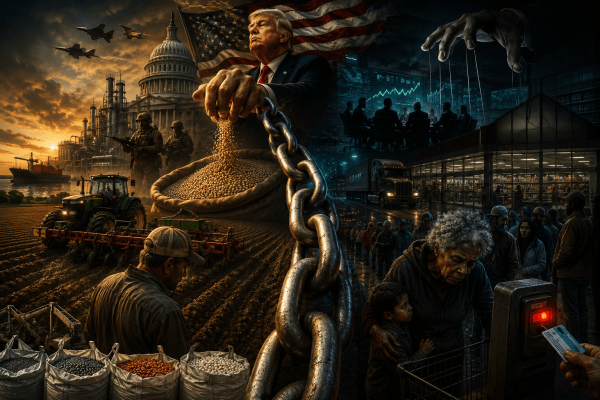
In a striking reveal, Fox celebrates Trump's fertilizer emergency as a boon for farmers, yet this facade obscures the underlying fragility of our food system reliant on state intervention. While fertilizer access gets prioritized, the true cost is hidden: a monopolized market where agribusiness thrives as workers face hunger, suspicion, and administrative punishment. Trump's regime twists food security into a mechanism for capital gain, revealing a stark disparity in state response; when profit is threatened, intervention is swift, but when workers struggle for sustenance, they face scrutiny. The urgent call is for food power—community sovereignty, mutual aid, and a radical rethinking of food as a right, not a commodity.
One Colony, Two Ships: How Liberal History Splits What Capitalism Built
James Traub's exploration of America's dual origins through the Mayflower and the White Lion is dangerously simplistic. He perpetuates a narrative of moral dichotomy, ignoring the harsh reality that both journeys fueled a settler-capitalist machine built on land theft and enslavement. The framing minimizes Indigenous dispossession and reduces oppressed voices to mere historical subjects. This liberal attempt at reconciliation fails to confront the brutal interdependence between North and South, leaving unchallenged the systemic inequities rooted in conquest and exploitation. Rather than embracing a flawed myth of unity, America must confront its history to dismantle the ongoing consequences of its oppressive foundations.
Cop City Is the Counterinsurgency Campus: How “Antifa” Became the New Name for the Old Domestic Enemy
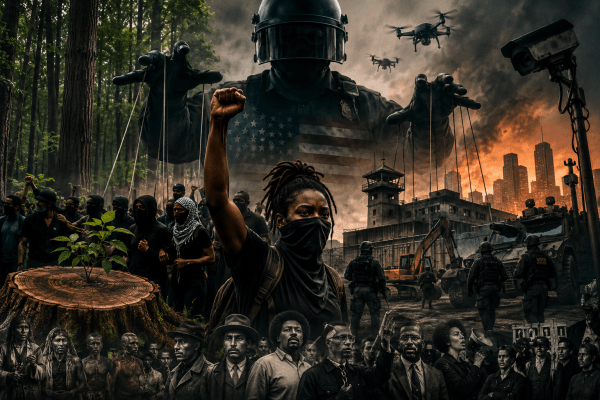
The Guardian's coverage of Trump's "antifa" prosecutions highlights a covert escalation of systemic repression rather than the emergence of a new threat. While it depicts the federal indictment against Cop City protesters as a shocking maneuver, this is merely the latest play in a long history of state-sponsored violence rooted in colonialism, slavery, and counterinsurgency tactics. The narrative frames Trump as the villain while obscuring the entrenched architecture of oppression that transcends his administration. The real battle lies in organizing effective resistance, connecting various social justice movements, and building robust defense mechanisms amidst a climate poised for increasing militarization and legislative warfare against dissent.
No Pride in Empire: Seattle’s Rainbow Classroom and the World Cup War Machine
The Seattle Pride Match is not just a progressive celebration but a vehicle for imperial propaganda, co-opting the cultural struggles of predominantly Muslim nations like Iran and Egypt. This event frames the West as a moral authority while masking the brutal realities of sanctions, military finance, and surveillance that underpin these dynamics. The local organizers, corporate sponsors, and FIFA collaborate to transform a football match into a colonial lesson, undermining the very values they profess to uphold. The real challenge lies in recognizing this manipulation and reframing the narrative: embracing genuine solidarity and resistance against imperial structures, rather than succumbing to an illusion of moral superiority.
They Called It Ego: Jacobin, Chris Smalls, and the Policing of Black Anti-Imperialist Labor
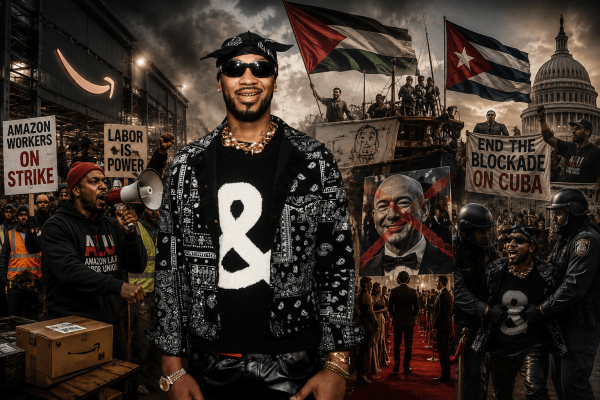
Chris Smalls, once heralded as a labor hero, now finds himself a casualty of overblown ego in the eyes of Jacobin. Yet, this portrayal dangerously obscures a deeper truth: his evolution from solely confronting Amazon to advocating for Palestinian and Cuban solidarity reveals an unsettling fear among the respectable Left. They're comfortable with labor militancy as long as it remains contained and domesticated; once it branches into anti-imperialism, they recoil. Smalls symbolizes a challenge to the status quo, an unfiltered confrontation with empire that threatens to redefine labor politics as an international struggle. In essence, the fear of a Black worker embracing a global perspective exposes the fragile backbone of contemporary Leftist thought.
The World Was Not Discovered: Genocide, Slavery, and the Birth of Capitalist Empire
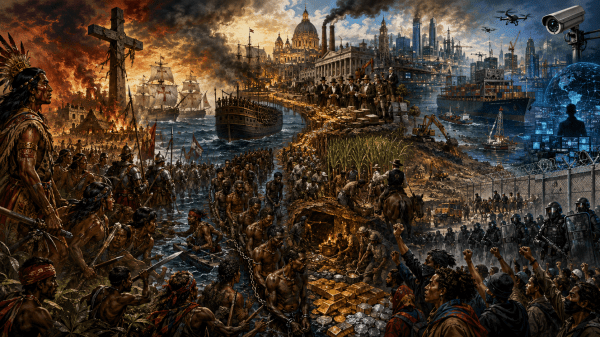
History is often told from the perspective of conquerors, romanticizing imperialism as a noble endeavor of “discovery.” However, this narrative ignores the vibrant, complex societies that existed long before European arrival; civilizations rich in culture and knowledge prepared to resist. The so-called “Age of Discovery” merely facilitated violent conquest, genocide, and exploitation. Colonialism and capitalism are intertwined, with wealth extracted through enslavement and land theft, while underdevelopment in colonized regions resulted from this systematic violence. Today, the consequences of colonialism persist, as neo-colonial strategies manipulate economies and suppress sovereignty. To reclaim the future, societies must confront this history, recognize the pain of oppression, and organize for a just world, free from the chains of empire.
From the Amerikan Dream to the Amerikan Nightmare: Malcolm X, Revolution and the New Human Being
Malcolm X reshaped my understanding of America’s racial dynamics, revealing it not as a flawed democracy but as a colonial project steeped in oppression. His teachings led me beyond the shallow understanding of leftist politics to a deeper comprehension of the intertwined struggles against imperialism and capitalism. Each encounter with his work pushed me toward recognizing humanity in the oppressed and the global context of their struggles. Through Malcolm, I learned that true liberation requires a conscious break from inherited identities tied to empire. His evolution mirrors a broader human struggle, challenging us to embrace revolutionary love as an act of transformation, not mere rhetoric.
From Alliance to Containment: How Anglo-American Power Engineered the Cold War
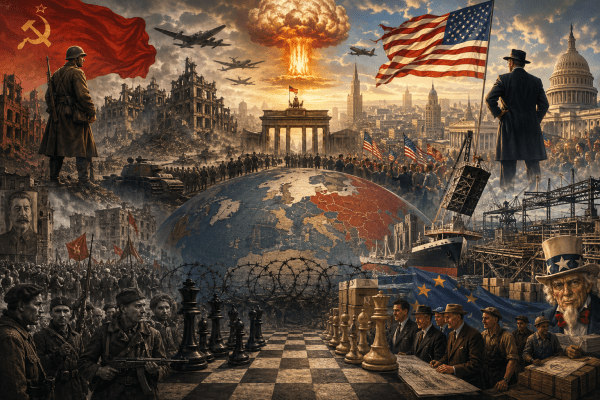
The essay provocatively dismantles the myth that the Cold War was merely a reaction to "Soviet aggression." Instead, it reveals it as America's calculated strategy to reinforce a capitalist world order post-World War II, driven by anxieties over rising leftist movements and anti-colonial uprisings. It highlights how the U.S. initiated a campaign of political warfare and economic reconstruction through the Marshall Plan, effectively shaping Europe and other regions under its imperial influence. To Washington, the real danger was not communism but the threat of genuine independence that challenged capitalist dominance. The Cold War was less about ideological battles and more about inter-imperialist struggles to determine global economic control.
Census of Collapse: Trump, Technofascism, and the War Against Reality
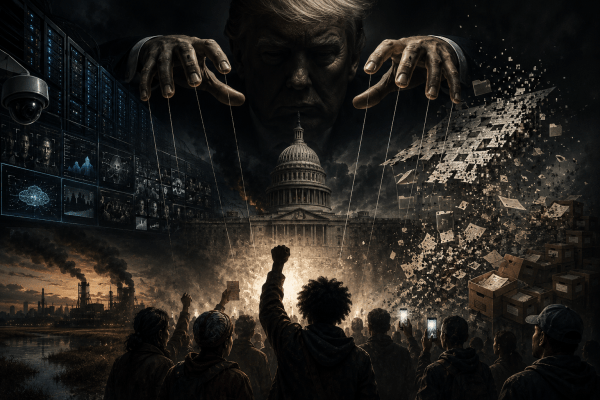
The Trump regime's assault on federal datasets is a calculated effort to erase reality, obscuring critical information on hunger, pollution, maternal health, and climate disasters. By dismantling public data, the ruling class suppresses the very tools citizens need to challenge systemic failures. Expert narratives dominate discourse, overshadowing the voices of the oppressed who suffer and resist. This isn't just bureaucratic negligence; it's a deliberate strategy to manage perception amidst a crumbling empire. As the regime erases statistics, communities are disarmed and rendered invisible, making the struggle for public knowledge essential to resistance against state control. The battle for data is a battle for truth.
The Colorblind Con Job: How the Supreme Court Makes Black Power Disappear
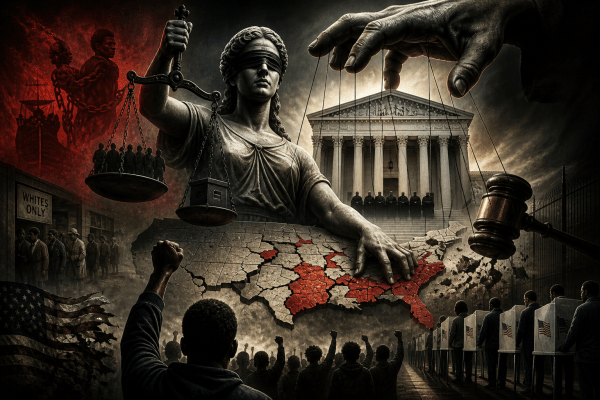
In a provocative dissection of the U.S. Supreme Court's ruling against Louisiana's majority-Black district, the article exposes a chilling truth: the very mechanisms meant to ensure voting rights are systematically undermined. NPR's portrayal of this as a mere legal setback pales in comparison to the deeper rot at the heart of American democracy, which has long grappled with the notion of Black political power. This ruling is emblematic of a historical pattern where rights are granted under duress, only to be stealthily reclaimed when they threaten the status quo. It’s not just about losing a voting bloc; it’s about the ongoing struggle for true representation in a system designed to contain it.