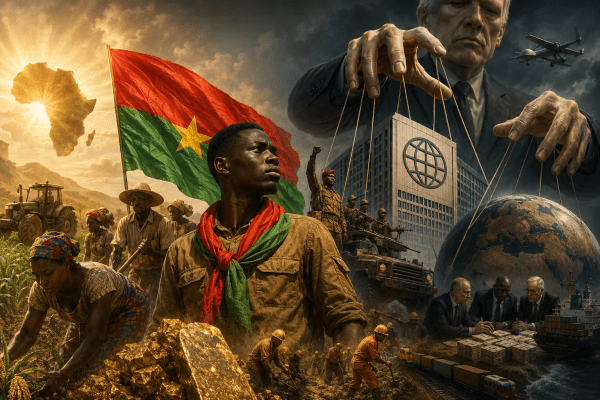
The article presents IMF and World Bank re-engagement as routine normalization, masking a political event shaped by years of institutional blockade and external pressure. Beneath that surface lies a struggle over sovereignty, where constitutional legitimacy, sanctions, and anti-neoliberal memory redefine what “recognition” actually means. The return of global finance collides with a still-living project of... Continue Reading →
Starve the Island, Blame the Victim: How Empire Turns Siege into “Defiance”
The New York Times repackages economic warfare as diplomatic tension, presenting Cuba’s resistance as irrational defiance rather than a response to material coercion. A reconstruction of the facts reveals a deliberate strategy of energy strangulation, financial restriction, and calibrated pressure designed to destabilize Cuban society from within. When these conditions are placed back at the... Continue Reading →
The Wound They Refuse to Heal: Taiwan, Empire, and the War Against Chinese Sovereignty
Reuters doesn’t just report events—it organizes reality through an imperial lens that disciplines how China is seen and understood. Beneath the surface, the Taiwan question reveals a dense structure of civil war legacy, U.S. militarization, legal contradictions, and economic interdependence. The truth is not “cross-strait tension,” but an unfinished revolutionary contradiction weaponized by empire to... Continue Reading →
Choking to Death on an Empty Stomach: How Empire Turns War into Hunger
Reuters reports a BRICS food reserve proposal as risk management, but strips away the imperial structure shaping the crisis. The material record shows a world where war, sanctions, and supply chains converge to produce food insecurity at a global scale. Beneath the headlines lies a system that has transformed food, fertilizer, and shipping into weapons... Continue Reading →
The Origins of the Korean War: From Colonial Rupture to Contained Revolution
This review reconstructs the Korean War not as a sudden conflict in 1950, but as the culmination of colonial transformation, revolutionary struggle, and imperial intervention between 1945 and 1947. Drawing on Bruce Cumings, it reveals how liberation opened a radical possibility that was contained, divided, and ultimately reshaped into two opposing systems—making war not accidental,... Continue Reading →
Order in the Rubble: How Empire Calls Coercion Peace in Lebanon
USA TODAY reports the bombs, the bodies, and the diplomatic noise, but leaves the machinery of power in the shadows. Beneath the language of “escalation” lies a longer structure of occupation, ceasefire manipulation, infrastructural warfare, and pressure on Lebanese sovereignty. The strikes on Lebanon are not an interruption of order, but one of the ways... Continue Reading →
Tripwires of Empire: The Gulf Monarchies, the U.S.-Israel War on Iran, and the Crisis of Imperial Security
This essay begins by excavating how The Guardian recasts a U.S.-Israeli war and its aftermath into a fear narrative centered on Iran while muting the imperial structure behind the violence. It then reconstructs the real terrain: Gulf militarization, sanctions on Iran, strategic chokepoints, regional recalibration, and the diplomatic and economic relations the article leaves in... Continue Reading →
From Ceasefire Spectacle to Open Threat: How U.S. Power Reveals Its Limits in Iran and the Emerging Multipolar Order
The media narrative frames the war through the language of objectives and outcomes, masking how imperial violence is normalized and depoliticized. A reconstruction of the facts reveals a deeper reality: sanctions, covert operations, chokepoint control, and historical intervention form the material architecture of this conflict. What emerges is not policy failure but a system in... Continue Reading →
Manufacturing a “Xi Doctrine”: How Imperial Analysis Distorts China’s Development Strategy
A think tank narrative repackages China’s Five-Year Plan as a leader-driven doctrine, masking its institutional and historical character. The actual policy reveals a multi-dimensional strategy shaped by domestic priorities and external pressure. This transition reflects a deeper socialist development process unfolding through contradiction, not confusion. Across multiple fronts, emerging forces are beginning to resist the... Continue Reading →
You Can’t Bomb Your Way Out of Empire: The Colonial Contradiction, White Radicalism, and the Failure of the Weather Underground
A liberal memoir transforms a history of anti-imperialist rebellion into a story of family inheritance, masking the structural realities of empire and repression. Beneath that narrative lies a system defined by imperial war abroad and counterinsurgency at home, where dissent is managed, surveilled, and neutralized. The Weather Underground emerged from this contradiction, but its turn... Continue Reading →