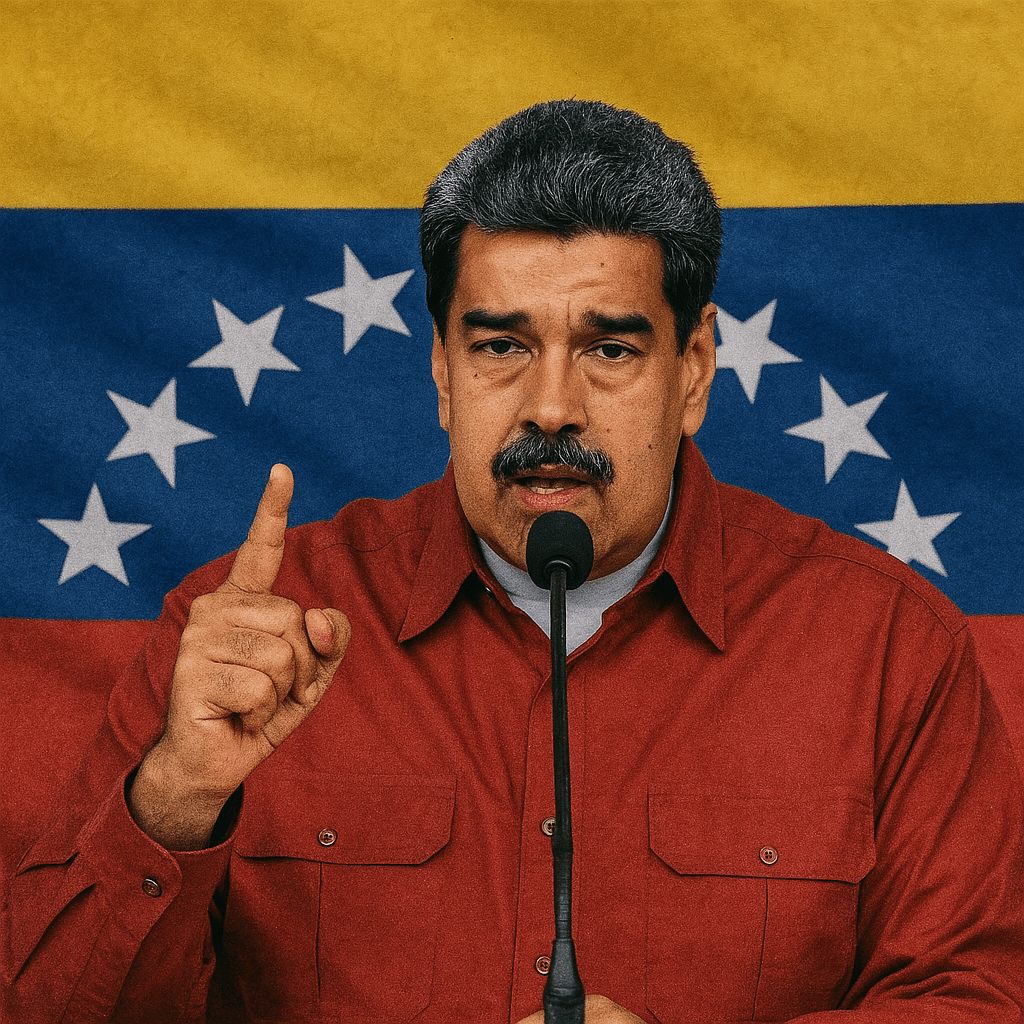
How Venezuela defied the odds and resisted economic strangulation in the era of hyper-imperialism.
By Weaponized Information
The United States has never forgiven Venezuela for choosing sovereignty. From the moment Hugo Chávez declared the Bolivarian Revolution, Washington launched a counterrevolution—not through direct military invasion, but through a weapon more insidious: hybrid warfare. Attempted Coups. Sabotage. Subversion. Sanctions, blockades, asset freezes, currency manipulation, and diplomatic isolation have all been mobilized in a coordinated campaign to break the will of a government that dared nationalize its oil and speak to the poor.
More than 900 sanctions have been placed on Venezuela since 2015, targeting state oil firm PDVSA, the banking sector, foreign trade, and even food imports. These are not just punitive policies—they are acts of siege warfare designed to generate chaos, erode state legitimacy, and trigger regime change without a single Marine landing. Former UN rapporteur Alfred de Zayas has called them crimes against humanity. But in the corridors of empire, they’re called strategy.
And yet—Venezuela has not collapsed. This is what makes the country’s endurance so threatening to Washington and its technofascist planners. Despite hyperinflation that peaked at over 10,000% in 2019, economic sabotage, and the flight of over 7 million people, the Venezuelan state has stabilized its currency, partially restored oil output, forged strategic alliances with China, Russia, Iran, and Turkey, and continued to provide subsidized food and healthcare to millions through the CLAP program and Barrio Adentro network.
What the media calls “authoritarianism” is often just a state fighting to survive under siege. Elections have continued. Opposition parties—often funded by the National Endowment for Democracy—have fractured. Military coups have failed. The U.S. even recognized a fake president, Juan Guaidó, who today can’t even get elected to his HOA board.
The Bolivarian Revolution has survived not because of miracles but because it built real structures of popular power. Communal councils, worker cooperatives, and housing missions have created a base of loyalty that cannot be dissolved by economic pressure alone. In the era of hyper-imperialism, where empire seeks to digitally isolate and economically paralyze its enemies, Venezuela’s resistance offers a blueprint—flawed, embattled, and still incomplete—for how to outlast the siege.
Venezuela has declared a new economic emergency. Not a retreat, but a recalibration. With U.S. sanctions still in place and assets still frozen in Western banks—including more than $1 billion in Venezuelan gold held by the Bank of England—Maduro’s government is betting on endogenous development and multipolar partnerships to stabilize the economy without surrender.
In a world where the U.S. can bankrupt countries with the stroke of a Treasury pen, Venezuela’s fight is not just national—it is civilizational. And it is not over.
 Weaponized Information
Leave a comment