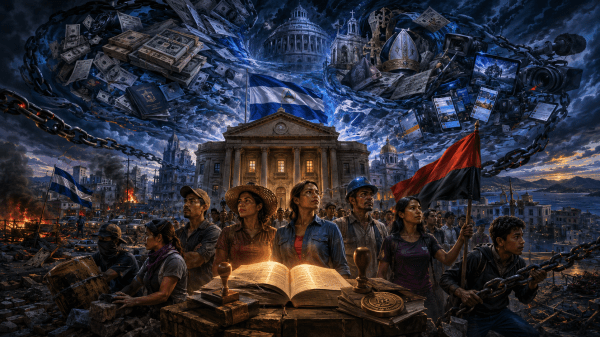
The Guardian’s Missing Clause: How Imperial Elections Became “Democracy” in Nicaragua
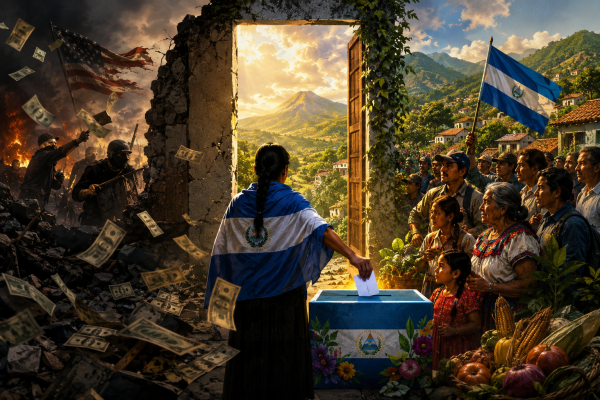
Daniel Ortega’s recent announcement that Nicaragua will cease future elections is portrayed by The Guardian as a blatant rejection of democracy, conveniently ignoring the historical context of imperial influences shaping Nicaraguan electoral politics. The claim that opposition parties are the embodiment of democracy is a façade; previous elections were tainted by U.S. interference, corporate financing, and foreign-imposed sanctions. Ortega's call to defend the Sandinista Revolution against imperial restoration isn’t about tyranny; it’s about reclaiming sovereignty from an electoral process manipulated by outside forces. Instead of clinging to an imperial framework, this moment presents an opportunity for Nicaragua to build a democracy rooted in popular power and authentic participation.

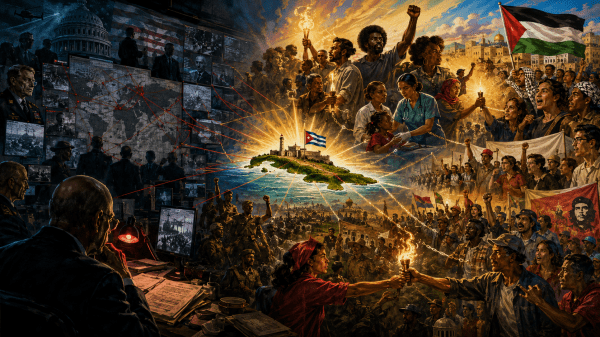
The Empire Calls Resistance Subversion: Cuba and Washington’s War on Revolutionary Consciousness

The State Department's report conflates documented espionage with a sweeping indictment of social movements, branding students, revolutionaries, and dissenters as part of a conspiracy orchestrated from Cuba. This narrative denies local struggles against oppression, instead framing resistance as a foreign-directed plot, thus erasing historical context and the material origins of dissent. The document's loose connection between Cuba's influence and contemporary activism serves as a McCarthyite tool against American dissent. By equating genuine political engagement with espionage, it aims to squash revolutionary consciousness and reinforce the status quo, revealing the empire's fear that the oppressed might unite and resist independently.

The Lawyers of the Counterrevolution: How Nicaragua Is Dismantling the Infrastructure of Imperial Power

The Associated Press presents Nicaragua’s removal of lawyers from the professional registry as another unexplained authoritarian crackdown. This essay reconstructs the deeper reality: a post-2018 Sandinista counter-subversion campaign aimed at the foreign-funded NGO, media, ecclesiastical, expatriate, financial, and legal networks the government believes helped organize the attempted coup. Lawyers and notaries matter because they give those networks legal continuity through contracts, properties, associations, donations, and powers of attorney. Nicaragua has the right to dismantle imperial infrastructure, but revolutionary sovereignty must still distinguish proven subversion from ordinary legal practice through transparent evidence and popular accountability.

National Self-Defense in the Age of Multipolarity

From Libya’s Ruins to Venezuela’s Resolve — How the Global South Is Relearning the Art of SovereigntyBy Prince Kapone | Weaponized Information | October 2025The Return of Armed SovereigntyThe myth of a “rules-based international order” has finally collapsed under the weight of its own hypocrisy. For three decades, Washington and its junior partners cloaked naked... Continue Reading →

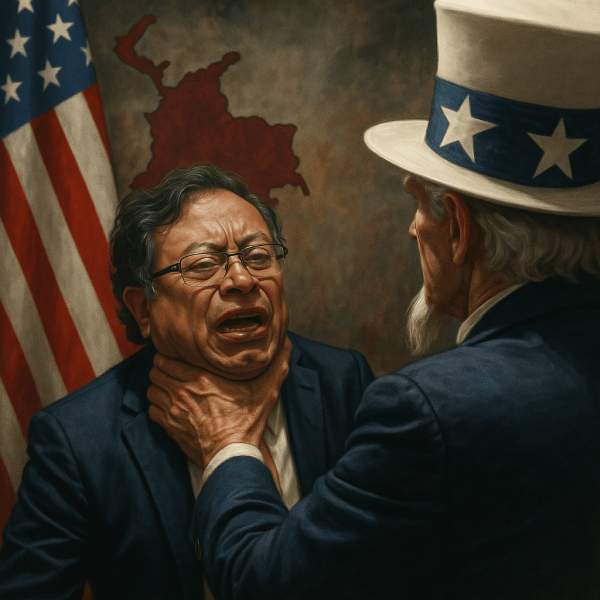
Decertifying Colombia: Fortress America and the War on Sovereignty

Washington dresses lawfare as “drug control” while tightening the Monroe Doctrine’s noose around the hemisphere. Petro’s defiance—on labor, land, Palestine, and multipolarity—marks him as a target not for coca but for sovereignty. The drug war is the mask; recolonization is the mission. By Prince Kapone | Weaponized Information | September 16, 2025How a “Neutral” Wire... Continue Reading →

Fortress Empire and the American Pole

The Pentagon’s draft defense strategy is no retreat from global confrontation—it is the reassertion of hemispheric domination. Behind the language of “homeland security” lies Monroe Doctrine 2.0, technofascist consolidation at home, and the attempt to weld the Americas into a captive pole of power in a multipolar world.By Prince Kapone | Weaponized Information | September... Continue Reading →

Website Powered by WordPress.com.

Up ↑