As markets soar, the majority of households are trapped in economic despair, cutting back on spending as essential prices rise and wages stagnate. The AP's analysis of "consumer confidence" reveals a grotesque class divide—where the wealthy thrive and the working class suffers under burdens of debt and inflation. This narrative cleverly masks the structural inequalities, framing economic distress as mere sentiment rather than a blatant symptom of a system rigged in favor of capital. The urgent call to action is clear: workers must unify and transform their economic plight into organized class power, recognizing that genuine change requires confrontational strategies, not empty optimism.
Apples to Apples: Superexploitation from Orchards to iPhones
What appears to be a comparison between two unrelated commodities—apples picked in U.S. orchards and Apple devices assembled across the Global South—is in fact a comparison between two forms of the same capitalist-imperialist labor regime. In U.S. agriculture, superexploitation is organized through settler-colonial land relations, racialized migrant labor, H-2A dependency, deportability, and the broader coercive... Continue Reading →
Manufacturing a “Xi Doctrine”: How Imperial Analysis Distorts China’s Development Strategy
A think tank narrative repackages China’s Five-Year Plan as a leader-driven doctrine, masking its institutional and historical character. The actual policy reveals a multi-dimensional strategy shaped by domestic priorities and external pressure. This transition reflects a deeper socialist development process unfolding through contradiction, not confusion. Across multiple fronts, emerging forces are beginning to resist the... Continue Reading →
The Gazafication of Cuba: Economic War and the Genocidal Siege on Sovereignty
This review of The Economic War Against Cuba by Salim Lamrani excavates the historical architecture of the U.S. blockade and reinterprets it through the present conjuncture, revealing it not as a failed Cold War relic but as an evolving system of imperial economic warfare. Moving from trade embargo to extraterritorial coercion to full-spectrum energy siege,... Continue Reading →
Trump, ABC, and the Monopoly Class: Tariffs, Tax Cuts, and the Crisis of Imperial Political Economy
Corporate media frames tariffs as a consumer morality tale while shielding monopoly power. The data reveals regressive burdens, profit expansion, and geopolitical escalation beneath the headline numbers. Trade warfare emerges as imperial recalibration in a fading unipolar order. Labor, colonized nations, and multipolar movements must organize where the contradictions already burn.By Prince Kapone | Weaponized... Continue Reading →
Callie House and the First Mass Reparations Movement in U.S. History
A formerly enslaved woman who helped turn memory of bondage into a national economic claim. Her movement proved reparations was a working-class demand for stolen labor, not a plea for charity. The federal government criminalized her because compensation threatened the racial economic order. Her legacy links Black liberation to the broader struggle over wealth, power,... Continue Reading →
Lil’ Bobby Hutton and the Generation That Refused to Beg
A teenage Panther whose life exposed the colonial reality inside the United States. His political awakening marked the rise of organized Black revolutionary youth. His killing revealed how the state responds when the oppressed build power.His memory remains a lesson in struggle, organization, and historical continuity. Prince Kapone | Weaponized Information | Black History Matters... Continue Reading →
The Pole and the Cage: Fortress America, Technofascism, and the Labor Regime of Imperial Decline
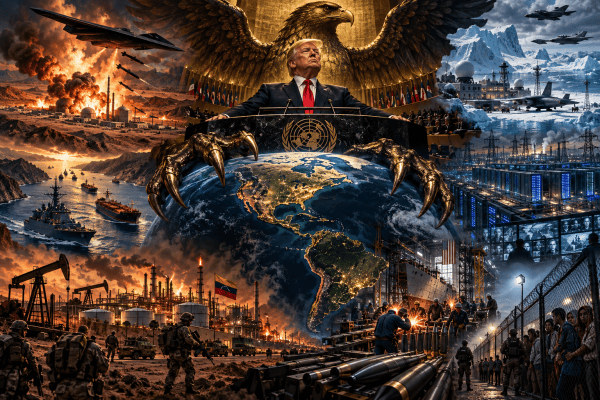
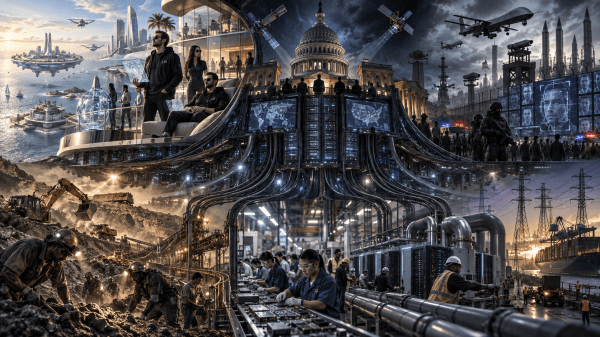
The U.S. economy is generating profits without integrating people into stable life. Domestic labor is being recalibrated through precarity, surveillance, and managed migration. Fortress America turns the hemisphere into a disciplined rear-base of corridors, minerals, and compliant labor. The American Pole and technofascism are one system—an empire tightening the enclosure at home and abroad.By: Prince... Continue Reading →
History as Weapon: Walter Rodney and the Discipline of Revolutionary Marxism
A Weaponized Intellects reconstruction of A History of the Guyanese Working People, 1881–1905 that treats Rodney’s most mature historical materialist work not as scholarship for contemplation, but as theory forged for organization, struggle, and socialist revolution. By Prince Kapone | Weaponized Information | Weaponized Intellects Book Review | January 23, 2026A Book Written to Be... Continue Reading →
Capital as Crime Scene: How Marx Dissects the Social Machinery of Exploitation
A Weaponized Intellects reconstruction of Capital that follows Marx’s dialectical knife from the commodity to the state, exposing capitalism not as a flawed system in need of reform, but as a coherent social order built on abstraction, dispossession, and organized domination—and reclaiming Marx’s method as a weapon for the global working class and colonized nations.... Continue Reading →