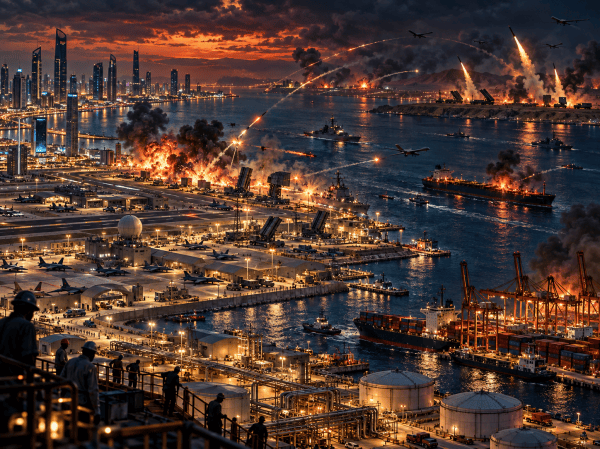
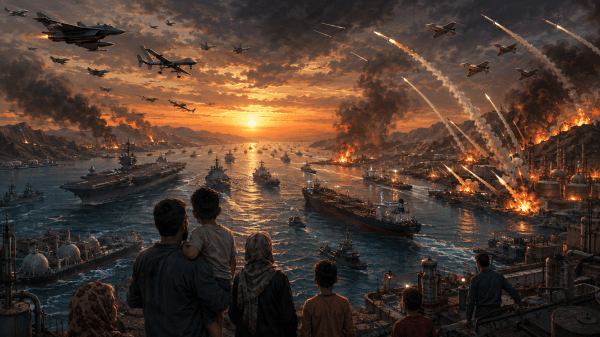
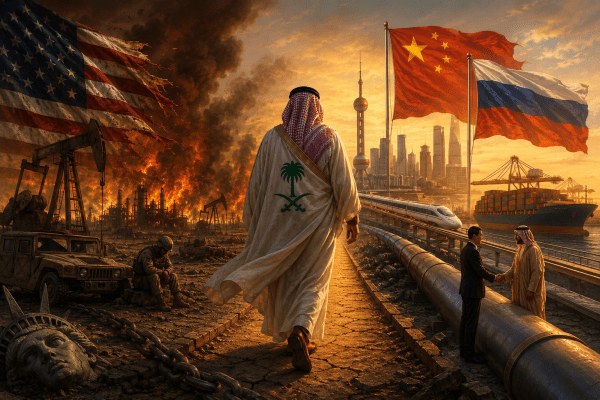
In a region beset by chaos, the Financial Times outlines Saudi Arabia's push for a non-aggression pact with Iran amidst the disarray following the U.S.-Israeli war. This article masquerades as diplomatic insight while delicately sidestepping the imperial roots of the conflict. By framing Iran as the looming threat and sidelining the U.S.'s destabilizing role, it fosters a narrative that propels imperial interests instead of addressing the reality of a fractured Gulf. The urgency is not peace but control, as Gulf states strive to reclaim agency from a suffocating imperial order, revealing that their fate hinges on navigating a treacherously militarized landscape.
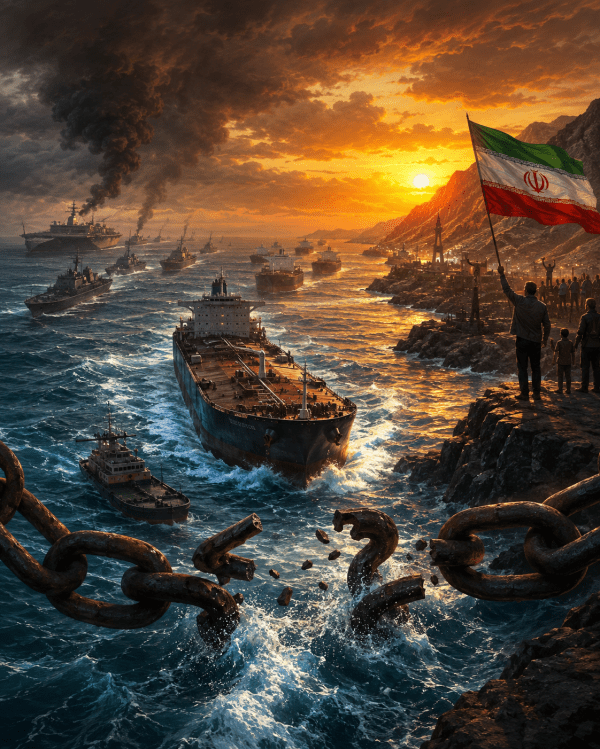
Great Satan at the Strait: Iran, International Law, and the Collapse of the “Rules-Based Order”
In a tale of diplomacy that sounds more like a sitcom plot, the Associated Press managed to frame U.S.-Israeli power plays as polite conversation while depicting Iran’s resistance as a chaotic tantrum. Imagine a landlord demanding rent while simultaneously hammering a "peace" sign into the wall—classic! The article promotes a narrative where blocking a nation is just “maritime security,” leaving readers to wonder if the actual level of aggression got lost in translation. Amid drones and oil price panic, the main issue lurking around like an unwelcome relative is whether nations can truly be sovereign or if they must politely obey the empire’s whims. It's a comedy of imperial contradictions, where legality bends more than a yoga instructor under pressure!
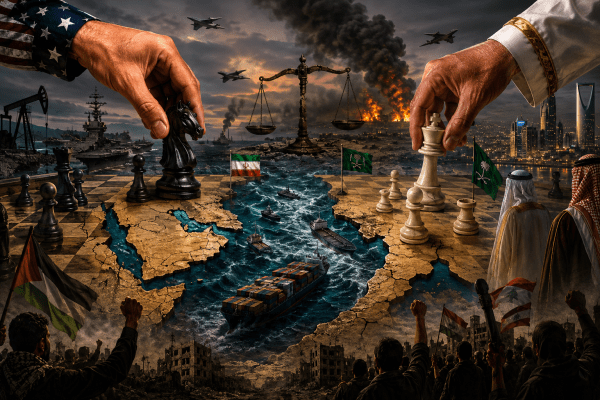
The Corridors of Defiance: How the War on Iran Accelerated the Multipolar Reorganization of Western Asia
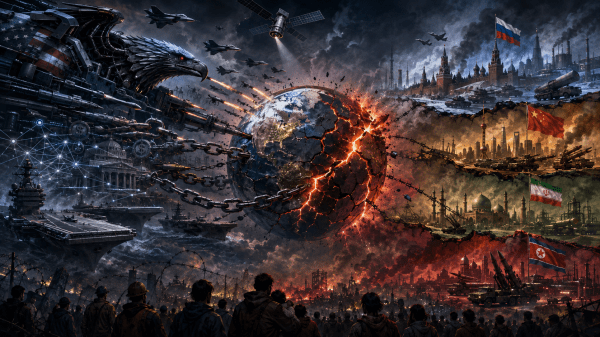
The 2026 U.S.-Israeli assault on Iran was a strategic miscalculation, intended to reassert imperial dominance in Western Asia but instead revealing the fragility of Atlantic hegemony. As the old security architecture eroded, alternative infrastructures and regional alliances emerged, facilitating trade and cooperation beyond Western control. The ongoing crises connected Gaza, Yemen, and the vital sea lanes, illustrating that military aggression has backfired, prompting regional states to recalibrate and seek resilience against imperialism. This war exposed a transformative geopolitical landscape, where logistics and diplomatic maneuvers are increasingly driven by necessity, carving out a multipolar future and undermining the sheer authority once held by the empire.
Fault Lines of Empire: U.S. Strategy, Pakistani Class Power, and the Crisis of Sovereignty
Asia Times frames Pakistan’s instability as a strategic obstacle, obscuring the material and political forces shaping the terrain. The crisis emerges from IMF austerity, elite domination, climate catastrophe, and a deepening political rupture following the coup against Imran Khan. Imperialist recalibration collides with multipolar transition, exposing the struggle between sovereignty and neocolonial extraction. Workers, peasants,... Continue Reading →
Rahm Emanuel, AIPAC, and the Cracking Consensus: When Empire Can No Longer Subsidize Its Own Legitimacy
When a man of the system starts changing his tune, it’s not because he found his conscience—it’s because the system itself is under strain, and the machinery that bankrolls and justifies this violence is starting to grind and show its cracks. Look past the campaign chatter and you see the real thing: U.S. power, public... Continue Reading →
Choking to Death on an Empty Stomach: How Empire Turns War into Hunger
Reuters reports a BRICS food reserve proposal as risk management, but strips away the imperial structure shaping the crisis. The material record shows a world where war, sanctions, and supply chains converge to produce food insecurity at a global scale. Beneath the headlines lies a system that has transformed food, fertilizer, and shipping into weapons... Continue Reading →
Killing the Lion to Slay the Dragon: Iran, China, and the Architecture of U.S. Power
The bombs falling on Iran did not begin this war—they reveal it. For decades, U.S. strategy has worked to break states, choke economies, and fracture regions in order to control the flow of energy and discipline any path of independent development. What looks like a regional conflict is the tightening of a global vise, aimed... Continue Reading →
Iran Under Fire, Empire Exposed: The U.S., Israel, and the New York Times’ War Narrative
The New York Times frames imperial vulnerability as logistical inconvenience, masking the political meaning of exposure. The reconstructed facts reveal a war fought across an integrated system of bases, airspace, and energy choke points from Hormuz to Kharg. The deeper contradiction shows an empire that can still project force but can no longer prevent that... Continue Reading →
Politico and the Art of Imperial Whispering: How Narrative Manages Crisis, War, and a Fracturing Western Bloc
What presents itself as sober reporting reveals, on closer inspection, a carefully arranged narrative that fragments reality into isolated claims while obscuring the material ground beneath them. A close reading exposes the specific devices through which uncertainty is manufactured, alliances are subtly disciplined, and strategic tensions are recast as manageable intrigue. When the missing historical,... Continue Reading →
Axis of Empire: The Coup, the Shah, and the War Against Iranian Sovereignty
Afshin Matin-Asgari’s history exposes how U.S.–Iran relations were forged not through partnership but through intervention, oil politics, and the overthrow of democratic sovereignty. This review excavates the buried architecture of empire behind the 1953 CIA coup and the construction of the Shah’s authoritarian client state. It follows how the Iranian Revolution shattered that imperial arrangement... Continue Reading →