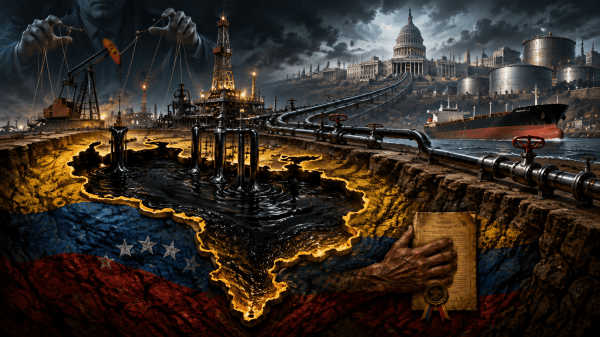
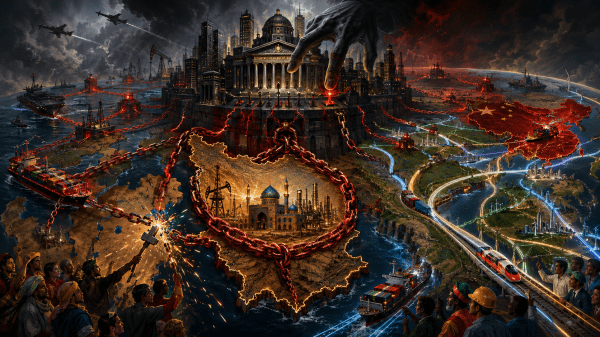
Delcy Rodríguez's shocking pivot from anti-imperialist rhetoric to endorsing U.S. oil agreements is less a political betrayal and more an unveiling of Venezuela's fractured sovereignty. The narrative is explosive: as Washington tightens its grip, national ownership of oil assets becomes a hollow claim, with real power shifting to private capital and American influence. The illusion of control is shattered—Venezuelans are left to wrestle with a new reality where contracts dictate who profits from their resources. The stakes are high, as demands for transparency and public scrutiny grow louder; will the oil wealth truly benefit the people, or simply reinforce the power structures in play?
The Collateral of Empire: Debt, Power, and the Future
America's staggering $81.9 trillion debt is more than just a number; it's a complex web of financial claims overshadowing the real economic landscape. The nation's ability to issue dollars grants it a unique power, allowing it to leverage future incomes to accommodate debt—while the average worker grapples with mortgages, credit cards, and student loans. This contradictory system—where public power fuels private finance—disguises the inequality at play. As lenders profit, households struggle, further entrenching societal divides. The U.S. isn’t just a massive debtor; it’s a realm where debt serves as both a lifeline and a constraint, revealing the capitalist dance between ownership and obligation.
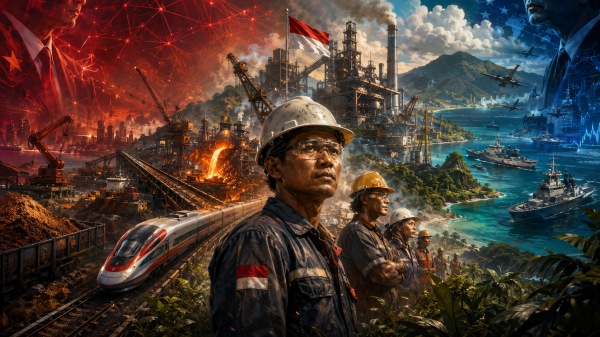
Sovereignty Built on Foreign Steel: Indonesia’s Industrial Rise and the Fight Over Who Commands It
Indonesia is ensnared in a web of foreign capital and corporate power, straddling the interests of Beijing and Washington while striving for autonomy. Its dependency on Chinese investment for industrial growth is creating complex struggles over resource control and worker rights. While the state seeks to regulate foreign involvement in its burgeoning industries, genuine sovereignty hinges on who truly reaps the benefits. Rhetoric about maintaining balance belies a troubling reality: as the nation builds industrial capacity, the power dynamics increasingly favor foreign interests, leaving local workers and communities grappling for their rightful share in this economic transformation.
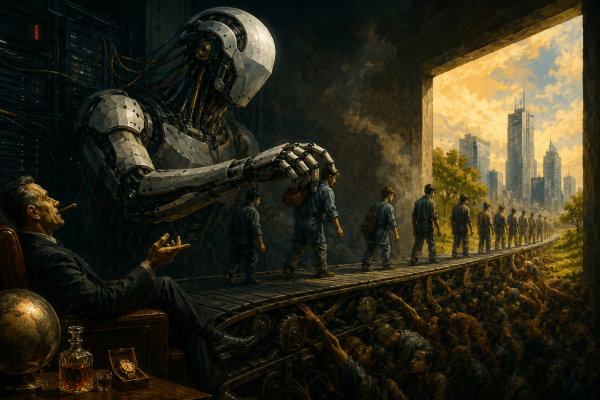
The Worker Becomes Optional: The Wage Still Demands Your Life
Bill Gates has finally acknowledged a truth that capitalists prefer to ignore: as AI and automation advance, corporations can reduce their reliance on human workers, yet those workers still need jobs to survive. This dystopian paradox manifests as corporations accumulate vast fixed capital while employing fewer people, leading to increasing labor insecurities. The state, ostensibly aiding automation's growth, is simultaneously crafting systems to manage this emerging class of excess workers. Gates proposes measures to protect jobs, but under capitalism, preserving employment becomes essential simply for survival, distorting the very essence of technological progress into a means of perpetuating exploitation rather than liberating humanity from labor.
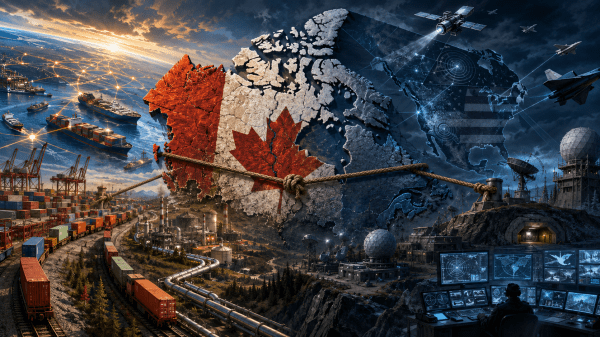
The Freight Is Moving, the Guns Aren’t: Canada Between Multipolar Markets and Atlantic Command
Canada’s century-old continental bargain with the United States built factories, pipelines, profits, and military integration into the same structure that Washington can now turn into leverage. Yet Canada was never merely an American dependency: its banks, mining firms, pension funds, and corporations grew into a secondary imperial power capable of exercising domination abroad even while... Continue Reading →
Bessent’s Dollar War: Iran, Imperial Recalibration, and the Rising Cost of American Command
Scott Bessent’s Operation Economic Outcast exposes the machinery beneath U.S. financial power. Washington is not merely sanctioning Iran; it is pressuring governments, banks, ports, airlines, and corporations across the world to enforce American policy or risk exclusion from the dollar system. The campaign reveals a deeper process of Imperialist Recalibration: as U.S. command becomes harder to reproduce, inherited financial and military advantages are wielded more openly and coercively. Yet every act of compulsion also strengthens the incentive for sovereign alternatives. The struggle is over who controls the infrastructure of global economic life—and who gets to say no.
Lenin’s Imperialism: The World Is Socialized, the Loot Stays Private
Lenin's "Imperialism, the Highest Stage of Capitalism" exposes the dark underbelly of capitalism, where economic forces and political power dance in a shadowy masquerade. He reveals how imperialism is not a mere side-effect of states' ambitions but a complex product of capital's relentless quest for profit, driving nations to export capital rather than just goods. The document reflects the sinister dynamics that create monopolies, establish financial oligarchies, and differentiate classes within the proletariat, suggesting that even workers can become complicit in their subjugation. This analysis remains crucial today, as it compels us to question ownership and control within our increasingly interconnected world.
Marx and Engels Against Their Own Ghosts: The German Ideology and the Fight to Keep Materialism Inside History
Marx and Engels' The German Ideology brutally uncovers the egregious folly of detaching philosophy from material conditions. They weaponize critiques of German idealists, exposing how revolutionary thought that ignores the tangible, lived experiences of class struggle morphs into mere ideology. Highlighting the perils of alienation, they assert that human powers can unwittingly turn oppressive when subjected to capitalist structures. Moreover, they admonish socialists who, by elevating abstract ideas above real movements, dilute the revolutionary essence of their theories. In a world increasingly interlinked yet profoundly unequal, their insistence on rooting ideas in concrete history remains a clarion call for genuine transformation against ideological hauntings.
Whose Gospel Is It?: Empire, the Oppressed, and the Battle for Christianity
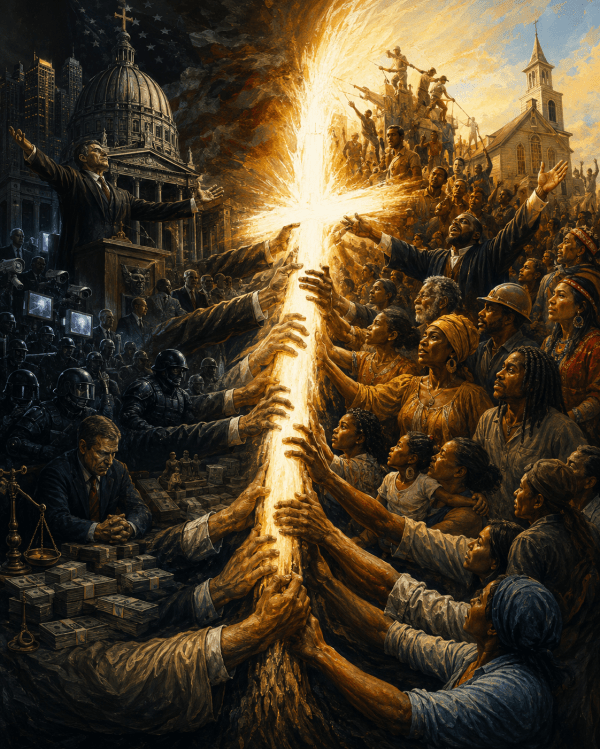
The profound legacy of American Christianity reveals a striking dichotomy: a faith that has historically upheld domination and one that fervently resists it. From the hidden church of the enslaved to Black abolitionism and Indigenous Christian defiance, oppressed communities have seized the Gospel to construct their liberation narrative. As institutional power consolidated in the hands of reactionary forces, an urgent call emerged for believers to reclaim their spiritual heritage and resist Christian nationalism. The challenge lies in forging an organized Christian movement capable of translating faith into collective action that confronts exploitation and promotes social justice, reinvigorating the powerful tradition of liberation Christianity.
Bombing for Submission, Producing Deterrence: How the War on Iran Manufactures the Threat Washington Claims to Fear
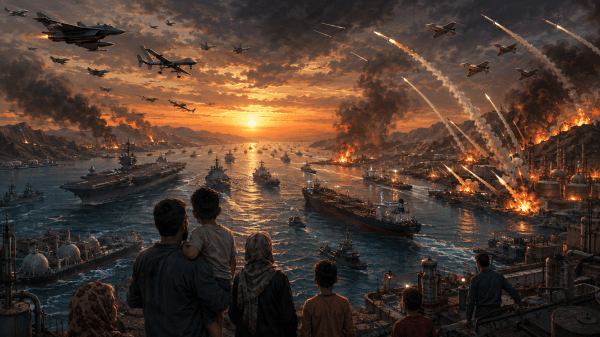
CNN admits that Washington started the war, then quietly moves that fact into the scenery so Iran’s response can reappear as the new source of danger. The chronology tells another story: Iran’s offensive doctrine preceded the August reshuffle and was hardened through war, blockade, a failed reciprocal settlement, and renewed coercion around the Strait of... Continue Reading →