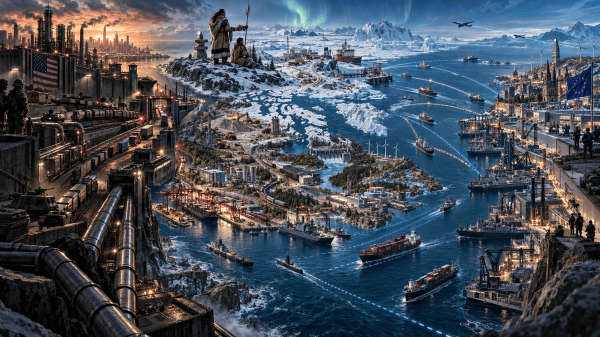
No Annexation Required: Greenland Gets a Seat Inside Washington’s Arctic Wall
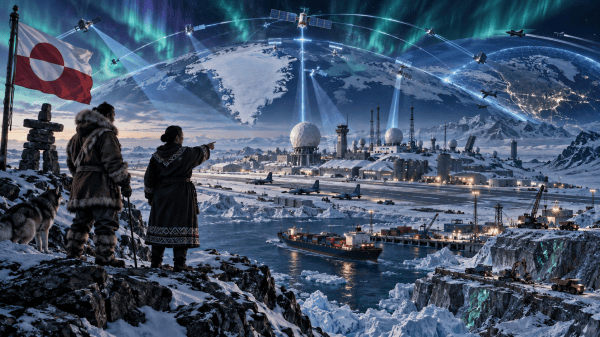
Forget the surface-level headlines; the Greenland agreement is a complex chess game, far beyond Trump's land-grab fantasies. The U.S. and Denmark superficially box Greenland into negotiations, overshadowing its own quest for agency and self-determination in the face of imperial maneuvering. As the Arctic transforms into a geopolitical battleground against rising powers like China and Russia, Greenland finds itself asserting its rights while navigating the treacherous waters of dependency. The true question isn't merely who controls the territory but whether Greenland can leverage its newfound strategic significance into genuine autonomy and prosperity over its resources, contracts, and future.

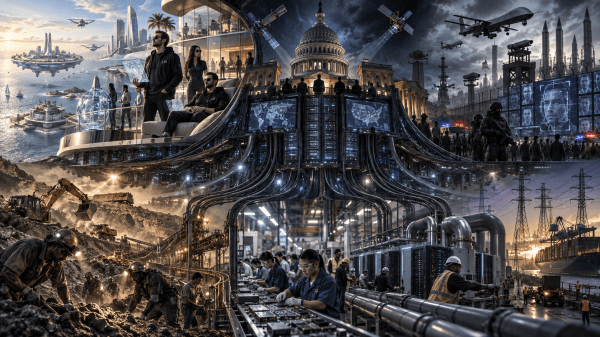
The Nerd Reich Wanted to Exit the State: Then Capital Learned It Needed the Machinery

Gil Durán's "The Nerd Reich" provocatively dissects the tech elite's evolution from libertarian ideals to an authoritarian grasp on power. Far from escaping state oversight, Silicon Valley's billionaires, like Peter Thiel, reveal a dark shift: they now seek to enhance governmental control while championing the illusion of individual freedom. Durán labels this new reality "tech fascism," where technology conglomerates and capital intertwine with state apparatus. As these technocrats consolidate power, a crucial question emerges: can humanity reclaim technologically wielded potential, or will it remain enslaved by elite ownership? This critical inquiry forebodes a future dominated by private interests rather than collective governance.

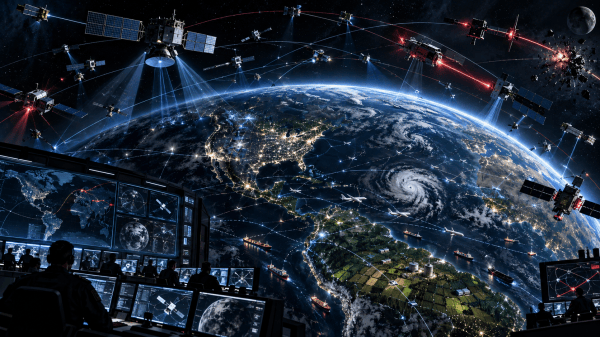
We Built an Orbital Nervous System: The War Machine Came to Command It

The U.S. military's recent admission of operating weapons in orbit isn’t the start of space militarization; it's merely the public unveiling of a long-established reality. Decades of geopolitical maneuvering and failed arms control have woven military functions into the very fabric of space infrastructure crucial for global communication and navigation. As rival nations develop counterspace systems, the stakes intensify: who governs this vital domain, humanity’s common resource or a battleground for military supremacy? The struggle becomes whether orbit will serve human needs or become a theater for power contests, with civilian and military dependencies intricately intertwined, compounding the urgency of this cosmic dilemma.

The Empire Built the Exit: Canada, Europe, and the Roads Around Fortress America

The New York Times' report on Canada's potential "associate membership" in the EU presents a simplistic narrative of geopolitical shifts. Yet, the truth is far more complex and gritty. Canada and Europe have long cultivated ties in defense and industry, reacting to escalating U.S. pressures that threaten their autonomy. As Washington tightens its grip, Canada seeks alternatives—not merely new collaborators but also a platform to reclaim control over its resources and industrial capabilities. The relationship is riddled with contradictions, as Indigenous rights and labor demands challenge who truly holds power in this emerging landscape. The gears of change are in motion, but the question lingers: who will govern this uncharted territory?

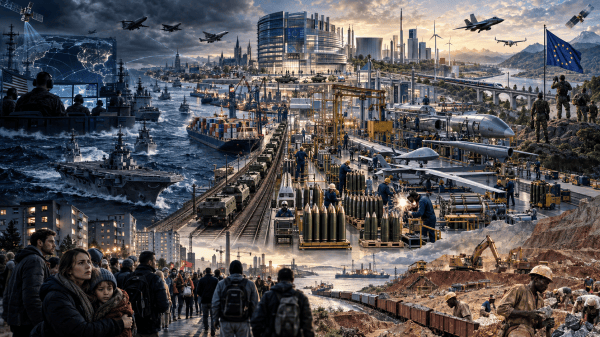
The Rear Grew Teeth: Europe Rearms the Empire and Builds the Means to Defy It

Europe stands at a crossroads, teetering between aspiration and disillusionment. While citizens envision a unified continent brimming with strength, their faith in existing structures crumbles under the weight of slow responses and dependency on America. With rising defense spending and manufacturing capacities, the stakes are high: will this newfound power serve the elite monopolies or empower the working class? The far-right feeds on feelings of decline, masking deeper questions about control and ownership. The real issue isn't a lack of imagination but the dire need for command: who controls Europe’s burgeoning power? The fight for true sovereignty—socially and politically—has only just begun.

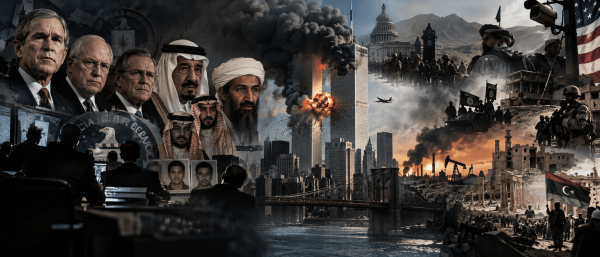
When the Savages Manage Savagery: 9/11, Permanent War, and the Collapse of the American Century

Max Blumenthal’s The Management of Savagery traces how the Afghan jihad, covert warfare, and the post-9/11 national-security state produced enemies Washington repeatedly claimed it could control. The full architecture of September 11 may never be known, but the official story cannot explain the accumulated record of intelligence failures, Saudi-linked facilitation, prior war planning, institutional obstruction, and immediate imperial exploitation. From Afghanistan and Iraq to Libya, Syria, domestic surveillance, and the rise of Trump, the same contradiction returns: empire weaponized instability, then lost control of the forces it empowered. Permanent war expanded American coercion while accelerating the collapse of the unipolar order.

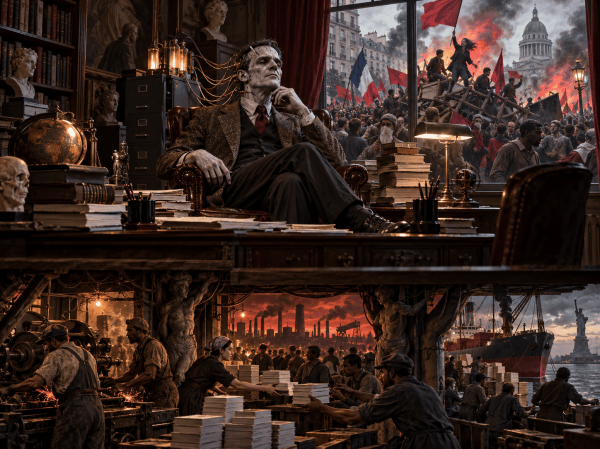
The Corpse Got Tenure: French Theory’s American Afterlife

Requiem for French Theory asks a question academia prefers to leave buried: how did a heterogeneous group of French thinkers become a unified radical canon in the United States? Monville and Rockhill trace the foundations, universities, publishers and Cold War institutions that helped make French Theory travel, but the deeper story is more dialectical than conspiracy. Foucault, Derrida, Deleuze and others confronted real contradictions and produced genuine insights even as their work was selectively reproduced, professionalized and detached from mass struggle. The lesson reaches Marxism itself: revolutionary theory needs more than correct ideas. It needs its own means of intellectual production.

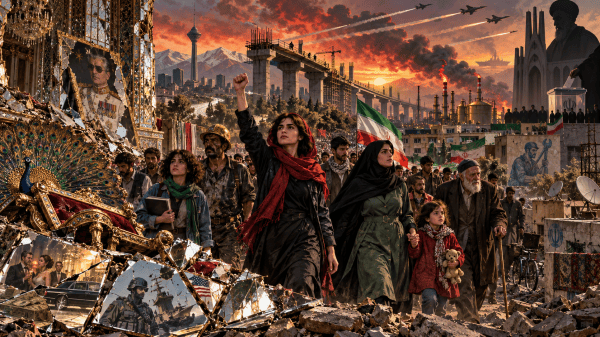
Iran Took Back Its History: The Revolution That Never Finished the Fight for Power

Robin Wright's "The Last Great Revolution" illustrates the paradox of the Iranian Revolution—a genuine transformation that sought to establish a sovereign state but left popular sovereignty incomplete. Wright captures Iran's tumultuous journey, showcasing revolutionary shifts in women’s rights, education, and national identity, yet she falls into the trap of imposing a Western liberal trajectory. The revolution is portrayed as a struggle—between religious and revolutionary authority—that still battles for legitimacy. Ultimately, rather than documenting a forgotten pathway to liberalism, Wright unveils a resilient revolutionary spirit combating imperial influences. This is not the story of a revolution retreating into the shadows, but one that persistently asserts its existence against predetermined narratives.

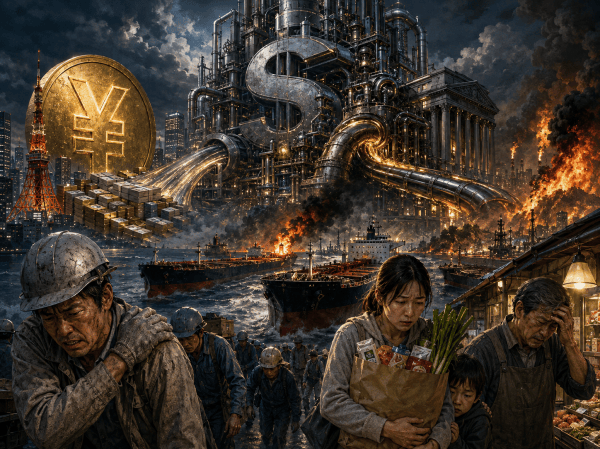
Japan Can Shake the Dollar, but It Can’t Set the Rules: The Yen Inside the Dollar Machine

Reuters treats the yen’s violent swings as a market mystery, but the real story runs through the machinery of dollar-centered finance. Japan is a wealthy imperial-core creditor with enormous reserves and U.S. assets, yet its monetary choices remain constrained by U.S. rates, Treasury markets, imported energy, public debt, and capital flows. That dependence is reciprocal but unequal: Japanese instability can hurt Washington even as Tokyo adjusts inside a system it doesn’t command. And the costs travel downward. Workers win raises, then war-driven oil shocks, currency weakness, and inflation threaten to eat them away—turning monetary sovereignty into a class struggle over who pays.

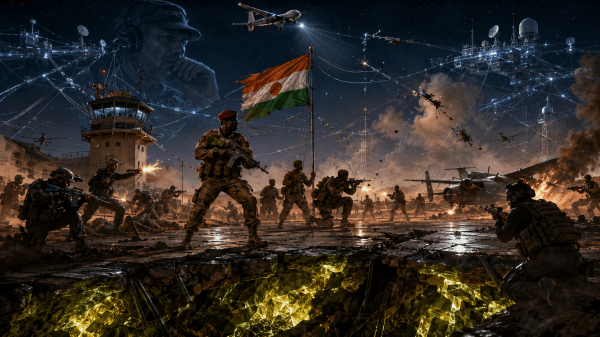
The Coup Didn’t Come From Nowhere: Niger, Base 101, and the Empire Inside the State

BBC framed Niger’s August 29 Base 101 uprising as a story about mutinous soldiers and a frightening weapons cache. The deeper record reveals something far more consequential: a fractured special-operations apparatus, credible evidence of Bazoum-linked and foreign contacts, an inherited Western security system, and a state still fighting to reclaim control over its military, uranium, and foreign relations. As France and the United States adapt to lost bases through smaller footprints, partner forces, and strategic networks, Niger is building alternative relationships through the AES, Russia, and Algeria. The coup didn’t come from nowhere—and neither did the empire trying to survive its retreat.

Website Powered by WordPress.com.

Up ↑