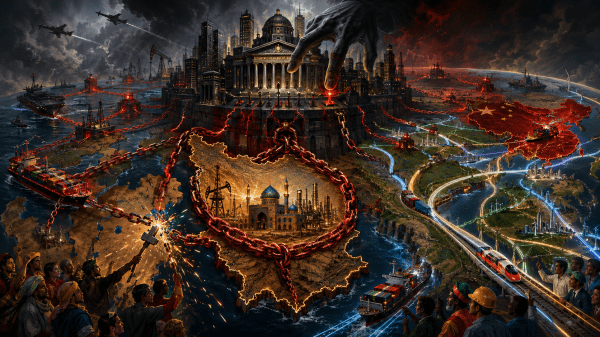
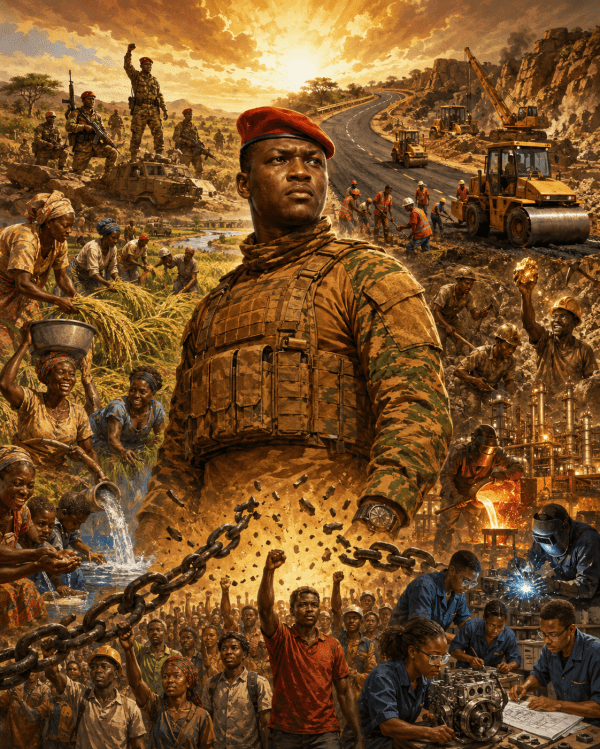
The recent oil agreements between Niger and Chinese firms aren't just another business deal; they expose a seismic shift in Africa's political landscape. As Western powers cling to outdated neocolonial frameworks, Niger is bargaining fiercely for sovereignty over its vast resources, rejecting mere extraction in favor of local control. This isn't a clean break; it’s messy and contradictory, revealing the power struggle over who governs the circulatory systems of wealth. The Sahel countries are navigating a new reality where they challenge traditional dependency and assert their agency. History is shifting beneath our feet—can Africa carve out a new path, or will old patterns reassert themselves?
Cocaine Cowboys and Lithium Indians: Bolivia, the Monroe Doctrine, and the Return of the Colonial Republic
Bolivia is ablaze, but The New York Times misses the mark, framing protests as mere chaos ignited by a presidential betrayal. The truth is far more profound: a collision of historical projects poised for supremacy. Behind the unrest lies a struggle against neocolonial forces, with President Paz's agrarian reforms threatening Indigenous and campesino sovereignty. The culprits are not just disenfranchised voters but a systematic push toward resource extraction and imperialism. The uprising is a collective cry not just for policy change but for self-determination, land rights, and a unified front against re-colonization. The narrative must shift from superficial crisis to deep-rooted rebellion.
The Red Menace Strikes Back: Vietnam, the DPRK, and the Collapse of Imperial Isolation
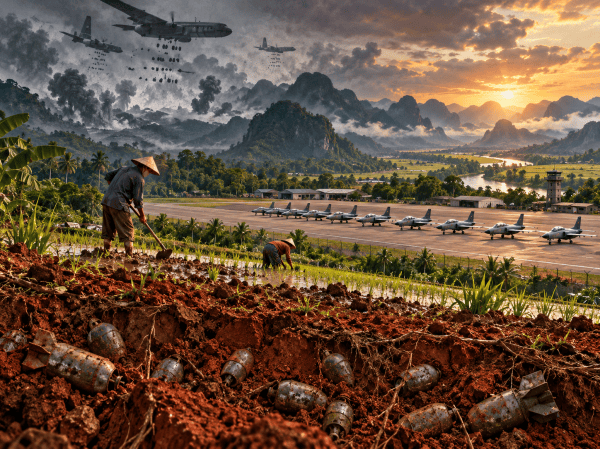
In May 2026, Vietnam's Foreign Minister met with North Korean officials, a significant yet underreported event that challenges the Western narrative of the DPRK as isolated and irrational. This meeting signifies the resurgence of socialist internationalism and the resilience of anti-imperialist relations against a U.S.-dominated order. Vietnam asserts its independence by maintaining ties with a historically aligned state despite pressures to conform to U.S. interests, illustrating a defiance of binary political expectations dictated by Western powers. As these two nations deepen cooperation, they expose cracks in imperial control, revealing that sovereignty endures in the face of sanctions and coercion.
Gold, Lithium, and the Chains of Empire: Zimbabwe, China, and the Battle to Break the Colonial Economy
The imperial press calls Zimbabwe’s recovery “bizarre,” revealing more about empire’s ideology than Africa’s reality. Beneath the headlines lies a material transformation driven by gold, lithium, labor, and survival within a system built to constrain it. As Zimbabwe pushes toward beneficiation and partners with China, it enters a global struggle over who controls resources, industry,... Continue Reading →
Concrete and Control: Imperial Media vs Sovereign Development in the China–Cambodia Energy Nexus
This essay excavates how Western energy media transforms a Cambodian hydropower project into a geopolitical morality play, recoding sovereign development as “Chinese influence.” It reconstructs the material reality beneath that narrative: fuel dependence, state planning, bilateral agreements, regional grid integration, and the political economy of infrastructure. It then reframes the project as a node in... Continue Reading →
The Return of the State: How Industrial Policy Became a Weapon of Global Power
An emerging “consensus” around industrial policy masks a deeper ideological project disciplining development within the boundaries of global capital. The material reality reveals a world defined by subsidy wars, coercion, and uneven development, where state intervention is already reshaping the global economy. China stands at the center of this contradiction as a socialist-led state navigating... Continue Reading →
From Imperial Plunder to Socialist Possibility: Capitalism, Dependency, and the Road to Sovereign Development
Development is not a neutral path but a historical process forged through conquest, extraction, and domination. Underdevelopment is not a failure to advance, but the condition produced by integration into a world system structured by imperial power. As the crisis of global capitalism deepens and the space for sovereign maneuver widens yet destabilizes, nations are... Continue Reading →