Sovereign Enough to Steal From: How American Law Turns Conquest Into Governance

Ward Churchill’s Perversions of Justice exposes the legal machinery through which Indigenous sovereignty is recognized just enough to legitimize treaties, land cessions, resource extraction and colonial administration—then restricted whenever it threatens settler possession or state power. Following that contradiction from conquest and property into uranium mining, blood quantum, AIM repression and U.S. imperial expansion, this review tests both Churchill’s strongest insights and his strategic limits. His final wager—that the colonizer’s own law can be weaponized to fracture legitimacy and withdraw consent—remains powerful. But the deeper revolutionary question is what turns that rupture into organized material counter-power.

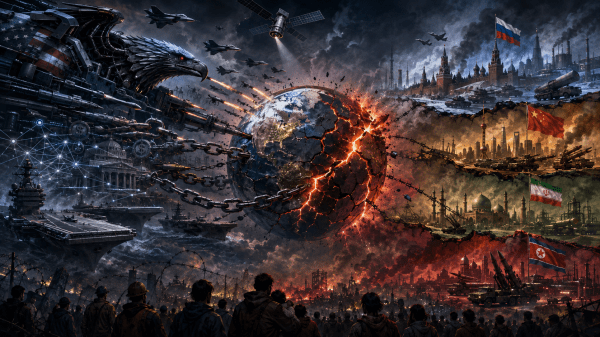
The Axis Washington Built: How the War Against Multipolarity Is Pushing the World Toward World War III

The rhetoric around a so-called "authoritarian axis" of Russia, China, Iran, and North Korea is dangerously misleading. This narrative stems from a long history of U.S. military expansion and interventionism that has fostered the very hostilities it claims to combat. Instead of viewing these nations as a monolithic threat, we must recognize that their alliances are responses to decades of American aggression and coercion. Bosco's portrayal of these entities as simple villains obscures the deeper dynamics at play, namely that U.S. actions have directly contributed to their convergence. To prevent a World War III scenario, we must dismantle the war machinery perpetuating this cycle of escalation and educate the public on these historical nuances.

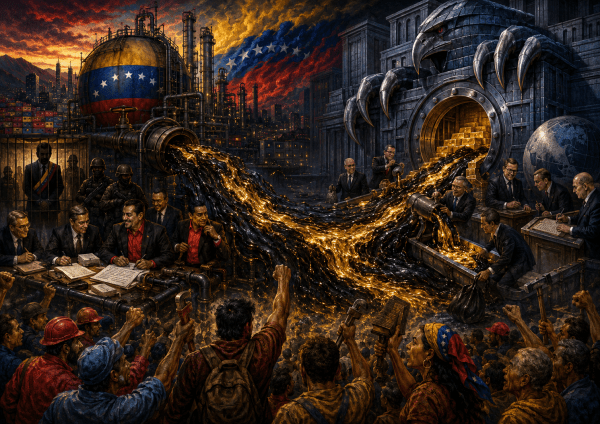
The Thieves Opened the Vault: From Comprador Corruption to Imperial Receivership in Venezuela

The betrayal of Pedro Binaggia, a Venezuelan informant for U.S. authorities, is just a microcosm of a much larger imperial drama. While Binaggia recorded evidence of a $1.2 billion oil fraud, he found the American government he served turned its back on him after extracting what it needed. This tale is framed as his personal tragedy but obscures the broader context of imperial overreach. The U.S. not only investigates and prosecutes alleged crimes but assumes control over Venezuela’s oil revenue, reducing a sovereign state to a pawn in a power game. The theft of national wealth is cleaned up by a facade of legality, while corrupted officials and foreign interests conspire in the shadows. It's a grim reminder: in this twisted narrative, the real crime lies in the extraction, not just the theft.

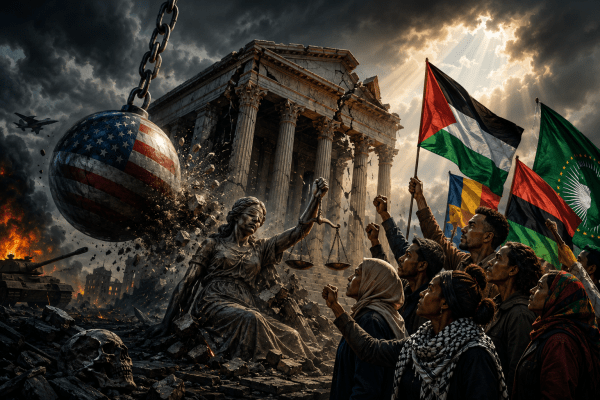
The Palestine Exception: Why Washington Is Trying to Break the ICC

The Guardian's coverage of Marco Rubio's claim that the International Criminal Court (ICC) threatens U.S. sovereignty highlights the deeper issue of imperial exemption rather than genuine sovereignty. The U.S. has long opposed ICC jurisdiction that could implicate American or allied personnel, reacting strongly against Palestinian efforts to document crimes under occupation. The article critiques the liberal institutionalism of the response, noting a lack of representation for affected parties. It underscores that U.S. sanctions targeting Palestinian organizations and ICC officials are a means to maintain impunity. Oppressed nations seek accountability, using available legal systems to challenge the dominance of imperial powers and protect their sovereignty against external coercion.

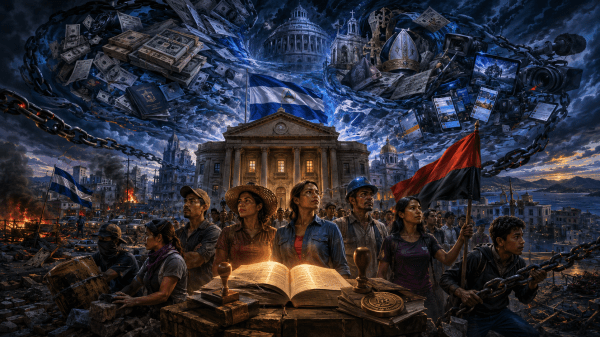
The Lawyers of the Counterrevolution: How Nicaragua Is Dismantling the Infrastructure of Imperial Power

The Associated Press presents Nicaragua’s removal of lawyers from the professional registry as another unexplained authoritarian crackdown. This essay reconstructs the deeper reality: a post-2018 Sandinista counter-subversion campaign aimed at the foreign-funded NGO, media, ecclesiastical, expatriate, financial, and legal networks the government believes helped organize the attempted coup. Lawyers and notaries matter because they give those networks legal continuity through contracts, properties, associations, donations, and powers of attorney. Nicaragua has the right to dismantle imperial infrastructure, but revolutionary sovereignty must still distinguish proven subversion from ordinary legal practice through transparent evidence and popular accountability.

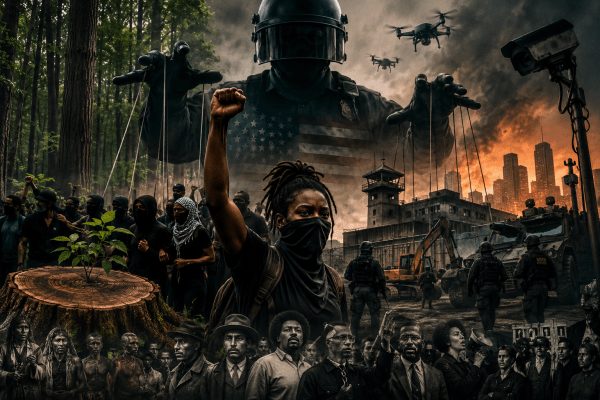
Cop City Is the Counterinsurgency Campus: How “Antifa” Became the New Name for the Old Domestic Enemy

The Guardian's coverage of Trump's "antifa" prosecutions highlights a covert escalation of systemic repression rather than the emergence of a new threat. While it depicts the federal indictment against Cop City protesters as a shocking maneuver, this is merely the latest play in a long history of state-sponsored violence rooted in colonialism, slavery, and counterinsurgency tactics. The narrative frames Trump as the villain while obscuring the entrenched architecture of oppression that transcends his administration. The real battle lies in organizing effective resistance, connecting various social justice movements, and building robust defense mechanisms amidst a climate poised for increasing militarization and legislative warfare against dissent.

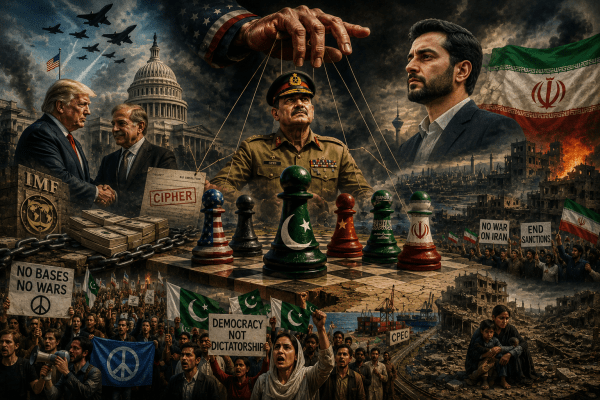
All Will Be Forgiven: Pakistan, Iran, and the Empire’s Crisis of Obedience

Pakistan’s emergence as a mediator in the U.S.-Iran war is a masquerade, showcasing a military regime, led by Prime Minister Shehbaz Sharif, seeking legitimacy through compliance with U.S. agendas. The facade of diplomacy hides a deeper reality: military-managed governance, manipulative partnerships, and economic subjugation sustained by Western powers. As global dynamics shift, Pakistan's balancing act among rival powers reveals an opportunistic survival strategy rather than genuine sovereignty. This troubling scenario underscores an essential truth: imperialism thrives not through outright violence but via coercive control, shaping a world where authentic peace remains a distant, arguably unattainable ideal.

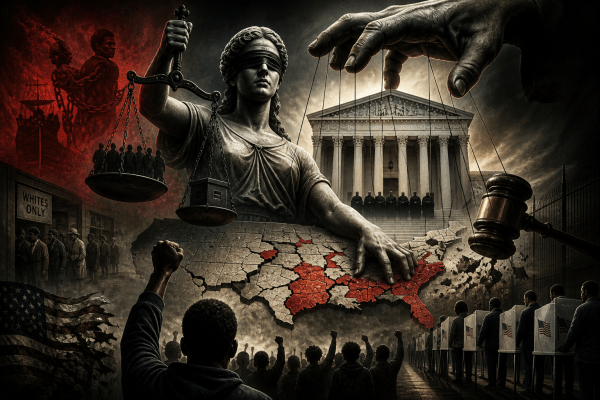
The Colorblind Con Job: How the Supreme Court Makes Black Power Disappear

In a provocative dissection of the U.S. Supreme Court's ruling against Louisiana's majority-Black district, the article exposes a chilling truth: the very mechanisms meant to ensure voting rights are systematically undermined. NPR's portrayal of this as a mere legal setback pales in comparison to the deeper rot at the heart of American democracy, which has long grappled with the notion of Black political power. This ruling is emblematic of a historical pattern where rights are granted under duress, only to be stealthily reclaimed when they threaten the status quo. It’s not just about losing a voting bloc; it’s about the ongoing struggle for true representation in a system designed to contain it.

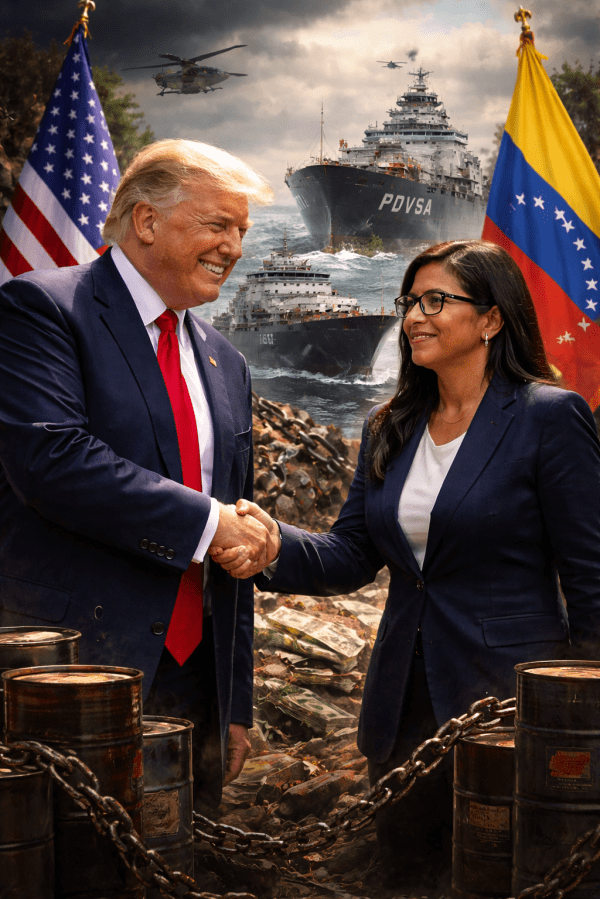
Fortress America and the Oil Ultimatum: Venezuela, Hyper-Imperialism, and the Open Consolidation of the American Pole

This essay argues that Trump 2.0 marks the open phase of U.S. hyper-imperialism, where coercion replaces consent and hemispheric dominance is enforced without disguise. Using Venezuela as the central case, it traces how leader abduction, naval encirclement, oil custodianship, and legal warfare form a consolidated strategy to subordinate sovereign states to the American Pole under... Continue Reading →

Website Powered by WordPress.com.

Up ↑