Democracy With a Visa Stamp: Washington’s Election War on Brazil

Reuters exposed an alleged Trump administration attempt to enter Brazil and cast doubt on its 2026 election, but treated the affair as partisan misconduct rather than part of a wider imperial campaign. Tariffs structured around U.S. economic needs, sanctions against Brazilian judicial officials, terrorism designations and long-standing security ties reveal a coordinated effort to discipline Brazilian sovereignty. The confrontation also belongs to Washington’s imperialist recalibration: consolidating the American Pole as Brazil deepens economic and technological relations with China. The real struggle is over who governs Brazil—its people, or an empire determined to supervise its courts, elections and developmental future.

The Empire Calls Resistance Subversion: Cuba and Washington’s War on Revolutionary Consciousness

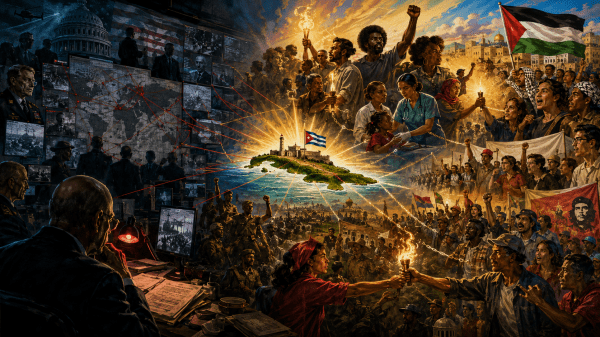
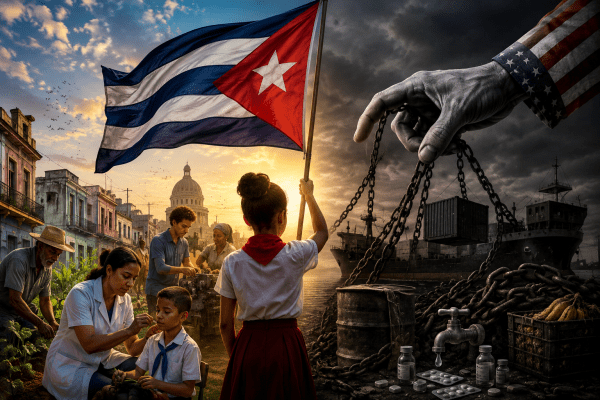
The State Department's report conflates documented espionage with a sweeping indictment of social movements, branding students, revolutionaries, and dissenters as part of a conspiracy orchestrated from Cuba. This narrative denies local struggles against oppression, instead framing resistance as a foreign-directed plot, thus erasing historical context and the material origins of dissent. The document's loose connection between Cuba's influence and contemporary activism serves as a McCarthyite tool against American dissent. By equating genuine political engagement with espionage, it aims to squash revolutionary consciousness and reinforce the status quo, revealing the empire's fear that the oppressed might unite and resist independently.

Public Money, Private Command: The State Returns to Rescue Capital

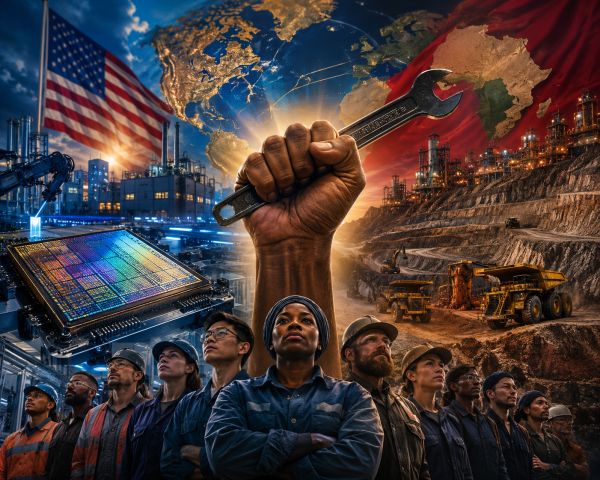
Washington's recent equity stakes in key corporations like Intel signal capitalism's failure rather than a shift towards socialism. While the government assumes control over critical industries, it simultaneously excludes workers from labor and decision-making roles. The stated objective is national security, but this forms part of a broader imperial strategy that intertwines military needs with corporate interests. The public funds the industrial system while remaining marginalized, illustrating a profound contradiction: social production is maintained under corporate control. As America grapples with its economic decline, the push for a more equitable structure is vital. It's time for public investment to translate into worker empowerment and community authority.

Same Boss, New Contract: USMCA and the Empire’s Grip on Mexico and Canada

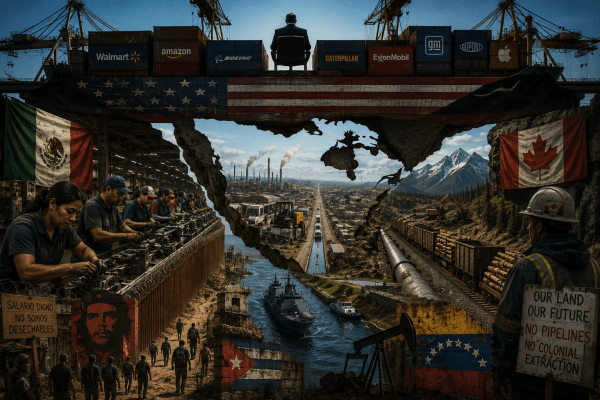
NBC's portrayal of Trump's refusal to renew the USMCA is more than a mere disruption in trade; it’s a calculated move to establish an iron grip over North America. The article frames this as instability, ignoring the deeper narrative of imperial ambition where trade agreements become tools for coercion. The U.S. isn't retreating; it's reconfiguring the continent, tightening control over Mexico and Canada while excluding China from the fold. Workers from all sides suffer under this new order while corporate interests thrive unchallenged. Ultimately, this is not a story of chaos but of empire reshaping subjugation—inviting you to witness the birth of Fortress America instead of its decay.

The Robber at the Gate: Venezuela, China, and the American Pole’s Oil Ledger

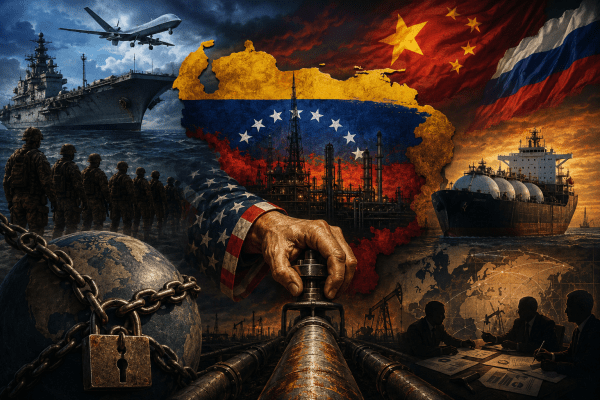
Washington masquerades as a “gatekeeper,” but it’s merely an imperial force exploiting Venezuela’s oil through a facade of debt management. The South China Morning Post article dismisses the severe issue of sovereignty, framing the US’s dominance as mere financial oversight. This is financial piracy, where the empire suffocates a nation but presents itself as a recovery manager. As China seeks to protect its investments in Venezuela, the true battle is not about debt but about reclaiming sovereignty from imperial grasp. The struggle is clear: Venezuela’s resources belong to its people, not to the US, which must be confronted directly to dismantle this neocolonial command.

The Blockade’s Market Miracle: How Washington Starves Cuba, Then Calls the Hunger Socialism

CBS/AFP’s portrayal of Cuba’s recent economic reforms is less about facts and more about constructing a narrative that favors imperialism. Framing these reforms as desperate "free-market" concessions, the article ignores the U.S. blockade's true role in choking Cuba's economy while painting socialism as a failed ideology. This reporting reduces complex realities into a morality tale that absolves the U.S. of accountability, instead distilling Cuba's struggles into proof of its socialist inadequacy. Ultimately, the real story is one of resilience: a nation striving for autonomy amid relentless imperial domination, desperately attempting to balance limited market adaptations without surrendering sovereignty.

The Roads Remember Túpac Amaru: Jacobin Calls Popular Power a Vacuum

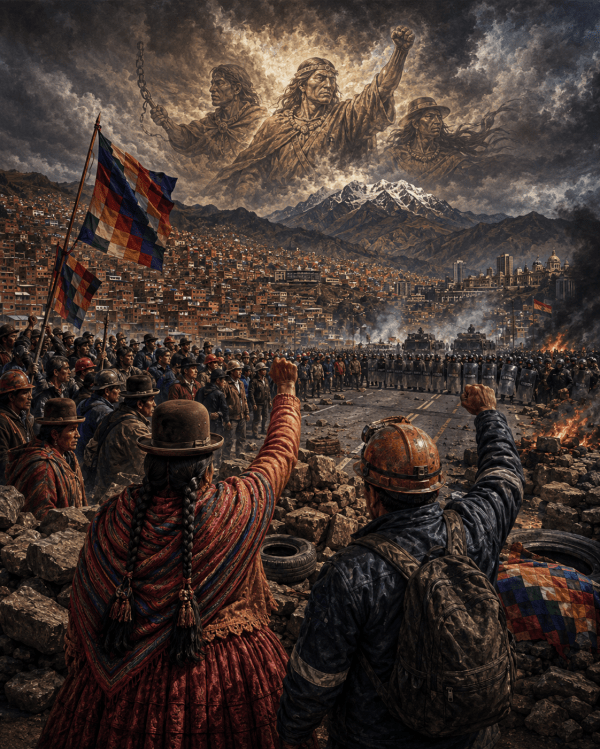
Bolivia is experiencing a seismic shift, as the indigenous and working-class masses rise against a government they see as complicit with imperial interests and corporate power. Jacobin's portrayal of this struggle as chaotic “political vacuum” fails to grasp the reality: the people are not absent from politics; they are reclaiming agency. While the ruling class laments blocked roads and instability, they ignore the genuine political force being forged by those occupying them—workers, campesinos, and indigenous communities asserting power where previously silenced. The barricades are not just obstacles; they symbolize resistance against commodification and repression, signaling a reawakening of history in the fight for sovereignty and justice.

Grand Theft América: Cartels, Capital, and the CIA’s Hemispheric War

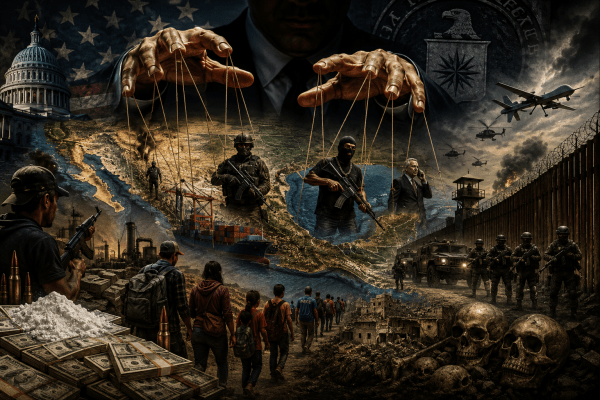
CNN's report on secret CIA operations in Mexico reveals a troubling narrative that frames U.S. intervention as a necessary counter-terror effort against cartels, while obscuring deeper issues of imperial influence. The article reflects how imperial media sanitizes violent operations, portraying them as essential for security. These actions are linked to a broader strategy of militarization and economic dependency, threatening Mexican sovereignty and democracy. The framing of cartels as terrorist organizations facilitates increased U.S. oversight and intervention. The need for organized anti-imperialist resistance is urgent, as declining U.S. hegemony conditions responses to crises under the guise of safety and necessity.

Empire at the Doorstep: How the Narco War Becomes a License to Penetrate Sovereignty

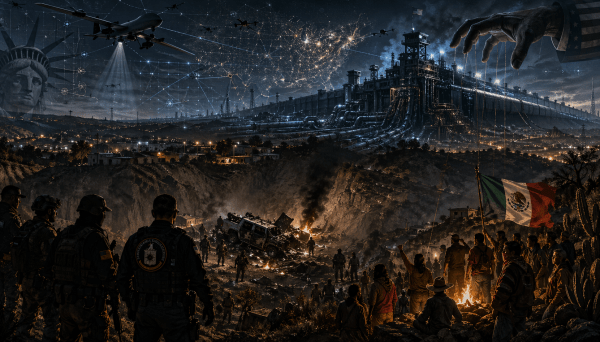
What appears as a tragic incident in Chihuahua is exposed as a carefully managed narrative that obscures the presence of foreign power operating inside Mexico. The factual record reveals a dense security architecture where intelligence, surveillance, and training pipelines blur the line between cooperation and control. Stripped of illusion, the episode reflects a deeper contradiction... Continue Reading →

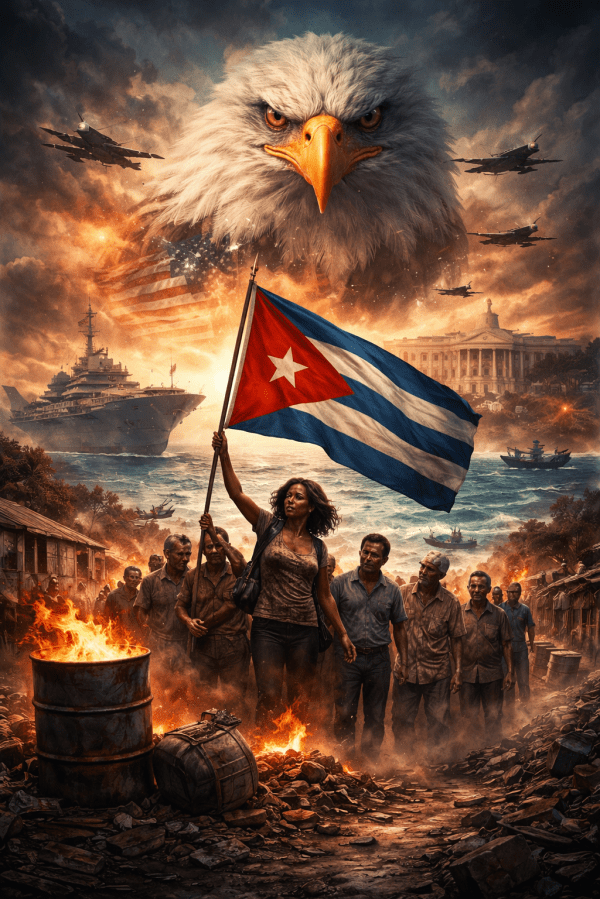
Cuba Will Not Kneel: Trump, The New York Times, and the Contradictions of the American Pole

The New York Times launders U.S. regime-change demands into the language of negotiation, masking domination as diplomacy. Beneath the narrative, a coordinated campaign of economic strangulation—especially through energy chokepoints—reveals deliberate coercion, not Cuban failure. This pressure is part of a broader imperial recalibration: the consolidation of Fortress America as a hemispheric bloc under U.S. control.... Continue Reading →

Website Powered by WordPress.com.

Up ↑