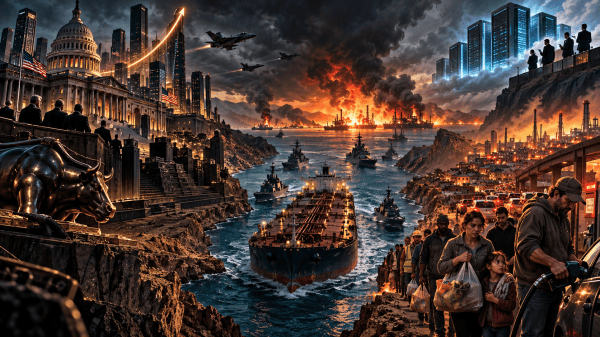
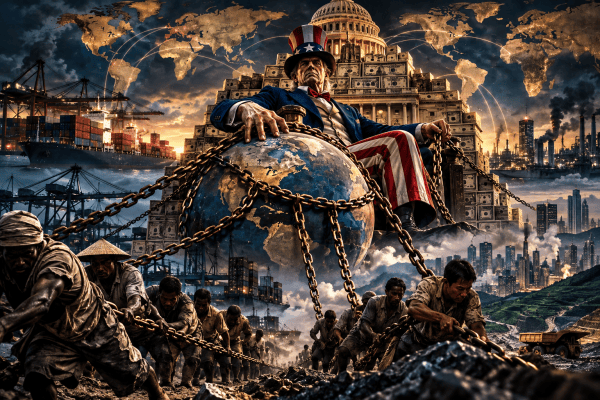
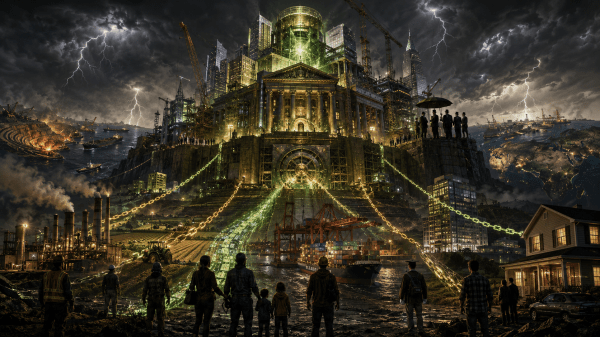
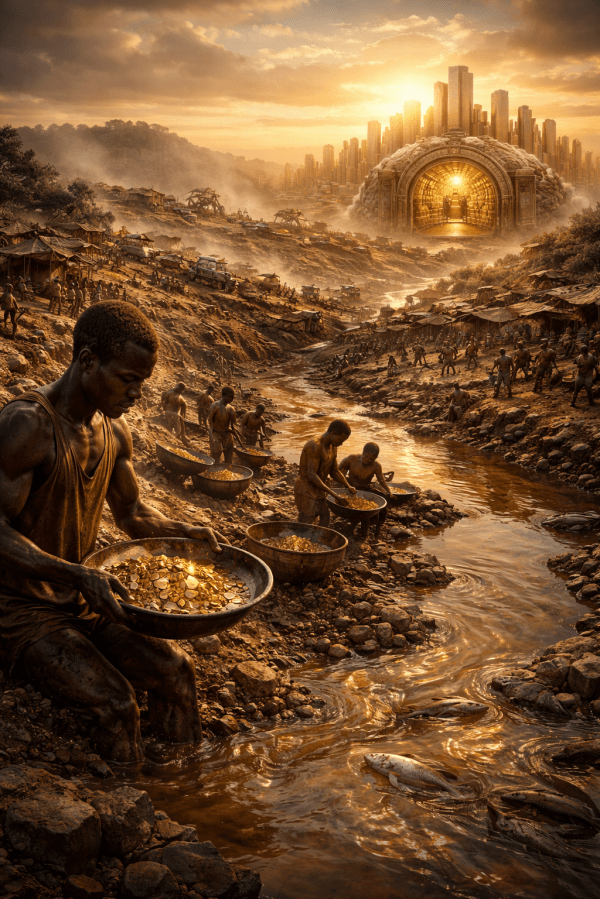
Lenin's "Imperialism, the Highest Stage of Capitalism" exposes the dark underbelly of capitalism, where economic forces and political power dance in a shadowy masquerade. He reveals how imperialism is not a mere side-effect of states' ambitions but a complex product of capital's relentless quest for profit, driving nations to export capital rather than just goods. The document reflects the sinister dynamics that create monopolies, establish financial oligarchies, and differentiate classes within the proletariat, suggesting that even workers can become complicit in their subjugation. This analysis remains crucial today, as it compels us to question ownership and control within our increasingly interconnected world.
Containment Makes Its Own Escape Routes: China, Iran, and the Rare-Earth Contradiction
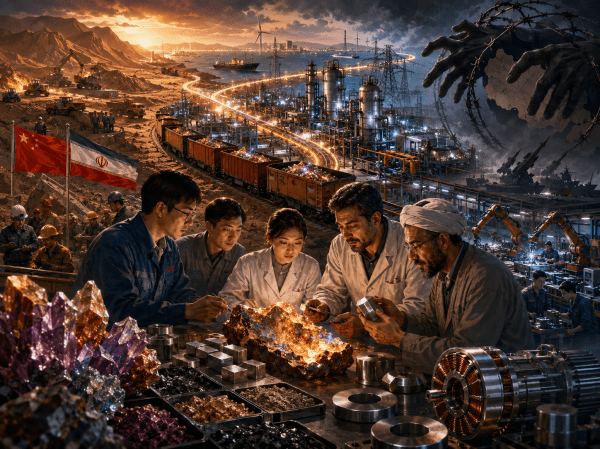
The narrative surrounding a modest scientific workshop between China and Iran is sensationalized into a geopolitical crisis, primarily through the lens of U.S. concerns. It's ironic: while Washington frantically condemns this cooperation, the real battle revolves around who controls the rare-earth supply chain. Both countries face sanctions that push them to create independent scientific and industrial pathways. The focus should pivot from mere diplomatic theatrics to whether this partnership enhances Iran's productive capacity or merely perpetuates dependency. Ultimately, this cooperative effort holds the potential to disrupt traditional power dynamics—unless it devolves into another avenue for exploitation under foreign dominance.
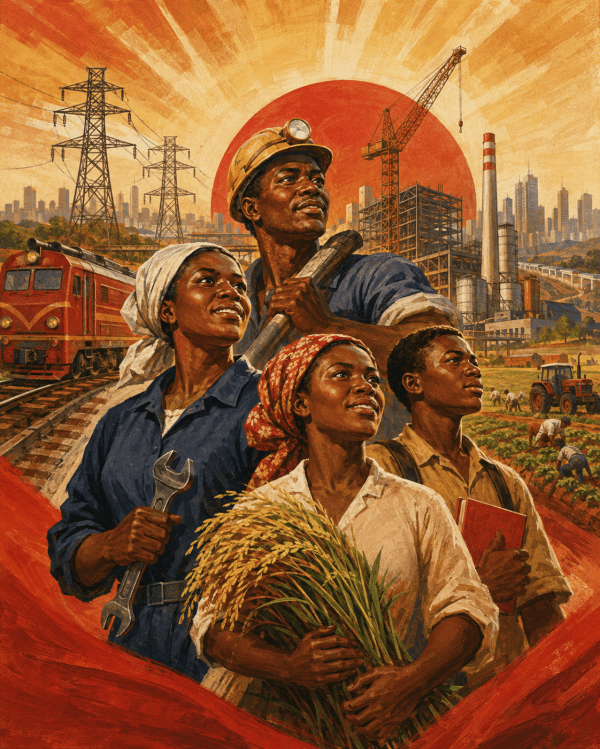
The Dividend Is Human: Africa’s Population Boom and the Battle Over Production
The Financial Times provocatively flips the Malthusian narrative on its head, arguing Africa's plight stems from a historical lack of population rather than excess. This revisionist tale criticizes the colonial legacy that stripped Africa of its labor and infrastructure, while the current swell of population, cities, and markets struggles against debt and underdevelopment. The real challenge isn't merely a growing populace; it's whether Africans can seize control of factories, technology, and continental markets. As density increases, the push for organized labor and investment in industrial capacity becomes crucial—otherwise, Africa risks becoming a mere market for foreign goods, trapped in a cycle of dependency despite its demographic potential.
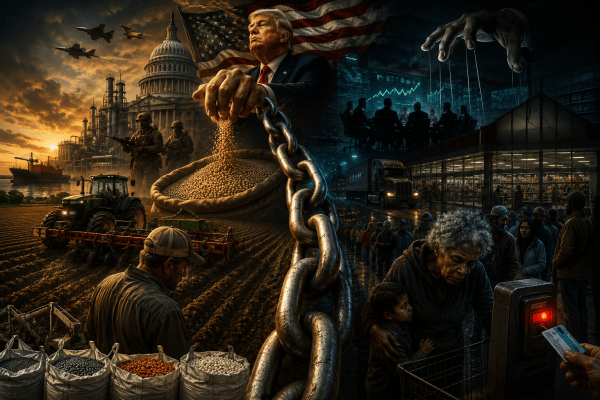
The Hunger Chain: How Trump Feeds Capital and Disciplines the Hungry
In a striking reveal, Fox celebrates Trump's fertilizer emergency as a boon for farmers, yet this facade obscures the underlying fragility of our food system reliant on state intervention. While fertilizer access gets prioritized, the true cost is hidden: a monopolized market where agribusiness thrives as workers face hunger, suspicion, and administrative punishment. Trump's regime twists food security into a mechanism for capital gain, revealing a stark disparity in state response; when profit is threatened, intervention is swift, but when workers struggle for sustenance, they face scrutiny. The urgent call is for food power—community sovereignty, mutual aid, and a radical rethinking of food as a right, not a commodity.
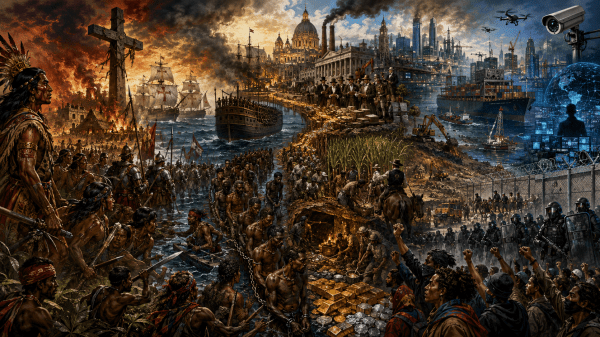
The World Was Not Discovered: Genocide, Slavery, and the Birth of Capitalist Empire
History is often told from the perspective of conquerors, romanticizing imperialism as a noble endeavor of “discovery.” However, this narrative ignores the vibrant, complex societies that existed long before European arrival; civilizations rich in culture and knowledge prepared to resist. The so-called “Age of Discovery” merely facilitated violent conquest, genocide, and exploitation. Colonialism and capitalism are intertwined, with wealth extracted through enslavement and land theft, while underdevelopment in colonized regions resulted from this systematic violence. Today, the consequences of colonialism persist, as neo-colonial strategies manipulate economies and suppress sovereignty. To reclaim the future, societies must confront this history, recognize the pain of oppression, and organize for a just world, free from the chains of empire.
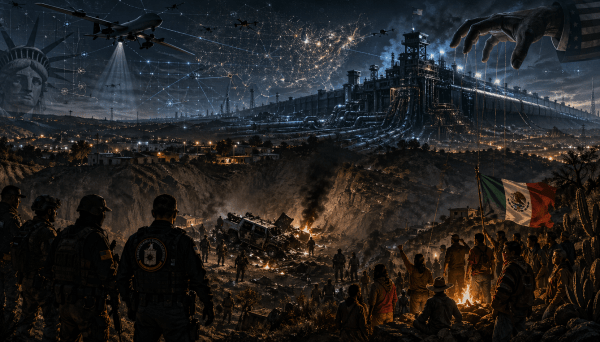
Empire at the Doorstep: How the Narco War Becomes a License to Penetrate Sovereignty
What appears as a tragic incident in Chihuahua is exposed as a carefully managed narrative that obscures the presence of foreign power operating inside Mexico. The factual record reveals a dense security architecture where intelligence, surveillance, and training pipelines blur the line between cooperation and control. Stripped of illusion, the episode reflects a deeper contradiction... Continue Reading →
Axel Springer, the Africa Finance Corporation, and the Vault: Gold, Monetary Anxiety, and the Battle Over Who Controls the Chain
A trillion dollars in untapped gold is sold as opportunity in an age of financial instability. The numbers glitter, but the narrative abstracts extraction from labor, land, and history. Reserve accumulation rises alongside illicit outflows, smuggling networks, and toxic exposure. The real struggle is not over gold in the vault, but over who governs the... Continue Reading →
Lobito and the Long Arm of Empire: Europe’s Green Transition Runs on African Land, Labor, and Life
How the EU’s “model corridor” revives the colonial blueprint under the banner of sustainability— and how African workers, communities, and global movements are fighting back. By Prince Kapone | Weaponized Information | November 24, 2025 Europe’s Clean Hands Fantasy in the New Scramble for Africa The article under excavation, “In the new scramble for Africa’s... Continue Reading →
Resilience for Whom? The EU’s 2025 Strategic Foresight Report and the Crisis of Hyper-Imperialism in a Multipolar Transition
Brussels calls it “Resilience 2.0.” In reality it is a manual for managing imperial decline: shifting Europe from Russian pipelines to U.S. LNG, seizing assets through lawfare, codifying dependence on American cloud and chips, militarizing budgets, and policing speech. Across the Global South, a multipolar counter-project points toward another horizon—cooperation, sovereignty, and solidarity. The choice... Continue Reading →
Solar Sovereignty and the Silent Rebellion of the Global South
Africa’s rooftop revolution is not a side effect of climate policy—it’s a crack in empire’s circuitry. Fueled by Chinese supply chains and working-class necessity, solar panels are becoming tools of delinking. No loans, no permission, no Western oversight—just light, autonomy, and insurgent infrastructure. This isn’t a transition. It’s a threat. And the sun can’t be... Continue Reading →