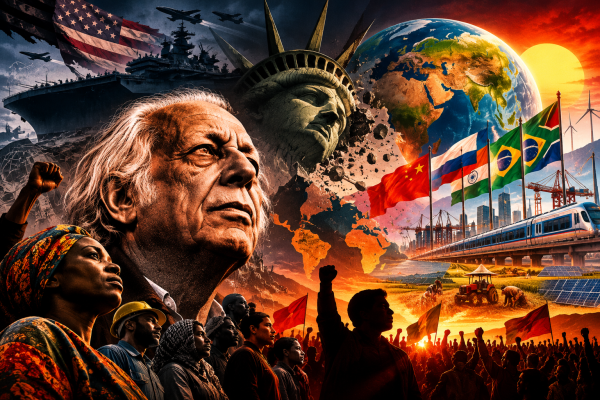
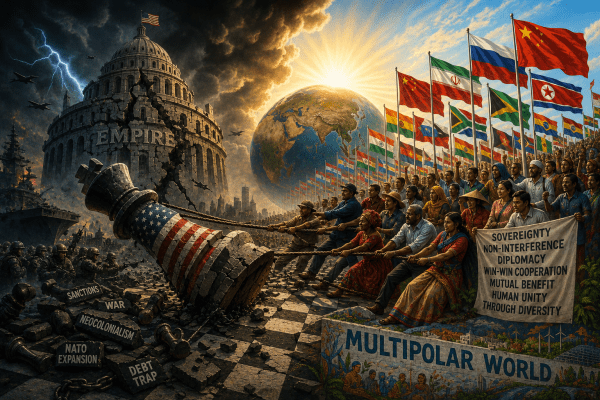
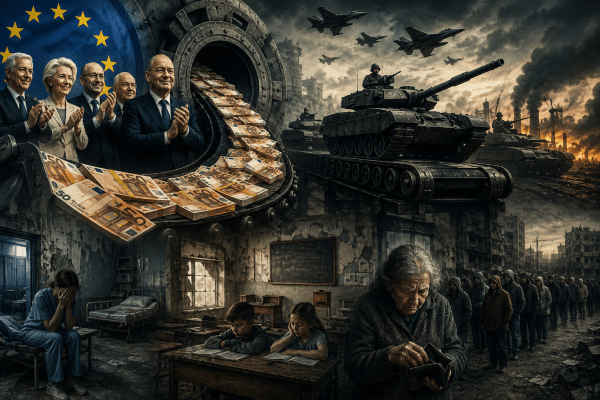
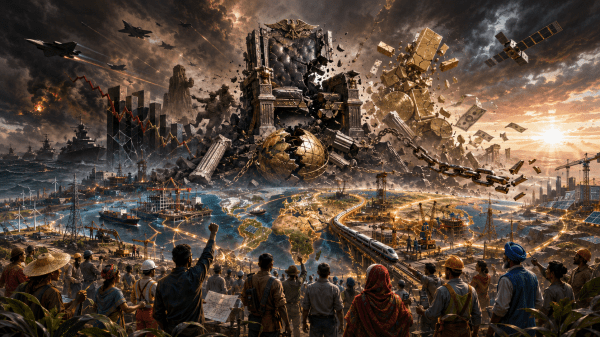
Janet Abu-Lughod's "Before European Hegemony" ruthlessly dismantles the myth that Europe rose to global prominence due to inherent superiority or brilliance. Instead, it reveals a pre-existing world economy crafted by diverse, thriving civilizations from which Europe, late to the game, benefited through exploitation and rupture. By tracing this narrative, Abu-Lughod forces us to confront uncomfortable truths: Europe did not create history; it emerged through the erosion of powerful systems created by others. History wasn’t predestined; it was violently reshaped.
Reopening the Cage: Bretton Woods Returns to a Country That Refused to Kneel
The article presents IMF and World Bank re-engagement as routine normalization, masking a political event shaped by years of institutional blockade and external pressure. Beneath that surface lies a struggle over sovereignty, where constitutional legitimacy, sanctions, and anti-neoliberal memory redefine what “recognition” actually means. The return of global finance collides with a still-living project of... Continue Reading →
From Imperial Plunder to Socialist Possibility: Capitalism, Dependency, and the Road to Sovereign Development
Development is not a neutral path but a historical process forged through conquest, extraction, and domination. Underdevelopment is not a failure to advance, but the condition produced by integration into a world system structured by imperial power. As the crisis of global capitalism deepens and the space for sovereign maneuver widens yet destabilizes, nations are... Continue Reading →
The Independent’s Imperial Blindness: How North Korea and Belarus Refuse Isolation and Build Under Siege
The Independent recasts the DPRK–Belarus treaty as suspicious alignment while obscuring sanctions, war, and coercion shaping both states. The actual record shows concrete agreements across food, healthcare, industry, and education built through ongoing diplomatic coordination. These developments emerge from Korea’s imposed partition, Belarus’s post-Soviet Western pressure, and their shared positioning alongside Russia in the Ukraine... Continue Reading →
After the Empire — Before the Collapse
When Emmanuel Todd wrote After the Empire, Washington still believed it ruled a permanent unipolar world. Todd saw something different: an empire sustained less by production than by financial tribute and military spectacle. Two decades later the contradictions he described—economic dependency, micromilitarism, and ideological decay—have matured into the turbulent transition now reshaping global power.By Prince... Continue Reading →
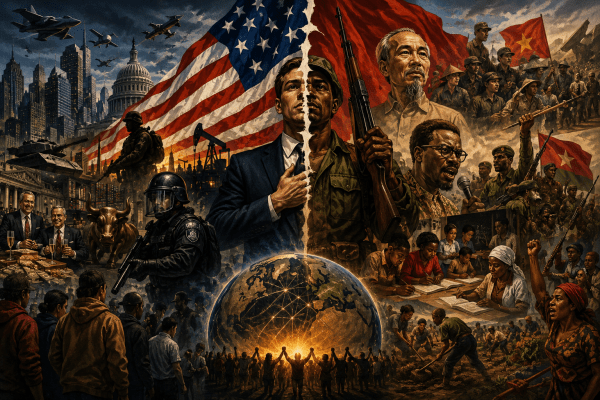
The United States of America, or the United Empire of Earth?
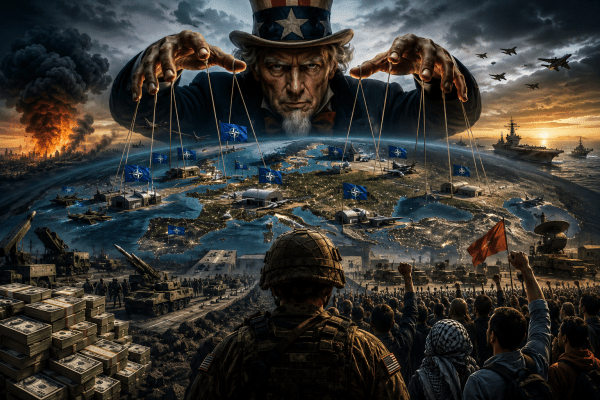
From settler conquest on the North American continent to a planetary lattice of bases, fleets, satellites, and command zones, the United States has constructed the most extensive military infrastructure in human history. Beneath the language of alliances, deterrence, and security lies a global machine designed to police the colonial world economy. But the very scale... Continue Reading →
The BBC, Zelensky and the Price of Primacy: When Hegemony Calls Itself Defense
This essay excavates the BBC’s framing of the Ukraine war to reveal how catastrophe rhetoric and moral personalization manufacture consent. It reconstructs the documented record—NATO expansion, U.S. strategic doctrine, Minsk diplomacy, sanctions, and militarization—to widen the frame beyond headline urgency. It then situates the conflict within the deeper contradiction between imperial hegemony and national sovereignty,... Continue Reading →
White Guilt or White Pride? The False Choice That Preserves Empire
“White guilt” shrinks a global system of power into a private mood. Liberal confession mourns history while preserving the machinery of dominance. Reactionary pride weaponizes heritage to harden bloc discipline under multipolar pressure. Beyond shame and nostalgia lies defection from empire and alignment with global liberation.By Prince Kapone | Weaponized Information | February 20, 2026History... Continue Reading →
Cathedrals and Carriers: Marco Rubio’s Civilizational Manifesto for a New Western Century
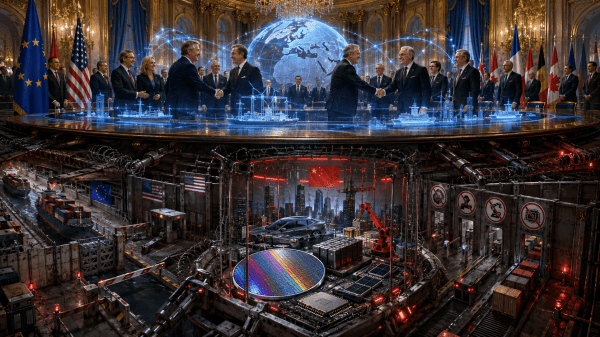
In Munich, the language of heritage, sovereignty, and renewal cloaks a program of bloc consolidation, industrial recalibration, hardened borders, and unilateral force. Beneath the hymn to Western civilization lies a disciplined strategy to reassert Atlantic primacy in a multipolar world. The question is not whether the West will act — but who benefits from how... Continue Reading →
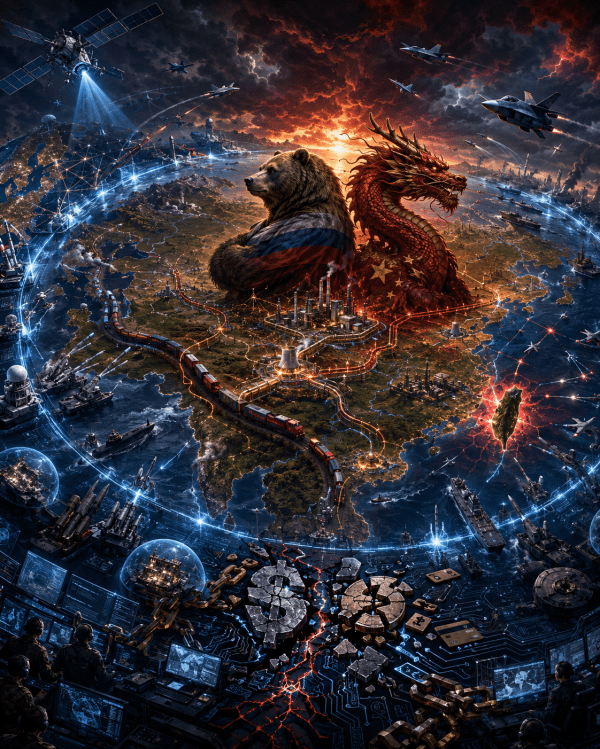
Empire Recruits, China Consolidates: The CIA Video and the Crisis of Unipolar Power
A CIA recruitment campaign is framed as opportunity while containment intensifies. Behind the video lies a shattered U.S. intelligence network and a decade of Chinese military reform. Export controls and Indo-Pacific encirclement reveal a deeper structural recalibration. As multipolarity widens the field, the real struggle is over who shapes the emerging order.By: Prince Kapone |... Continue Reading →