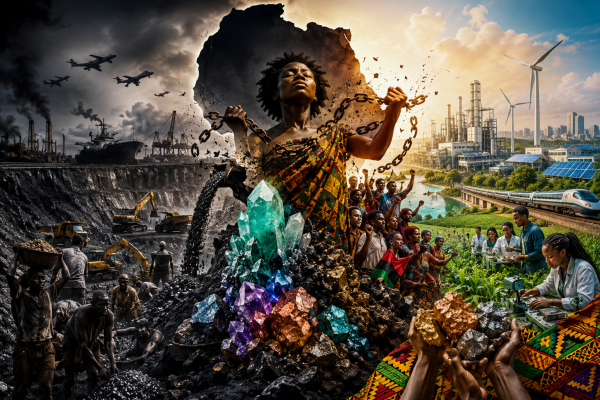
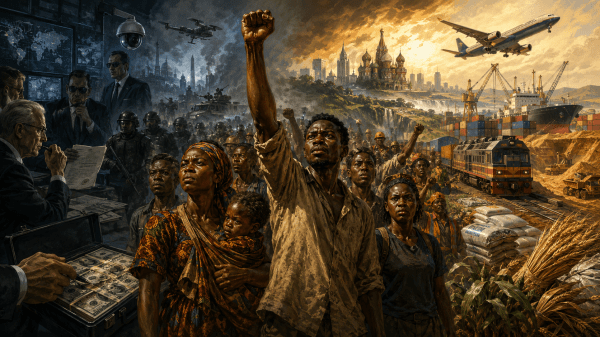
Africa is sitting on a treasure trove of critical minerals vital for the future of technology and energy, yet continues to be stymied by outdated infrastructure and foreign control. McKinsey’s report highlights the potential for $40 billion in mining value, but fails to confront the core issue: Africa’s continued subjugation as a resource mine rather than a sovereign player. This narrative masks Africa’s political struggles and reinforces colonial patterns under a veneer of opportunity. The necessity for a continental strategy emerges as a means to reclaim economic power and transform the mineral wealth from a tool of exploitation into a foundation for self-determination and industrial capability. The danger lies not in missed opportunities, but in repeating the same historical mistakes that have kept Africa relegated to mere supplier status.
The Political Economy of Imperial Feminism: Iran Beyond the Propaganda
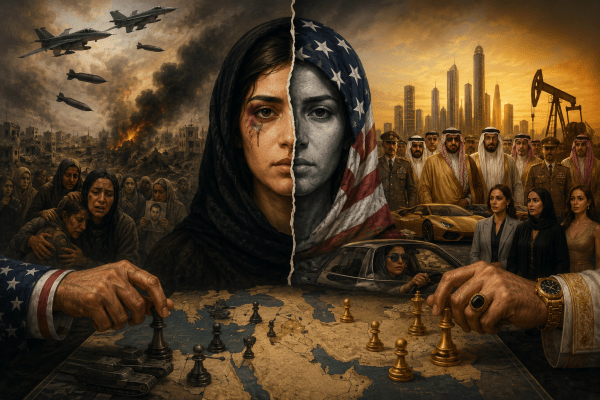
The West does not give a damn about women in West Asia. It cries for Iranian women because Iran is an enemy, then sells bombs to kings, bankrolls apartheid, protects dictators, sanctions civilians, and calls the whole rotten business human rights. Iran has contradictions, but those contradictions belong to Iranian women and Iranian society to struggle over — not to Washington, NATO, or the white ruling class. Real internationalism starts at home, against the empire that turns women’s suffering into ammunition.
Hands Off Tanzania: The West Discovers Democracy When Africa Stops Asking Permission
Tanzania's diplomatic dance with Russia unveils a stark reality: while Western media narrows the narrative to a disobedient state seeking validation from imperial powers, the true story is a nation striving for sovereignty and survival. President Hassan’s trip, framed as a scandal by Western outlets, masks the pressing needs of food security, trade, and military cooperation. The West frames Africa’s foreign policy through its lens, yet Tanzania’s pursuit of diverse partnerships challenges this monopoly. This isn’t merely about a president’s reputation; it’s about a country's right to self-determination. The true scandal? Tanzania’s defiance shakes colonial chains, invoking both anxiety and resentment from its former overseers.
Workers of the New World: BRICS+, Platform Capital, and the Class Struggle Inside Multipolarity
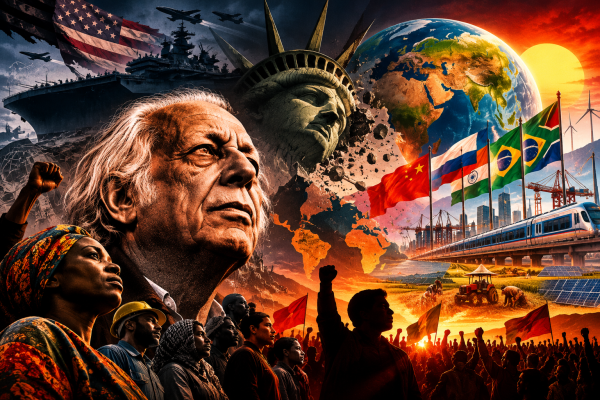
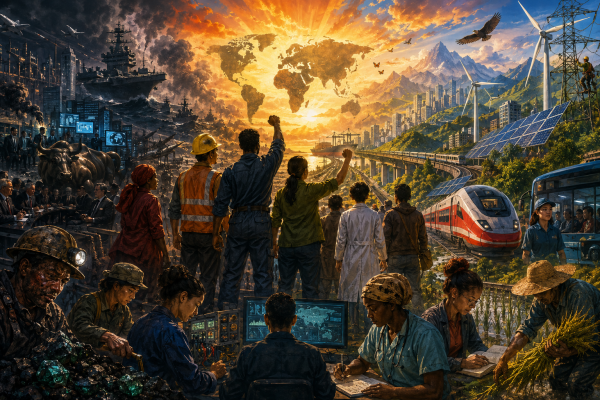
The Atlantic neoliberal order is disintegrating, revealing the ravages inflicted on workers and the environment by a relentless pursuit of profit. As BRICS+ nations seek to reclaim industrial sovereignty and labor rights, they face a chaotic multipolar reality where exploitation continues under different guises. Amid profound instability, the laboring class must transition from mere instruments of production to conscious political actors capable of reshaping development. This moment offers a critical opportunity: to reclaim the narrative and construct a world centered on human dignity and ecological balance. The question now is whether history will be rewritten by workers or remain dominated by elites.
The Corridors of Defiance: How the War on Iran Accelerated the Multipolar Reorganization of Western Asia
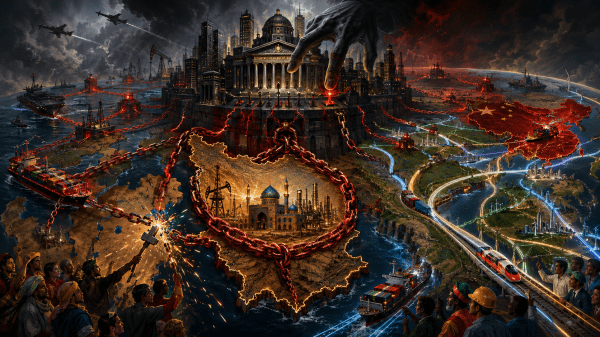
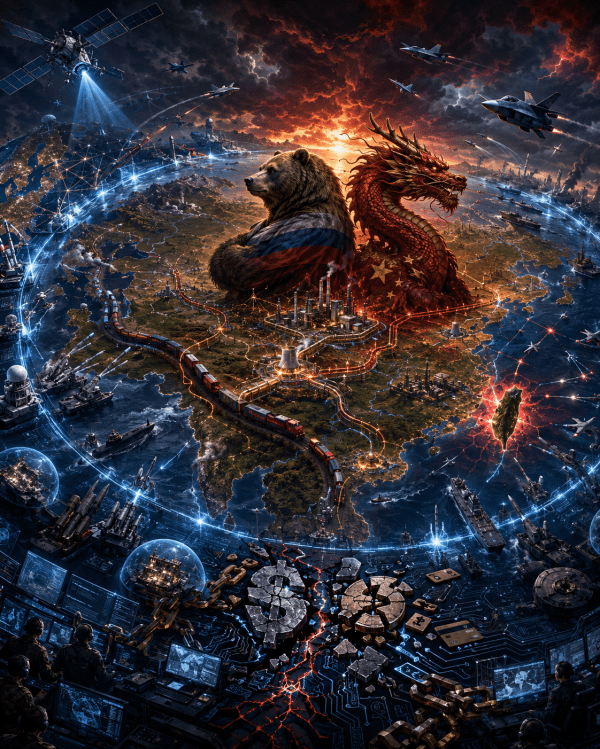
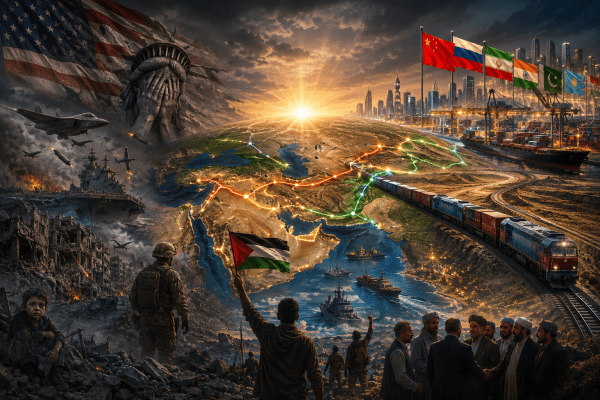
The 2026 U.S.-Israeli assault on Iran was a strategic miscalculation, intended to reassert imperial dominance in Western Asia but instead revealing the fragility of Atlantic hegemony. As the old security architecture eroded, alternative infrastructures and regional alliances emerged, facilitating trade and cooperation beyond Western control. The ongoing crises connected Gaza, Yemen, and the vital sea lanes, illustrating that military aggression has backfired, prompting regional states to recalibrate and seek resilience against imperialism. This war exposed a transformative geopolitical landscape, where logistics and diplomatic maneuvers are increasingly driven by necessity, carving out a multipolar future and undermining the sheer authority once held by the empire.
Fault Lines of Empire: U.S. Strategy, Pakistani Class Power, and the Crisis of Sovereignty
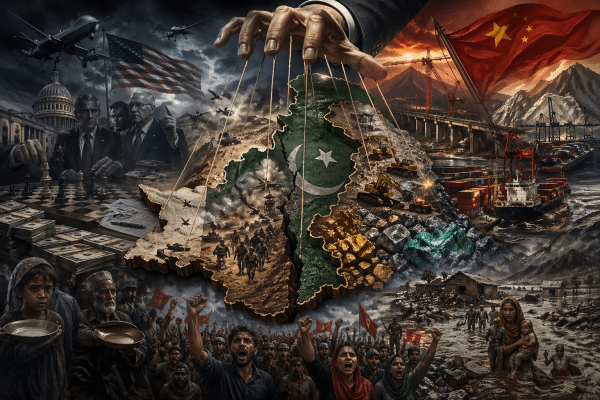
Asia Times frames Pakistan’s instability as a strategic obstacle, obscuring the material and political forces shaping the terrain. The crisis emerges from IMF austerity, elite domination, climate catastrophe, and a deepening political rupture following the coup against Imran Khan. Imperialist recalibration collides with multipolar transition, exposing the struggle between sovereignty and neocolonial extraction. Workers, peasants,... Continue Reading →
Choking to Death on an Empty Stomach: How Empire Turns War into Hunger
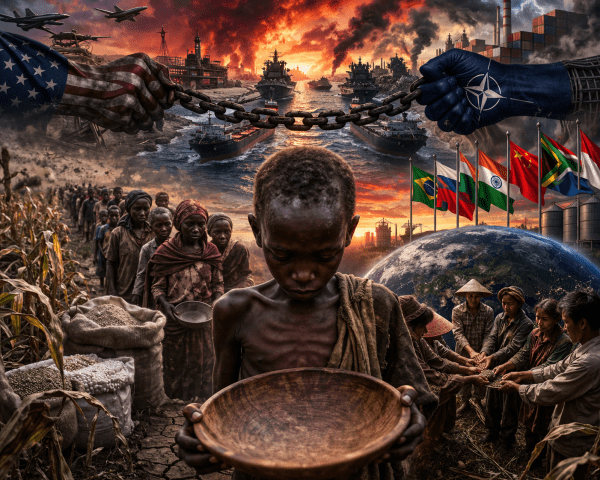
Reuters reports a BRICS food reserve proposal as risk management, but strips away the imperial structure shaping the crisis. The material record shows a world where war, sanctions, and supply chains converge to produce food insecurity at a global scale. Beneath the headlines lies a system that has transformed food, fertilizer, and shipping into weapons... Continue Reading →
Steel, Credit, and the Ghost of Unipolarity: Excavating Washington’s Gospel of Force
An op-ed declares that only the gun shapes history. We audit the numbers behind the metaphor. We situate debt, ports, sanctions, and sovereignty inside the wider architecture of global power. And we argue that multipolar bargaining space—not military nostalgia—is the terrain of our century. By Prince Kapone | Weaponized Information | February 26, 2026 The... Continue Reading →
The BBC, Zelensky and the Price of Primacy: When Hegemony Calls Itself Defense
This essay excavates the BBC’s framing of the Ukraine war to reveal how catastrophe rhetoric and moral personalization manufacture consent. It reconstructs the documented record—NATO expansion, U.S. strategic doctrine, Minsk diplomacy, sanctions, and militarization—to widen the frame beyond headline urgency. It then situates the conflict within the deeper contradiction between imperial hegemony and national sovereignty,... Continue Reading →
Iran Under Hybrid War: Sanctions, Sabotage, Terror Proxies, and the Long Siege Against Sovereignty
A forensic reconstruction of how sanctions, sabotage, terror proxies, narrative warfare, and regional forward bases have converged into a full-spectrum hybrid war against Iran — and why the January 2026 unrest is not a spontaneous crisis, but the latest front in a decades-long campaign to break an independent state.By Prince Kapone | Weaponized Information |... Continue Reading →