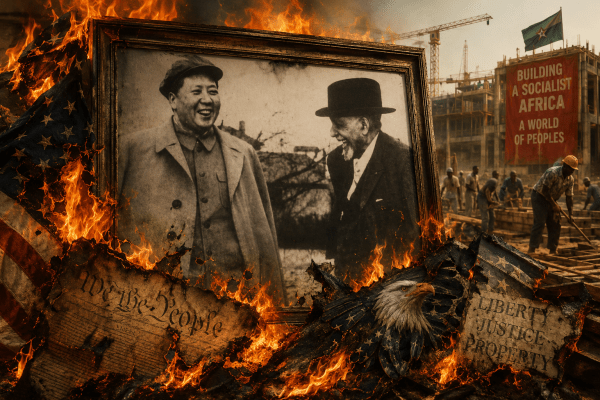
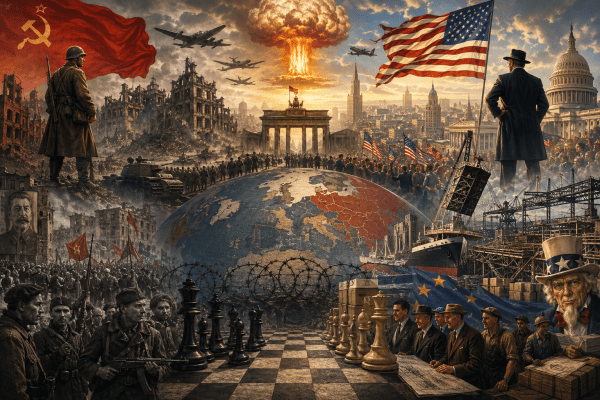
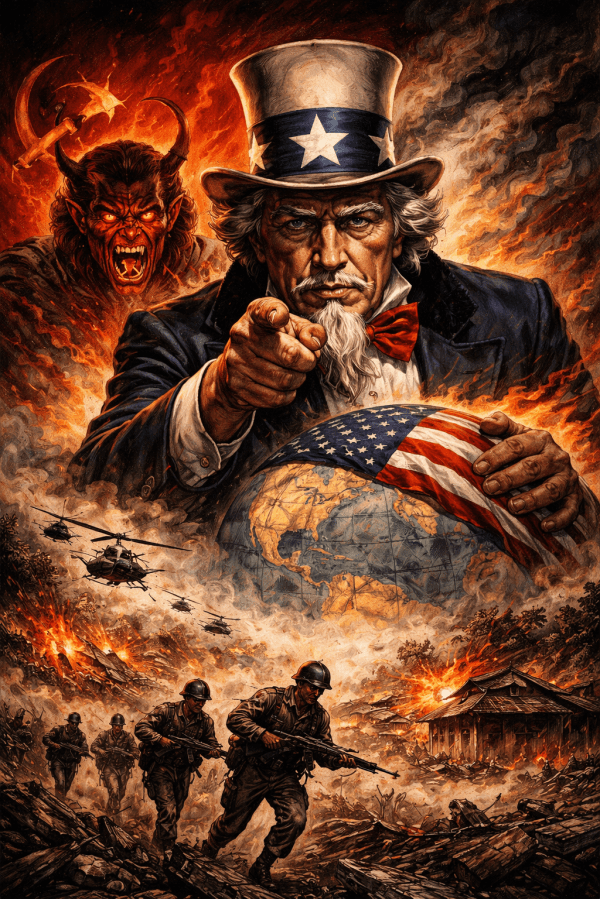
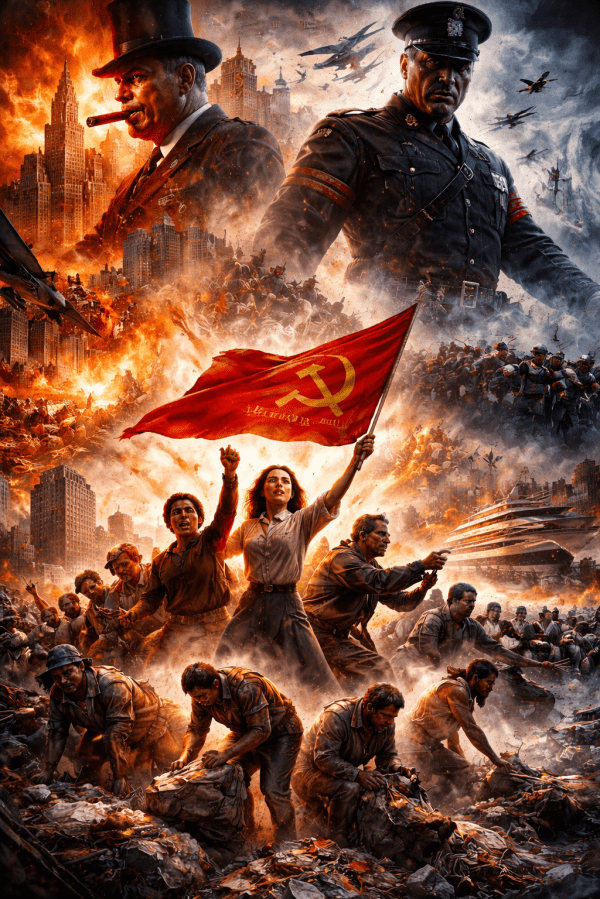
The essay provocatively dismantles the myth that the Cold War was merely a reaction to "Soviet aggression." Instead, it reveals it as America's calculated strategy to reinforce a capitalist world order post-World War II, driven by anxieties over rising leftist movements and anti-colonial uprisings. It highlights how the U.S. initiated a campaign of political warfare and economic reconstruction through the Marshall Plan, effectively shaping Europe and other regions under its imperial influence. To Washington, the real danger was not communism but the threat of genuine independence that challenged capitalist dominance. The Cold War was less about ideological battles and more about inter-imperialist struggles to determine global economic control.
Failure According to Whom?: Rewriting the Metrics of Socialism
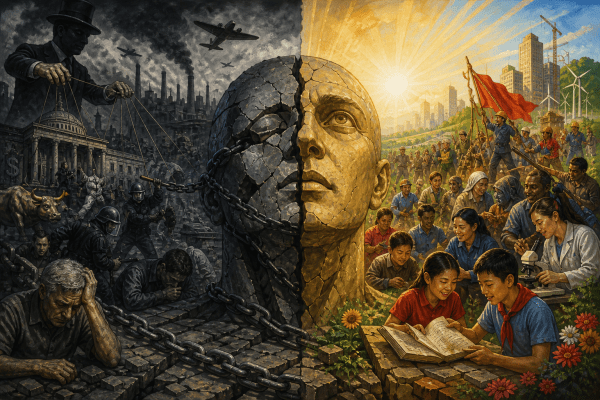
The pervasive claim that socialism has "failed" is an ideological construct rather than a factual statement. A closer analysis reveals that socialist systems, from the Soviet Union to China, achieved measurable gains in education, health, and economic development under dire conditions. This narrative of failure is not supported by historical evidence but rather is a product of a century-long ideological war against socialism. Capitalism, meanwhile, perpetuates crises, inequality, and social fragmentation, failing to meet human needs. The real question is not why socialism fails, but how it has transformed societies when confronted with immense challenges, challenging the ruling narrative that defines success so narrowly.
Empire’s Favorite Lie: Michael Parenti, Anti-Communism, and the Moral Alibi of Capital
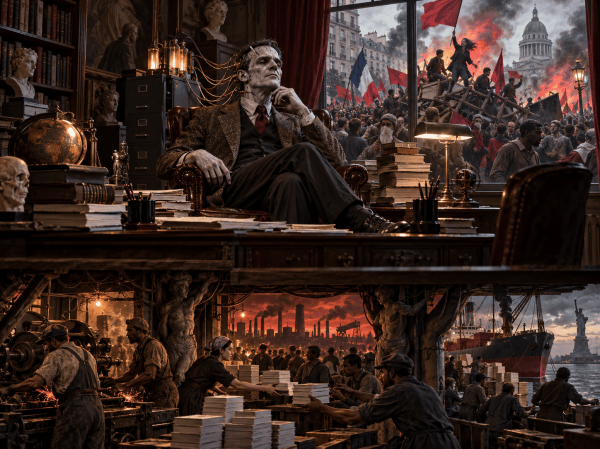
Anti-communism is not an opinion but an environment. The communist is demonized so empire can call itself innocent. Liberal reason disciplines dissent more effectively than repression. Vietnam exposes anti-communism as an ideology that requires bodies. By Prince Kapone | Weaponized Intellects Book Review | Weaponized Information | January 28, 2026 I. When Anti-Communism Becomes the... Continue Reading →
Capital’s Emergency Exit: Michael Parenti, Fascism, and the War on Class Memory
Fascism is not an aberration but a rational instrument deployed when capital loses democratic control. Socialist revolutions expanded freedom for the many and were met with siege, sabotage, and counterrevolution. The restoration of capitalism in the East revealed the market as a system of plunder, repression, and social decay. Anti-communism and class denial function as... Continue Reading →
Towards a New Political Science: Politics as the Science of Power
A rupture with procedural political science and canonical abstraction, this essay reconstructs politics as the scientific study of power—how it is accumulated, organized, enforced, and resisted—drawing on revolutionary praxis, settler colonial history, and imperial crisis to redefine what political theory is, who produces it, and what it is for. By Prince Kapone | Weaponized Information... Continue Reading →
October 1917: A Century Later — Samir Amin and the Return of the World Revolution
Samir Amin’s October 1917: Revolution, A Century Later is both a commemoration and a battle cry — a lucid Marxist-Leninist reflection on the world-historic rupture of 1917 and the unfinished struggle it ignited. Written in the twilight of the neoliberal era, the book reasserts the global and anti-imperialist meaning of the October Revolution, reminding us... Continue Reading →
The Enemy Within: Trump, Lawfare, and the Criminalization of Antifascism
The so-called “antifa terrorism” charges in Texas expose a deeper truth: the empire’s legal and media institutions are being fused into a technofascist apparatus of control. The war on terror has come home. By Prince Kapone | Weaponized Information | October 17, 2025 The Manufacture of Domestic Terror: Reuters as Lawfare Apparatus On October 16,... Continue Reading →