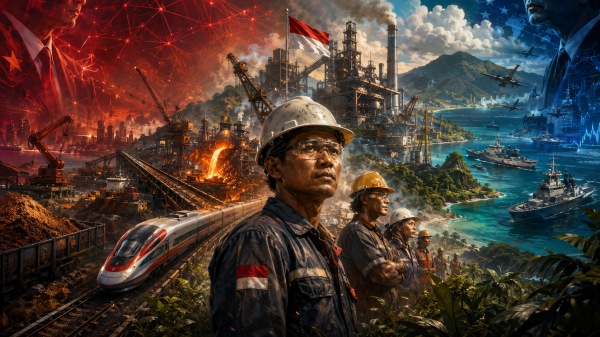
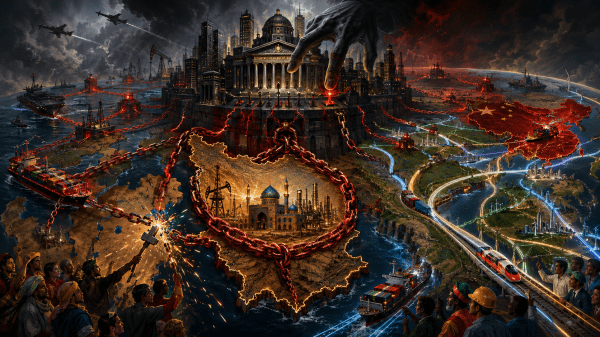
Asia Times doesn’t just argue for strategy—it reframes dependency as sophistication, urging Bangladesh to negotiate its place in a system it does not control. Beneath the language of leverage lies a material reality of export concentration, external inputs, financial discipline, and geopolitical pressure shaping every move. Multipolarity opens space—but only within limits, where new alignments... Continue Reading →
The World System Before European Hegemony: How the West Hijacked a System It Did Not Build
Janet Abu-Lughod's "Before European Hegemony" ruthlessly dismantles the myth that Europe rose to global prominence due to inherent superiority or brilliance. Instead, it reveals a pre-existing world economy crafted by diverse, thriving civilizations from which Europe, late to the game, benefited through exploitation and rupture. By tracing this narrative, Abu-Lughod forces us to confront uncomfortable truths: Europe did not create history; it emerged through the erosion of powerful systems created by others. History wasn’t predestined; it was violently reshaped.
Africa Against the World Market: Hosea Jaffe, Imperialism, and the Long Struggle for Liberation
A Weaponized Intellects review of A History of Africa that excavates Hosea Jaffe’s uncompromising analysis of colonialism, class formation, and imperial domination—situating his intervention within the liberation struggles of his time and assessing its enduring relevance for understanding Africa, the world system, and the unfinished project of revolutionary transformation today. By Prince Kapone | Weaponized... Continue Reading →
Reopening the Cage: Bretton Woods Returns to a Country That Refused to Kneel
The article presents IMF and World Bank re-engagement as routine normalization, masking a political event shaped by years of institutional blockade and external pressure. Beneath that surface lies a struggle over sovereignty, where constitutional legitimacy, sanctions, and anti-neoliberal memory redefine what “recognition” actually means. The return of global finance collides with a still-living project of... Continue Reading →
From Imperial Plunder to Socialist Possibility: Capitalism, Dependency, and the Road to Sovereign Development
Development is not a neutral path but a historical process forged through conquest, extraction, and domination. Underdevelopment is not a failure to advance, but the condition produced by integration into a world system structured by imperial power. As the crisis of global capitalism deepens and the space for sovereign maneuver widens yet destabilizes, nations are... Continue Reading →
The Capitalized Womb: How Slavery Turned Black Women’s Reproduction into American Wealth
JSTOR’s tidy little history lesson reveals something real, but only after liberal scholarship scrubs the auction block clean enough for polite readers. Beneath the archive sits a system that turned rape, forced birth, and hereditary bondage into law, credit, and capital. The real story is not bad science gone astray, but a slave order using... Continue Reading →
The Fool Who Moved the Mountains Still Walks Among Us: China’s Long March to Socialism and the Emergence of the Multipolar World Order
From Mao’s seizure of sovereignty to Xi’s effort to discipline capital, China’s modern history is neither a fall from revolutionary purity nor a smooth ascent into capitalism, but a protracted socialist struggle through contradiction. Each phase of development generated new class forces, new dangers, and new strategic adjustments, as the Party-state sought to preserve political... Continue Reading →
Manufacturing a “Xi Doctrine”: How Imperial Analysis Distorts China’s Development Strategy
A think tank narrative repackages China’s Five-Year Plan as a leader-driven doctrine, masking its institutional and historical character. The actual policy reveals a multi-dimensional strategy shaped by domestic priorities and external pressure. This transition reflects a deeper socialist development process unfolding through contradiction, not confusion. Across multiple fronts, emerging forces are beginning to resist the... Continue Reading →
The Colonial Architecture of Class: How Race Was Engineered to Divide Labor and Stabilize Empire
What masquerades as a race-class conflict in America is merely the internal workings of empire. By tracing the evolution of labor relations, it becomes clear that racial divisions are structural, not superficial nuisances. This overlapping oppression demands a unified, revolutionary response, dispelling false dichotomies to reveal a singular system demanding collective action.
Guns Over Bread: How NPR Helps Normalize Technofascism in the Age of Trump
As military spending skyrockets, social programs are slashed under the guise of “budget priorities.” This isn’t just fiscal prudence; it’s a calculated betrayal. The old social contract is dead, replaced by a system where austerity and militarization reign, revealing an empire fraying at the edges, clinging to power through coercion.