The U.S. state is vigorously fortifying its military and technological apparatus while systematically withdrawing social support through food assistance and healthcare, showcasing a disturbing trend of technofascist consolidation. As military might is acknowledged in orbit and social benefits dwindle, the ruling order exacerbates class divisions, demanding increased legitimacy from a population now subjected to strict classification and conditionality. Political expression faces barriers in increasingly privatized venues, reflecting a tactical alliance between state interests and tech monopolies. This ominous shift marks a historical reckoning: the state is reallocating its substantial resources toward military supremacy at the expense of everyday security, creating a precarious societal structure poised for conflict.
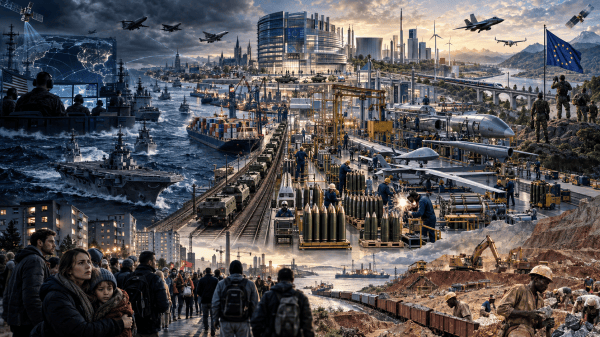
The Rear Grew Teeth: Europe Rearms the Empire and Builds the Means to Defy It
Europe stands at a crossroads, teetering between aspiration and disillusionment. While citizens envision a unified continent brimming with strength, their faith in existing structures crumbles under the weight of slow responses and dependency on America. With rising defense spending and manufacturing capacities, the stakes are high: will this newfound power serve the elite monopolies or empower the working class? The far-right feeds on feelings of decline, masking deeper questions about control and ownership. The real issue isn't a lack of imagination but the dire need for command: who controls Europe’s burgeoning power? The fight for true sovereignty—socially and politically—has only just begun.
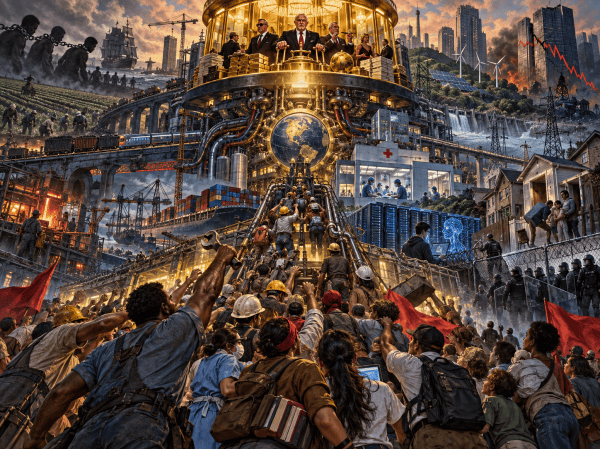
Peggy Noonan Calls Capitalism Organic: The Wall Street Journal Buries the Violence That Built It
Peggy Noonan's alarm over socialism's surge reveals her flawed analysis: she blames the consciousness of the wounded instead of capitalism, which thrives on historical injustices like dispossession and slavery. As the capitalist structure crumbles under its contradictions—where collective production is shackled by private ownership—Noonan dismisses the urgency of socialism, painting it as a radical force aimed at destruction. Yet, socialism is rising not from whimsical ideology but out of necessity, as younger generations face economic precarity and disillusionment. The question isn’t whether capitalism is natural or just; it’s who truly controls the wealth and future built by the collective.
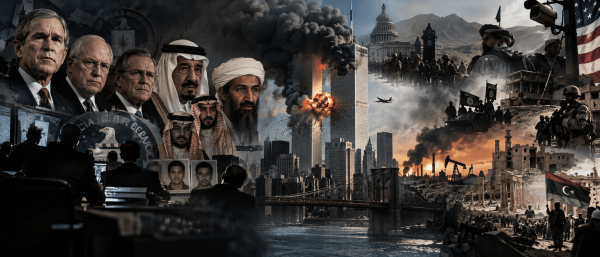
When the Savages Manage Savagery: 9/11, Permanent War, and the Collapse of the American Century
Max Blumenthal’s The Management of Savagery traces how the Afghan jihad, covert warfare, and the post-9/11 national-security state produced enemies Washington repeatedly claimed it could control. The full architecture of September 11 may never be known, but the official story cannot explain the accumulated record of intelligence failures, Saudi-linked facilitation, prior war planning, institutional obstruction, and immediate imperial exploitation. From Afghanistan and Iraq to Libya, Syria, domestic surveillance, and the rise of Trump, the same contradiction returns: empire weaponized instability, then lost control of the forces it empowered. Permanent war expanded American coercion while accelerating the collapse of the unipolar order.
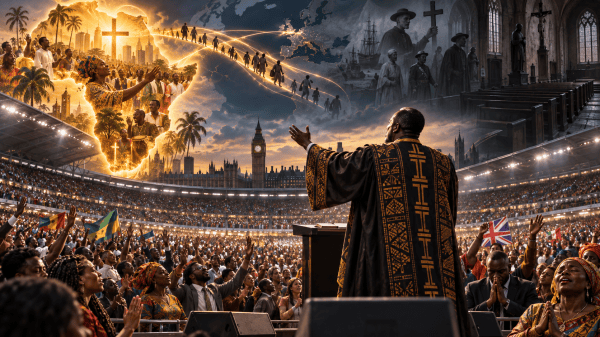
The Cross Changed Hands: Africa Breaks Europe’s Missionary Monopoly
CNN sees African preachers filling Western stadiums and calls it a reversal, but the missionary map began changing long before the flights turned north. Africans were never silent objects of Christian mission: they preached, translated, built churches, and fought European control over institutions their own labor sustained. Today, African-led churches command missionaries, money, property, and... Continue Reading →
Convenience Inherited an Empire: Africa Puts the World Map on Trial
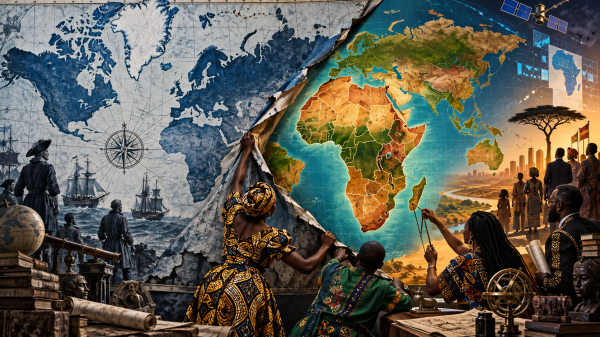
Mercator’s projection began as a useful tool for sailors, not a colonial conspiracy. But publishers, schools, governments, and later digital platforms carried its distorted view of continental scale far beyond navigation, turning a technical choice into inherited common sense. This essay traces how colonial cartography made geographic knowledge part of territorial command, how Web Mercator gave the old projection a new technological life, and how African political organization transformed the issue into a struggle over narrative sovereignty. The UN vote to “correct the map” matters—but a fairer image of Africa is only one front in the larger fight over who gets to define, produce, and control global knowledge.
The Corpse Got Tenure: French Theory’s American Afterlife
Requiem for French Theory asks a question academia prefers to leave buried: how did a heterogeneous group of French thinkers become a unified radical canon in the United States? Monville and Rockhill trace the foundations, universities, publishers and Cold War institutions that helped make French Theory travel, but the deeper story is more dialectical than conspiracy. Foucault, Derrida, Deleuze and others confronted real contradictions and produced genuine insights even as their work was selectively reproduced, professionalized and detached from mass struggle. The lesson reaches Marxism itself: revolutionary theory needs more than correct ideas. It needs its own means of intellectual production.
Iran Took Back Its History: The Revolution That Never Finished the Fight for Power
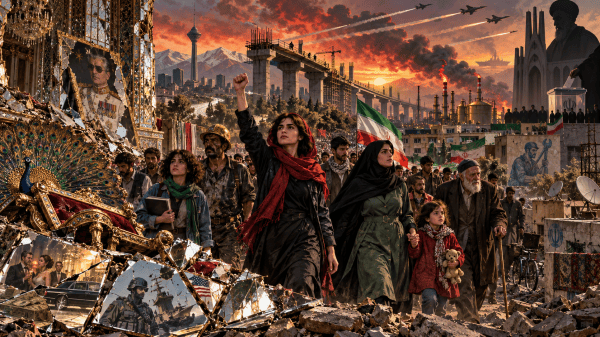
Robin Wright's "The Last Great Revolution" illustrates the paradox of the Iranian Revolution—a genuine transformation that sought to establish a sovereign state but left popular sovereignty incomplete. Wright captures Iran's tumultuous journey, showcasing revolutionary shifts in women’s rights, education, and national identity, yet she falls into the trap of imposing a Western liberal trajectory. The revolution is portrayed as a struggle—between religious and revolutionary authority—that still battles for legitimacy. Ultimately, rather than documenting a forgotten pathway to liberalism, Wright unveils a resilient revolutionary spirit combating imperial influences. This is not the story of a revolution retreating into the shadows, but one that persistently asserts its existence against predetermined narratives.
The Empire Before Capitalism: How Conquest Built the Atlantic System
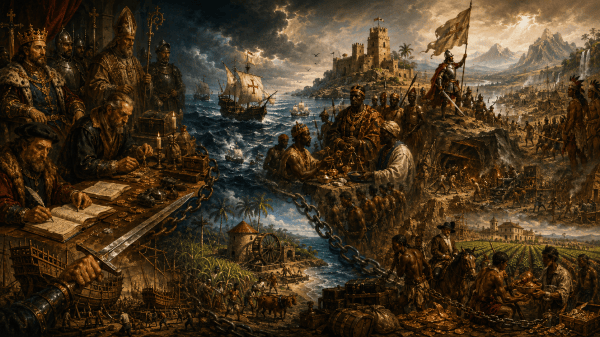
The Atlantic conquest connected European powers with global markets, transforming capitalism by intertwining armed states, merchant capital, and coerced labor. Conquistadors sought wealth, while political structures evolved through dynamic relationships that fused established power with new economic systems, ultimately reshaping societies worldwide and paving the way for future capitalism.
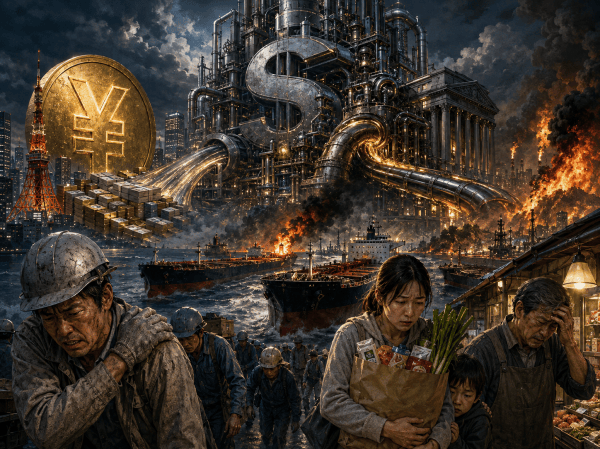
Japan Can Shake the Dollar, but It Can’t Set the Rules: The Yen Inside the Dollar Machine
Reuters treats the yen’s violent swings as a market mystery, but the real story runs through the machinery of dollar-centered finance. Japan is a wealthy imperial-core creditor with enormous reserves and U.S. assets, yet its monetary choices remain constrained by U.S. rates, Treasury markets, imported energy, public debt, and capital flows. That dependence is reciprocal but unequal: Japanese instability can hurt Washington even as Tokyo adjusts inside a system it doesn’t command. And the costs travel downward. Workers win raises, then war-driven oil shocks, currency weakness, and inflation threaten to eat them away—turning monetary sovereignty into a class struggle over who pays.