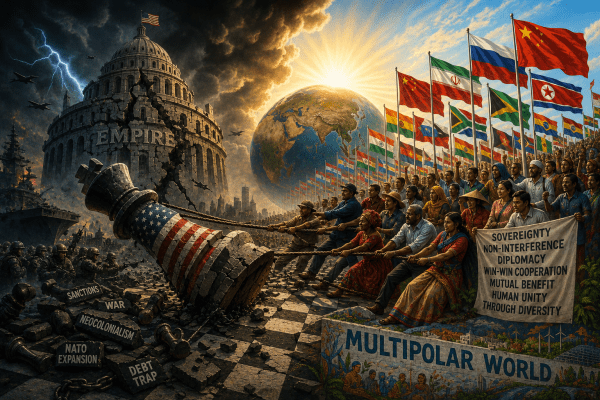
In a provocative shake-up, Foreign Affairs describes China, Russia, Iran, and DPRK as a nascent threat, labeling them "worse than an axis." This insinuation reveals a deep-seated imperial anxiety rather than a justified concern over a military conspiracy. These nations are forging multipolar alliances that challenge Western hegemony—an act of sovereign defiance unsettling the imperial status quo. The article underscores an inherent fear of an empowered Global South, no longer obedient to the West’s dictate. It’s not about a looming conquest but about nations rising to reclaim their sovereignty, thus threatening the very structure that sustains Western dominance. Forget the “axis” narrative; recognize the emerging world order as a potential liberation movement for the oppressed.
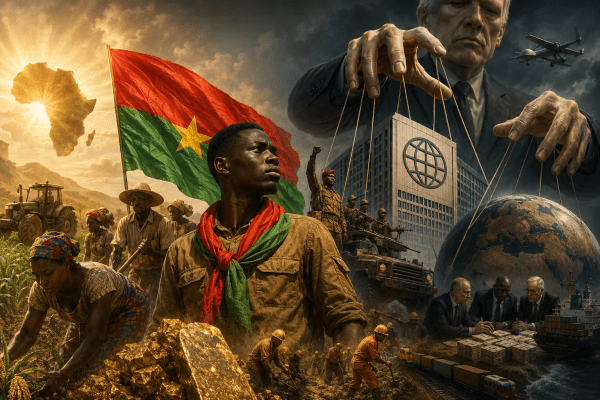
The Development Racket: How the World Bank Repackages Empire in Burkina Faso
The World Bank's report on Burkina Faso masquerades as a beacon of growth while burying the sinister realities of imperialism and neoliberal domination. Beneath the polished metrics of economic success lies a nation striving for food and resource sovereignty, grappling with the vestiges of colonial exploitation. This report, cloaked in the language of reform, manipulates narratives to maintain control, ignoring the voices of those truly affected. Burkina Faso’s fight against the systems that dictate their development is not a mere economic story; it's a battleground for sovereignty, pitting genuine progress against imperial interests that aim to manage rather than liberate.
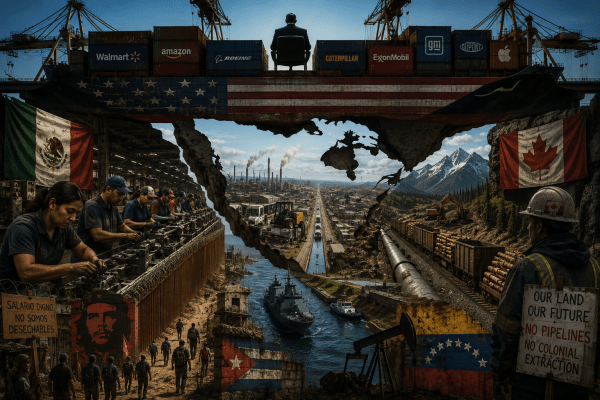
Same Boss, New Contract: USMCA and the Empire’s Grip on Mexico and Canada
NBC's portrayal of Trump's refusal to renew the USMCA is more than a mere disruption in trade; it’s a calculated move to establish an iron grip over North America. The article frames this as instability, ignoring the deeper narrative of imperial ambition where trade agreements become tools for coercion. The U.S. isn't retreating; it's reconfiguring the continent, tightening control over Mexico and Canada while excluding China from the fold. Workers from all sides suffer under this new order while corporate interests thrive unchallenged. Ultimately, this is not a story of chaos but of empire reshaping subjugation—inviting you to witness the birth of Fortress America instead of its decay.
Socialism Without Revolution: Jacobin’s Market Fantasy Against the Socialist World
Bhaskar Sunkara’s market socialism is a bold yet flawed vision that naively overlooks the burdens of imperialism. He critiques past socialist models while proposing that worker-run firms can flourish within a system still embedded in capitalist exploitation. However, the reality is that these worker enterprises would still rely on the global hierarchy that upholds imperial advantages. A true socialist awakening must reject these inherited structures and demands an anti-imperialist framework instead. Without confronting the realities of colonial legacies and ensuring reparative relations, Sunkara’s proposal risks socializing the benefits of imperialism while maintaining its oppressive mechanisms intact.
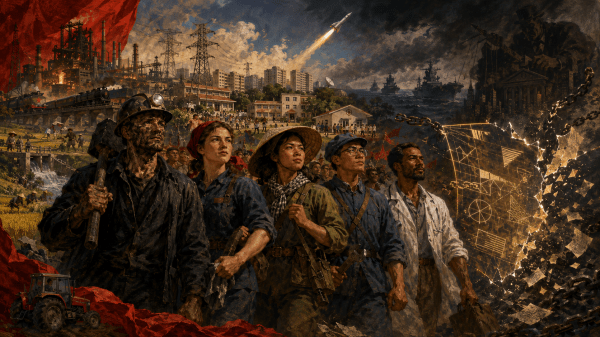
From Yan’an to Shenzhen: How China Forged Socialism Through Concrete Contradiction
China’s revolutionary saga obliterates the Cold War illusion of socialist states as mere Soviet puppets. Through peasant uprisings and intricate political maneuvers, China redefined socialism amidst imperial oppression, transforming from a colonial victim to a technological titan without abandoning Communist rule. The narrative that constraints socialism to a Soviet mold collapses under China’s rich history of adaptation to its unique tumultuous reality. China’s evolution showcases socialism as a living pursuit aimed at sovereignty and rejuvenation, not dogmatic adherence. The experiences of struggle, experimentation, and resilience reflect a deep understanding: socialism thrives on continuous reimagining, not imitation.
The Red Scare Has a Filing Cabinet: CNN, Communism, and the Policing of American Thought
CNN turns deleted tweets into an anti-communist dossier while burying the housing, healthcare, immigration, education, and antiwar demands that made Darializa Avila Chevalier’s campaign matter. The article inherits a long U.S. tradition where communism is treated not as a political position but as contamination. The real story is capitalism’s fear that workers might learn the... Continue Reading →
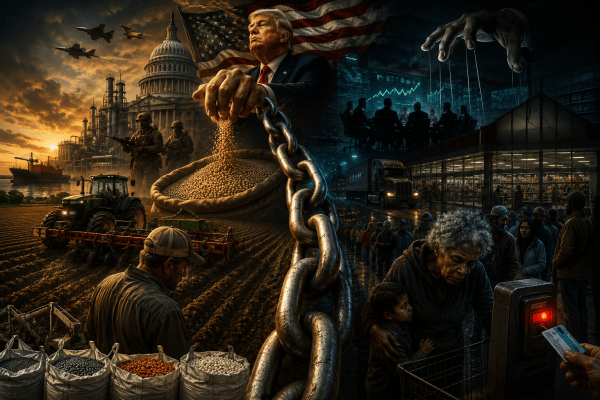
The Hunger Chain: How Trump Feeds Capital and Disciplines the Hungry
In a striking reveal, Fox celebrates Trump's fertilizer emergency as a boon for farmers, yet this facade obscures the underlying fragility of our food system reliant on state intervention. While fertilizer access gets prioritized, the true cost is hidden: a monopolized market where agribusiness thrives as workers face hunger, suspicion, and administrative punishment. Trump's regime twists food security into a mechanism for capital gain, revealing a stark disparity in state response; when profit is threatened, intervention is swift, but when workers struggle for sustenance, they face scrutiny. The urgent call is for food power—community sovereignty, mutual aid, and a radical rethinking of food as a right, not a commodity.
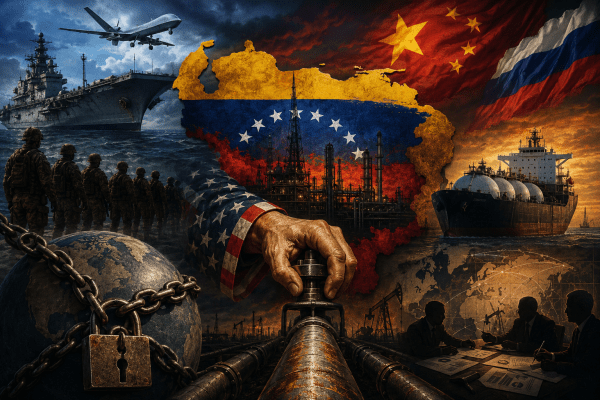
The Robber at the Gate: Venezuela, China, and the American Pole’s Oil Ledger
Washington masquerades as a “gatekeeper,” but it’s merely an imperial force exploiting Venezuela’s oil through a facade of debt management. The South China Morning Post article dismisses the severe issue of sovereignty, framing the US’s dominance as mere financial oversight. This is financial piracy, where the empire suffocates a nation but presents itself as a recovery manager. As China seeks to protect its investments in Venezuela, the true battle is not about debt but about reclaiming sovereignty from imperial grasp. The struggle is clear: Venezuela’s resources belong to its people, not to the US, which must be confronted directly to dismantle this neocolonial command.
Immunity for the Occupiers: Gaza and the Peace Board of Empire
The Guardian's exposure of a leaked immunity draft serves as just the tip of a colossal iceberg: the Board of Peace governing Gaza masquerades as a humanitarian initiative but is an elaborate facade for hyper-imperialism. Rather than delivering justice or sovereignty to the Palestinian people, this foreign administration seeks legal immunity, converting public facilities into operational bases and redefining colonial rule as a technocratic management process. The real scandal lies not just in their legal shield but in the fact that Gaza is being stripped of autonomy and treated as a problem to be managed. Resistance isn’t merely an option; it’s a necessity against this colonial resurrection disguised as peace.
One Colony, Two Ships: How Liberal History Splits What Capitalism Built
James Traub's exploration of America's dual origins through the Mayflower and the White Lion is dangerously simplistic. He perpetuates a narrative of moral dichotomy, ignoring the harsh reality that both journeys fueled a settler-capitalist machine built on land theft and enslavement. The framing minimizes Indigenous dispossession and reduces oppressed voices to mere historical subjects. This liberal attempt at reconciliation fails to confront the brutal interdependence between North and South, leaving unchallenged the systemic inequities rooted in conquest and exploitation. Rather than embracing a flawed myth of unity, America must confront its history to dismantle the ongoing consequences of its oppressive foundations.