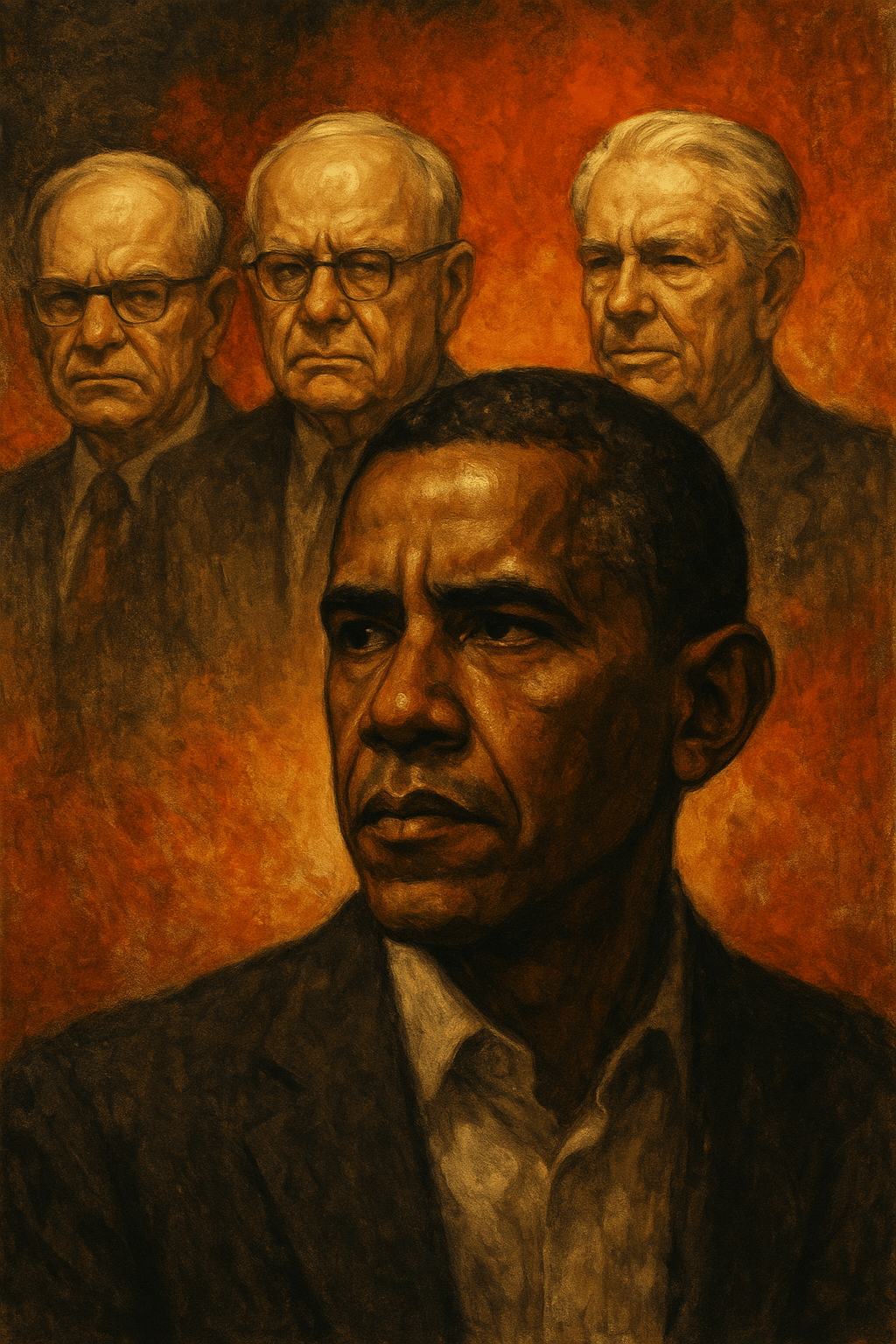
How a radical method of seeing the empire became a tool for managing it, and why reclaiming “woke” requires breaking with the settler state and realigning with global anti-imperialist struggle
By Prince Kapone | Weaponized Information | December 6, 2025
When “Woke” Left Home and Got Jumped by the Empire
Once upon a time, before cable news discovered the word and turned it into a chew toy, “woke” lived in a very specific neighborhood. It belonged to Black folks in the belly of the United States, to the people this country built its wealth on and then tried to disappear. “Stay woke” was a warning, not a brand. It meant: don’t believe what these people tell you about themselves; don’t let their schools, their news, their courts, or their flags be the last word on what’s real. It was a survival code developed inside the internal colony, passed from mouth to ear, house to corner, cell block to church pew. It told you that the official story and the truth were usually standing on opposite sides of the street.
For those of us raised on the other side of that street—inside the comfortable lies of the settler majority—this is the first hard lesson: “woke” was never about moral superiority, personal branding, or corporate virtue-signaling. It was about epistemology, even if nobody used that word. It was about how you know what you know. If you are Black in America, you learn fast that the police report is not the final word, that the prosecutor’s narrative is a script, that the textbook is a weapon, and that the nightly news will lie on you with a straight face. “Stay woke” meant: compare their story to what your eyes see and your people live. Check the pattern, not just the headline. Treat the empire’s narrative as a suspect.
That kind of consciousness is dangerous for any ruling class. Because once people begin to systematically mistrust the official version of reality, they start to ask structural questions. Why does the ghetto stay poor no matter who gets elected? Why do Black and Indigenous people end up in prison and in coffins at rates no algorithm of “personal responsibility” can justify? Why do the same politicians who talk about democracy keep invading countries that try to control their own resources? “Stay woke” was the embryo of a more rigorous method—what we might call, in more formal language, a historical materialist way of seeing. It pushed people to look past speeches and into the machinery.
The U.S. state understood this long before most polite liberals did. When the Panthers opened free breakfast programs and political education classes, they weren’t just feeding children; they were teaching a generation to connect police terror in Oakland with napalm in Vietnam. When Malcolm told people that the chicken of American violence was coming home to roost, he wasn’t being poetic; he was drawing a map of empire. When SNCC organizers in the South linked Jim Crow sheriffs to the global colonial order, they were practicing the same basic craft as the person on the block who told you to “stay woke” about the cops. Different styles, same project: help people see the system as a system.
That is precisely why the system had to hit back. First came open repression: COINTELPRO files, assassinations, frame-ups, mass incarceration. Once the radical organizations were scattered or underground, the ruling class faced a second task: clean up the ideological mess. You cannot leave a whole population walking around with a vocabulary designed to decode your lies. So the liberal wing of the empire—the foundations, universities, NGOs, media outlets, HR departments—got to work. They took bits and pieces of the language born in the ghettos and movements, stripped away the anti-capitalism and anti-imperialism, and repackaged what was left as a polite, professional anti-racism that would never threaten property or power.
That is the creature people now recognize as “wokeness”: a domesticated, housebroken imitation of the original thing. It scolds individuals for bad language but rarely names the system that creates the conditions. It obsesses over representation in the boardroom while saying nothing about who owns the building. It trains people to count faces on TV, not bodies in prison yards or villages hit by U.S. bombs. It can get you a consulting gig, a fellowship, a DEI position—everything except liberation. This is not an accident; it is the ideological arm of a domestic neocolonial project designed to integrate a small layer of the oppressed into managing the rest.
Enter the other side of the white ruling class: the settlers who never forgave even the appearance of progress. They look at this liberal counterfeit of “woke”—this safe, market-friendly version—and react like Reconstruction just happened yesterday. In their eyes, any concession to the reality of racism, any attempt to widen the circle of who counts as human, is already too much. So they declare war on “woke,” by which they mean school librarians, workplace trainings, and the occasional Black superhero movie. They do not touch the banks, the police budgets, the military bases, or the oil companies. They are not revolting against empire; they are fighting over the paint color on the prison walls.
So here we are, in a country where “woke” has been pulled in three directions at once. The oppressed created it as a weapon of clarity. The liberal elite turned it into a moral accessory for a Black and brown petty bourgeoisie tied into imperial institutions. The reactionary right turned it into a pantomime villain for white grievance politics. In this mess, the original meaning is almost unrecognizable. But if we are serious about tearing down this system, we don’t have the luxury of letting the ruling class redefine the language of our own survival. We have to track the word back to its source, understand the material conditions that produced it, and expose the operations that hijacked it.
This essay is written from the side of those who refuse both illusions: we reject the liberal costume of “wokeness” that decorates empire with diversity, and we reject the settler tantrum that screams “anti-woke” while clinging to the same stolen wealth. Our task is different. It is to recover the kind of consciousness “stay woke” once pointed to: a clear-eyed, collective, scientifically grounded understanding of how empire works, who it grinds down, and what it will take to end it. To do that, we have to look beyond the buzzword and into the machinery of domestic neocolonialism that produced this whole circus in the first place.
From Civil Rights to Domestic Neocolonialism
Kwame Nkrumah warned that the most dangerous form of empire is the one that keeps the flag but loses the chains. In his language, neocolonialism is the stage where a people appear to have won independence, yet their economy, politics, and future are still set elsewhere. What the United States pulled off after the 1960s was a variation on the same theme, but aimed inward. Instead of decolonizing the internal colonies it had built through slavery and land theft, it redesigned the terms of domination. Jim Crow was retired, but the basic architecture of white power remained intact. The method changed: less naked apartheid, more sophisticated management.
On the surface, it looked like a revolution. Segregation signs came down, civil rights laws went up, Black elected officials appeared where only white faces had been allowed before. The Supreme Court spoke the language of equality. Presidents gave speeches about justice and opportunity. In the textbooks, this would later be narrated as the great moral awakening of America. But if we follow the money and the guns instead of the speeches, a different pattern appears. The neighborhoods stayed poor. The police stayed violent. The schools stayed unequal. The prisons swelled. The wage relation didn’t change color just because some of the bosses did.
This is where Nkrumah’s lens becomes so sharp it cuts. In neocolonialism, the old colonial office is replaced by a local management team whose job is to keep the basic arrangement in place while calming the population. The United States did not simply “allow” Black participation out of enlightenment. It needed a new layer of intermediaries to stabilize the system after the open terror of Jim Crow and the upheavals of the 1960s. The solution was to open specific doors: law schools, city halls, university departments, foundation boards, corporate management tracks. A slice of the colonized population was invited inside, on condition that they never question ownership of the house.
This slice is what we call the Black petty bourgeoisie: professionals, politicians, non-profit managers, media figures, pastors, academics, mid-level executives. Their material survival is tied not to the liberation of the Black working class, but to the smooth functioning of the very institutions that keep that class in check. They administer grants but not reparations; reforms but not expropriations; diversity initiatives but not power transfers. They run programs in neighborhoods patrolled by the same police; they sit on advisory boards for schools that still track Black kids into failure; they serve on commissions to review a criminal justice system that treats Black life as disposable. Their role is to prove that the system can include Black faces without ever changing its heart.
For the ruling class, this arrangement solves several problems at once. Internationally, it allows the U.S. to pose as a reformed democracy in the era of African and Asian independence struggles: “Look, we overcame our past; we even have Black mayors and generals.” Domestically, it splits the oppressed along class lines. A minority can now “make it” by attaching themselves to the state and corporate world, while the majority remain trapped in precarious work, unemployment, or prison. Any attempt by the masses to rise up can be lectured down by their own “leaders,” who warn that resistance will jeopardize the fragile gains of inclusion. In this way, civil rights becomes not just a partial victory but a tool of counterinsurgency.
From the standpoint of the white working class, this transformation was deliberately misrepresented. Instead of being taught that Black struggle forced the state to concede limited reforms while leaving the core of the system untouched, white workers were told that “too much” had been given away. They were encouraged to see Black advancement not as a partial repayment of a massive historical debt, but as an attack on their own status. Resentment was manufactured from above. While factories moved, unions were broken, and wages stagnated, politicians and pundits told white workers to blame civil rights, affirmative action, and “special treatment” rather than the corporations and banks that were stripping the whole working class bare.
In reality, what took shape after the 1960s was a domestic version of the same strategy Nkrumah saw in Africa: political incorporation without economic control, symbolic sovereignty without material power, and a local elite class mediating between the empire and the people. In the United States, that meant we moved from sheriffs guarding whites-only signs to Black police chiefs defending militarized departments; from white-only city halls to Black mayors managing austerity budgets; from open colonial law to “colorblind” legal codes administered by a judiciary steeped in the same property relations as before. The colony did not end; it was upgraded.
This is the ground on which today’s “woke” spectacle stands. You cannot understand the liberal celebration of representation, nor the right-wing backlash against it, without seeing the neocolonial deal that underpins them both. On one side, a class of integrated Black and brown professionals, trained to speak the language of justice while defending the institutions of empire. On the other, a layer of white settlers furious that the empire they thought belonged only to them is now being managed in a more multicolored way. Both sides argue over who should sit at the table. Neither asks who owns the land under the building or the labor that fills the plates. To break out of that script, we have to name this order for what it is: not a democracy steadily expanding its promise, but a neocolonial regime learning new tricks to manage an old crime.
The Great Hijacking: How “Woke” Became a Tool of the Liberal Empire
Before the empire got its hands on it, “stay woke” was a grassroots science. It was not a posture, a TED Talk theme, or a set of HR modules about being nice at work. It was an epistemology forged under duress—an insurgent method of knowing that emerged from the lived reality of people who had every reason to distrust the official story. Black communities built this science the same way all oppressed peoples build their own understanding of power: through patterns, through memory, through experience, through the sharp clarity that comes from being on the receiving end of the system. “Stay woke” meant: the state lies; the media lies; the police lie; the curriculum lies. If you want to survive, you better learn to read what’s behind the lie.
But empire is a jealous god. It cannot tolerate competing ways of seeing the world, especially ones that help the oppressed identify the system itself as the enemy. So once the revolutionary movements were crushed—once the Panthers’ survival programs were dismantled, the Young Lords’ clinics raided, AIM leaders imprisoned, SNCC fragmented, and the Black Liberation Army hunted across the country—the ruling class moved quickly to seize the ideological terrain left behind. They had wiped out the organizations. Now they needed to wipe out the worldview that produced them.
This is how “woke” was stolen. It didn’t happen overnight. It happened through the slow, deliberate work of a liberal ruling class that understood something the right still doesn’t: you can’t police thought with guns alone. You need institutions. You need school boards, universities, publishing houses, philanthropic foundations, media outlets, think tanks, NGOs, and corporate HR departments. You need a whole cultural apparatus to neutralize the consciousness you fear. The liberals’ job was to take the vocabulary of radical critique and wash it in the laundromat of “professionalism,” “representation,” and “diversity”—until all its revolutionary content rinsed away.
So “stay woke,” which once meant “watch the state,” became “watch your tone.” It was hollowed out and refilled with the politics of career advancement. Structural analysis became personal sensitivity. Anti-imperialism became diversity in the Pentagon. Radical internationalism became land acknowledgments at elite universities that still sit on stolen land. The dialectical method—seeing how capitalism, racism, and imperialism form one system—was replaced with a pop-psychology menu of “inclusion,” “empathy,” and “safe spaces,” all of which could coexist perfectly well with the CIA, Wall Street, and a police force armed like a colonial occupation.
For the liberal wing of the ruling class, this was not hypocrisy; it was strategy. They needed a domesticated version of political consciousness that could absorb anger without channeling it into revolution. They needed a language that acknowledged injustice in the abstract but protected the actual relations of property, policing, and empire. They needed a politics that made room for Black CEOs, Black cops, Black prosecutors, Black drone pilots, and Black mayors overseeing austerity budgets—but not for Black liberation. Liberal “wokeness” is the ideology of the neocolonial manager class: expressive, symbolic, flattering, moralizing—and perfectly safe for capital.
Then came the settler right, late to the party and confused as usual. They mistook the liberal counterfeit for the real thing. They saw corporate diversity trainings and assumed revolution was around the corner. They looked at rainbow logos and thought Marx had infiltrated the Fortune 500. So they lashed out—against school librarians, against trans kids, against Black history, against college syllabi, against anything that even resembled empathy—believing they were fighting radicalism. In truth, they were swinging wildly at shadows while leaving the actual machinery of American empire untouched.
The right hates “woke” because they think it represents a threat to white supremacy, when in reality the liberal version of “woke” is one of the ways white supremacy has adapted to the 21st century. The liberals love “woke” because it lets them pretend they’ve transcended racism while continuing to manage the same prisons, police departments, banks, and drone bases that keep racial capitalism alive. And the original architects of “stay woke”—the Black working class, the colonized poor, the political prisoners who held on to the truth through decades of repression—are left watching both sides fight over a word that was never meant for either of them.
So let’s be clear: what passes for “wokeness” in public discourse today is not the child of Black radical tradition. It is the child of counterinsurgency. It is the ideological settlement that grew in the ruins of the Black Revolution of the 1960s. It is the cultural wing of domestic neocolonialism. It soothes the guilty conscience of the settler liberals and triggers the paranoia of the settler reactionaries, all while doing nothing to expose, let alone challenge, the empire that dominates us all.
To reclaim the original meaning of “stay woke,” we have to strip away every layer of liberal paint and settler graffiti. We have to return to the material conditions that produced it: police raids at dawn, counterintelligence operations in every neighborhood, labor exploitation, housing disinvestment, stolen land, stolen labor, stolen lives. We have to remember that “woke” was never about etiquette; it was about survival. It was not about comfort; it was about clarity. It was not about diversity; it was about dismantling the systems that make diversity without justice possible. And that’s why this empire had to steal it. Because a people who stay woke are a people who can no longer be governed by lies.
Before the Neocolonial Deal Came the Counterinsurgency War
The United States likes to pretend that the civil rights era ended with reconciliation, moral progress, and a gentle national awakening. But the historical record reads more like a military report than a bedtime story. In the late 1960s and early 1970s, the U.S. state waged an internal war—quiet to those who were never its targets, deafening to those who were. This was not “law enforcement.” It was counterinsurgency, crafted with the same logic the U.S. deployed in Vietnam, Guatemala, and the Philippines. And its purpose was simple: stop the rise of a revolutionary movement among the internally colonized before it could remake the country.
Look at the FBI’s own documents: COINTELPRO wasn’t some rogue operation. It was a federally coordinated program designed to “expose, disrupt, misdirect, discredit, or otherwise neutralize” Black liberation organizations, anti-imperialist movements, radical Indigenous resistance, and any white allies who dared defect from the colonial order. They were explicit about their priorities. They feared a “Black Messiah”—their words—who could unify the masses, politicize the youth, and internationalize the struggle. Malcolm X, Fred Hampton, Dr. King, Huey Newton, Stokely Carmichael: each was viewed not as a domestic activist but as a potential insurgent leader.
So the state acted accordingly. Hampton was drugged and murdered in his sleep by Chicago police working with the FBI. Geronimo Pratt was framed and imprisoned for 27 years. Assata Shakur was targeted, shot, and forced into exile. The American Indian Movement was besieged at Wounded Knee; dozens of leaders were imprisoned, harassed, or killed. The Young Lords’ health clinics were raided. The Chicano movement faced militarized policing and surveillance. The FBI flooded organizations with informants, agents provocateurs, forged letters, slander campaigns, manufactured rivalries, and the kind of psychological warfare that would be considered a war crime if deployed abroad.
When the smoke cleared, the revolutionary wing of the internal colonies lay shattered. Not because its ideas were wrong or because it lost credibility, but because the state had launched the most sophisticated domestic counterinsurgency campaign in modern U.S. history. By 1980, the prisons were full of political prisoners, the militant organizations were decimated, and the surviving communities were reeling from drugs, unemployment, deindustrialization, and police occupation. This was the moment the U.S. ruling class chose to unveil its new strategy: civil rights integration as a neocolonial settlement.
Integration was not granted because the U.S. had matured morally. It was granted because the state had already neutralized the only forces capable of turning formal equality into real power. With the revolutionaries eliminated, the ruling class could afford to open the door to a select few—Black professionals, administrators, politicians, entertainers, clergy, military officers. These individuals were not given power over the system; they were given positions within the system. Their job was to help stabilize the racial order, manage the contradictions of the empire, and absorb the frustrations of the dispossessed.
Without COINTELPRO, there is no Black mayor boom, no rise of Black police chiefs, no Black prosecutors cracking down on the same communities they came from, no Black faces in corporate leadership, no carefully selected racial “firsts” to parade before the world as evidence of American progress. Without the defeat of the liberation movements, there is no respectable “civil rights establishment” partnering with police departments, real estate developers, Wall Street donors, and Democratic Party operatives. The neocolonial layer could only be installed after the revolutionary layer was ripped out.
This is why the liberal version of “wokeness” could flourish. It required the destruction of the political traditions that might have kept its usage grounded in struggle, accountability, and revolutionary purpose. Once the Panthers, AIM, the Young Lords, and radical formations across the country were gone or incapacitated, the ruling class could safely promote a neutered form of consciousness—expressive but not transformative, critical but not radical, moralistic but not materialist. They could encourage a language of justice without building institutions of justice; they could promote diversity without redistributing power; they could praise nonviolence while maintaining the most violent state apparatus on Earth.
Counterinsurgency didn’t just remove leaders. It removed entire political possibilities. It closed off the anti-imperialist horizon. It severed young people from revolutionary elders. It rewrote the collective memory of the 1960s, turning liberation movements into “extremists” and their repression into “policing.” And with the field clear of revolutionary alternatives, the ruling class installed a neocolonial model of leadership that could be marketed as progress while functioning as containment. This is the soil from which the current political order grew. This is the foundation on which “wokeness” as a liberal commodity now rests.
The point is not nostalgia. The point is that you cannot understand the political landscape of the twenty-first century—the rise of DEI, the spectacle of representation, the petty-bourgeois misleadership class, the corporate appropriation of movement language—without understanding the state’s deliberate destruction of the political forces that once produced revolutionary clarity. Without counterinsurgency, the neocolonial settlement does not exist. And without the neocolonial settlement, the liberal counterfeit of “wokeness” cannot exist either.
The Black Petty Bourgeoisie: Manufactured Leadership for a Managed Colony
Empires do not govern colonies by brute force alone. They govern them by manufacturing a leadership class that looks like the people but thinks like the rulers. The United States did this with extraordinary sophistication after the 1960s. And the evidence for this is not just in radical literature—it is in the state’s own documents, the sociological analyses of the early 20th century, the political autopsies of the rebellions of the 1960s, and the philanthropic blueprints of the foundations that redesigned Black politics from above.
The Kerner Commission—hardly a revolutionary body—accidentally revealed the architecture of this project. Convened in 1967 to investigate the urban uprisings, it concluded that the rebellions were not caused by criminals, agitators, or “outside influences,” but by systemic racism, police brutality, segregation, joblessness, and state neglect. Their famous line—“our nation is moving toward two societies, one Black, one white—separate and unequal”—was less a revelation than a confession. But buried in the report was something even more important: a recommendation that the government expand “responsible Negro leadership” to help manage and pacify the discontent. In polite liberal language, the Kerner Commission openly called for the construction of a Black managerial class that could stabilize the internal colony.
Franklin Frazier predicted this decades earlier. In The Black Bourgeoisie, he argued that the emerging Black middle class would be structurally incapable of challenging white supremacy because its material position depended entirely on white institutions. He described their aspirations as “fantastic compensation”—status-seeking, integrationist, individualistic—anchored in a desire for acceptance rather than liberation. This class would, in his words, “imitate the values of the white bourgeoisie” while being denied real power. Under the neocolonial order that followed the 1960s, Frazier’s prophecy became an operating manual.
Carter G. Woodson’s diagnosis in The Mis-Education of the Negro sharpened the blade even further. Woodson showed how schooling for Black Americans was deliberately designed to separate Black elites from Black masses—to produce graduates who identified with the institutions of the oppressor rather than the needs of their own communities. “When you control a man’s thinking,” he wrote, “you do not have to worry about his actions.” In the neocolonial era, his insight was weaponized: higher education became a training ground for a class of Black professionals who would manage the institutions that disciplined the very people they claimed to represent.
Robert Allen’s Black Awakening in Capitalist America provided the missing political economy. He documented how corporations, banks, and philanthropic foundations moved aggressively in the late 1960s to prevent Black self-determination from taking root. They poured money into “community development” programs, job-training centers, business initiatives, and elite leadership pipelines aimed at creating a Black class loyal to capitalism. Allen showed that this was not benevolence—it was counterrevolution. The ruling class recognized that, after the uprisings, they needed Black intermediaries who could serve as buffers between the white power structure and the increasingly radical Black working class. These intermediaries were intentionally cultivated.
Karen Ferguson’s Top Down reveals the mechanism. The Ford Foundation—joined by Rockefeller, Carnegie, and others—took the language of Black Power and hollowed it out from the inside. They funded organizations that promoted “Black leadership,” “Black pride,” and “community empowerment,” but only within the boundaries of capitalism and U.S. state authority. Programs that challenged the police, the land regime, the corporate structure, or imperialism were defunded or attacked. Programs that pushed business development, managerial training, and moderate reform were elevated. Ferguson shows how foundations remade the meaning of Black Power itself, replacing its revolutionary core with a managerial, technocratic, elite-led version that fit the needs of the neocolonial state.
When we put these pieces together—Woodson’s miseducation, Frazier’s class critique, Allen’s political economy, Ferguson’s philanthropic blueprint, and the Kerner Commission’s call for “responsible leaders”—we see the full machinery: a deliberate, multi-institutional project to produce a Black petty bourgeoisie that would govern the internal colony on behalf of the empire. This class became the local managers of austerity, the faces of police-backed city halls, the administrators of failing school systems, the spokespeople for corporate America, and later the ambassadors of DEI politics. Their job was never to confront the system but to legitimate it.
And because their structural position depends on the stability of the empire, they function as the ideological police of the Black working class. They tell rioters to “go home.” They tell organizers to “vote responsibly.” They tell the dispossessed to “be patient.” They condemn radical movements as “divisive.” They promote entrepreneurship while the material basis for Black economic autonomy is systematically destroyed. They sit on corporate boards while eviction rates soar in Black neighborhoods. They celebrate representation in the billionaire class while the median Black family has less than one-tenth the wealth of the median white family.
This is not betrayal—it is class position. A colonized people cannot liberate themselves through a class whose survival depends on the institutions of the colonizer. And in the United States, that class has been carefully cultivated, ideologically trained, financially supported, and politically celebrated as the future of Black progress. In reality, they are the keystone of domestic neocolonialism: the intermediaries through whom the empire governs, pacifies, and symbolically includes the people it materially excludes.
This is why liberal “wokeness” and DEI politics could flourish. They are the cultural expression of this class formation—individual advancement packaged as social transformation, representation presented as justice, managerial diversity sold as liberation. Without this class, there is no ideological apparatus to convert the language of struggle into the language of institutional belonging. Without them, there is no Black face to legitimize state power. Without them, the empire would look like what it is: a settler-colonial project managing its internal colonies through old machinery dressed in new skin.
How Identity Politics Was Torn From Its Roots and Turned Into Counterinsurgency
Identity politics didn’t start as a corporate slogan or a nonprofit grant category. It began as a revolutionary critique. It was an insistence that the struggles of the colonized, the exploited, and the oppressed could not be collapsed into abstract class categories that ignored the material realities of racism, patriarchy, and empire. It emerged from people who experienced domination in their bodies as well as in their wages. It pointed out that liberation had to be collective, structural, and rooted in the concrete lives of the masses—not in symbolic gestures or personal achievement. Identity politics, in its original form, was a dagger aimed at the heart of American capitalism and settler colonialism.
But once counterinsurgency wiped out the revolutionary wing of the Black movement, a vacuum opened. Into that vacuum stepped a new version of identity politics—one stripped of its anti-capitalist and anti-imperialist content, severed from its connection to mass struggle, and redirected into the safe corridors of academia, elite foundations, and professionalized activism. The shift was profound. What had been a tool for confronting power became a tool for managing power. What had been a threat to empire became a language empire could use to disguise itself.
The new identity politics replaced structural analysis with personal testimony. It substituted collective liberation with individual recognition. It treated oppression as a matter of interpersonal behavior rather than the product of a political economy rooted in land theft, slavery, imperial plunder, and the ongoing extraction of value from the global South and the internal colonies. In this framework, the problem was no longer the police as an occupying force—it was “bias.” The problem was no longer capital’s global supply chains—it was “representation.” The problem was no longer imperialism—it was “inclusion.” The horizon shrank until all that was left were questions of presence, tone, and etiquette.
Meanwhile, the settler majority embraced a different fantasy: that racism had become a matter of individual prejudice or bad attitudes, not the backbone of the country’s political and economic order. They learned to speak the language of denial: “I don’t see color,” “I treat everyone the same,” “We had a Black president.” This was the ideological genius of the empire: racism without racists, exploitation without exploiters, inequality without perpetrators. The system remained intact, but its violence was reframed as an unfortunate byproduct of personal misunderstanding rather than the logic of a colonial state defending stolen land and stolen wealth.
In this landscape, the new identity politics found its function. It offered the oppressed moral validation without providing them political power. It gave individuals language to name their experience without giving them tools to confront the structure that produced it. It created an economy of social capital—where identities became credentials to be leveraged for access to institutions that had already declared themselves off-limits to systemic change. It elevated a class of professionals whose authority came not from organizing the masses but from narrating their identities to elite audiences. They became experts in grievance but strangers to insurgency.
And because this version of identity politics was built on recognition rather than redistribution, it became the perfect ideological partner for the Black petty bourgeoisie. Representation became the new currency of legitimacy. If a system could install enough Black faces in high places, it could claim moral progress while continuing to dispossess the Black working class. Corporate offices hired diversity consultants instead of union organizers. Universities recruited diversity officers instead of protecting Black students from police. Foundations funded racial healing workshops instead of material struggle. In this way, identity politics became the cultural wing of domestic neocolonialism.
The result is a politics that can speak endlessly about trauma but never about exploitation. It can name microaggressions but not landlords. It can critique language but not power. It can demand representation in elite institutions but never question the existence of those institutions. It can celebrate the rise of a Black billionaire while the median Black family still has almost no wealth. It can mourn the deaths of Black people at the hands of police while rejecting any political project that would actually dismantle the police. This is identity politics as counterinsurgency: a symbolic revolt that leaves the empire stronger.
The tragedy is not that identity politics exists—it is that it was stripped of its revolutionary core. When it was grounded in mass struggle, it revealed the links between race, class, gender, and empire. When it was tied to anti-capitalist organizing, it pointed toward collective liberation. But once it was severed from that terrain, it became a language of management rather than transformation. It props up the petty bourgeoisie, legitimizes the institutions of empire, and misdirects the anger of the oppressed away from the system and back onto individuals.
To reclaim identity politics, we have to return to its roots—not the shallow rituals of liberal recognition, but the deep soil of anti-imperialist struggle. The question is not who sits at the table of power, but who owns the land, who controls the wealth, who commands the violence, and who gets to decide the future. In other words: identity politics must be ripped away from the soft hands of the managerial class and returned to the calloused hands of the people who built and bled for this country without ever owning it. Anything less is just another chapter in the empire’s playbook.
Obama: The Apotheosis of Domestic Neocolonial Integration
Let’s stop pretending Barack Obama just “happened” because America suddenly grew a conscience. Obama didn’t rise because the empire was healing. He rose because the empire was bleeding. Bush’s imperial tantrum had blown a hole in the hull, the world was turning its back on Washington, and the settlers at home were tired, broke, and furious. The system needed a miracle — or at least something that looked like one.
And that’s when they brought him out.
Obama didn’t walk out of Black America’s long river of struggle. He walked out of America’s imperial finishing schools. Punahou. Occidental. Columbia. Harvard Law. These are not institutions of liberation — they are factories for manufacturing imperial managers. They don’t teach you how to upend empire. They teach you how to run it without getting your hands dirty.
His biography was sold to us as a journey of hope. In reality, it was a résumé for the ruling class. The man was groomed exactly the way the British groomed colonial administrators in India and Kenya — cosmopolitan, polished, multilingual in the ways of power, and totally divorced from the people he’d eventually be told to “represent.”
And when the empire was in free fall, they made their move. Wall Street cut the checks. Silicon Valley built the mythos. Liberal foundations rolled out the PR machine. Media corporations turned him into a moral superhero. Everything was choreographed like a Broadway production — except the stakes were trillions of dollars, the future of the empire, and the containment of a restless internal colony.
Obama wasn’t raised to break the system. He was raised to save it. His job was to put a Black face on a white empire that had embarrassed itself. To calm the global South after Iraq. To pacify Black America after Katrina. To lure disillusioned youth back into the patriotic tent. To convince the world that the empire had turned a corner, even as the same hands held the same whip.
And lord, did he deliver.
Under Obama, Wall Street got bailed out so fast the ink didn’t even dry. Black families lost generations of wealth. AFRICOM spread across Africa like a colonial police force with a PowerPoint. Libya — one of Africa’s most independent states — was ripped apart in the name of “democracy” and left in chaos. The drones flew. The prisons swelled. The cops fattened their budgets. The NSA learned everyone’s middle name.
This wasn’t betrayal. This was his job description.
Obama was the perfect domestic neocolonial administrator — a man whose presence signaled “change,” while his politics guaranteed continuity. A Black man who didn’t come out of the centuries-long Black struggle inside this land, but out of the institutions designed to manage it. A symbolic son of Africa who expanded the Pentagon’s bootprint across the continent. A man who could lecture Black workers about responsibility in the morning and sign a drone strike order in the afternoon.
This is what the ruling class wanted: a figure who could seduce the oppressed, soothe the liberals, impress Europe, charm the media, and terrify none of the people who actually run the empire. Someone who could make American power feel legitimate again without changing anything that made it illegitimate.
And that’s exactly why the liberals swooned. Why the corporations praised him. Why the CIA loved him. Why Wall Street funded him. Why the white ruling class embraced him like a lost son. He gave the empire back its mask.
We need to understand what that means: Obama wasn’t a break from the white ruling class. He was its evolution. He proved whiteness — as a structure of power — no longer needs white skin to run the show. It just needs loyalty. It just needs fluency in empire’s moral vocabulary. It just needs someone who knows how to smile while they tighten the chains.
That’s why his presidency is the high point of domestic neocolonial integration. The radical movements of the 60s and 70s were crushed. The comprador class was elevated. And Obama stood at the summit of that long counterinsurgency process, the final product of decades of state violence followed by decades of elite grooming.
The empire didn’t lose its character. It just upgraded its costume. It diversified its management. It repackaged domination. And it found the perfect salesman in Barack Obama.
DEI, Corporate Diversity, and the Settler Backlash: A Ruling-Class Family Feud
The conflict over “wokeness” and DEI is widely misinterpreted as a struggle between progress and reaction. In reality, it is a dispute within the white ruling class over how to manage a crisis-ridden empire. Both factions accept the fundamentals of capitalist exploitation, settler sovereignty, and imperial power. What they disagree on is the preferred method of administering domination.
DEI emerged not as a tool of liberation but as a managerial solution to stabilize institutions after structural failures: the crisis of legitimacy following the civil rights era, the rebellions of the late 20th century, the collapse of public trust in the early 21st century, and the worldwide exposure of U.S. racism through media and war. Rather than redistribute wealth or power, DEI reorganized optics. It integrated a narrow layer of nonwhite professionals into corporate, academic, and governmental hierarchies while leaving the underlying colonial-capitalist relations unchanged.
This liberal version of “diversity” functions as a domestic neocolonial mechanism. It recruits representatives from the oppressed into administrative roles that help legitimize the state, mediate discontent, and present the illusion of progress. It does not reduce police budgets, confront Wall Street, weaken the military, or expand worker control. It offers symbolism in place of sovereignty.
The conservative backlash — the so-called “anti-woke” movement — is not opposed to exploitation. It is opposed to the liberal wing’s method of managing it. Its social base is rooted in settler entitlement: the belief that access to the institutions of domination is a racial birthright. For this camp, DEI represents not a threat to the imperial system but a threat to their exclusive identification with it. Their opposition is driven by a desire to restore an earlier, more explicitly white hierarchy, not by any intention to dismantle capitalist or imperial structures.
Thus, the conflict between liberal DEI and conservative anti-wokeness is a conflict over the aesthetic of domination, not its substance. The liberal faction argues that empire must be multicultural to survive its legitimacy crises; the conservative faction argues that empire must remain white in appearance to maintain its settler identity. In both cases, empire itself is non-negotiable.
The material impact of this feud on the working class and colonized communities is negligible. DEI does not alter the distribution of wealth, the function of the police, the structure of prisons, the behavior of landlords, the operations of ICE, the directives of AFRICOM, or the profit mandates of major corporations. It shifts representation within managerial strata while leaving the economic and coercive foundations intact.
Meanwhile, the anti-woke offensive seeks to eliminate even symbolic concessions while preserving — and often expanding — policing, surveillance, austerity, and imperial war. It directs settler anger away from the ruling class and toward the minimal appearance of inclusion, ensuring that dissatisfaction is contained within ideological boundaries that never threaten the system itself.
The result is a controlled ideological battlefield in which both sides reinforce the central premise: capitalism must remain unchallenged; empire must remain intact; the internal colony must remain pacified; and political struggle must remain confined to the terrain of culture, symbolism, and managerial diversity.
In this sense, DEI and anti-woke politics function as complementary mechanisms of counterinsurgency: one neutralizes dissent through inclusionary imagery, the other through reactionary discipline. Both guard the same social order. Both defend the same economic architecture. Both obscure the real target: the settler-colonial, capitalist-imperialist system itself.
Why Some of You Woke MF’s Need to Go Back to Sleep
At this stage of the analysis, one fact stands out like a cop car in the rearview mirror: the thing people call “wokeness” today is not an awakening. It is a decoy. A soft, padded cell inside the empire where anger gets drained, rebellion gets domesticated, and people learn to confuse motion with movement. It keeps folks busy arguing about vocabulary while the ruling class keeps extracting rent, wages, land, and life.
That’s the genius of the current order. When the state crushed the real movements—when it jailed the Panthers, disappeared AIM militants, hunted down Black revolutionaries, smashed Puerto Rican nationalists, and broke the back of the anti-war and labor upsurge—it didn’t leave an empty field behind. It built a whole new ideological playground. And in that playground, every slide and swing set is designed to keep people circling the same orbit, never touching the root of their own oppression.
This modern “wokeness” is one of those playground structures. It doesn’t organize working-class people; it manages them. It doesn’t confront the colonial state; it speaks the state’s language back to itself. It swaps out struggle for symbolism, structure for sentiment, and material politics for therapeutic performance. Empire doesn’t fear this kind of politics. Empire funds it. Empire staffs it. Empire loves it like a landlord loves a tenant who pays on time and never complains about the mold.
The tragedy is not that people care about injustice—of course they do. The tragedy is that the ruling class has figured out how to redirect that care into rituals that do nothing to threaten power. They turned oppression into a branding opportunity. They turned awareness into a personality trait. They turned politics into etiquette. And they got millions of people to believe that moral performance is the same thing as revolutionary clarity.
So when we say some folks need to “go back to sleep,” we’re not asking them to check out. We’re asking them to step off the rollercoaster the ruling class built to give the illusion of movement. We’re saying: stop exhausting yourself inside the ideological amusement park that was designed to keep you dizzy. Let the counterfeit consciousness die off so a real one—disciplined, collective, material, dangerous—can breathe again.
The truth is simple: you cannot fight a system you refuse to name. And you cannot name a system if your entire worldview has been shaped by the institutions that depend on keeping the system intact. That’s why “wokeness” caps out at representation, news cycles, personal testimony, HR trainings, and endless cultural disputes. It has no vocabulary for imperialism. No vocabulary for the labor theory of value. No vocabulary for colonial domination. No vocabulary for class struggle. It is politics stripped of teeth.
And once you recognize that, the path becomes clearer. The point is not to refine the existing rhetoric but to outgrow it. To walk away from the moral posturing that substitutes individual virtue for collective liberation. To stop letting the managerial class hand us prepackaged identities that fit neatly inside the empire’s filing system. To break, decisively, with the frameworks that keep the oppressed confused about who their enemies really are.
Going “back to sleep” is simply the first step in waking up the right way. It’s clearing the fog. It’s wiping off the fingerprints the ruling class leaves on your consciousness. It’s pressing reset on a political imagination that’s been boxed in by NGO logics, university jargon, and corporate sentimentalism. Only after that reset can a different kind of clarity emerge—a clarity grounded in history, material relations, the colonial contradiction, and the global struggle of the oppressed.
The Only Way Out: Revolutionary Re-Alignment With the Colonized Majority of Humanity
When you follow the logic of this system to its foundation stones—past the slogans, past the rituals, past the ideological smoke grenades—it becomes painfully obvious: the U.S. empire cannot be reformed, diversified, refurbished, or renovated into justice. It was built on theft, cemented by genocide, expanded through slavery, and maintained through endless war. The contradiction is not cosmetic. It is structural. It is colonial. It is global.
Every attempt to soften or “decolonize” this machinery from within has ended the same way: the ruling class absorbs the vocabulary, strips the content, and feeds the result back to the oppressed as if it were nourishment. That is how we got corporate DEI. That is how we got NGO identity politics. That is how we got a Black president presiding over an expanding police state and an expanding AFRICOM. And that is how we got millions of people mistaking representation for liberation.
The truth is not complicated. It’s just unpopular in the imperial core: you cannot liberate the oppressed by strengthening the empire that oppresses them. No amount of inclusive language, diverse hiring, or symbolic recognition can change the basic character of a system that extracts life from the global South and dumps its costs on the backs of colonized peoples—both abroad and inside the borders of the United States.
Real consciousness—real “wokeness,” in its original, insurgent sense—does not orbit around the anxieties of the imperial middle class. It orbits around the struggles of the colonized nations. It grounds itself in the material fact that the majority of humanity lives under conditions shaped by Western plunder, and that their liberation will not come from the boardrooms, classrooms, or political institutions of the empire.
The central lesson of revolutionary history is consistent: when the oppressed rise, the empire panics; when the oppressed organize, the empire attacks; when the oppressed win, the empire bleeds. Every inch of human progress—from Haiti to Vietnam, from Cuba to China, from Mozambique to Bolivia—was torn from the hands of colonial powers, not gifted by them. Nothing in the imperial core changes until the colonized force it to change.
This is why the real path forward for people in the West is not to “reclaim” the empire or “perfect” its democracy, but to defect from its project altogether. To break with the illusions that the ruling class sells us, and align our politics with the billions of people fighting for sovereignty, dignity, and survival against the very system we live inside. The moral and strategic compass both point in the same direction: toward the struggles of Africa, Indigenous nations, Asia, Latin America, and the Caribbean.
The colonial contradiction is not an add-on. It is the organizing principle of the entire world order. And the moment we center it—truly center it—the fog lifts. The debates that dominate Western discourse reveal themselves as privileged distractions. Liberal “wokeness” becomes a dead end. Conservative backlash becomes a tantrum of a declining settler class. The whole domestic political theatre collapses into what it is: a fight between factions of the same ruling class over how best to manage a sinking empire.
But outside that theatre, outside the screens and speeches and slogans, a different world is being built. It is being built in the factories and farmlands of the global South, in the barrios and favelas, in the refugee camps and prison cells, in the movements resisting sanctions, coups, blockades, drones, and financial strangulation. It is a world that refuses to die, no matter how violently the empire tries to kill it.
Our task—those of us trapped inside the belly of this beast—is not to paint the walls of the monster with brighter colors. It is to weaken it. Undermine it. Refuse its myths. Break its ideological chains. And align ourselves, materially and politically, with the forces struggling to bury it. That is where real internationalism begins: not in self-congratulation, but in defection; not in symbolic solidarity, but in structural commitment.
And that, ultimately, is what it means to “stay woke” in the true sense of the word—not the corporate version, not the academic version, not the liberal caricature, but the insurgent science of the oppressed. The clarity that comes from studying the world through the eyes of those who fight empire, not those who manage it. The discipline of refusing illusions. The courage to choose sides.
Because in a dying empire, sleepwalking is fatal. Liberal wokeness is a hallucination. Reactionary backlash is a coffin. Only a revolutionary awakening—rooted in history, guided by the colonized, armed with science—offers a way out.
 Weaponized Information
Leave a comment