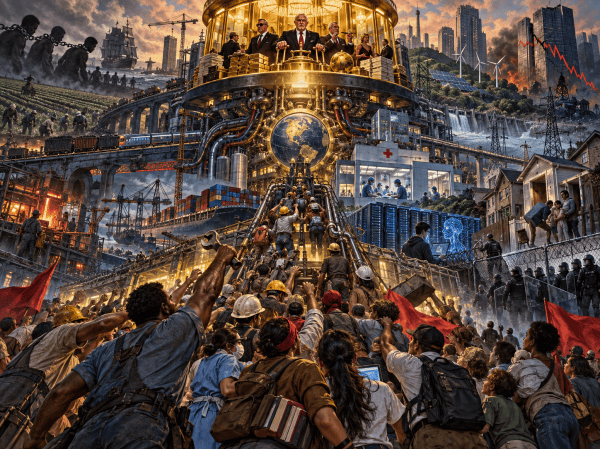
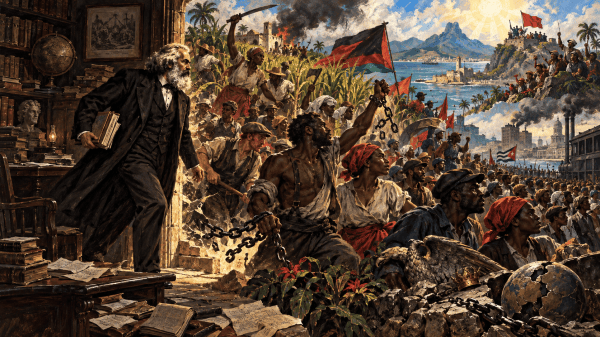
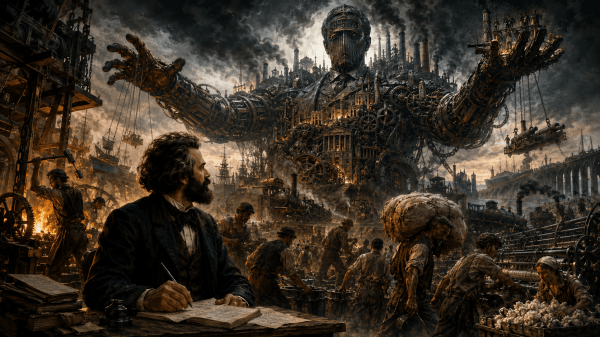
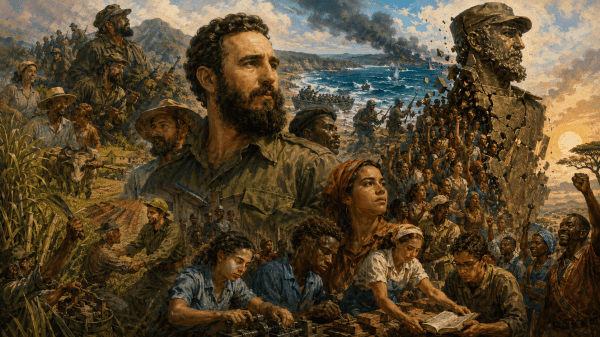
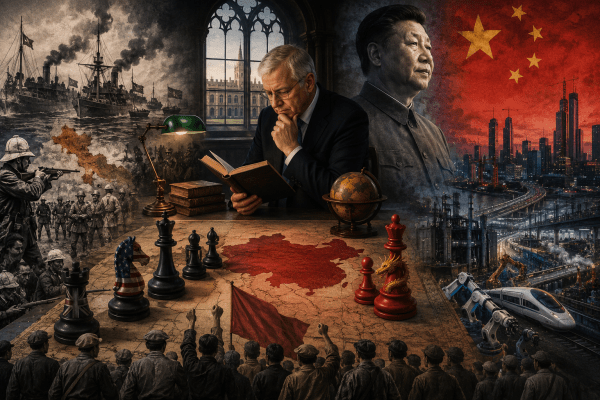
China’s revolutionary saga obliterates the Cold War illusion of socialist states as mere Soviet puppets. Through peasant uprisings and intricate political maneuvers, China redefined socialism amidst imperial oppression, transforming from a colonial victim to a technological titan without abandoning Communist rule. The narrative that constraints socialism to a Soviet mold collapses under China’s rich history of adaptation to its unique tumultuous reality. China’s evolution showcases socialism as a living pursuit aimed at sovereignty and rejuvenation, not dogmatic adherence. The experiences of struggle, experimentation, and resilience reflect a deep understanding: socialism thrives on continuous reimagining, not imitation.
The Red Scare Has a Filing Cabinet: CNN, Communism, and the Policing of American Thought
CNN turns deleted tweets into an anti-communist dossier while burying the housing, healthcare, immigration, education, and antiwar demands that made Darializa Avila Chevalier’s campaign matter. The article inherits a long U.S. tradition where communism is treated not as a political position but as contamination. The real story is capitalism’s fear that workers might learn the... Continue Reading →
The Red Menace Strikes Back: Vietnam, the DPRK, and the Collapse of Imperial Isolation
In May 2026, Vietnam's Foreign Minister met with North Korean officials, a significant yet underreported event that challenges the Western narrative of the DPRK as isolated and irrational. This meeting signifies the resurgence of socialist internationalism and the resilience of anti-imperialist relations against a U.S.-dominated order. Vietnam asserts its independence by maintaining ties with a historically aligned state despite pressures to conform to U.S. interests, illustrating a defiance of binary political expectations dictated by Western powers. As these two nations deepen cooperation, they expose cracks in imperial control, revealing that sovereignty endures in the face of sanctions and coercion.
Failure According to Whom?: Rewriting the Metrics of Socialism
The pervasive claim that socialism has "failed" is an ideological construct rather than a factual statement. A closer analysis reveals that socialist systems, from the Soviet Union to China, achieved measurable gains in education, health, and economic development under dire conditions. This narrative of failure is not supported by historical evidence but rather is a product of a century-long ideological war against socialism. Capitalism, meanwhile, perpetuates crises, inequality, and social fragmentation, failing to meet human needs. The real question is not why socialism fails, but how it has transformed societies when confronted with immense challenges, challenging the ruling narrative that defines success so narrowly.
Song of Ariran: Born in Failure, Forged through War
This Weaponized Intellects Book Review treats Kim San’s life not as biography but as a weapon—tracing how colonial violence, exile, repression, and ideological struggle forged a revolutionary consciousness that rejects liberal illusion, exposes the limits of nationalism and adventurism, and affirms that only disciplined, mass-based anti-imperialist struggle can transform defeat into the foundation for victory.... Continue Reading →
The Fool Who Moved the Mountains Still Walks Among Us: China’s Long March to Socialism and the Emergence of the Multipolar World Order
From Mao’s seizure of sovereignty to Xi’s effort to discipline capital, China’s modern history is neither a fall from revolutionary purity nor a smooth ascent into capitalism, but a protracted socialist struggle through contradiction. Each phase of development generated new class forces, new dangers, and new strategic adjustments, as the Party-state sought to preserve political... Continue Reading →
The Big Payback: Settling Accounts with the Paid Piper of Western Marxism (Part 1)
A ruthless chapter-by-chapter assault on Herbert Marcuse’s Soviet Marxism: A Critical Analysis, exposing it not as some noble “immanent critique” of actually existing socialism, but as a polished work of Cold War Western Marxist sabotage—an effort to sever Marx from Lenin, dialectics from revolution, and theory from the hard, blood-soaked labor of building socialism under... Continue Reading →
The Prince Without a Crown: Gramsci’s Blueprint for Power in the Age of Managed Dissent
This review excavates “The Modern Prince” as Gramsci’s prison-forged answer to the West’s revolutionary stall: why fortified capitalism survives crisis through consent, institutions, and “common sense.” It reconstructs his core strategic arsenal—collective will, hegemony, war of position, and the party as the organized brain of the oppressed—against the fantasies of spontaneity and the dead-end of... Continue Reading →
Empire vs. Sekou Odinga: Counterinsurgency, Community Power, and the War for Black Liberation (1944–2024)
Jamaica, Queens forged a revolutionary in the shadow of Malcolm X. The Black Panther Party built dual power — and the state answered with disruption. Underground struggle met federal conspiracy and thirty-three years of captivity. Elderhood returned him to a new generation still facing the same empire. By Prince Kapone | Weaponized Information | Black... Continue Reading →
Cedric J. Robinson, Black Marxism and the Colonial Blindspot Inside Western Marxism
Black Marxism and the Colonial Blindspot Inside Western Marxism Cedric J. Robinson did not write Black Marxism to abandon Marxism, but to indict the version of it that emerged safely inside empire. By tracing capitalism’s formation through slavery, racial domination, and colonial war, Robinson forces historical materialism to confront what Western Marxism systematically erased. The... Continue Reading →